

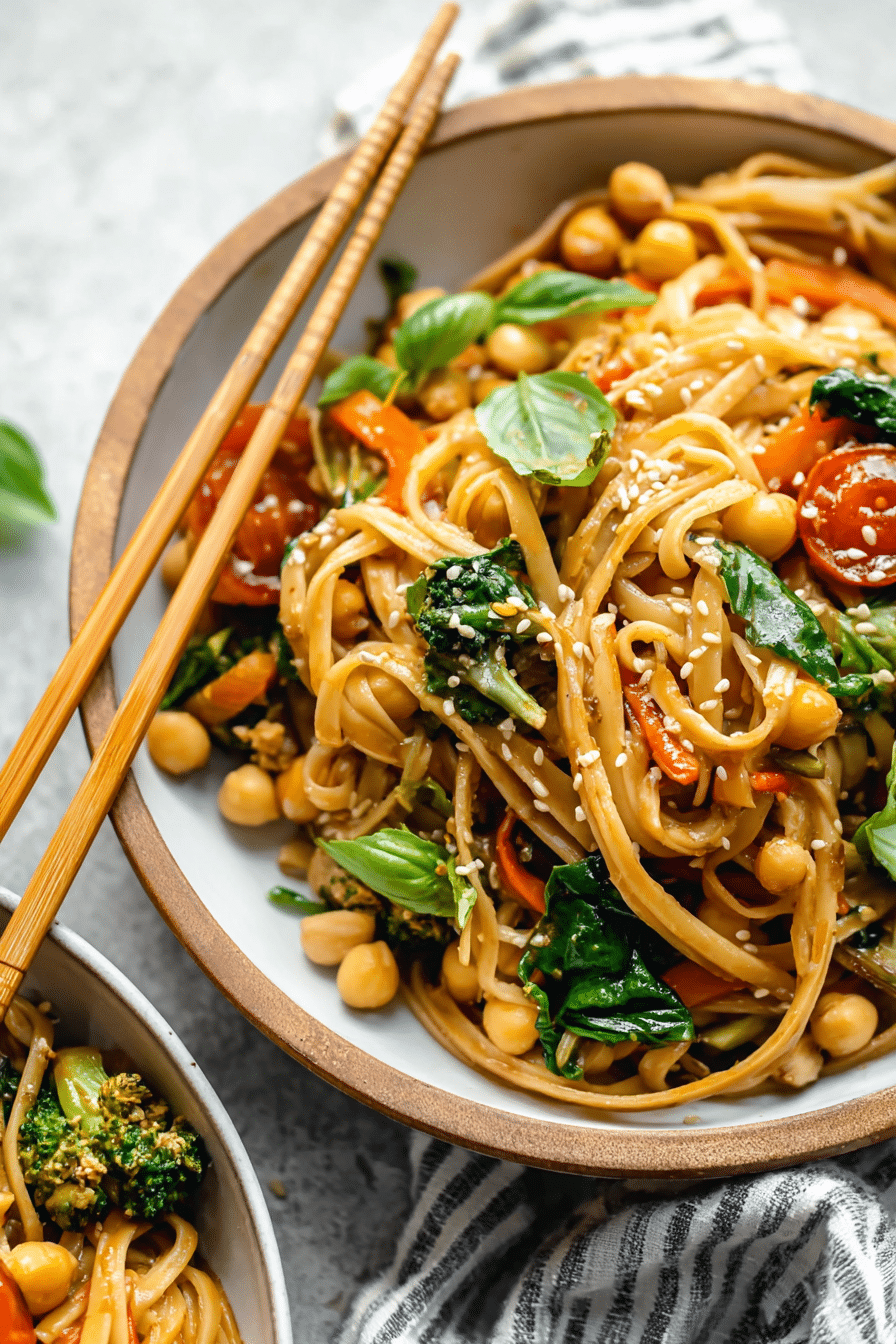
I cook on weeknights for a busy household, so recipes that come together fast and taste like I spent more time on them are my favorites. These 30-minute vegan stir fry sesame noodles fit that bill: bright veggies, a savory-sweet sesame sauce, and chickpeas for substance — all finished in one pot. I love that the sauce comes together with a quick whisk and that the dish keeps well for lunches later in the week.
I often keep one jar of toasted sesame oil and a can of chickpeas in my pantry so I can throw this together on short notice. Using pre-cut or frozen vegetables shaves even more time off the clock — I sometimes rely on a frozen stir-fry mix when life gets hectic. The result is a colorful bowl that smells like a weeknight treat and feels filling without being heavy.
Over the years I’ve learned a few small adjustments that make a big difference: drain your noodles well, stir the veggies often so they caramelize a little, and add the sauce at the end so everything stays glossy and saucy. Read on for the ingredient notes, step-by-step method, and my best tips for storing and reheating so your leftovers taste just as good.
Why These 30-Minute Vegan Stir Fry Sesame Noodles Are Perfect for Busy Weeknights
Stir fry cooking is fast because high heat and small cuts of vegetables speed everything up. You get dinner on the table in about 30 minutes with minimal cleanup — a huge win when schedules are tight. If you want to shave prep time further, use pre-cut produce or frozen veg so there’s less chopping involved.
The bowl is balanced: chewy noodles, crisp-tender vegetables, and chickpeas for plant-based protein and fiber. The sauce is savory with a touch of sweetness and toasted sesame for depth; it coats everything so each bite feels cohesive. If you’d like another fast, family-friendly weeknight option, try this creamy tomato pasta for a different flavor profile.
Sensory note: picture bright orange carrots, green broccoli florets, and glossy noodles tossed in a fragrant sesame-ginger sauce — the aroma of toasted sesame oil and fresh ginger makes the kitchen feel cozy and fast at once.
Everything You Need for 30-Minute Vegan Stir Fry Sesame Noodles
Below I cover the core ingredients and the basic tools that make this dish easy to execute on a busy night. Use fresh, seasonal vegetables when you can for the best texture and flavor; frozen or pre-cut vegetables are fine in a pinch and save time.
- Ingredient Discussion
- Soy sauce or coconut aminos – Provides the salty, savory backbone; swap coconut aminos for a gluten-free option with a slightly sweeter profile.
- Sesame oil – Adds toasty aroma and a silky finish; toasted sesame oil gives the most pronounced flavor.
- Rice vinegar – Brightens the sauce and balances the sweetness.
- Ginger & garlic – Fresh aromatics that lift the whole dish; grate the ginger thin for even distribution.
- Arrowroot or cornstarch – Thickens the sauce so it clings to the noodles and veggies.
- Chickpeas – The main plant protein; they add creaminess and bite when tossed with the sauce.
- Stir-fry noodles (rice, ramen, or soba) – Any quick-cooking noodle that you prefer; choose gluten-free rice noodles for a gluten-free dish.
- Broccoli, carrots, bell pepper, onion – Classic stir-fry vegetables chosen for color and contrasting textures; swap in seasonal produce as you like.
- Garnishes: basil, scallions, roasted cashews, sesame seeds – Add freshness, crunch, and extra sesame flavor at the end.
Kitchen tools: a large skillet or wok for high-heat cooking, a medium bowl for whisking the sauce, a pot to cook noodles (unless your noodle type is one-pot), and a colander for draining. A sturdy spatula helps you stir quickly and evenly.
The Secret to the Perfect Texture: Noodles That Stay Tender
Getting the noodle texture right transforms this dish from fine to fantastic. Overcooked noodles become mushy and lose their bite, while undercooked noodles taste raw and distract from the dish. I’ve learned a few practical techniques that help every time.
- Cook the noodles exactly according to the package directions to avoid mushiness — timing matters. Different noodle types require different cooking methods, so follow the label.
- Rinse the noodles with cold water right after draining to stop the cooking process and prevent them from sticking together; this is especially important with rice noodles.
- Toss a little sesame oil with the drained noodles if you won’t be combining them with the sauce immediately; this gives them shine and prevents clumping.
- If your noodles feel gummy after reheating, rinse them under hot water briefly or toss them in a hot skillet with a splash of water to loosen them up.
- Sensory cue: perfectly cooked noodles should feel silky and still give slightly when you bite — not floppy, not hard.
Protein & Nutrition: How Chickpeas Keep This Dish Filling
Chickpeas add satisfying plant protein and fiber, which slows digestion and helps you feel full longer — ideal for a weeknight meal that holds you until bedtime or lunch the next day. They also provide a creamy contrast to the firmer vegetables and the tender noodles.
Nutrition per serving (approximate):
- Calories – 595 kcal
- Fat – 17.8 g
- Carbohydrates – 95.4 g
- Protein – 15.1 g
Beyond those numbers, the dish delivers fiber from chickpeas and vegetables, vitamins from the colorful veg, and healthy fats from sesame oil and cashews. It’s a balanced bowl that hits multiple dietary needs while staying plant-based.
How to Make 30-Minute Vegan Stir Fry Sesame Noodles (Step-by-Step)
- Prepare your sauce in a medium bowl by whisking together the salty, sweet, and aromatic elements and the starch so it’s ready to thicken quickly when it hits the hot pan.
- Bring a pot of water to a boil and cook your chosen noodles according to the package instructions; drain and rinse with cold water to stop cooking, then set aside.
- Heat your skillet or wok over medium-high heat and add toasted sesame oil. Add the onion and carrots first; cook until the onion just begins to soften and the carrots start to color.
- Add the broccoli florets and bell pepper; stir frequently and cook until the broccoli is bright and tender-crisp. You want a little bite left in the broccoli for texture.
- Add the drained chickpeas to the pan to warm through, then reduce the heat to low and pour in the prepared sauce. Stir so the sauce coats the vegetables and chickpeas and let it cook until it thickens slightly.
- Toss in the cooked noodles, fresh herbs, and chopped cashews; toss gently but thoroughly so every strand of noodle gets sauced. Heat just until everything is combined and warmed through.
- Finish with scallions and a sprinkle of sesame seeds before serving. If the sauce is too thick, add a splash of water to loosen it; if it’s too thin, simmer a minute longer to reduce.
Pro Tip for 30-minute vegan stir fry sesame noodles: Gluten-Free Swaps & Meal-Prep Tips
- I recommend rice noodles for a naturally gluten-free noodle; if you want a lower-carb option, spiralized zucchini noodles work well when added at the very end so they stay firm. Look for certified gluten-free soba or ramen if you prefer those textures.
- Use gluten-free soy sauce or coconut aminos to keep the sauce gluten-free; coconut aminos are slightly sweeter, so taste before adding more sweetener.
- Batch the sauce ahead and store it in the fridge — it stays good for several days and makes weeknight assembly nearly instantaneous.
- Cook extra chickpeas or roast a tray of vegetables at the start of the week to speed up dinners; store components separately and combine when ready to eat.
- To reheat without losing texture, gently warm on the stovetop with a splash of water or broth instead of the microwave; the skillet method helps revive the sauce and keeps the noodles from getting gummy.
Pro-Tips, Troubleshooting, and Variations are presented below as bulleted lists for high scannability.
Consider preparing some vegetable spring rolls to enjoy with your stir fry, making for a well-rounded meal.
- Troubleshooting (I speak from experience):
- If the sauce separates or looks grainy, whisk it vigorously off the heat — small amounts of oil can separate from the sauce if it’s overheated.
- If noodles clump, rinse them under hot running water briefly and toss with a little sesame oil, then reheat in a skillet.
- If vegetables get mushy, cut them larger next time and reduce the cooking time; high heat and quick cooking preserve snap.
- Variations (easy swaps):
- Replace chickpeas with pan-fried tofu or tempeh for a more textured protein.
- Add edamame for extra protein and a bright pop of green.
- Stir in a spoonful of tahini or peanut butter for a richer, creamier sesame sauce.
How to Store, Reheat, and Meal-Prep These Sesame Noodles
Store leftovers in an airtight container in the refrigerator for up to 3–4 days. Keep sauce and noodles separated from any toppings like fresh herbs or roasted cashews if possible, and add those just before serving for the best texture.
- Reheat on the stovetop over medium heat with a splash of water or vegetable broth to loosen the sauce; stir frequently until warmed through.
- If using the microwave, heat in short intervals and stir between bursts to avoid hot spots and gummy noodles.
- For meal-prep, package components separately: noodles, sauce/veggies, and garnishes. Combine and reheat for a fresher bowl during the week.
For a quick and delicious meal prep option, try pairing your sesame noodles with our quick no-bean chili.
Frequently Asked Questions
How long does it take to make 30-Minute Vegan Stir Fry Sesame Noodles?
This dish can be prepared in just 30 minutes, making it perfect for a quick weeknight dinner.
Can I substitute other vegetables in this stir fry?
Absolutely! Feel free to use your favorite vegetables or whatever you have on hand. Just be sure to adjust the cooking times accordingly.
Are these sesame noodles gluten-free?
You can make them gluten-free by using gluten-free soy sauce or coconut aminos and substituting the noodles for gluten-free options like rice noodles.
What other protein sources can I add besides chickpeas?
You can also add tofu or tempeh for additional protein, or even edamame for a different texture.
How should I store leftovers of the stir fry?
Store leftovers in an airtight container in the refrigerator for up to 3-4 days. You can reheat in the microwave or on the stove.
30-Minute Vegan Stir Fry Sesame Noodles
Ingredients
Method
- In a medium bowl, whisk together the soy sauce, water, garlic, coconut sugar, sesame oil, rice vinegar, fresh ginger, sesame seeds, red pepper flakes, and arrowroot starch (or cornstarch). Set aside.
- Add 1 tablespoon sesame oil to a large pot, then add in chopped onion and sliced carrots. Cook for 2-4 minutes until onions begin to soften. Next, add in broccoli and bell pepper and cook, stirring frequently, for an additional 6-8 minutes or until the broccoli is slightly tender.
- While the veggies are cooking, make your stir fry rice noodles according to the directions on the package. Then drain and set aside.
- Add the drained chickpeas to the pot with the cooked veggies. Immediately turn the heat to low and add in the sauce. Cook for an additional 2 minutes over low heat until the sauce begins to thicken. Stir in rice noodles, fresh basil ribbons and cashews; toss again to combine. Garnish with scallions and sesame seeds. Serves 4.