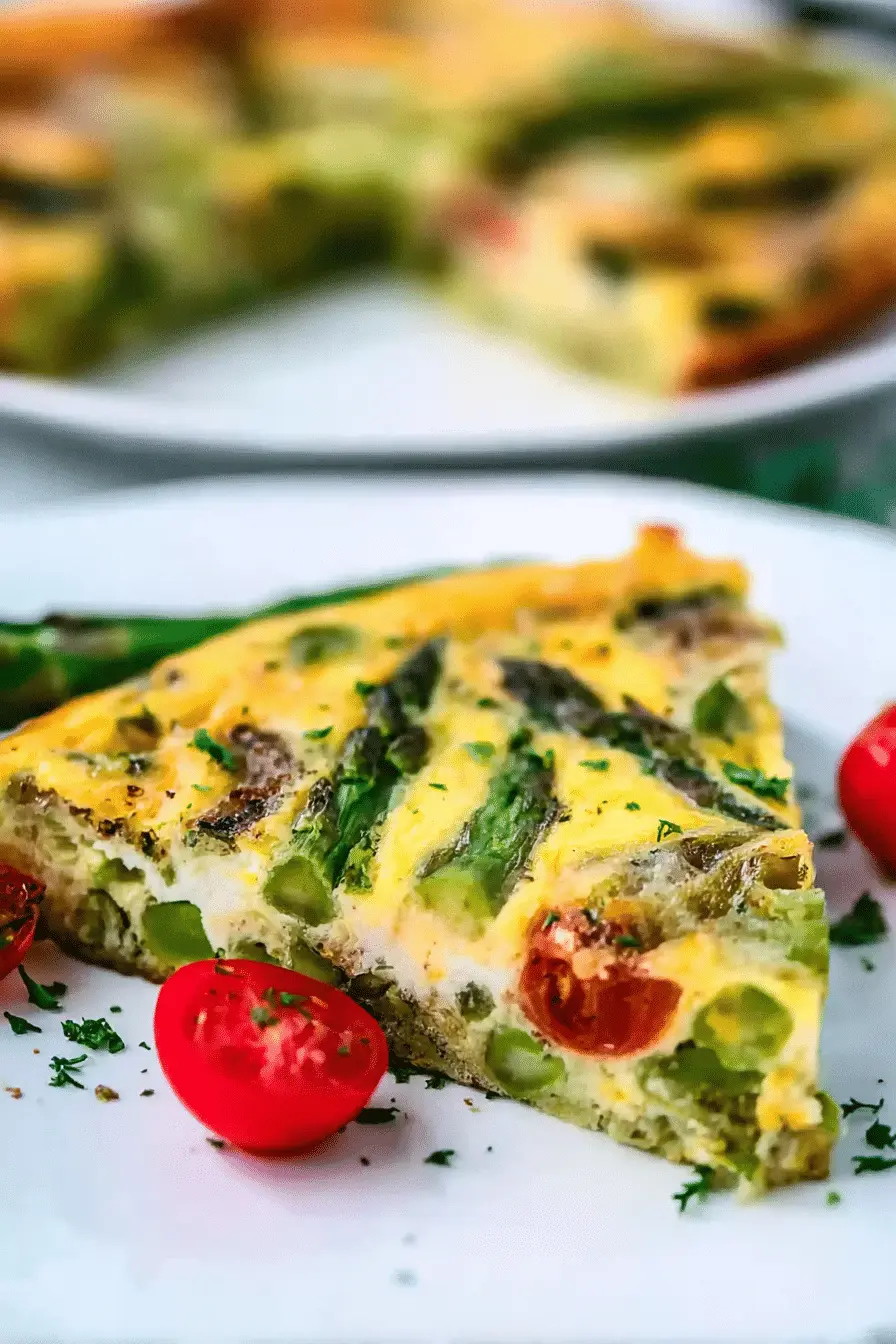
The Asparagus Frittata I Make Every Week — Ready in 40 Minutes
- Prep
- 20 min
- Cook
- 20 min
- Total
- 40 min
- Serves
- 4
- Calories
- 516 kcal
- Protein
- 35.00 g
- Carbs
- 10.00 g
- Fat
- 37.00 g
Introduction
I make this asparagus frittata on busy evenings when I want something fast, bright, and satisfying with minimal cleanup. It cooks quickly in a single skillet, uses pantry-friendly cheeses, and is flexible enough to adapt when I'm short on one ingredient. The first time I tested the recipe I overcooked it on the stovetop — from that mistake I learned the simple two-stage method that gives a tender, not-rubbery custard.
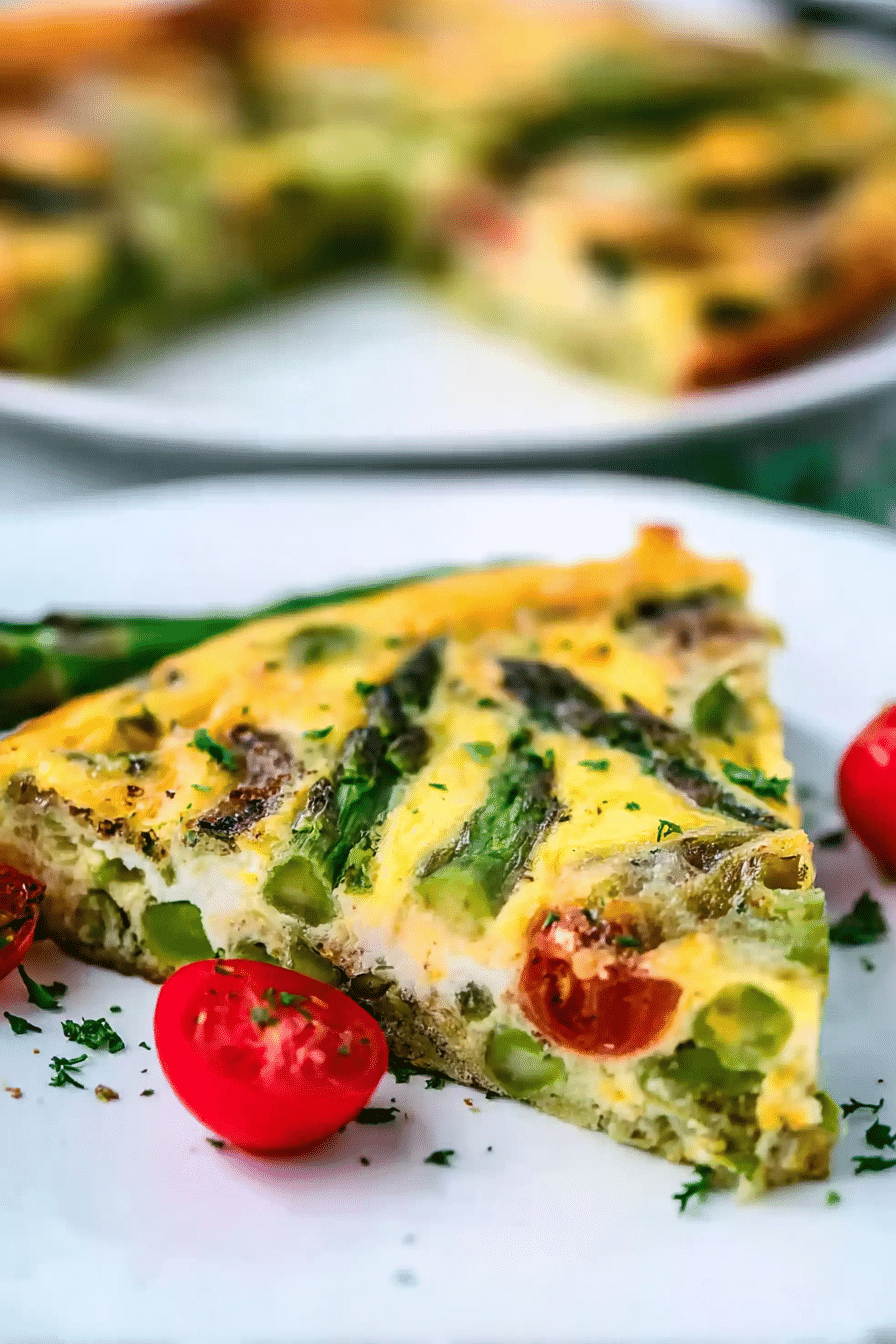
When I’m cooking for my family I like that this frittata comes together fast — sauté the veggies, pour in the egg mixture, finish in the oven, and you’re done in under 40 minutes. The colors of green asparagus and halved cherry tomatoes make it feel special, and the melted cheeses create a comforting top that browns lightly in the oven.
I’ll walk you through the tools and techniques I use to avoid common pitfalls, suggest swaps if you need dairy-free options, and share storage and reheating tips so leftovers feel just as good the next day. This is an every-weeknight recipe for me when I want something quick but still worth sitting down to eat.
Why this asparagus frittata is perfect for busy weeknights
Practical reasons this works on a tight schedule — it’s fast, low-mess, and forgiving. Visualize the bright asparagus and juicy tomatoes and imagine the gentle aroma of sautéed mushrooms and butter filling your kitchen while you finish a quick salad.
- Total preparation and cooking time of just 40 minutes — fast enough for weeknight dinner.
- Minimal cleanup with a single skillet method: sauté, pour, and bake in the same pan.
- Flexible ingredient list so you can use what’s on hand — swap or omit without breaking the recipe.
Everything You Need for Asparagus Frittata
Below are the essentials — both ingredients and tools — described so you know why each one matters and what to substitute if needed.
- Asparagus – The star vegetable; provides a fresh, slightly sweet bite and visual green contrast. Use fresh stalks that snap, not limp ones.
- Mushrooms – Add chewiness and umami; choose cremini or white button for an easy pantry pick.
- Cherry tomatoes – Burst of acidity and color that balances the richness of the eggs and cheese.
- Eggs – The binding protein; whisk well so the texture is smooth and uniform.
- Mozzarella – Melts into a gooey layer without overwhelming the dish.
- Cheddar – Adds a sharp note for balance and deeper color when browned.
- Parmesan – Brings nutty, salty complexity and helps with overall savory depth.
- Feta – Crumbled on top for tangy pops of flavor and textural contrast.
- Butter – For sautéing: gives a richer flavor than neutral oil and helps vegetables brown gently.
- Green onions – Fresh garnish that brightens each slice.
- Salt & pepper – Simple seasoning to taste; add gradually and adjust at the end.
- Cast iron skillet – Retains heat evenly and gives a nice bake; if you don’t have one, any ovenproof skillet will do.
- Whisk and spatula – For aerating eggs and folding the mixture into the vegetables without deflating it.
The Secret to a Tender, Not-Rubbery Frittata
Getting the custard texture right is about gentle heat and timing. Smell and sight are good guides — you want a glossy, slightly jiggly center before finishing in the oven.
- Whisk the eggs until homogeneous so the finished custard is even in texture.
- Cook the vegetables over medium heat so they soften without releasing excess water; dry ingredients brown slightly and taste better.
- When you add the egg mixture to the skillet, stir gently just to distribute — don’t overwork it or you’ll lose the air that makes the frittata light.
- Remove from the stovetop when the edges are set but the center still has a slight wobble; residual and oven heat will finish it for a tender result.
- Use sight and a gentle shake of the pan to judge doneness rather than poking with a fork — the top should be puffed and barely golden.
Timing & Temperature: How to Avoid Overcooking
Oven temperature and timing are your friends here. Preheating and respecting residual heat prevents the rubbery texture that comes from high, prolonged heat.
- Preheat the oven so the pan and frittata receive consistent heat when transferred — a cold oven leads to uneven cooking.
- Finish in a moderate oven to set the center gently; high heat will brown too quickly and overcook the interior.
- Judge doneness by look and pan movement: edges should be firm, center slightly jiggly.
- Remember residual heat — the frittata will continue to set after you remove it, so pull it when it’s just short of fully firm.
- If you’re uncertain, a clean knife inserted near the center should come out mostly clean but not dry.
Cheese Choices: Getting Flavor Without Sogginess
Cheese adds richness and mouthfeel, but moisture management matters. The combo of melting cheeses with a drier, salty cheese keeps the top flavorful without making the custard watery.
- Mozzarella melts beautifully and creates that familiar stretchy texture; use a low-moisture version if you can to avoid excess water.
- Cheddar brings sharpness and color; sharper cheeses generally need less volume to have big flavor impact.
- Parmesan is drier and salty, which helps absorb some moisture and round out the flavor.
- Feta is crumbly and tangy; scatter on top so it stays textural rather than melting into the custard.
- Non-dairy options: firm, aged-style plant cheeses or pressed nut-based cheeses will behave better than very soft vegan mozzarellas — drain any watery containers before using.
How to Make Asparagus Frittata (Step-by-Step)
- Preheat your oven to a moderate temperature so it’s ready when you transfer the skillet.
- Whisk the eggs with the grated and shredded cheeses called for in your recipe, seasoning with salt and pepper; set the mixture aside.
- Melt butter in a 10-inch ovenproof skillet over medium heat, then add the asparagus and mushrooms and sauté until just tender; sprinkle a little salt while they cook.
- Add halved cherry tomatoes and sauté briefly until warmed through; you want them softened but not collapsed.
- Pour the egg mixture over the vegetables, folding gently to distribute without deflating the eggs. Cook on the stovetop until the edges begin to set and the center still moves slightly.
- Sprinkle the remaining melting cheeses and crumbled feta over the top, then transfer the skillet to the preheated oven.
- Bake until the frittata is puffed and the top is lightly golden — the center should be just set with a slight wobble.
- Let the frittata rest briefly, garnish with chopped green onions, cut into wedges, and serve warm.
Pro Tip for asparagus frittata: Cook gently on the stovetop, then finish in the oven for an even set
- The two-step method prevents overcooking: stovetop gives control and color, oven gives even finishing heat.
- Avoid high stovetop heat; medium is enough to set edges without firming the center too quickly.
- Experiment with a slightly earlier oven finish if you prefer a softer center, or a minute or two longer for a fully firm custard.
How to Store, Reheat and Make-Ahead Asparagus Frittata
Leftovers are great for meal prep. Use these practical steps to keep texture and flavor as close to fresh as possible.
- Refrigerate slices in an airtight container for up to three days; for longer storage, freeze portions wrapped tightly and stored in freezer-safe containers.
- To reheat, place slices in a 350°F oven for about 10 minutes until warmed through — this keeps the edges from getting rubbery. For speed, a quick microwave reheating is fine but may soften the texture.
- If making ahead, cook through the stovetop steps and chill before baking; bake from cold but add a few extra minutes in the oven to ensure a full set.
Creative Variations and Dietary Swaps
- Herb swap: add chopped dill, chives, or parsley for fresh brightness before serving.
- Vegetable variations: try bell peppers, spinach, or thinly sliced zucchini — sauté well to remove excess moisture.
- Protein add-ins: cooked ham, crumbled sausage, or smoked salmon can change the meal into a heartier dinner.
- Vegan swap: use a chickpea flour batter or silken tofu-egg replacement and a firm vegan cheese that won’t release water; press or drain any plant cheeses before using.
- Make it lighter: reduce the amount of melting cheeses and increase the vegetables for a lower-calorie, veggie-forward version.
Troubleshooting
I’ve learned a few things through trial and error, so here are quick fixes for common problems.
- If the frittata is rubbery: I usually remove it from heat earlier next time and rely on the oven to finish setting — too much stovetop time is often the culprit.
- If it’s watery: I pat vegetables dry before adding, cook them a bit longer to evaporate moisture, and use a drier grated cheese like Parmesan to absorb excess liquid.
- If the top browns too quickly: I lower the oven temperature slightly or tent the skillet with foil for part of the bake time.
- If the center never sets: I check oven temperature with an oven thermometer and add a few extra minutes; sometimes an oven runs cooler than expected.
Nutritional Breakdown and Health Benefits
This frittata is high in protein from the eggs and cheeses and relatively moderate in carbohydrates. Asparagus is low-calorie and offers vitamins A, C, and K plus folate and fiber. The dish provides a satisfying, balanced meal that can be adjusted to fit lighter or heartier needs.
Approximate nutrition per serving: about 516 calories, 37 g fat, 10 g carbohydrates, and 35 g protein. Adjust cheeses and portion sizes to change calorie and fat content.
Frequently Asked Questions
How long does it take to make asparagus frittata?
This asparagus frittata is quick to prepare and cook, taking just under 40 minutes from start to finish!
What cheeses work best in a frittata?
In this recipe, we use mozzarella, cheddar, Parmesan, and feta cheese. These combine well for flavor and texture without becoming soggy.
Can I add other vegetables to the frittata?
Absolutely! Feel free to add your favorite veggies like bell peppers or spinach for added flavor and nutrition.
How should I store leftover frittata?
Store any leftover frittata in an airtight container in the fridge for up to 3 days. Reheat in the oven or microwave.
What is the best way to reheat asparagus frittata?
For the best texture, reheat slices in the oven at 350°F for about 10 minutes. You can also use a microwave for quicker reheating.
Recipe Card
The Asparagus Frittata I Make Every Week — Ready in 40 Minutes
- Prep
- 20 min
- Cook
- 20 min
- Total
- 40 min
- Serves
- 4
- Calories
- 516 kcal
- Protein
- 35.00 g
- Carbs
- 10.00 g
- Fat
- 37.00 g
Ingredients
- 2 tablespoonsunsalted butter
- 1 poundasparagus (ends trimmed and cut into 1-inch pieces)
- 1 cupmushrooms (sliced)
- 1 cupcherry tomatoes (halved)
- 8 largeeggs
- 1 cupshredded mozzarella cheese (divided)
- 1 cupshredded cheddar cheese (divided)
- 1/2 cupgrated Parmesan cheese
- 1/2 cupfeta cheese (crumbled)
- 1/2 teaspoonsalt
- 1/2 teaspoonground black pepper
- 1/2 cupgreen onions (chopped)
Instructions
- 1
Preheat oven to 350 degrees F.
- 2
In a medium bowl, whisk eggs and add ½ cup shredded mozzarella cheese, ½ cup shredded cheddar cheese, and ½ cup grated parmesan cheese. Whisk to combine. Add salt and pepper. Set aside.
- 3
Melt butter in a 10-inch cast iron skillet over medium heat.
- 4
Add chopped asparagus and mushrooms, sprinkle with salt, and sauté until tender, about 5 minutes. Add tomatoes and sauté for another 2 minutes.
- 5
Stir the egg mixture and add it to the skillet, folding gently to combine with the veggies. Cook until almost set.
- 6
Sprinkle remaining ½ cup mozzarella cheese and ½ cup cheddar cheese on top. Sprinkle the feta cheese on top and green onions.
- 7
Bake in the preheated oven until frittata is puffed and cheese begins to turn lightly golden in color, about 10 minutes.
- 8
Garnish with green onions before serving. Cut into wedges and serve.
You might also like

Reviews
Be the first to review this.