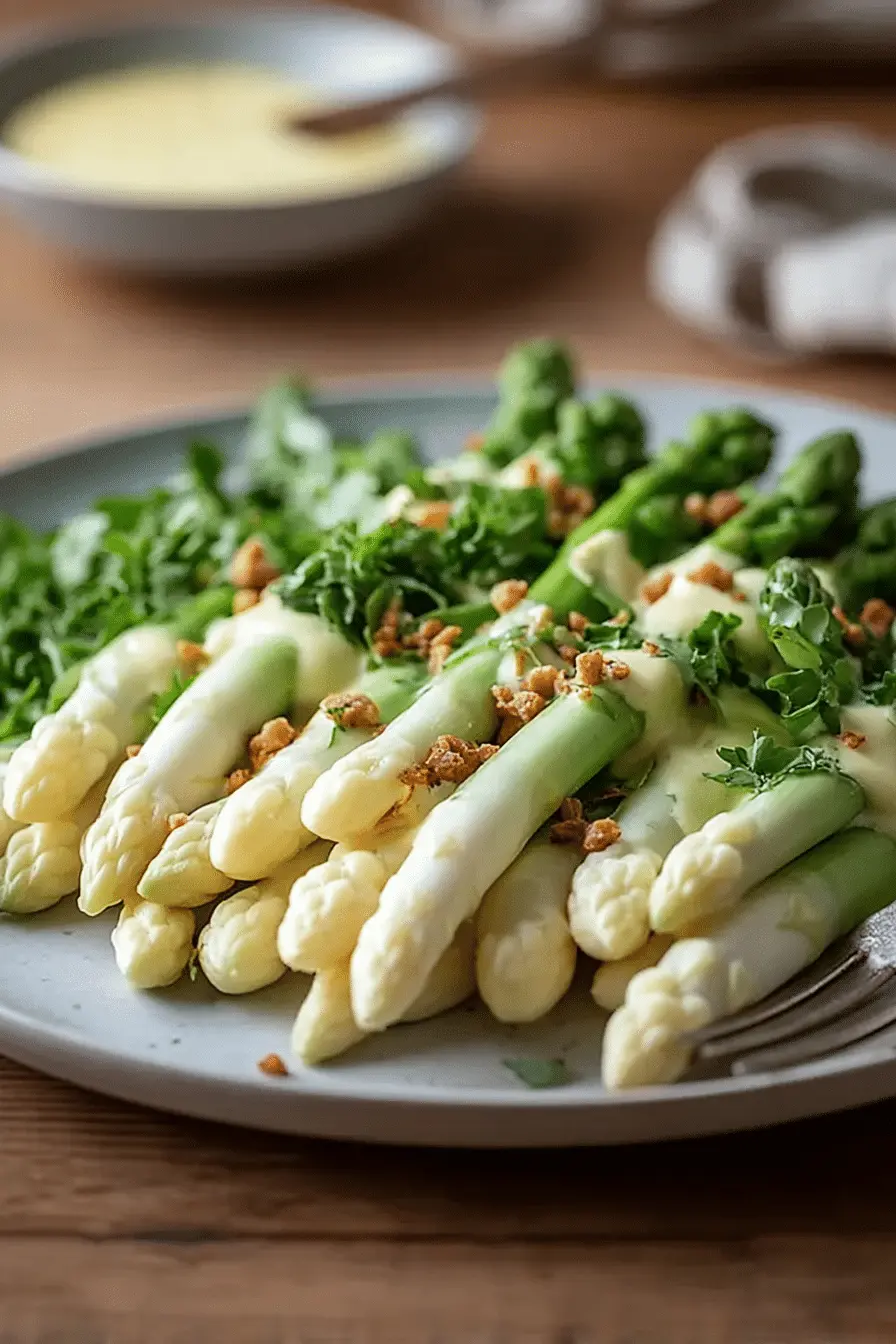
How I Finally Nailed Asparagus German Recipe at Home
- Prep
- 15 min
- Cook
- 20 min
- Total
- 35 min
- Serves
- 4
- Calories
- 380 kcal
Introduction
I grew up with Spargel season as the calendar’s happiest week: neighbors bringing over bundles of white asparagus wrapped in damp paper, the smell of butter and lemon rising from my mother’s pan. I still remember the first time I tried to peel those pale, velvet-tipped stalks in my own kitchen—too much pressure and they shredded, too little and the woody base left you chewing. Over the years I learned to read a stalk by its snap and to trust a timer the way a conductor trusts a metronome.
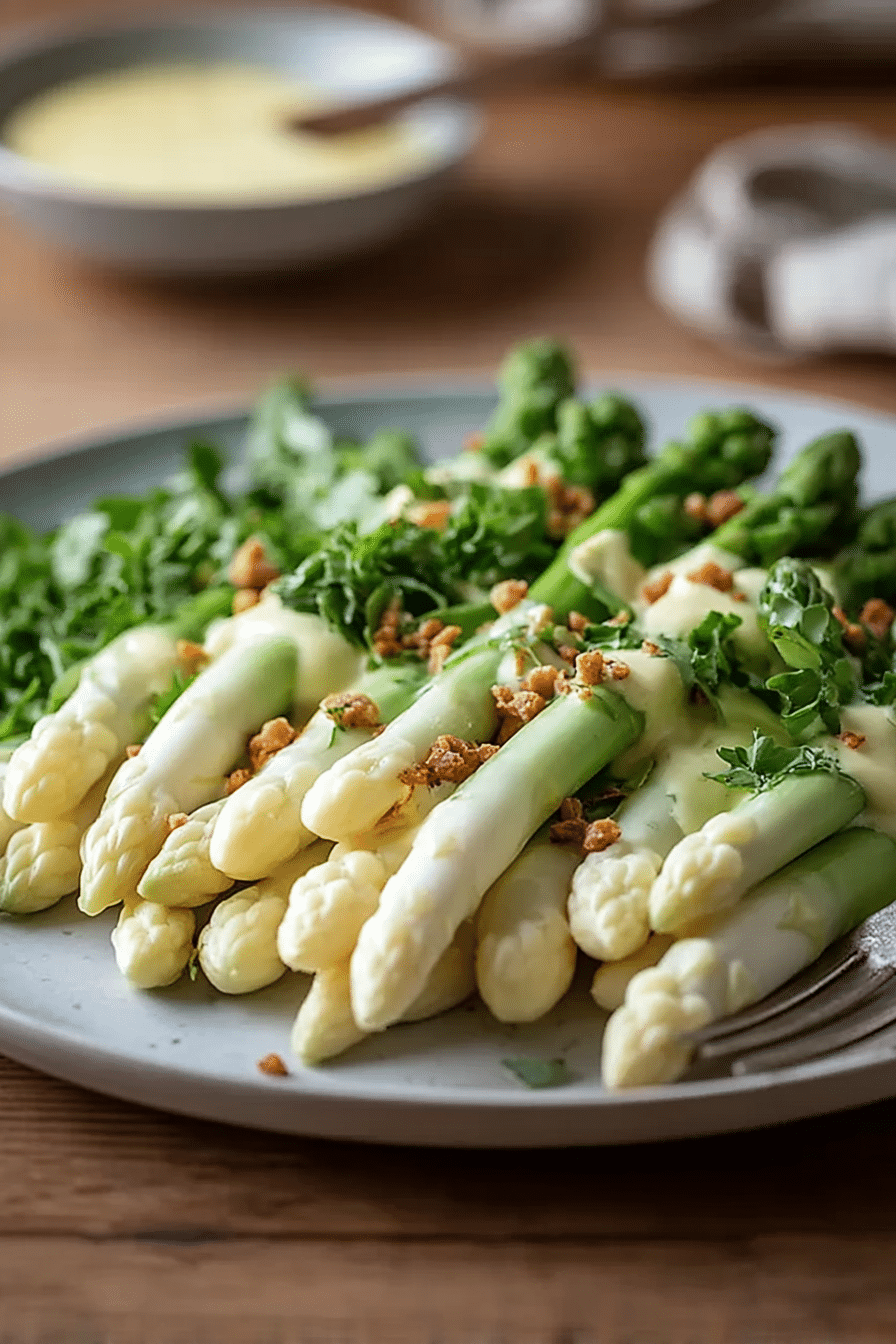
Making Spargel at home feels like a small ceremony: the quiet, methodical peeling, the gentle simmer, the ritual of warm Hollandaise spooned over the tops. I’ve learned that what makes this dish special isn’t complexity but attention—how you peel, how you time the simmer, how you coax the sauce into a glossy emulsion without breaking it. When everything aligns it tastes like spring: buttery, lemon-bright, and utterly comforting.
Over time I also collected market tricks and small fixes that save a dinner from collapse—how to rescue a separated sauce, when to call the asparagus done, and how to finish with a crunchy breadcrumb topping that makes an ordinary plate feel celebratory. Read on and I’ll walk you through the exact choices I make in my kitchen so you can bring a little Spargelzeit to your table.
Everything You Need for Asparagus German Recipe
Before you begin, gather a few reliable tools and choose ingredients you trust—the difference between a good Spargel night and a forgettable one is often a single well-chosen ingredient or the right pan. Below I list what I use in my kitchen and why each item matters. I also include a concise nutritional snapshot so health-conscious cooks know what to expect.
- Essential tools – A sturdy vegetable peeler for white asparagus, a long shallow pot for simmering, a slotted spoon or spider for gentle handling, a small heatproof bowl and whisk for Hollandaise, and a thermometer if you like precise control over sauce temperature.
- Fresh white asparagus (Spargel) – The star: peel it thoroughly and trim the woody ends so that the stalks cook evenly.
- Egg yolks – Provide richness and act as the emulsifying base for Hollandaise; pasteurized yolks are an easy swap if raw eggs worry you.
- Butter – Clarified or gently melted butter gives that classic, silky mouthfeel to the sauce.
- Lemon juice – Brings brightness and balances the butter’s richness.
- Salt, sugar, white pepper – Small amounts in the cooking water and sauce bring out the natural sweetness of the Spargel.
- Buttered breadcrumbs & fresh herbs – Optional finishing touches for texture and aroma: I like parsley or dill.
Approximate nutrition (per serving): 380 kcal; Fat: ~31 g; Carbohydrates: ~15 g (including fiber ~3 g); Protein: ~9 g. These numbers will shift with portion size and whether you add ham, smoked salmon, or extra buttered crumbs.
Choosing and Preparing White Asparagus (Spargel): Market Tips
Buy Spargel at the height of the season if you can—late spring is when sellers bring in freshly cut stalks and the flavor is at its peak. At market I feel each bunch: good white asparagus is firm and heavy for its size, with tight tips and no soft spots. The skin should be smooth; if it looks papery or shriveled, pass it by.
- Inspect the tips and base: tightly closed tips and a firm base mean fresher stalks.
- Peeling technique: start a little below the tip (don’t dig into the spear), peel downward toward the base in thin strokes. I prefer to rotate the stalk as I peel to keep the pressure even and avoid tearing the tender tip.
- Trim only what’s necessary: snap or cut the woody bottom rather than over-trimming—you’ll preserve more tender vegetable this way.
- Sourcing tip: ask vendors when the asparagus was harvested; asparagus that was cut the same day will taste brighter and cook more predictably.
The Secret to Perfect Tender (Not Mushy) White Asparagus
In my experience, the single most common mistake is overcooking. White asparagus can go from tender to mushy in minutes, which is why monitoring time and water temperature matters more than high heat. The goal is a tender stalk that still holds together when you lift it.
- Match cooking time to thickness: thicker stalks need more time; thin ones will be done quickly. Gauge doneness by sliding a small knife near the base—you want a slight resistance, not butter-soft collapse.
- Keep the water at a gentle simmer rather than a rolling boil: violent bubbles batter the stalks and can make them stringy.
- Add a pinch of sugar and a touch of butter to the cooking water; this is an old-market trick that draws out the vegetable’s natural sweetness without making it limp.
- Cook in batches if your pot is crowded—crowding steams rather than simmers, which lengthens time and risks uneven texture.
How to Make Asparagus German Recipe (Step-by-Step)
Follow these steps in order, and keep an eye on the Hollandaise while it comes together. If at any point the sauce looks grainy or too thick, see the Troubleshooting notes below.
- Peel the white asparagus starting just below the tips and working toward the base; trim the woody ends.
- Bring a large pot of water to a gentle boil and add a little sugar, salt, and a knob of butter to the water to enhance flavor.
- Gently lower the asparagus into the pot and simmer for about 8–12 minutes, depending on thickness, until tender but still holding their shape.
- While the asparagus cooks, whisk egg yolks with lemon juice in a heatproof bowl until smooth.
- Set the bowl over a pot of simmering water (double-boiler style), ensuring the bowl doesn’t touch the water, and whisk continuously.
- Slowly drizzle in warm melted butter, a little at a time, whisking until the sauce becomes thick and glossy.
- Season the Hollandaise with salt and a pinch of white pepper; keep warm but not over the steam or it may overheat.
- Drain the asparagus carefully and arrange on a warmed platter; pour the warm Hollandaise over the spears and scatter buttered breadcrumbs and fresh herbs if you like.
- Serve immediately with boiled potatoes and your choice of smoked ham or salmon, and a crisp Riesling if you’re pouring wine.
Troubleshooting
- If the Hollandaise begins to separate, whisk in a tablespoon of warm water to bring it back together.
- If the sauce becomes grainy, remove from heat and whisk vigorously off the steam—often gentle agitation rescues the emulsion.
- If asparagus is undercooked, briefly return it to simmering water for one- to two-minute increments; taste as you go to avoid overshooting.
Note: The following Pro-Tips, Troubleshooting, and Variations are presented as bulleted lists for quick scanning.
Pro Tip for asparagus german recipe: Keep Hollandaise Silky
- Understand the emulsion: Hollandaise is an oil-in-water emulsion stabilized by egg yolks. Keep temperatures moderate—too hot and the yolks will scramble, too cool and the butter won’t incorporate.
- Temperature control: whisk the yolks until slightly thickened, then add butter slowly. Use a gentle, steady heat under the bowl and remove from steam if the sauce tightens too quickly.
- Rescue techniques: if the sauce thickens excessively, whisk in a tablespoon of warm water; if it splits, start with a fresh egg yolk in a clean bowl and whisk the broken sauce into it slowly.
- I keep a small cup of warm water nearby when I make Hollandaise; a teaspoon at a time lets me adjust texture without diluting flavor.
Variations and Pairings: Vegan Hollandaise, Meats, and Sides
Here are approachable variations and classic pairings to dress up your asparagus plate. I often alternate between the timeless version and a plant-based Hollandaise when friends ask for vegan options.
- Vegan Hollandaise alternative: blend cashews (soaked), nutritional yeast, lemon, and a neutral plant milk until silky; warm gently and season to taste.
- Classic pairings: boiled new potatoes and thinly sliced smoked ham are traditional; smoked salmon is another elegant choice.
- For added texture: crisp buttered breadcrumbs or lightly toasted almonds provide a pleasant contrast to the soft asparagus.
- If you want a light main, try serving asparagus alongside a lemon pasta or an asparagus quiche—both bring a complementary brightness.
Try pairing your asparagus with some roasted asparagus for a delightful twist on texture and flavor.
An asparagus quiche can also be a wonderful way to incorporate this seasonal vegetable into your meals.
If you're looking for a light main dish, consider serving your asparagus with lemon asparagus pasta to enhance the freshness.
For a colorful plate, add some oven roasted cauliflower that complements the flavors of the asparagus beautifully.
How to Store, Reheat, and Make Ahead Asparagus with Hollandaise
Leftovers are possible, but both asparagus and Hollandaise change texture in the fridge. Here are my tested methods for storage and reheating to preserve as much of the original character as possible.
- Storage: keep cooked asparagus wrapped gently in a damp paper towel inside an airtight container; store Hollandaise separately in a warm container if you plan to eat within a few hours, otherwise cool and refrigerate in a sealed jar.
- Reheating asparagus: steam gently or warm in a skillet with a little butter over medium-low heat for a minute or two—avoid microwaving, which can make white asparagus rubbery.
- Reheating Hollandaise: best reheated over very low heat while whisking constantly; if it tightens, whisk in a little warm water. If you must make ahead for a party, keep the sauce warm in a thermos or over a bain-marie set to very low heat.
- Make-ahead strategy: you can peel and trim the asparagus a day ahead and store it in damp paper towels in the fridge; make the Hollandaise shortly before serving for the best texture.
Frequently Asked Questions
How do I select the best white asparagus? Look for firm, unblemished stalks that are smooth and have tightly closed tips. The fresher the asparagus, the better the flavor!
Can I make Hollandaise sauce ahead of time? It's best to make Hollandaise sauce fresh, but if you need to prepare it in advance, keep it warm and whisk in a bit of warm water if it thickens too much.
What can I serve with this asparagus dish? Classic pairings include boiled potatoes, smoked ham, or salmon. A crisp white wine like Riesling also complements the dish beautifully!
What if my asparagus turns out mushy? To avoid mushy asparagus, cook it gently and monitor the cooking time. Aim for 8–12 minutes based on the thickness of the stalks.
Is there a vegan alternative for Hollandaise sauce? Yes! You can make a vegan Hollandaise using cashews, nutritional yeast, and plant-based milk for a delicious alternative.
Recipe Card
How I Finally Nailed Asparagus German Recipe at Home
- Prep
- 15 min
- Cook
- 20 min
- Total
- 35 min
- Serves
- 4
- Calories
- 380 kcal
Ingredients
- 2 lbswhite asparagus (Spargel), peeled and trimmed
- 1 tspsugar
- 1 tspsalt
- 1 tbspbutter
- 3 largeegg yolks
- 1 tbsplemon juice (freshly squeezed)
- ½ cupunsalted butter, melted
- Pinchsalt and white pepper
- ½ cupbuttered breadcrumbs for a crispy topping
- —Fresh herbs like parsley or dill for garnish
- —Traditional sides: boiled potatoes, smoked ham, or salmon
Instructions
- 1
Carefully peel the white asparagus, starting just below the tips and working down to the ends. Trim off the woody bottoms.
- 2
Fill a large pot with water and bring it to a gentle boil. Add sugar, salt, and butter to the water to enhance the flavor.
- 3
Gently place the asparagus into the pot and cook for 8–12 minutes, depending on the thickness of the stalks. The asparagus should be tender but not mushy.
- 4
In a heatproof bowl, whisk the egg yolks and lemon juice until smooth.
- 5
Place the bowl over a pot of simmering water, ensuring the bottom doesn’t touch the water.
- 6
Gradually whisk in the melted butter, a little at a time, until the sauce thickens.
- 7
Season with salt and white pepper to taste, then remove from heat.
- 8
Drain the cooked asparagus and arrange it on a serving platter.
- 9
Pour the warm Hollandaise sauce over the asparagus.
- 10
Optionally, sprinkle buttered breadcrumbs on top for added texture and garnish with fresh parsley or dill.
- 11
Serve the asparagus hot with classic German sides like boiled potatoes, smoked ham, or salmon. Pair with a crisp white wine, like Riesling, to complete the experience.
- 12
Keep a close eye on the Hollandaise sauce to prevent it from curdling. If it thickens too much, whisk in a tablespoon of warm water.
- 13
Cook asparagus in batches if necessary to avoid overcrowding the pot.
You might also like


Reviews
Be the first to review this.