

I make this asparagus quiche whenever spring arrives and the market piles high with bright green stalks. In my kitchen it became the go-to for brunches because the flavors feel seasonal and polished without fuss: tender asparagus, salty feta, bright scallions and a custardy filling set in a deep-dish crust. I like that it travels well from oven to table and can be served warm or at room temperature, which takes the pressure off the host.
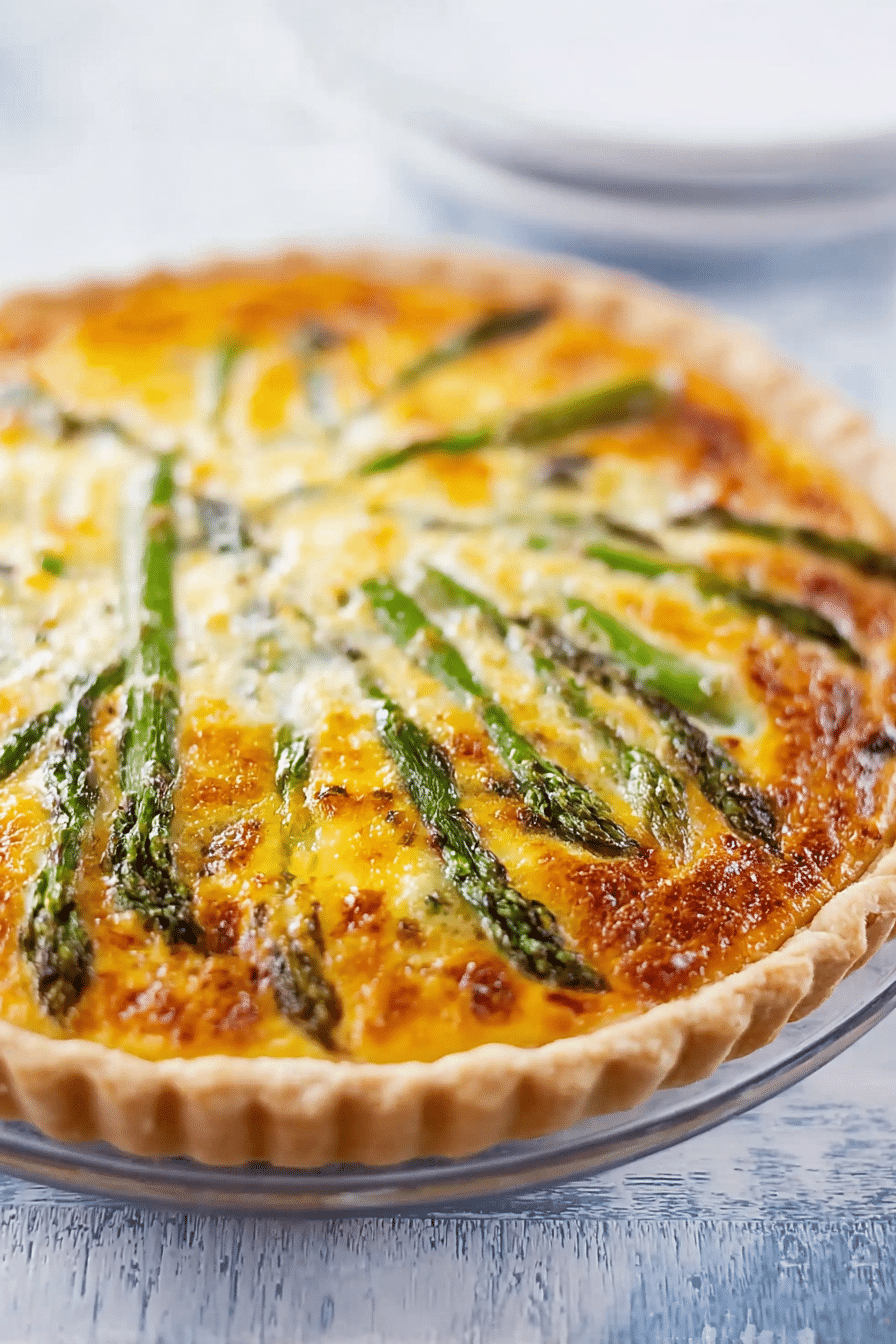
I’ve baked this quiche both ways — in a store-bought deep-dish shell for last-minute company, and in a homemade crust when I want the fluted edge and extra crunch. Over the years I learned that a short par-bake and a little patience while it cools deliver clean slices that look great on a platter. Guests always comment on the bright green asparagus against the pale custard and flecks of white feta.
Because it’s forgiving, you can riff on fillings or make it the night before and reheat. I’ll share the exact baking timelines that work in my oven, tips that prevent a soggy bottom, and a few make-ahead moves so you can focus on guests instead of the oven thermometer when friends arrive.
Why This Asparagus Quiche Is Ideal for Spring Entertaining
This quiche makes the most of spring produce — asparagus is at its sweetest and most fragrant now, and the dish shows it off. The creamy custard is substantial enough for brunch without feeling heavy on a crisp day; the feta adds a tangy counterpoint that lifts every forkful. Visually, the contrast of golden-brown crust, pale custard, and vibrant asparagus is an instant centerpiece, and you can slice it ahead so guests can help themselves.
Sensory notes: the kitchen will smell gently of butter and baked egg as it cooks; the crust should offer a light crunch under a silky filling; and the bright, slightly grassy aroma of roasted asparagus will carry through the room.
Everything You Need for Asparagus Quiche
Below I describe each ingredient and why it matters so you can choose wisely at the market or swap things out to suit guests.
- Asparagus – The star. Choose firm, bright stalks with closed tips. Tender spears work best in a shallow bake; thicker stalks can be blanched or roasted first for even texture.
- Pie crust (homemade or store-bought) – Provides structure and crunch. A deep-dish shell holds more filling and showcases the asparagus; store-bought saves time, homemade gives a flakier edge.
- Feta cheese – Adds salty tang and creamy pockets throughout the custard; a crumbly sheep or sheep-goat blend works beautifully.
- Scallions (or mild onion) – Provide a gentle onion note without overpowering the asparagus; slice thin so they mingle with the custard.
- Eggs – The binding and thickening agent. They create the custard’s structure and that satiny texture we aim for.
- Half-and-half (or a milk-plus-cream mix) – Balances richness and lightness in the custard; choose higher-fat dairy if you want an especially silky result.
- Kosher salt & freshly ground black pepper – Seasoning is crucial; salt highlights the asparagus and feta while pepper adds warmth.
- All-purpose flour (for dusting) – Keeps your dough from sticking while you roll and helps achieve a clean crust edge.
- Substitutions – For a dairy-free version, use a creamy plant milk plus a vegan egg replacer and a tangy dairy-free cheese alternative; for a richer quiche, use heavier cream.
How to Choose and Prep Fresh Asparagus
Choosing and prepping asparagus is simple but makes a big difference in the finished quiche. Here are the steps I follow every time.
- Pick stalks that snap when bent and have vibrant color; avoid any that look limp or woody.
- Trim the woody ends by snapping or cutting where the stalk naturally breaks; the break point is your guide to the tender portion.
- Slice the spears into uniform pieces so they cook evenly in the quiche — I aim for thin rounds that match the depth of my pan.
- For thicker stalks, blanch briefly in salted boiling water then shock in ice water to preserve color and remove some raw bite; drain well before adding to the filling.
- Dairy-free option: swap the feta for a nut-based crumb or marinated tofu to retain texture and tang while keeping the dish plant-based.
The Secret to a Silky Custard Without a Soggy Crust
Making a custard that is lush but not weeping takes attention to ratios, temperature, and technique. These are the methods I rely on to get that satin set every time.
- Use a balanced egg-to-dairy ratio — enough eggs to set the custard but not so many that it becomes rubbery; using part cream or half-and-half gives a silkier mouthfeel.
- Whisk the eggs and dairy gently until combined; avoid whipping air into the mixture, which can create bubbles and an uneven set.
- Par-bake (blind-bake) the crust so the bottom is set before the custard goes in; this seals the dough and prevents sogginess.
- Pour the custard slowly into the shell to avoid disturbing the crust edge; stop an inch below the rim so there’s room for expansion without spills.
- Let the quiche rest for at least 15 minutes after baking — this allows the center to finish setting and makes slicing neater.
Timing & Oven Tips for Deep-Dish Quiche
Oven differences matter far more with deep-dish quiche than with thin tarts. I always check my oven temperature and use a sheet under the pie to catch any overflow. These timing tips are what I use in my oven — adjust a little for yours.
- Preheat fully and use an oven thermometer to verify the actual temperature; many ovens run hot or cool by 10–20°F.
- Par-bake the lined crust until set, then remove weights and bake briefly until the surface just begins to brown — this usually takes several minutes longer than the initial set.
- With a filled deep-dish quiche, bake until the edges are set and the center still jiggles slightly; expect a range around 40–50 minutes depending on depth and oven.
- If the crust browns too quickly, tent loosely with foil for the remainder of the bake so the filling can finish without burning the rim.
- Always cool the quiche on a rack for a short time before slicing to help the custard stabilize.
How to Make Asparagus Quiche (Step-by-Step)
Follow these steps in order; you’ll have maximum control over texture and presentation. You can also explore a different crust and filling for contrast — if you love quiche, you should try our delicious Spinach & Goat Cheese Quiche, which offers a unique sweet potato crust!
- Prepare your crust: roll and fit into a deep-dish pan if using homemade, or place a store-bought deep-dish shell on a baking sheet if using frozen.
- Chill the crust briefly in the refrigerator — this helps keep the fat cold so the edges stay flaky while baking.
- Blind-bake the crust with weights until the bottom is set; remove weights and bake a little longer until the surface shows the first hint of color.
- Trim and slice asparagus to uniform pieces; thin spears can be used raw, thicker ones are best blanched and drained.
- Scatter half the cheese and scallions in the crust, layer the asparagus, then top with the remaining cheese and scallions so the filling is evenly distributed.
- Whisk eggs with half-and-half or your chosen dairy until smooth, season with salt and pepper, then pour slowly into the crust — leave a small gap at the rim.
- Bake on the middle rack until the edges are firm and the center still wobbles slightly; tent with foil if the crust edges brown too fast.
- Rest for at least 15 minutes before slicing. For neat slices, chill briefly after cooling and then cut with a sharp knife.
Pro Tip for Asparagus Quiche: Par‑bake and Chill for Clean Slices
Note: Pro-Tips, Troubleshooting, and Variations are presented as bulleted lists for quick scanning and practical use.
- Par-bake the shell until set, then cool slightly before filling — this is the single best way to avoid a soggy bottom.
- Chill the filled and baked quiche for 20–30 minutes before slicing if you prefer perfectly clean wedges for a buffet or platter.
- Add fresh herbs (tarragon or chives) just before serving to preserve their aroma and color.
- For presentation, lay a few spears across the top of the quiche before baking to create an elegant, structured look.
Troubleshooting
- If the center is still liquid after the edges are set, return to the oven at a slightly lower temperature until it firms (cover the rim if needed).
- If the crust is soggy, increase the par-bake time next time and brush the bottom with an egg wash to seal it before filling.
- If the top browns too quickly, tent the quiche loosely with foil and continue baking until set.
- If slices weep after cooling, allow a longer rest time before cutting; rapid cooling can cause moisture to separate.
Variations
- Swap feta for goat cheese or grated gruyère for a nuttier, meltier profile.
- Add sautéed mushrooms or roasted peppers for an earthier flavor; fold them into the filling so distribution is even.
- Make a crustless quiche by omitting the pastry and baking the custard in a buttered dish for a lighter, gluten-free option.
- For a dairy-free quiche, use a plant-based cream substitute and crumbled marinated tofu in place of cheese.
How to Store, Reheat, and Make-Ahead Asparagus Quiche
Quiche is one of the most hospitable make-ahead dishes — here’s how I handle leftovers and prepping before company arrives.
- To refrigerate: cool completely, then cover tightly with foil or place in an airtight container; it will keep for several days.
- To reheat: warm gently in a 325–350°F oven until heated through; reheating in the oven preserves crust crispness better than the microwave.
- To freeze: wrap cooled slices or the whole quiche tightly in plastic and foil; thaw overnight in the fridge before reheating to avoid sogginess.
- Make-ahead strategy: bake the quiche the day before, chill, and reheat before serving — or bake from chilled at a slightly lower temperature to warm through without overbrowning.
Complementary Side Dishes and Drinks for Asparagus Quiche
A light, acidic salad is my usual companion to this rich quiche; a citrusy vinaigrette or a simple green with a sherry dressing cuts through the creaminess. Consider pairing with a crisp white wine or a bright sparkling water with a twist of lemon for balance. For a complete spring spread, add a warm vegetable or grain salad on the side — try a seasonal orzo or a classic Caesar for contrast.
Complement your quiche with a refreshing Spring Orzo Salad that perfectly enhances the seasonal flavors.
A classic homemade Caesar salad pairs beautifully with this asparagus quiche for a complete meal.
Consider serving Sheet Pan Roasted Veggie Tacos alongside your quiche for a vibrant and healthy side dish.
Frequently Asked Questions
Can I use a store-bought pie crust for this asparagus quiche?
Absolutely! You can simplify the process by using a store-bought deep-dish pie crust and bake it according to the package directions.
What are some tips for selecting fresh asparagus?
Look for bright green stalks with firm, closed tips. Thinner stalks are often more tender, while thicker ones have a stronger flavor.
How can I achieve a silky custard without a soggy crust?
Make sure to par-bake your crust before adding the filling, and use half-and-half or equal parts whole milk and heavy cream for a rich custard.
Is it possible to make asparagus quiche ahead of time?
Yes! You can prepare the quiche in advance and store it in the refrigerator. Just reheat it in the oven before serving for the best flavor and texture.
What are some good side dishes or drinks to serve with asparagus quiche?
Consider pairing your quiche with a light salad, roasted vegetables, or a refreshing white wine or sparkling water for a delightful meal.
Asparagus Quiche
Ingredients
Equipment
Method
- Option 2: For homemade pie dough, roll out dough into a 12 to 13-inch round and fit it into a 9 to 9 1/2-inch deep-dish pie plate, crimping the edges as desired.
- Chill the crust for 20 minutes and preheat the oven to 375ºF.
- Par bake the crust by placing it on a baking sheet, lining with foil and weights, baking for 20 minutes, removing weights, then baking for 10 additional minutes.
- Prepare the filling: Snap the tough ends off asparagus and cut into 1/4-inch pieces. Slice scallions and crumble feta cheese.
- Prepare the custard by whisking eggs, half-and-half, salt, and pepper in a bowl.
- Fill the pie crust with half the feta and scallions, then add asparagus, topping with remaining feta and scallions, and pouring the custard until just below the top.
- Bake the quiche for 40 to 45 minutes or until set at the edges but jiggles in the center. Let cool for at least 15 minutes before serving.