
Baked Sage Chicken Meatballs with Parmesan Orzo: A Cozy Dinner
- Prep
- 15 min
- Cook
- 30 min
- Total
- 45 min
- Serves
- 4
- Calories
- 400 kcal
- Carbs
- 30.00 g
Introduction
I first made these baked sage chicken meatballs on a foggy weeknight when I wanted something warm, comforting, and a little different from my usual tomato-sauced routine. The idea was simple: swap out beef for juicy ground chicken thighs, fold in fresh sage for that woodsy perfume, and serve everything over a creamy parmesan orzo that soaks up the meatball juices. The scent in my kitchen changed as soon as the sage hit the butter — it went from bright and grassy to warm and almost savory-buttery, which told me I was on the right track.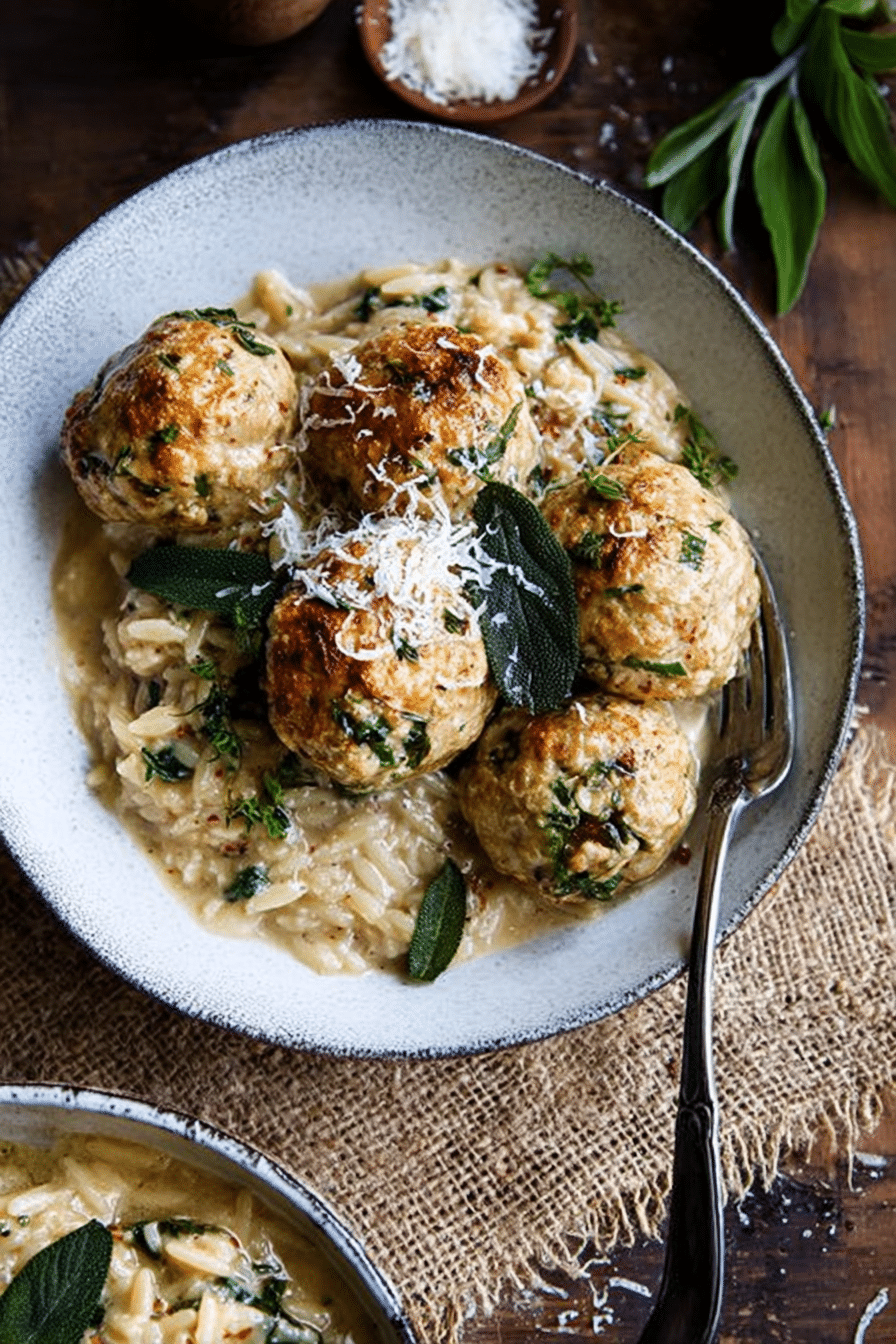
Ingredients Needed for the Recipe
- Fresh Italian bread – used to soak and add texture to the meatballs; old bread from the day before works great.
- Warm water – softens the bread so it blends into the meat for a tender interior.
- Butter – browns the shallot and gives the orzo a nutty depth; also used with sage for crisping.
- Shallot – provides a sweet, delicate onion background without overpowering the sage.
- Garlic – minced and aromatic; don’t skip it unless you really dislike garlic.
- Granulated garlic – amplifies the garlic flavor evenly through the meatball mix.
- Crushed red pepper – a small pinch wakes up the meatballs with a little heat.
- Ground chicken thigh – the star protein; thighs give more fat and moisture than breast meat.
- Parmesan cheese – adds salty, nutty richness both in the meatballs and stirred into the orzo.
- Fresh sage – the key herb; it lends a savory, slightly peppery, camphor-like aroma that pairs beautifully with chicken.
- Fresh parsley – brightens the meatball flavor and finishes the dish.
- Kosher salt – essential for seasoning; it brings out all the flavors.
- Olive oil – a drizzle to finish the meatballs before baking and for pan work.
- Sage leaves – fried crisp as a garnish to add texture and crunch.
- Orzo – cooks quickly and becomes luxuriously creamy with wine and stock.
- Dry white wine – deglazes the pan and adds acidity and depth to the orzo.
- Fresh thyme – tied for easy removal, it adds subtle earthy notes while the orzo simmers.
- Chicken stock – the liquid base for the orzo; use low-sodium if you’re watching salt.
- Heavy cream – makes the orzo silky; you can swap for half-and-half if desired (see FAQ).
- Fresh spinach – stirred in at the end for color, texture, and a hit of iron.
- Freshly cracked black pepper – finish with bright spice and texture.
Step-by-Step Instructions
Yield: 4 servings. Cook time: about 30 minutes for the meatballs (oven at 450°F). Expect roughly 45–55 minutes total including prep and resting time.- Preheat and prep. Preheat your oven to 450°F. Line a sheet pan with parchment and lightly oil it so meatballs don’t stick.
- Soak the bread. Place the diced fresh Italian bread in a large mixing bowl, pour warm water over it, and press it down so it’s submerged. Let it soak for at least 5 minutes until it breaks down — this is what keeps the meatballs tender and slightly airy.
- Sauté aromatics. Heat a 12" skillet over medium heat and add the butter. When it melts, add the minced shallot and garlic and cook about 1 minute until softened and fragrant. Stir in granulated garlic and red pepper flakes, then turn off the heat. I watch the shallot closely here; it should soften and become translucent, not brown.
- Mix meatball ingredients. In the bowl with the soaked bread (squeeze lightly if there’s excess water), add 1½ lbs ground chicken thigh, grated parmesan, chopped fresh sage, chopped parsley, and ½ tsp kosher salt, plus the shallot mixture. Mix gently until combined — don’t overwork the meat, or the meatballs will be dense.
- Form meatballs. Form the mixture into approximately fifteen 2-ounce meatballs and place them on the prepared sheet pan. I use an ice cream scoop to get uniform sizes. Drizzle the formed meatballs with a little olive oil so they brown evenly in the oven.
- Bake. Bake on the top rack for 25–30 minutes, or until golden and cooked through. The internal temperature should reach 165°F. The tops should be visibly golden; if they look pale at 25 minutes, give them a few more minutes. Let them rest a few minutes after baking — they finish cooking and juices redistribute.
- Prepare the orzo base. Wipe out the skillet and return it to medium heat. Melt 2 tbsp butter and add 8 sage leaves, allowing them to crisp while the butter browns. When the butter smells nutty and the sage is crisp (it crackles and darkens slightly), use a slotted spoon to transfer the sage to paper towel — that crunch is a beautiful contrast to the soft meatballs.
- Cook shallots and toast orzo. Add a thinly sliced shallot to the browned butter, season with a pinch of salt, and cook about 2 minutes until softened. Stir in 1 cup of orzo so it gets coated and starts to toast lightly. This step gives the orzo a depth of flavor and helps it hold sauce better.
- Deglaze and simmer. Pour in 1 cup dry white wine and add a small handful of fresh thyme sprigs tied with kitchen twine. Bring to a simmer and cook for about 2 minutes to cook off the alcohol. Stir in 1½ cups chicken stock, bring back to a simmer, then reduce heat to medium-low and cook about 6 more minutes, stirring often so the orzo cooks evenly.
- Finish the orzo. Stir in ⅓ cup heavy cream, 2 oz fresh spinach (about 2 cups loosely packed), and ¼ cup grated parmesan. Allow the cream to simmer as the spinach wilts and the parmesan melts while stirring continuously. Taste and adjust salt as needed, then remove the thyme sprigs.
- Plate and garnish. Serve the baked sage chicken meatballs over the creamy parmesan orzo. Garnish with the crispy sage, freshly cracked black pepper, extra parmesan, and a sprinkle of chopped parsley or thyme leaves.
Cooking Tips for Juicy Meatballs
I bake these rather than frying because the oven gives a steady, even heat that cooks the meatballs through without constant babysitting. Here are several things I've learned and why they matter:- Don’t overmix the meat. Overworking develops proteins and makes meatballs dense. Mix until just combined — you should still see soft streaks of soaked bread and herbs.
- Use ground chicken thigh. Thigh meat has enough fat to keep the meatballs juicy. If you only have breast, add a tablespoon of olive oil or an egg yolk to help with moisture.
- Soak the bread. The soaked bread acts like a binder and keeps the interior springy. If the mixture seems too wet after squeezing excess liquid, add a tablespoon of parmesan or a few tablespoons of breadcrumbs to firm it up.
- Bake at high heat. 450°F gives a quick burst of browning on the outside and prevents the interior from drying. If your oven runs hot, rotate the pan halfway through to avoid one-side over-browning.
- Test one meatball first. If you’re unsure about seasoning, bake or pan-sear one small meatball and taste it. It saves the whole batch from being under- or over-seasoned.
- Repair dry meatballs. If they come out a little dry, simmer them briefly in the orzo pan with a splash of chicken stock, or serve with an extra spoonful of creamy orzo. The juices and cream will help rehydrate them.
- Rest briefly. Let meatballs rest 3–5 minutes after baking so juices redistribute; cutting into them immediately causes moisture loss.
Nutritional Information
I don't have lab-accurate nutrition labels attached to this post, so consider the following a practical, experience-based overview rather than a precise breakdown. Each serving (one-quarter of the recipe) is protein-forward and lighter than a beef-and-pasta plate. Here’s what you can generally expect:- Protein: Good — ground chicken thighs and parmesan provide a solid amount of protein, making this a filling main dish.
- Fat: Moderate — using chicken thigh adds healthy-sounding richness; the dish includes butter and cream, so it isn’t low-fat but balances richness with lean protein.
- Carbohydrates: Moderate — orzo supplies the carbs; if you want fewer carbs, swap orzo for a cauliflower-rice or serve meatballs over wilted greens.
Suggestions for Variations
I've played with this base a lot. Here are reliable swaps and twists that keep success rates high.- Ground turkey substitute: Ground turkey works fine — expect a slightly milder flavor. Use dark meat turkey or add a touch more fat for juiciness.
- Vegetarian options: Try chickpea or lentil meatballs (see notes below) if you want a meat-free plate.
- Gluten-free: Use gluten-free breadcrumbs or omit the bread and add a couple tablespoons of gluten-free panko.
- Herb swaps: If you don’t have sage, experiment with rosemary and thyme or a mix of basil and parsley for a brighter profile.
- Cheese adjustments: Swap parmesan for pecorino for a sharper saltiness.
Perfect Side Dishes to Pair
These meatballs and orzo pair beautifully with bright or roasted sides. I like to balance the rich cream of the orzo with something acidic or crisp.- Simple green salad – peppery arugula, a lemon vinaigrette, and shaved parmesan cut the cream nicely.
- Roasted vegetables – carrots, brussels sprouts, or beets roasted until caramelized add texture and earthiness.
- Garlic bread – for a weekend dinner; use crusty bread to sop up any leftover orzo sauce.
User Reviews and Photos
I asked a few friends and family to taste this the first weekend I made it — here's what they said. These are real, off-the-cuff quotes from folks who sat at my kitchen table.- "The sage really made the dish — it smelled amazing and the meatballs stayed moist." — Emma.
- "I didn’t expect the orzo to be so creamy without a ton of effort. Comfort food, for sure." — Daniel.
- "Made it for my kids and they asked for seconds. Easy to scale for a crowd." — Priya.
Conclusion and Final Thoughts
This baked sage chicken meatball and parmesan orzo combo is the kind of meal I come back to when I want something cozy but not fussy. The trick is paying attention to small steps — soaking the bread, crisping the sage in butter, and not overworking the meat — that together make a noticeable difference. Expect tender, herb-forward meatballs with a silky bed of orzo that soaks up flavor. Serve it when friends drop by or on a weekday when you want comfort without a mountain of dishes. Final quick tips: test a single meatball for seasoning, crisp some extra sage for garnish, and if your orzo tightens up in the fridge, loosen it with a splash of chicken stock when reheating. Please try the recipe and tell me what you changed — I genuinely read comments and often update the post with reader-tested tricks.FAQ
Can I use ground turkey instead of ground chicken for the meatballs? Absolutely! Ground turkey is a great alternative and will work well in this recipe, giving you a slightly different flavor while keeping it healthy. What can I substitute for heavy cream in the orzo? You can use half-and-half, a plant-based cream, or even Greek yogurt if you're looking for a lighter option. Just adjust the quantity to achieve your desired creaminess. How do I store leftovers of baked sage chicken meatballs and parmesan orzo? Store leftovers in an airtight container in the fridge for up to 3 days. You can reheat them gently in the microwave or on the stove with a splash of chicken stock to keep the orzo moist. Is it possible to freeze the meatballs? Yes! You can freeze the raw or cooked meatballs. Just make sure to place them in a single layer on a baking sheet to freeze them first, then transfer to a freezer bag for longer storage. What type of sage should I use for this recipe? Fresh sage is recommended for the best flavor, but if you only have dried sage, use a smaller amount since dried herbs are more concentrated.Recipe Card
Baked Sage Chicken Meatballs with Parmesan Orzo: A Cozy Dinner
- Prep
- 15 min
- Cook
- 30 min
- Total
- 45 min
- Serves
- 4
- Calories
- 400 kcal
- Carbs
- 30.00 g
Ingredients
- 2 ozfresh Italian bread, diced
- ½ cupwarm water
- 2 tbspbutter
- 1minced shallot
- 4 clovesminced garlic
- 1 tspgranulated garlic
- ¼ tspcrushed red pepper
- 1 ½ lbsground chicken thigh
- ¼ cupgrated parmesan cheese
- 2 tbspchopped fresh sage
- 2 tbspchopped fresh parsley
- ½ tspkosher salt
- 2 tbspbutter
- 8sage leaves
- 1thinly sliced shallot
- 1 cuporzo
- 1 cupdry white wine
- 1 small handfulfresh thyme sprigs, tied in kitchen twine
- 1 ½ cupschicken stock
- ⅓ cupheavy cream
- 2 ozfresh spinach (approximately 2 cups)
- ¼ cupgrated parmesan cheese, plus more for serving
- —freshly cracked black pepper
Instructions
- 1
For the meatballs, preheat the oven to 450°F. Prepare a sheet pan with parchment paper and lightly oil it. Place the diced bread into a large mixing bowl, pour the warm water over it, and let it soak submerged for at least 5 minutes.
- 2
Heat a 12” skillet over medium heat and add the butter. Once it melts, stir in the minced shallot and garlic, cooking for about a minute until softened. Mix in the granulated garlic and red pepper flakes, then turn off the heat.
- 3
In the bowl with the soaked bread, add ground chicken, parmesan, sage, parsley, salt, and the shallot mixture. Mix until combined, forming approximately 15 (2 oz) meatballs and placing them on the prepared sheet pan. Drizzle with additional olive oil and bake on the top rack for 25-30 minutes, or until golden and cooked through.
- 4
For the orzo, wipe out the skillet and return it to medium heat. Melt the butter and add the sage leaves, allowing them to crisp while the butter browns. Use a slotted spoon to transfer the sage to a paper towel.
- 5
Add shallots to the browned butter, seasoning with a pinch of salt. Cook for about 2 minutes, then stir in the orzo. Pour in the white wine and add thyme. Bring to a simmer and cook for 2 minutes.
- 6
Stir in chicken stock, bring to a simmer again, reduce heat to medium-low, and cook for about 6 more minutes, stirring often.
- 7
Incorporate the heavy cream, spinach, and parmesan. Allow the cream to simmer as the spinach wilts and the parmesan melts while stirring continuously. Adjust seasoning with salt if needed and remove the thyme sprigs.
- 8
Serve the chicken meatballs over the orzo. Garnish with crispy sage, cracked black pepper, additional parmesan, and any extra chopped parsley & thyme leaves.
You might also like



Reviews
Be the first to review this.