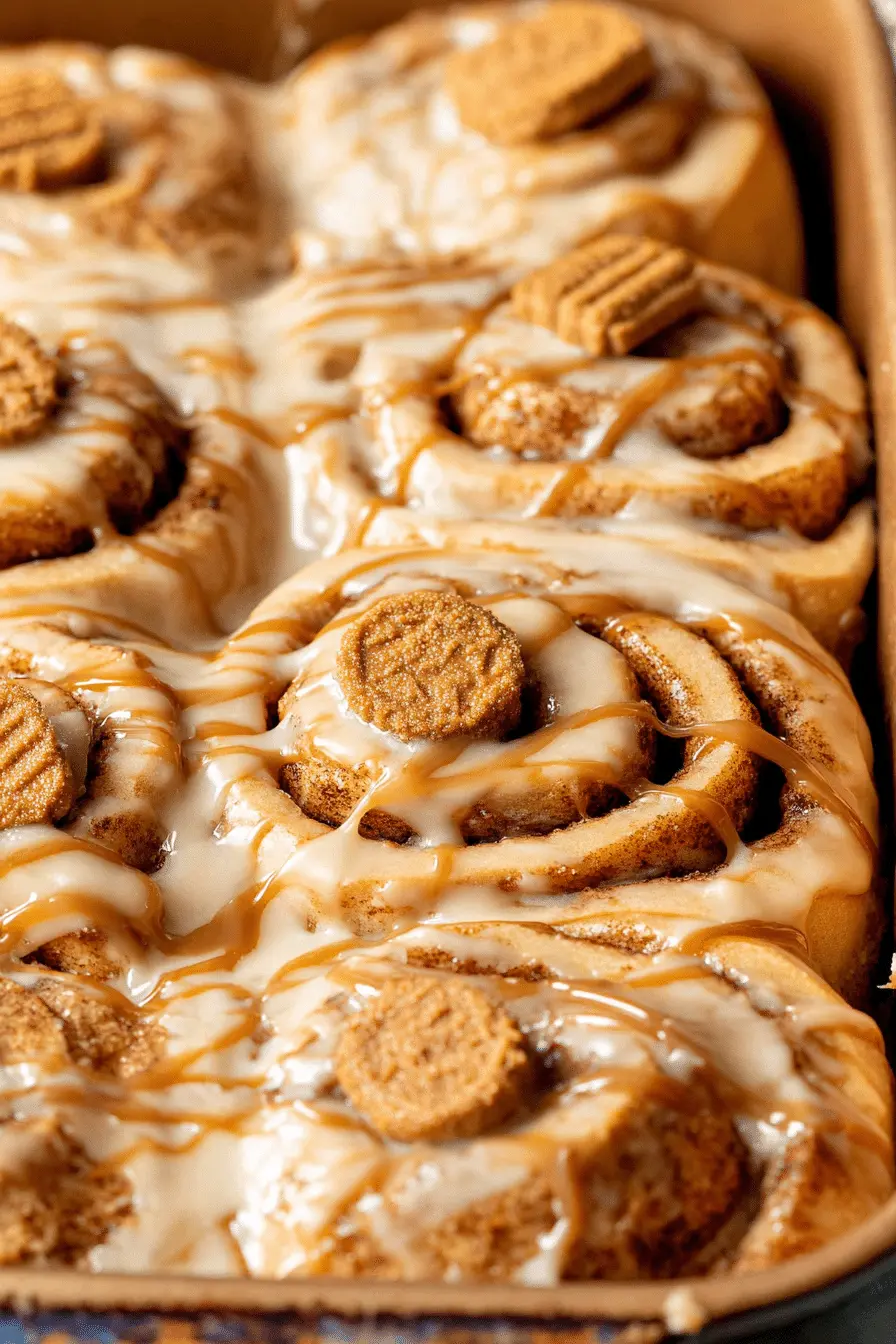
The Biscoff Cinnamon Rolls I Make Every Weekend — Vegan & Easy
- Prep
- 25 min
- Cook
- 20 min
- Total
- 55 min
- Serves
- 8
- Calories
- 505 kcal
- Protein
- 4.00 g
Introduction
I remember the first time I made these Biscoff cinnamon rolls in my tiny kitchen: the dough was a little too sticky, the oven a touch too cool, and yet the house smelled like the best bakery on the block. After a few batches and one stubbornly dense tray, I learned the small tricks that turn this into one of my favorite, reliably fluffy vegan bakes.
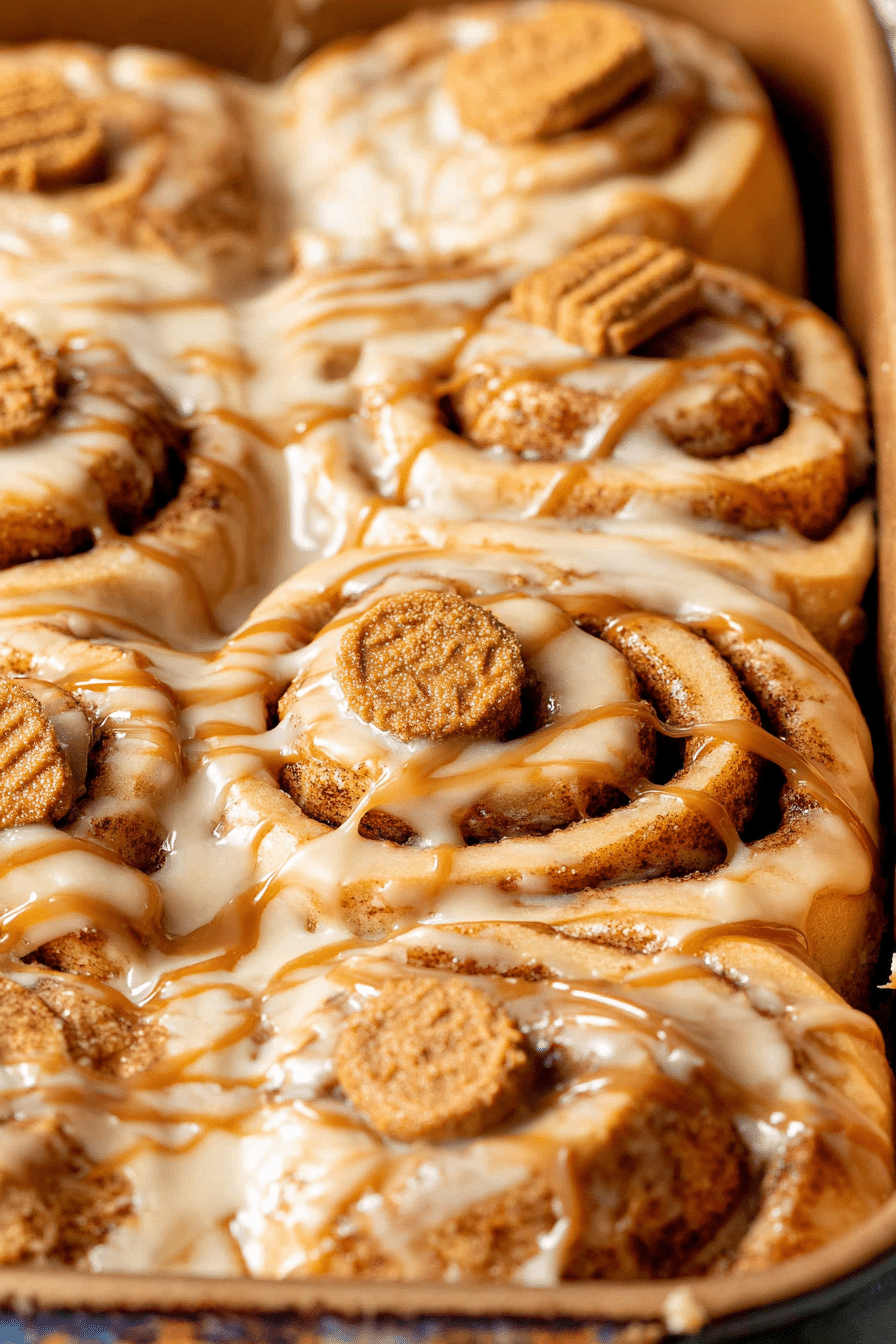
These rolls use Biscoff cookie butter so the cinnamon-sugar swirl becomes instantly irresistible — no complicated infusions or multiple fillings required. What I love most is how forgiving the recipe can be when you follow a couple of temperature and kneading rules I picked up along the way.
Read on and I’ll walk you through everything you need, the techniques that make the dough soft and pillowy, and the quick fixes I rely on when a batch needs rescuing. If you like hands-on baking that still fits into a busy morning, these are the rolls I make when I want something special without fuss.
Everything You Need for Biscoff Cinnamon Rolls
- Biscoff cookie butter – The signature flavor: it melts into the filling for that caramelized, spiced cookie taste you want in every bite. If you don’t have it, a smooth nut or seed butter mixed with crushed speculoos-style cookies works.
- Dairy-free milk – Helps activate the yeast and hydrates the dough. Warm (not hot) liquid wakes the yeast and gives a tender crumb.
- Active dry yeast – The lift agent that creates the soft, airy texture. Fresh, active yeast gives the best spring during proofing.
- Flour – Provides structure. For gluten-free options, use a high-quality gluten-free flour blend formulated for yeast breads and add a binder if needed.
- Vegan butter – Adds richness to both dough and swirl; use a spreadable variety for the filling and a firmer one for the dough if possible.
- Brown sugar & cinnamon – The classic duo for the filling; brown sugar adds moisture and that caramel flavor that pairs perfectly with cookie butter.
- Vegan cream cheese & powdered sugar – For the icing; cookie butter stirred into the cream cheese makes the glaze extra decadent.
- Crushed Biscoff cookies – Optional crunch and garnish that contrast the gooey filling.
- Substitution notes – For nut-free needs, choose seed-based butters and ensure your dairy-free milk is nut-free. For gluten-free versions, be prepared for slightly different rise and texture; read your flour blend’s directions and consider adding a little extra time for proofing.
The Secret to Soft, Fluffy Vegan Dough
- Activate the yeast properly: stir yeast into warm (hand-warm) milk with a little sugar and wait until it gets frothy — that’s your green light. If it doesn’t foam, your yeast may be past its prime.
- Kneading builds the dough’s network: work the dough until it's smooth and elastic. I usually knead until the dough springs back and feels slightly tacky, not dry or cracked.
- Don’t over-flour: adding too much flour while kneading will tighten the dough and create dense rolls. Use just enough to keep the dough manageable.
- Two rises matter: the first rise gives volume and flavor, the second sets the roll shape and lightness. I aim for a noticeable but not collapsed expansion between rises.
- Visual cues over strict timing: the dough should double and feel pillowy. If your kitchen is cool, expect the rise to take longer; a warm, draft-free spot will speed it up.
Why Temperature Matters for the Rise
- Yeast works best in a narrow temperature band: too cold and it sleeps, too hot and it dies. Aim for a comfortably warm environment so yeast can feed and create gas steadily.
- Overproofing vs underproofing: too long and the dough can collapse and taste overly yeasty; too short and the crumb will be tight and dense. Watch the dough more than the clock.
- Simple warm environments: I often set the bowl near a slightly warm oven or on top of the fridge. You can also use a warm water bath under a covered bowl to keep temperatures even.
How to Make Biscoff Cinnamon Rolls (Step-by-Step)
- Activate the yeast by mixing warm dairy-free milk with a pinch of sugar and the yeast; let it sit until foamy. This confirms your yeast is active.
- Mix dry ingredients in a large bowl, create a well, then add the yeast mixture, melted vegan butter, and vanilla. Stir until a shaggy dough forms.
- Turn the dough onto a lightly floured surface and knead until smooth and elastic. The dough should be slightly tacky but not sticky; adjust with small dustings of flour only if needed.
- Cover the dough and let it rise in a warm place until doubled. The time varies — use the doubled-size visual cue rather than relying on an exact number of minutes.
- Roll the dough into a rectangle and spread the filling (melted cookie butter mixed with softened vegan butter, brown sugar, cinnamon, and a splash of vanilla) leaving a small border. Sprinkle crushed Biscoff cookies for texture.
- Tightly roll the rectangle into a log and slice into even rolls. Place them into a baking dish, cover, and let rise again until puffy.
- Bake until golden, then let cool briefly before topping with a cream cheese cookie-butter glaze and extra crushed cookies if you like.
If you're a fan of cinnamon rolls, you might also want to try our sourdough cinnamon rolls for a delightful twist!
Quick Troubleshooting: Sticky, Dense, or Flat Rolls
- If the dough is too sticky: I sometimes let the dough rest for 10 minutes — hydration evens out and it becomes easier to handle. Add only tiny amounts of flour while kneading if absolutely necessary.
- If the rolls are dense: check your proofing times. I’ve fixed dense bakes by giving the dough more time in a slightly warmer spot; also avoid packing the rolls tightly into the pan.
- If the rolls collapse or are flat: you may have overproofed or the oven temperature was too low. I tap the dough gently — it should spring back slowly, not deflate.
- If your oven browns unevenly: rotate the pan halfway through baking for a consistent crust and color.
For a fun variation on cinnamon flavor, check out our fluffy cinnamon sugar donut muffins that are sure to please!
Pro Tip for Biscoff Cinnamon Rolls: Speed Up Proofing Without Losing Flavor
- Warm oven method: preheat oven to a low temperature for a minute, turn it off, then place the covered dough inside to proof — I use this when I need to shave 20–30 minutes off the clock.
- Warm water bath: set the bowl on top of a larger bowl filled with warm (not hot) water to create gentle warmth without drying the dough’s surface.
- Avoid overheating: if yeast gets too hot it loses activity and the dough won’t rise; always check with your hand — it should feel comfortably warm, not hot.
How to Store, Reheat, Freeze & Easy Variations to Try
- Storage: keep cooled rolls in an airtight container at room temperature for a day or two, or refrigerate for up to a week to maintain freshness.
- Reheating: warm individual rolls in the microwave briefly or in a low oven until just heated through to restore that soft, gooey texture.
- Freezing: freeze unbaked, cut rolls on a tray until solid, then transfer to a freezer-safe bag. When ready to bake, thaw and allow a slightly longer second rise before baking.
- Variations: try swapping crushed ginger snaps for the Biscoff cookies, adding a thin layer of apple butter under the cookie-butter swirl, or stirring citrus zest into the glaze for a bright finish.
Explore more sweet variations like our lemon blueberry sweet rolls, perfect for storing and serving later!
Frequently Asked Questions
Can I make these Biscoff cinnamon rolls vegan?
Absolutely! This recipe is designed to be vegan, using dairy-free milk and vegan butter. Enjoy these rolls without any animal products!
What can I use instead of Biscoff cookie butter?
If you don't have Biscoff cookie butter, you can try using other nut butters or a homemade spread made with crushed cookies and a little oil or dairy-free milk for consistency.
How do I know when the dough has risen enough?
The dough is ready when it has doubled in size, which usually takes about an hour and a half in a warm place. Look for a fluffy texture and a significant volume increase rather than relying only on the clock.
Can I freeze the cinnamon rolls?
Yes! You can freeze the unbaked rolls after cutting them. Just place them in a freezer-safe container, and when you’re ready to bake, let them rise for a bit longer before baking.
What should I do if my cinnamon rolls turn out dense?
If your rolls are dense, it could be due to insufficient rising time or too much flour. Make sure to measure ingredients accurately and allow the dough plenty of time to rise; a slightly warmer proofing environment often helps.
Recipe Card
The Biscoff Cinnamon Rolls I Make Every Weekend — Vegan & Easy
- Prep
- 25 min
- Cook
- 20 min
- Total
- 55 min
- Serves
- 8
- Calories
- 505 kcal
- Protein
- 4.00 g
Ingredients
- 1 cupdairy-free milk (warm but not hot to the touch)
- ¼ cuplight brown sugar (divided)
- 2 ¼ tspactive dry yeast
- 3 cupsall-purpose flour
- 1 tspground cinnamon
- ½ tspsalt
- 3 tbspvegan butter (melted)
- 1 tspvanilla extract
- ½ cuplight brown sugar (loosely packed)
- 1 tbspground cinnamon
- 3 tbspsoftened vegan butter
- ¼ cupmelted Biscoff Cookie Butter
- 5-6crushed Biscoff cookies
- 1 tspvanilla extract (optional)
- 2 tbspvegan cream cheese (softened slightly)
- 1 cuppowdered sugar
- 2 tbspmelted Biscoff cookie butter
- 1-2 tspdairy-free milk (as needed)
Instructions
- 1
Mix the warm dairy-free milk and half of the brown sugar together. Sprinkle in the active dry yeast, give it a quick stir, and let sit for 10 minutes until frothy.
- 2
In a large bowl, mix together the flour, the other half of the brown sugar, salt, and cinnamon. Make a well in the center and add the yeast mixture, vanilla, and melted vegan butter. The dough should come together into a ball and might be slightly sticky to the touch.
- 3
Transfer the dough to a lightly floured surface and knead for 8-10 minutes. Sprinkle an additional tablespoon of flour onto the dough as you knead until the dough is soft and no longer sticky.
- 4
Cover with a damp tea towel and let rise in a warm place for 1 ½ hours until doubled in size.
- 5
Once the dough has doubled in size, transfer the dough and shape it into a ball. Then, flatten it into a 6-inch diameter disk. Roll out into a 12” by 7” long rectangle. The dough should be around 1/4” thick.
- 6
Prepare the filling by combining the melted cookie butter, softened butter, brown sugar, cinnamon, and vanilla in a small bowl. Spread the filling on the dough leaving a ½" border on all the edges. Sprinkle the crushed Biscoff cookies on top.
- 7
Roll the dough into a log and cut into 1 ½" thick rolls. Place the rolls in the prepared baking dish. Cover the rolls with a damp cloth and let them rise for 20-30 minutes or until 1.5 in size.
- 8
Preheat the oven to 375°F while the rolls rise for a second time. Bake for 20-23 minutes or until golden brown.
- 9
While the rolls are baking, stir together the ingredients for the vegan cookie butter cream cheese icing in a small bowl. The mixture should be able to drizzle smoothly off a fork or spoon. If the icing looks thick, add up to 2 more teaspoons of dairy-free milk. If the mixture looks runny, add 1-2 tablespoons of powdered sugar at a time until you reach the desired consistency.
- 10
Let the buns cool slightly before spreading the frosting on top. You can also drizzle melted cookie butter on top and decorate with crushed Biscoff cookies.
You might also like



Reviews
Be the first to review this.