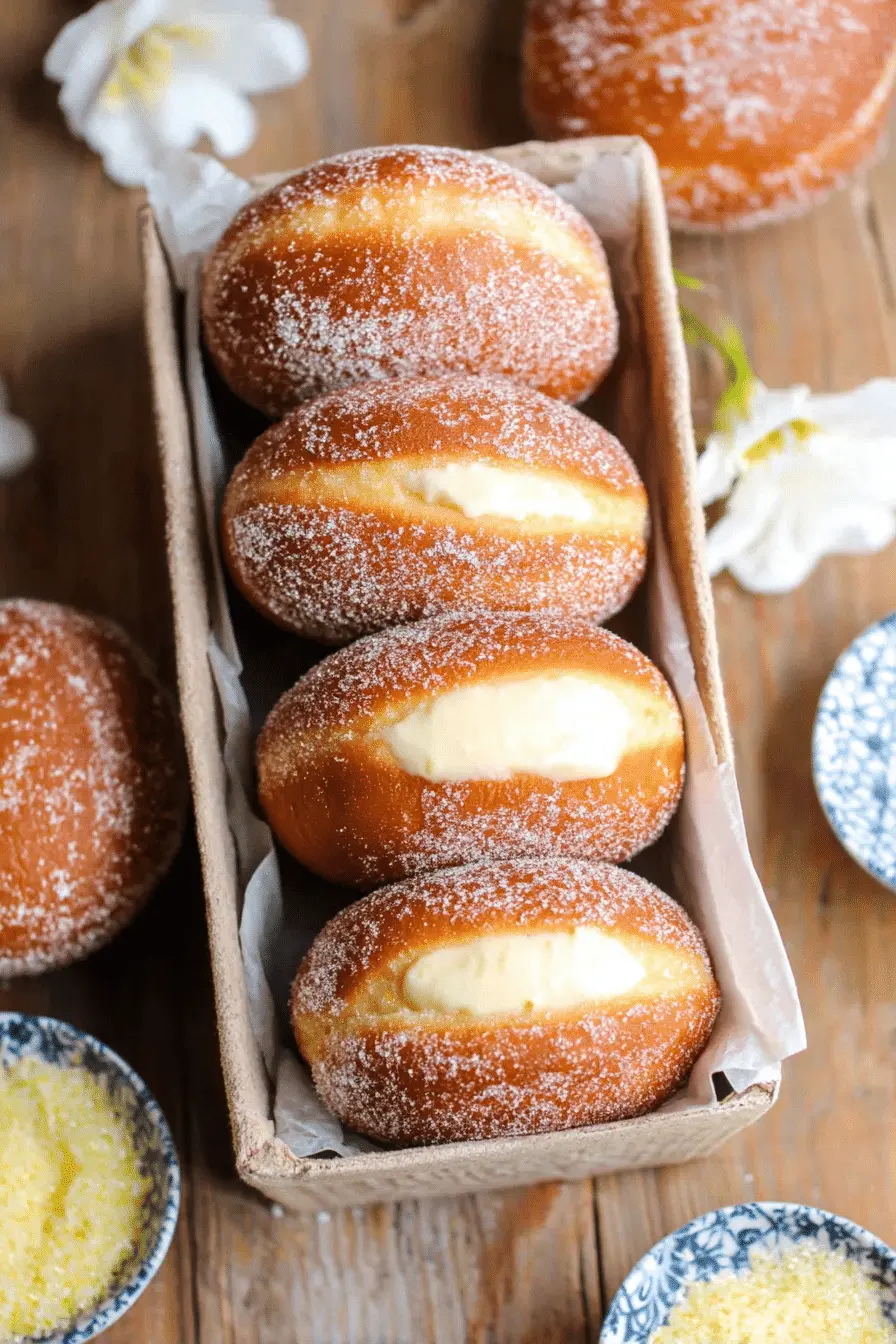
Delightful Bomboloni Italian Doughnuts: Make Your Own Luscious Treats
- Prep
- 180 min
- Cook
- 60 min
- Total
- 240 min
- Serves
- 12
- Calories
- 424 kcal
Introduction
I first fell in love with bomboloni on a rainy afternoon in Florence, standing at the counter of a tiny pasticceria while the baker handed me a warm, sugar-dusted round filled with thick, vanilla-scented pastry cream. It was still slightly warm from the fryer; when I bit into it, the shell was pillowy and soft, the sugar crackled gently against the outside, and the cream was rich and custardy without being cloying. That memory is what pushed me into the kitchen to reproduce them — many times — until this version felt right.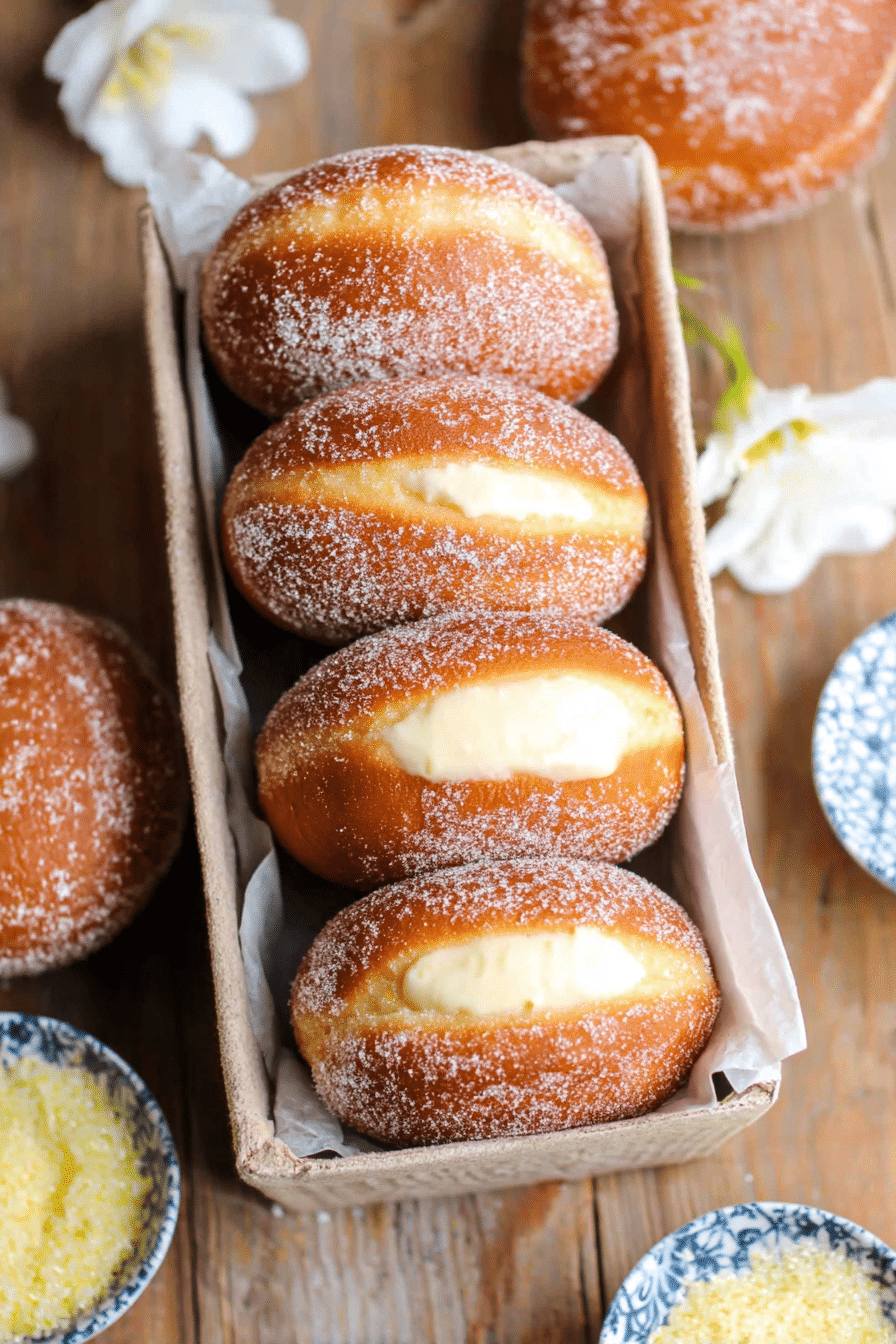
Ingredients for Perfect Bomboloni
Below are the ingredients to have on hand; I list them conversationally so you know what matters and why. If you want a more classic, measured ingredient list, scroll down to the step-by-step directions where I follow a tested ratio for about 10–12 large doughnuts.- Strong bread flour – gives the dough structure and chew; you want some gluten so the dough holds air without collapsing.
- 00 flour or all-purpose flour – softens the crumb and balances the bread flour; 00 is traditional in Italy if you can find it.
- Eggs – enrich the dough, add color and tenderness; use room-temperature eggs so they incorporate evenly.
- Butter – adds richness and keeps the crumb tender; softened, not melted, so it blends into the dough smoothly.
- Sugar – sweetens the dough and feeds the yeast slightly; additional caster or confectioners sugar is used to roll the finished bomboloni.
- Milk – lukewarm milk is part of the dough and helps create a soft, enriched texture; hot milk is used later for the pastry cream.
- Yeast – fast action or active dry yeast will work; check your packet instructions and activate if needed.
- Vanilla (paste or extract) – brings aromatic warmth to both dough and cream; a little goes a long way.
- Salt – that pinch balances the sweetness and strengthens gluten slightly.
- Sunflower or vegetable oil – neutral frying oil with a high smoke point; olive oil is too flavorful for frying these.
- Cornstarch – for the pastry cream to stabilize and thicken without grit.
- Egg yolks – enrich the pastry cream, giving it a silky texture and golden color.
- Lemon zest – optional but classic in crema pasticciera for a bright, clean lift.
Step-by-Step Instructions
Below is the method I use every time I make bomboloni. I’ve tested this over many batches, and the timing reflects realistic proofing and frying times. Read each step fully before you start — that’s where mistakes get avoided.- Check your yeast. If your packet says it needs activation, proof it in a little lukewarm milk (not hot — about body temperature) with a pinch of sugar. If it bubbles gently after 5–10 minutes, it’s alive. I once ignored this step and ended up with flat dough after a whole morning of waiting — don’t skip it.
- In the bowl of a stand mixer, combine the flours, sugar, and the active or instant yeast. Scatter softened butter cubes across the flour, then add the eggs, lukewarm milk, vanilla, and a small pinch of salt. Start kneading with the dough hook at low speed. Tip: if your kitchen is cold, the dough will be sluggish. I keep my mixer bowl on top of a warm (not hot) oven for a few minutes to give the dough a head start.
- Knead at low speed for about 10 minutes. You want the dough to be smooth, elastic, and slightly tacky but not sticky. The windowpane test works here: pull a small piece and see if a thin membrane forms without tearing. If the dough rips immediately, it needs more kneading. If it’s very sticky, add a tablespoon of flour at a time — too much flour will make the dough dense.
- Shape the dough into a smooth ball, place it in a lightly greased bowl, cover with plastic wrap, and let it prove in a warm spot until tripled in size — about 2–3 hours depending on the temperature. I often put mine in the oven with the light on for a gently warmed environment. You’ll know it’s ready when you press gently and the indent springs back slowly, not quickly.
- After the first rise, knock the air out gently, roll the dough to about 1.5 cm (½ inch) thickness, and cut rounds about 3.5 inches in diameter. Place them on parchment-lined trays and cover loosely — they need another 1–1.5 hours to puff up. Don’t let them over-proof or they’ll deflate in the oil.
- While they proof, make the crema pasticciera. Whisk egg yolks with sugar, vanilla, and lemon zest until combined. Stir in cornstarch, then temper in hot milk slowly while whisking constantly to avoid scrambled eggs. Return the mixture to the saucepan and cook gently until thick and glossy, about 10–15 minutes. Watch the texture: it should coat the back of a spoon and move slowly when you tilt the pan. Always cover the pastry cream with plastic wrap touching the surface to prevent a skin. Chill until firm enough to pipe.
- Heat a deep pan of neutral oil to about 170°C / 337°F. If you don’t have a thermometer, test with a small scrap of dough — it should sizzle and brown evenly in about 1-2 minutes. Too hot and the outside will darken before the center cooks; too cool and the dough soaks up oil.
- To fry, cut the parchment into squares and set each dough round on a square — this makes it easy to lower them into the oil and slide the paper away with tongs right after. Fry in batches: 2 minutes on the first side, then flip and fry another 2 minutes. Drain briefly on paper towels, then roll in caster or granulated sugar while still warm so the sugar adheres.
- When cool enough to handle, create a small opening on the side with a small knife and pipe the chilled pastry cream into each bombolone. You don’t need to overfill — push the nozzle in about an inch and squeeze until you feel resistance.
- Serve immediately for the best texture. Bomboloni are at their peak when the shell is still slightly warm and the cream is cool and silky.
Exploring Various Fillings
Traditional bomboloni are filled with pastry cream, but once you’re comfortable with the technique, it’s fun to explore other fillings. Here are tested ideas and a few notes on how they behave.- Classic Pastry Cream – silky, custardy, and the canonical filling; chill it so it’s pipeable but not rock-hard.
- Pistachio Cream – ground pistachios blended into a pastry cream or a nut paste folded into whipped cream; be mindful of oil content, which can make piping messier.
- Chocolate Pastry Cream – add quality dark chocolate to hot pastry cream off heat and whisk until smooth; cool slightly before piping to avoid melted shells.
- Nutella – delicious and simple; warm it slightly to make it pipeable, but don’t heat it too much or it’ll be runny in the bombolone.
- Fruit Jam – raspberry or apricot are classic; strain seed-heavy jams or mix with a little cornstarch-thickened puree so they don’t leak.
- Savory Options – yes, you can go savory: think ricotta mixed with herbs or a lemony mascarpone for a sweet-and-savory brunch treat. Frying and sugar-rolling is optional for these variations.
Troubleshooting Common Mistakes
I’ve learned most of these fixes the hard way. Here are problems you might encounter and how to address them.- Dough won’t rise – likely dead yeast or too-cold environment. Proof yeast first in lukewarm milk and place the dough in a warm spot (oven with light on or near a warm appliance).
- Dough is too sticky – wait 5–10 minutes; sometimes the flour hydrates and becomes less sticky. If still sticky, add flour a tablespoon at a time and knead until manageable.
- Doughnuts absorb too much oil – oil temperature too low. Use a thermometer and keep the oil around 170°C / 337°F. Fry in small batches so temperature recovers quickly.
- Shell browns too quickly – oil too hot. Lower the heat and monitor carefully; a dark exterior with raw inside means the oil was overheated.
- Fillings leak – either the filling is too thin or the hole is too large. Thicken the filling (chill pastry cream) and use a narrower piping tip. For jam, cook it down or add a pinch of cornstarch.
- Dough collapses after frying – over-proofed dough will deflate in the oil. Proof until puffy but still slightly resilient when touched.
Cultural Significance of Bomboloni
Bomboloni are more than just doughnuts in Italy; they’re an everyday indulgence and often a celebratory treat. Historically, they’re linked to fairs, Sunday mornings, and winter festivals. In many regions you’ll find them at breakfast counters, sold warm, or at holiday tables where families share sweets. Different towns have their preferred fillings and sugar finishes — some prefer powdered sugar, others granulated, and some even top them with a dollop of whipped cream. Just like bomboloni, Italian nut roll cookies play an important role in Italian celebrations and traditions. What I love about making bomboloni at home is that they recreate that bakery moment in my kitchen: the warm oil scent, the flash of sugar on fingertips, the communal act of piping and sharing. They’re an invitation to slow down for a sweet minute and to connect over crumbs and laughter.Nutritional Information
One filled bombolone (as in this recipe) is an indulgence. Typical nutritional content per serving is roughly:- Calories – about 424 kcal
- Fat – ~14 g
- Carbohydrates – ~61 g
- Protein – ~12 g
Serving and Storing Tips
Bomboloni are best served the day they’re made. That said, here’s how to maximize freshness:- Serve – dust with sugar just before serving or roll warm in sugar; pair with espresso or a milky cappuccino. A little contrast (warm shell, cool filling) is heavenly.
- Store – keep in a plastic container at room temperature for 1–2 days. Refrigeration will firm the cream but can make the shell slightly denser; take them out 30 minutes before serving so they soften a bit.
- Make-ahead – you can fry them ahead and freeze unfilled rounds separated by parchment. Reheat gently in a low oven, roll in sugar, then fill. Fillings freeze less well unless they’re stabilized (like some curds).
- Leftovers – they’re still tasty cooled. I often enjoy a slightly chilled bombolone the next day straight from the fridge — the cream firms and becomes more custardy.
Taste Tests and Variations I've Tried
Over a year of testing I tried pastry cream with different ratios of cornstarch, varying proofs, and different frying temperatures. A few useful findings:- More egg yolks in the pastry cream gives a silkier mouthfeel but requires careful tempering to avoid scrambling.
- Using a mix of bread flour and 00 flour balances chew and tenderness; all bread flour made the bomboloni too chewy for my liking.
- Letting the dough chill briefly after the first rise (20–30 minutes) makes cutting cleaner, especially in warm kitchens.
FAQ
What is an Italian bomboloni? Bomboloni are Italian filled doughnuts, similar to Berliner and pączek, typically enjoyed as a snack or dessert. They are soft, light, and usually filled with pastry cream. What is the difference between bomboloni and zeppole? While both are Italian doughnuts, bomboloni are filled with rich pastry cream, whereas zeppole are not filled and have a lighter dough similar to cream puffs. What is the best filling for bomboloni? The most popular fillings include Italian pastry cream, pistachio cream, chocolate pastry cream, Nutella, custard, and various jams. They can also be enjoyed without any filling. How long do bomboloni stay fresh? Bomboloni are best enjoyed fresh, but they can be stored in a plastic container for 1-2 days. Make sure they are kept in a cool place to maintain their texture. Can I bake bomboloni instead of frying them? For a healthier alternative, you can bake them, but keep in mind that the texture and flavor will differ from traditional fried bomboloni.Conclusion and Call to Action
Making bomboloni at home is a small, rewarding project that fills your kitchen with comforting smells and produces rounds of joy for friends and family. Expect a little practice — mastering proofing times and oil temperature takes a few tries — but once you get it, these are irresistibly good: soft, tender, sugar-kissed shells giving way to creamy centers. After enjoying your bomboloni, don't forget to try the best chocolate chip cookies for your next baking adventure! If you make these, please tell me how they turned out — what filling you loved, whether you tried a mini version, or what small adjustment gave you the best result. Tag a photo or leave a comment; I read every one and I’m always testing new variations.Recipe source and tested method based on a classic Bomboloni approach: enriched yeast dough, proofed and fried at 170°C, filled with crema pasticciera (Italian pastry cream). Yield: about 10–12 large doughnuts. Typical cook time: dough prep and proofing ~3–4 hours including resting, frying ~1 hour total for batches.
Recipe Card
Delightful Bomboloni Italian Doughnuts: Make Your Own Luscious Treats
- Prep
- 180 min
- Cook
- 60 min
- Total
- 240 min
- Serves
- 12
- Calories
- 424 kcal
Ingredients
- 2 cupsstrong bread flour
- 2 cups00 flour or all-purpose flour
- 3 largeeggs
- 6.5 tbspsoftened butter
- 1/2 cupgranulated sugar
- 1/2 cuplukewarm milk
- 1/2 tspvanilla paste or extract
- 2 1/4 tspfast action yeast
- 1 pinchsalt
- 2-3 tbspcaster sugar or confectioners sugar
- —sunflower or vegetable oil for frying
- 5 largeegg yolks
- 2.5 cupsmilk
- 1/4 cupcornstarch
- 1/3 cupsugar
- 1/2 tspvanilla paste or 1 vanilla bean
- Zest of 1lemon
Instructions
- 1
Check the instructions on your yeast packet. Some yeast can be added straight to the dry ingredients while others need to be activated in lukewarm liquid first. If so, activate it in a bit of lukewarm milk, avoiding adding extra liquid.
- 2
In the mixer bowl, combine the flour, sugar, and yeast by stirring.
- 3
Evenly distribute cubes of butter over the flour, then add the eggs, lukewarm milk, vanilla, and salt. Attach the dough hook to the mixer and knead at low speed for 10 minutes.
- 4
After 10 minutes, the dough should be smooth, elastic, and slightly tacky. Transfer to a cleaned surface, knead 2-3 times into a smooth ball, and let rise covered for 2-3 hours until tripled in size.
- 5
Once risen, flatten the dough and roll into a rectangle about ½ inch thick. Cut out round doughnuts about 3.5 inches in diameter.
- 6
Set the cut doughnuts on a lined surface, cover loosely, and allow to prove for 1-1.5 hours until tripled.
- 7
Heat oil in a deep pan until it reaches 170°C/337°F.
- 8
Fry the doughnuts for 2 minutes on each side, then drain on kitchen paper and roll in sugar.
- 9
Fill each doughnut with prepared pastry cream using a piping bag.
- 10
Serve immediately or store in plastic containers for 1-2 days.
You might also like


Reviews
Be the first to review this.