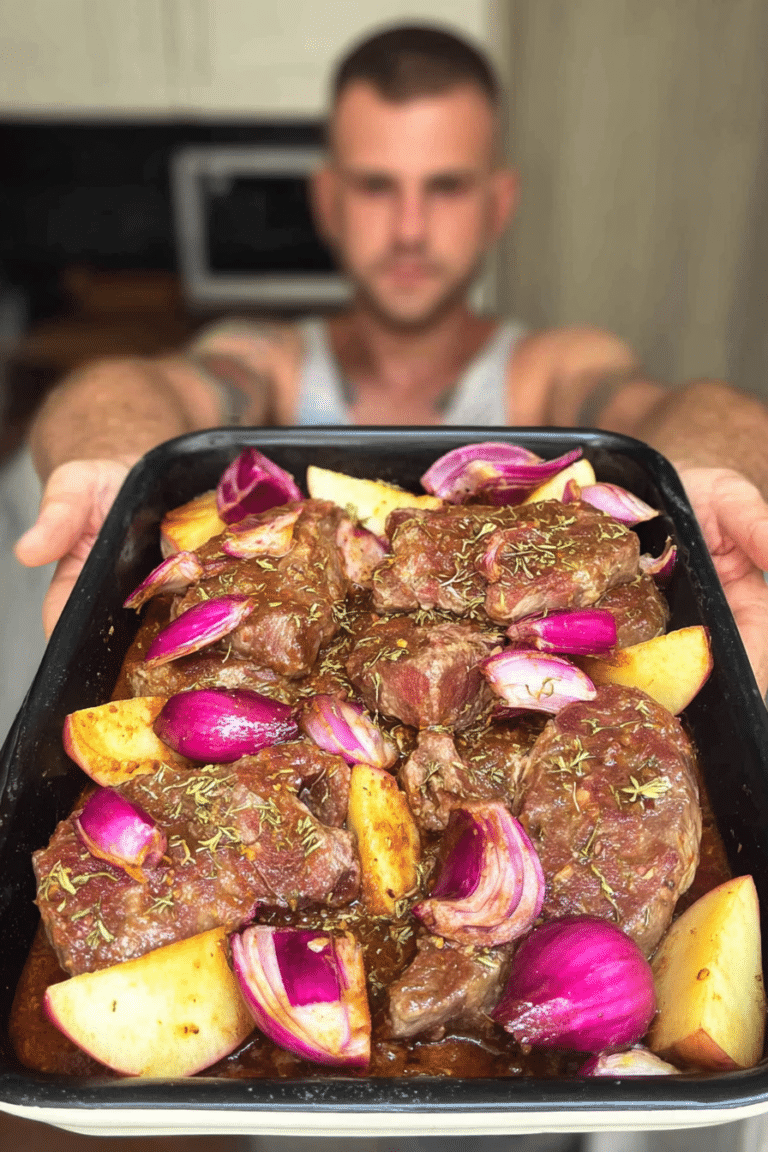


I grew up around a heavy pot that simmered for hours every Sunday — an unhurried ritual that meant company, conversation and a kitchen that smelled of garlic, oregano and a faint hint of rosemary. Over the years I’ve leaned on that same pot when I wanted to feed a crowd or simply slow down for dinner. This braised veal and peppers is exactly the kind of dish I reach for: humble ingredients, straightforward technique, and a reward that tastes like home.
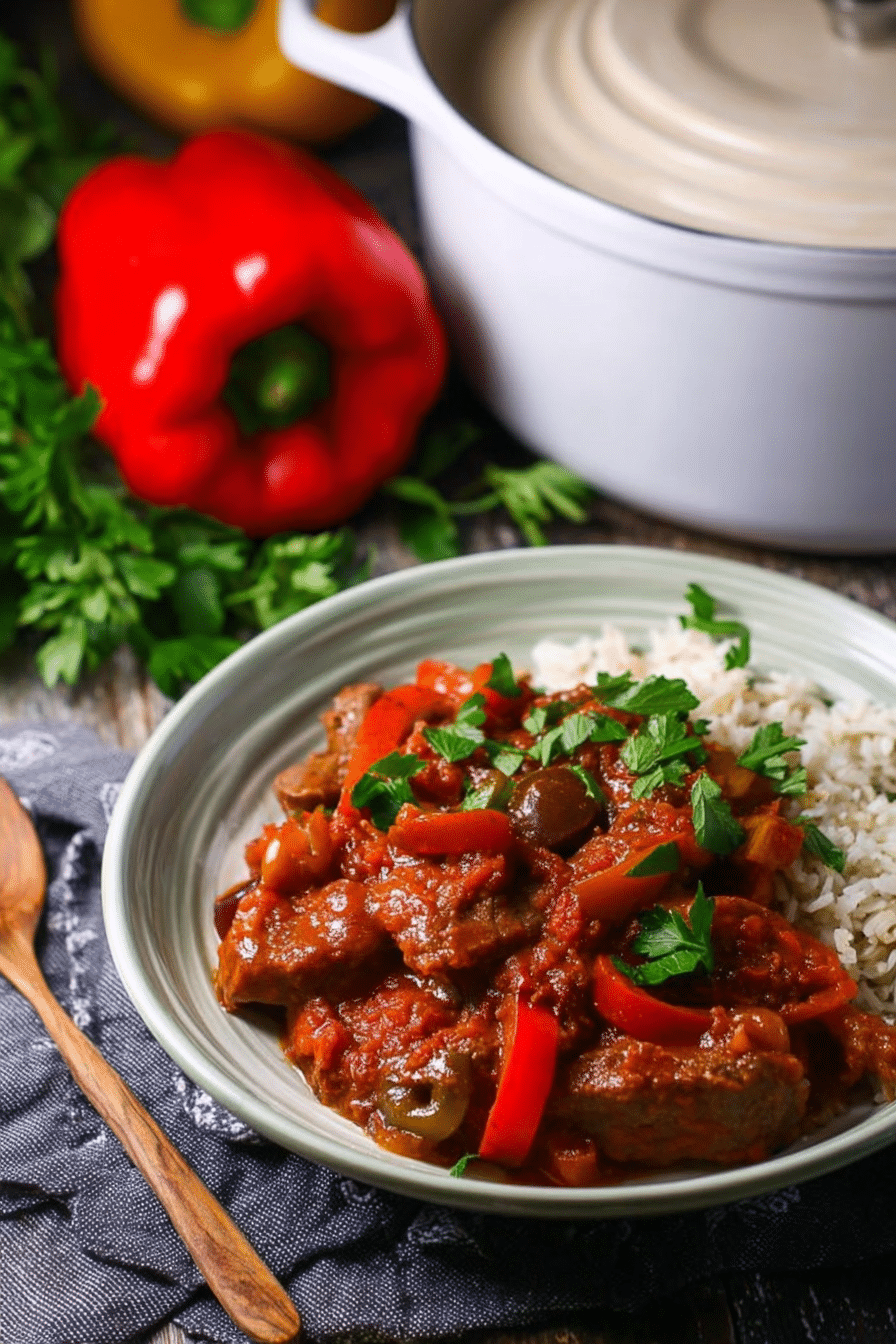
I like to cook this when friends come over — the kitchen fills with the slow, sweet aroma of tomatoes and softened peppers and everyone knows supper will be worth the wait. I’ll admit: the first time I made it I under-browned the meat and the sauce felt flat. After a few retries I learned the small moves that make a big difference, and I’ll share those with you so your pot comes out rich and comforting every time.
If you want to impress without fuss, this is the kind of dish that rewards patience rather than precision. It’s forgiving, versatile, and lovely reheated the next day when the flavors have melded even further.
Everything You Need for Braised Veal and Peppers
Gathering good ingredients is half the work. Below I break down the essentials and why each one matters — plus a few tools that make the braise easier.
- * Extra virgin olive oil – The backbone of flavor; use a fruity, good-quality oil since it shines through in the browning stage.
- * Veal (cubed) – Choose a boneless, relatively lean cut suitable for braising; tougher, economical pieces become meltingly tender when cooked low and slow.
- * All-purpose flour – For a light coating on the meat to encourage browning and slightly thicken the sauce.
- * Onion and garlic – Build the savory base; sauté until soft and golden for the best aroma.
- * Dry white wine – Adds brightness and helps lift browned bits from the pot when you deglaze.
- * Tomato paste and chopped tomatoes – Tomato paste provides depth and body; chopped tomatoes give texture and freshness.
- * Chicken stock – Keeps the sauce silky and adds gentle savory flavor without overpowering the veal.
- * Fresh parsley and oregano (or dried) – Fresh herbs add brightness at the end; dried herbs are fine in the long simmer.
- * Peppers (bell) – Green or a mix of green and red for color and a balance of slightly bitter to sweet notes when cooked down.
- * Red wine vinegar – A splash at the end lifts the sauce and balances richness.
- * Sugar and red pepper flakes – Sugar tames the acidity of tomatoes; red pepper flakes give a restrained heat.
- * Kosher salt and black pepper – Season generously during cooking and adjust to taste at the end.
- * Tools – A heavy-bottomed Dutch oven (or similar pot) is essential, plus tongs, a wooden spoon, a slotted spoon and a plate for resting browned meat.
How to Make Braised Veal and Peppers (Step-by-Step)
- Heat your Dutch oven over medium-high heat and add the olive oil so it shimmers — this is your hot surface for good browning.
- Season the veal with salt and pepper, dust it lightly with flour, and brown in batches so pieces sear rather than steam; transfer browned veal to a plate between batches.
- Lower the heat slightly, add the onion and garlic to the pot and cook until softened and golden; the fond (browned bits) left behind will flavor the sauce.
- Pour in the white wine to deglaze, scraping the bottom of the pot with a wooden spoon until those caramelized bits lift and dissolve into the liquid.
- Stir in the tomato paste and cook briefly to remove any raw edge, then add chopped tomatoes, stock, herbs, sugar and red pepper flakes; return the veal to the pot and season generously with salt and pepper.
- Reduce to the lowest heat, cover, and simmer slowly for about an hour — check occasionally and skim any foam if needed.
- After the first hour add the sliced peppers and a splash of red wine vinegar, adjust seasoning, then cover and continue to cook until the veal is fork-tender and the peppers have softened (about one more hour).
- Finish with minced parsley and a final taste adjustment: if the sauce feels too bright add a pinch of sugar, if too rich add a touch more vinegar; serve over rice or pasta to soak up the sauce.
The Secret to Perfectly Tender Veal
I’ve learned the hard way that small timing and temperature choices change everything. The two-hour slow braise is less about a magic ingredient and more about patience and attention: brown well, deglaze thoroughly, and keep the simmer gentle so the meat relaxes instead of tightening.
- Brown in batches — don’t overcrowd the pot or the meat will steam instead of caramelize.
- Maintain a very low simmer once the lid is on; a vigorous boil toughens veal.
- If the liquid reduces too quickly, add a splash more stock — the meat should always be partially submerged to braise evenly.
- Check doneness by testing a piece with a fork — when it easily separates or shreds, it’s done.
- For more ways to celebrate veal after it’s cooked, try my take on veal parmesan as a follow-up dish that will please any crowd.
The Role of Peppers in Italian Cuisine
Peppers arrived in Italy centuries ago and quickly found a place at the table for their bright color, variable sweetness and ability to balance richer meats and tomato-based sauces. In this dish the peppers soften and release a gentle sweetness that offsets the acidic tomato and savory veal.
Green bell peppers carry a bit more bite and herbal notes; red bell peppers offer deeper sweetness when cooked down. Cooking them slowly with the tomato sauce lets them melt into the braise rather than sitting as a raw counterpoint.
Peppers play a crucial role in various recipes, including cream cheese stuffed peppers, which showcases their versatility in Italian cooking.
Pro-Tip for Braised Veal and Peppers
- Brown in dry batches: pat the meat dry before flouring so you get a cleaner sear.
- Use a heavy pot: even heat prevents hot spots and helps the sauce reduce evenly.
- Finish with acid: a small splash of red wine vinegar right before serving brightens the whole dish.
- Cook ahead: this improves overnight — make it a day early when possible and reheat gently.
- Keep some stock warm on the side to adjust consistency without chilling the pot.
Suggestions for Delicious Side Dishes
This braised veal loves simple companions that soak up the sauce. Try one of these pairings depending on the season and the mood of the meal.
- Creamy polenta — its soft texture offsets the meat and soaks up the sauce beautifully.
- Al dente pasta tossed simply with olive oil or butter — an everyday classic that keeps the plate comforting and familiar.
- Charred garlic bread or a crisp green salad for freshness and crunch; for a vegetarian complement, consider pairing your dish with vegetarian stuffed peppers that share the same pepper-forward flavors.
Tips for Storing Leftovers and Variations to Try
Leftovers are a treat here — the sauce deepens and the veal becomes even more tender after resting. Store carefully and try a few variations to keep the dish interesting.
- Refrigeration: Cool to room temperature, transfer to an airtight container and refrigerate for up to three days.
- Freezing: Freeze portions in freezer-safe containers for longer storage; note that peppers may soften further on thawing.
- Reheating: Reheat gently over low heat with a splash of stock so the sauce loosens and the veal doesn’t dry.
- Variations: Add seasonal vegetables such as zucchini or mushrooms during the last hour of cooking; swap some tomatoes for roasted peppers for a different sweetness profile.
- Try adding a bright accent to leftovers by pairing them with a spoonful of homemade hot pepper jelly for a contrast of sweet heat.
Frequently Asked Questions
Can I use a different type of meat instead of veal for this recipe?
Yes! You can substitute veal with beef or pork, but keep in mind that the cooking time may vary slightly depending on the meat you choose.
What is the best way to store leftovers from braised veal and peppers?
Store any leftovers in an airtight container in the refrigerator for up to 3 days. You can also freeze it for longer storage, but the texture of the peppers may change upon thawing.
What can I serve with braised veal and peppers?
This dish pairs wonderfully with cooked rice or pasta. You might also consider serving it with a fresh salad or crusty bread to soak up the delicious sauce!
How do I know when the veal is tender enough?
The veal is perfectly tender when it can be easily shredded with a fork. This usually takes about 2 hours of low, slow cooking.
Can I add more vegetables to the braised veal and peppers?
Absolutely! Feel free to add other vegetables like zucchini or mushrooms. Just toss them in during the last hour of cooking to ensure they don’t overcook.
Braised Veal and Peppers
Ingredients
Equipment
Method
- Heat the olive oil over medium/high heat in a dutch oven or large heavy-bottomed pot. Season the veal cubes with kosher salt and pepper and toss with the flour until well-coated.
- Brown the veal in batches, adding more oil if needed. Remove the veal to a plate and add the onion and garlic to the pot.
- Reduce the heat to medium and cook the onion and garlic until softened and golden. Add the white wine to deglaze the pan and continue cooking until almost absorbed.
- Stir in the tomato paste and cook for 1-2 mins. Add the chopped tomatoes, chicken stock, sugar, oregano, parsley, red pepper flakes, and veal to the sauce. Season with kosher salt and pepper, then reduce heat to low, cover, and cook for 1 hour, stirring occasionally.
- After an hour, add the peppers and a splash of red wine vinegar. Adjust the seasoning, cover, and continue to cook for another hour until veal is fork tender and peppers are soft.
- Serve over rice or pasta if desired.