The Salad I Make Every Week — Carrot Arugula Salad with Fig & Avocado
- Prep
- 20 min
- Cook
- 20 min
- Total
- 40 min
- Serves
- 4
- Calories
- 421 kcal
- Protein
- 11.70 g
- Carbs
- 32.80 g
- Fat
- 28.70 g
On this page13 quick jumps
TOC
13 quick jumps
Introduction
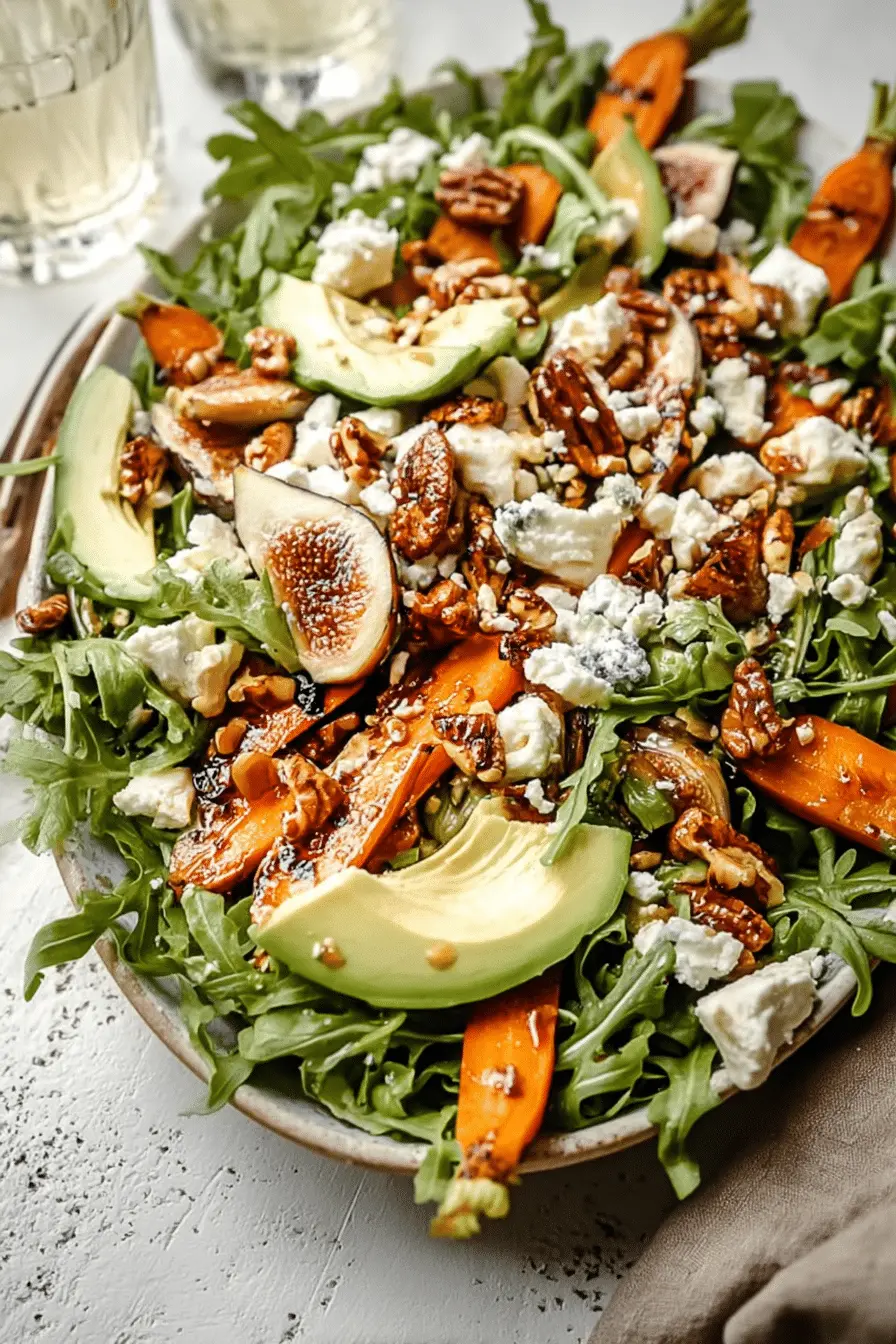
I make this carrot arugula salad most weeks when I want something refreshing, nutritious, and versatile. It’s the kind of lunch that feels light but leaves me satisfied—bright peppery arugula, sweet figs, creamy avocado, and carrots that you can serve raw for crunch or cook for a softer, sweeter bite. I first built this bowl around textures and real flavor, not tricks, and it’s become my go-to when time is short.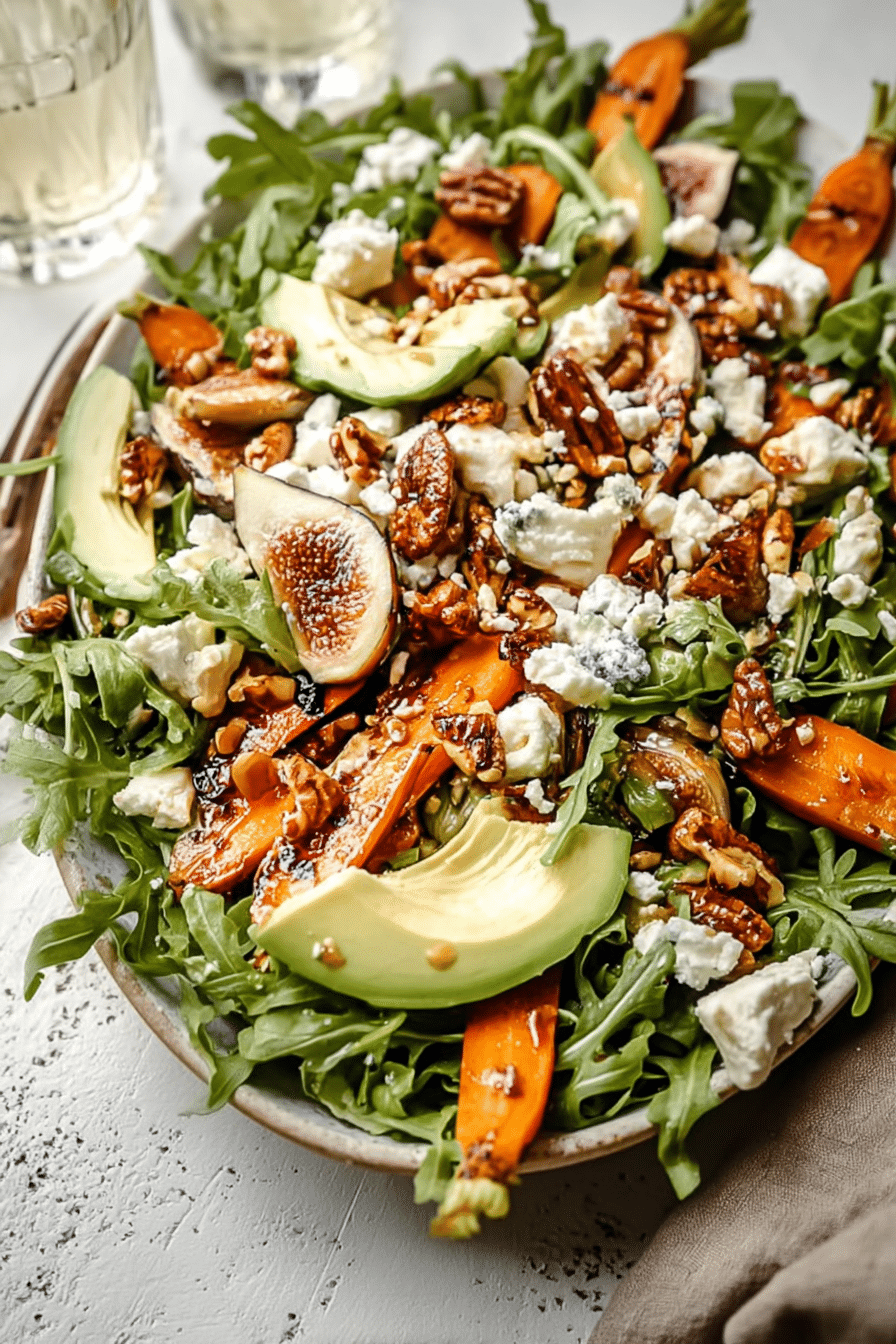
Why this Carrot Arugula Salad is Ideal for Busy, Health-Conscious Eaters
This salad delivers on speed, nutrition, and satisfaction without sacrificing flavor. Prep time is minimal if you batch-toast nuts and whisk the dressing while the carrots cook. The combination of leafy greens, plant-based fiber, healthy fats, and a modest amount of protein keeps blood sugar steadier than a carb-heavy lunch. Visually it’s appealing: deep green arugula, bright orange carrots, pale goat cheese crumbles, and jewel-toned figs. That contrast not only looks appetizing, it signals a range of textures and nutrients that help you feel full longer. For a quick lunch, toss everything together and you have a well-rounded plate that travels well if you pack the dressing separately.Everything You Need for Carrot Arugula Salad
Use high-quality, fresh ingredients when possible—small choices (riper figs, fresh lemon, good tahini) make this simple salad taste like more than the sum of its parts. Below I discuss each component and sensible swaps so you can optimize nutrition and flavor without relying on exact measurements here.- Baby arugula – Provides peppery bite and vitamin K; use mixed baby greens if you prefer a milder base.
- Carrots – Offer crunch, beta-carotene, and sweetness whether raw or cooked; choose firm, brightly colored roots.
- Dried figs – Add chew and natural sweetness plus fiber; dates or dried apricots work in a pinch.
- Walnuts – Toasted for aroma and crunch; supply healthy fats and a satisfying texture contrast.
- Goat cheese – Brings tang and creaminess; omit or swap for a plant-based cheese to make it vegan.
- Avocado – Cushions the salad with rich, monounsaturated fats and a silky mouthfeel.
- Roasted chickpeas (optional) – Add protein and extra crunch if you want a heartier bowl.
- Tahini – The dressing’s creamy backbone, giving sesame richness and healthy fats; swap with sunflower seed butter if allergic.
- Pure maple – Balances tahini’s bitterness with natural sweetness; honey can substitute if not strictly vegan.
- Fresh lemon and Dijon – Add brightness and tang to cut through richness.
Raw vs. Cooked Carrots: Nutrition, Texture & When to Choose Each
Both raw and cooked carrots have clear benefits. Raw carrots keep maximum vitamin C and provide a crisp, hydrating crunch that pairs well with peppery arugula. Cooked carrots soften and concentrate natural sugars, and cooking increases the bioavailability of certain carotenoids (like beta-carotene), which your body converts to vitamin A more efficiently. Texture matters here: raw carrots add sharpness and snap; grilled or roasted carrots add tenderness and a caramelized aroma that rounds out the salad. Choose raw when you want a light, crunchy bowl; choose cooked when you want depth and a slightly sweeter profile. Either way, the vibrant color and mouthfeel will shift your eating experience.Why the Maple Tahini Dressing Brings Balance (and How to Customize It)
The maple tahini dressing anchors the salad. Tahini offers creaminess and healthy fats that help your body absorb fat-soluble nutrients from the greens and carrots; maple syrup adds natural sweetness, and Dijon contributes a bright tang to keep the dressing from feeling heavy. The result is balanced—sweet, nutty, acidic, and silky. Customize easily: add a splash of apple cider vinegar or extra lemon for brightness; stir in a pinch of ground cumin or smoked paprika for warmth; or whisk a little sriracha for heat. If tahini isn’t available, almond or sunflower seed butter can substitute, though the flavor shifts slightly toward nuttier or more neutral tones. The dressing’s texture should be pourable but coating—use warm water sparingly to thin.Balancing Textures: Sweet Figs, Creamy Avocado & Crunchy Walnuts
Textures are the reason I keep returning to this recipe. Chewy dried figs add concentrated sweetness and fiber, creamy avocado softens each forkful, and toasted walnuts provide a toasty crunch that contrasts with the tender carrots and peppery arugula. Textural contrast makes the salad feel indulgent even when it’s light. When assembling, scatter ingredients so each bite has at least two textures—soft and crunchy or creamy and chewy. The aroma of toasting walnuts and caramelizing carrots signals the contrast to come before you even taste it, which makes the salad more enjoyable to eat.How to Make Carrot Arugula Salad (Step-by-Step)
- Prep first: halve or slice carrots and toss with a little oil, then season lightly. This keeps the rest of the work tidy and fast.
- Cook carrots (optional): grill over medium-high heat until tender and slightly charred, or roast in a hot oven until caramelized. Flip halfway through for even color.
- Toast nuts: heat walnuts in a dry skillet until fragrant and slightly darker — watch closely so they don’t burn.
- Make dressing: whisk tahini, lemon, maple, Dijon and a pinch of salt, then add warm water a bit at a time until the dressing reaches a pourable consistency.
- Assemble: lay arugula down, arrange carrots on top (warm or cold), scatter figs, toasted walnuts, goat cheese, and avocado slices, then drizzle with dressing.
- Season and serve: finish with a few turns of fresh black pepper and an extra pinch of flaky salt if desired.
Pro Tips for Carrot Arugula Salad: Cooked vs. Raw Carrot Benefits
Note: the Pro Tips, Troubleshooting, and Variations sections below are presented as bulleted lists for quick scanning.- Pick firm, smooth carrots with bright color—these are usually sweeter and less woody.
- Slice carrots on the bias or halve them lengthwise so they grill or roast evenly and develop more surface caramelization.
- If grilling, oil the carrots lightly to prevent sticking and to encourage those browned edges that add flavor.
- Toast nuts in a dry pan until fragrant; cool them before adding so they stay crisp in the salad.
- For faster prep, use pre-washed baby arugula and pre-sliced dried figs; keep the dressing in a jar so you can shake and use on demand.
- Want to add protein? Toss in roasted chickpeas or a handful of cooked grain to make the salad more substantial.
Troubleshooting
- Dressing too thick? Add warm water a teaspoon at a time and whisk until creamy but pourable.
- Carrots unevenly cooked? Slice them to uniform thickness and cook in a single layer so heat distributes evenly.
- Salad soggy after storage? Keep dressing separate and add just before serving to preserve crunch.
- Figs too hard? Rehydrate briefly in warm water or swap with softer dried fruits like apricots or dates.
How to Store, Make-Ahead & Easy Variations (Vegan, GF, Seasonal Swaps)
Store components separately when possible: keep dressed greens for the shortest time, toasted nuts in an airtight container, and dressing refrigerated. The assembled salad holds best for a couple of days if the dressing is added only at serving.- Make-ahead: toast nuts and make dressing up to 5 days ahead; roast or grill carrots and refrigerate—reheat briefly or serve cold.
- Vegan swap: omit goat cheese or use a plant-based crumble; use maple in the dressing to keep it vegan-friendly.
- Gluten-free: this salad is naturally gluten-free—watch any add-ins like croutons or pre-made chickpeas for cross-contamination.
- Seasonal swaps: in winter, substitute pears for figs and use roasted beets instead of carrots; in spring, toss in radishes for extra snap.
Frequently Asked Questions
Can I make this Carrot Arugula Salad vegan? Absolutely! You can simply omit the goat cheese or replace it with a vegan cheese alternative. The salad will still be delicious! How long can I store the Carrot Arugula Salad? The salad can be stored in the refrigerator for about 2-4 days. Just keep it in an airtight container for freshness! Is there a substitute for tahini in the dressing? Yes! You can use almond butter or sunflower seed butter as a substitute for tahini, but the flavor will differ slightly. Can I use other types of nuts in the salad? Definitely! Feel free to substitute walnuts with almonds, pecans, or your favorite nuts for a different flavor and texture. What can I use instead of figs if I don't have any? If figs aren't available, dried apricots or dates would make a great substitute in this salad, adding a nice sweetness!Ingredients
- 4 largecarrots, cut in half vertically and stems/tops removed
- 1 tablespoonavocado oil
- 5 ouncesbaby arugula
- ¾ cupdried fig halves
- ⅓ cupwalnut halves and pieces
- ⅓ cupgoat cheese crumbles
- 1avocado, sliced
- ½ cuproasted chickpeas (optional)
- ¼ cupdrippy tahini
- 2 tablespoonsfresh lemon juice
- 1-2 teaspoonspure maple syrup
- ½ teaspoondijon mustard
- ¼ teaspoongarlic powder
- 2-3 tablespoonswarm water, to thin out
- ¼ teaspoonsalt
- —freshly ground black pepper
Instructions
- 1
Add vertically cut carrots to a large bowl or a platter and drizzle with avocado oil then season with freshly ground salt and pepper. Use tongs or clean hands to coat the carrots with the oil.
- 2
Preheat the grill to medium high heat (about 400 degrees F) and grill the carrots for 15-25 minutes total or until slightly tender, flipping halfway through.
- 3
Toast walnuts in a dry skillet over medium heat, stirring occasionally until toasted and fragrant, about 5 minutes. Set aside.
- 4
In a medium bowl, whisk together the tahini, lemon juice, maple syrup, dijon, garlic powder, water (1 tablespoon at a time until you reach your desired consistency) and salt and pepper. Set aside.
- 5
Add arugula to a large platter and then layer with the toppings: grilled carrots, dried fig halves, toasted walnuts, goat cheese crumbles, avocado slices, and roasted chickpeas (if using).
- 6
Drizzle tahini dressing all over the top and season with freshly ground salt and pepper. Divide into bowls and enjoy!
Recipe Card
The Salad I Make Every Week — Carrot Arugula Salad with Fig & Avocado
Keep it handy for later, send it to someone cooking with you, or open the clean print view.
- Prep
- 20 min
- Total
- 40 min
- Serves
- 4
You might also like
The Salad I Make Every Summer: Simple Carrot Nectarine Salad
May 20, 2026
The Cherry Tabbouleh Salad I Make for Summer Gatherings
May 18, 2026
The 20-Minute Cherry Salad with Feta and Walnuts I Make All Summer
May 18, 2026
The Salad My Guests Always Ask For — Grilled Peach Burrata Salad
May 18, 2026
Reviews
Be the first to review this.