

I make this clam chowder whenever the air turns crisp and we want something that feels like home on a spoon. The first thing I do is let the bacon sizzle slowly so the house fills with that smoky, slightly sweet aroma that always brings everyone into the kitchen. While it simmers I chop onions and celery, and the sound of the pan softening those vegetables is the background music to the whole dish.
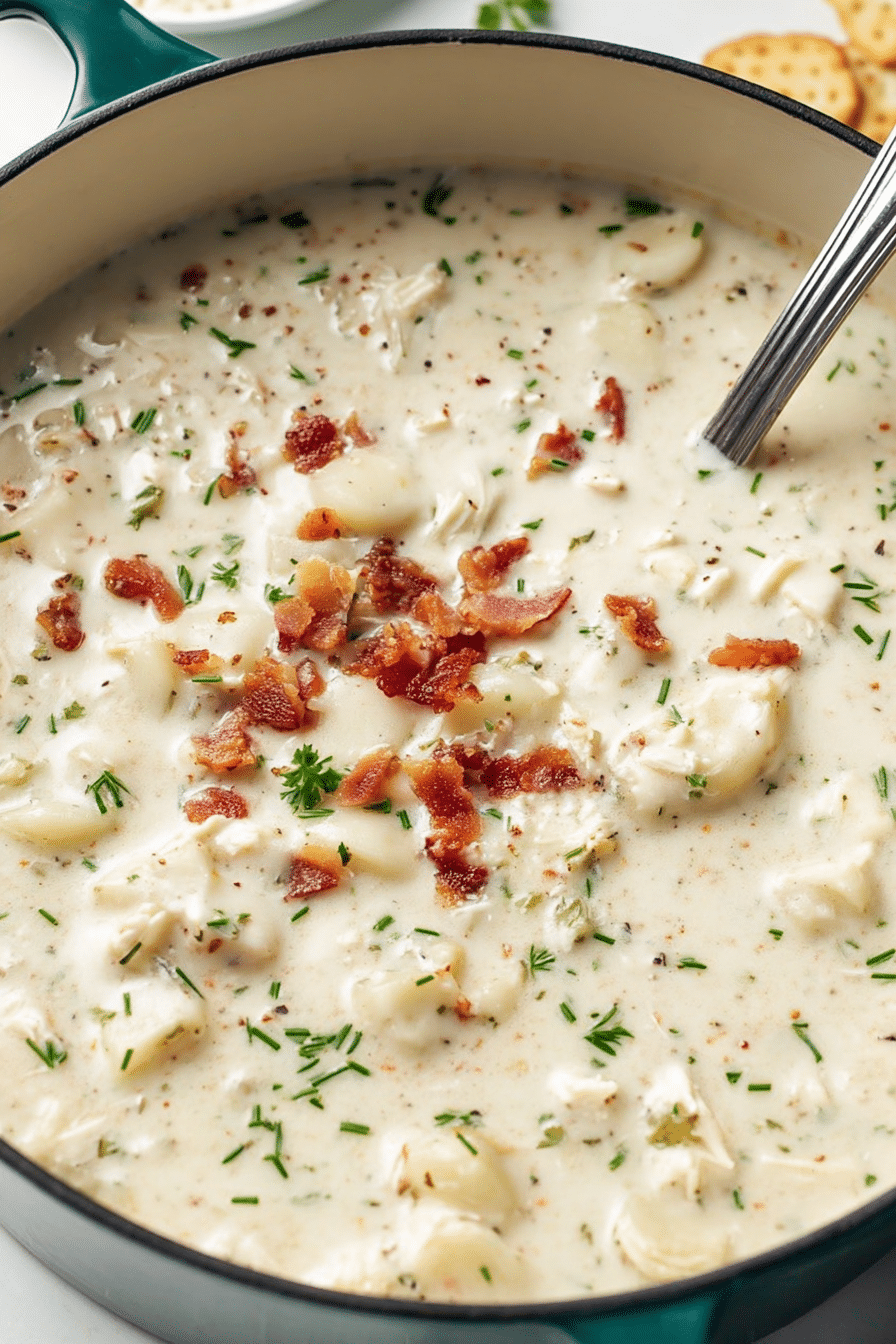
There are family evenings where this pot lives on the stove for hours, gently bubbling and getting better with every stir. I like to keep it simple and honest—bacon, clams, potatoes, and a creamy broth—because those familiar ingredients are what brings people together. This recipe has small habits I picked up along the way that make it sturdy on weeknights and special enough for visitors.
This recipe evokes feelings of home and comfort, much like our potato leek soup, perfect for cozy nights in.
Everything You Need for Clam Chowder
Below I talk about the ingredients as companions in the pot—what each one does and why choosing well matters. I lean on good bacon and fresh aromatics because they give the broth character before the clams even arrive.
- Bacon – Provides smoky, salty fat to start the base; you can substitute salt pork if you prefer a more traditional flavor.
- Butter – Adds richness and helps build the roux when combined with flour.
- Onion – The savory backbone; cook until soft so it melts into the broth.
- Celery – Adds a crisp, vegetal counterpoint to the cream.
- Garlic – Use sparingly for a warm note that doesn’t overpower the clams.
- Hot sauce & Worcestershire sauce – Small additions that deepen the savory profile; add to taste.
- Flour – The thickening agent for a classic roux; if you need gluten-free, use a starch alternative (see variations).
- Chicken broth – The liquid base that rounds out the clam liquor; use a good-quality broth for a cleaner taste.
- Half-and-half (or cream) – Gives the chowder its creamy body; heavier creams will make it richer, lighter dairy will be less decadent.
- Clam juice – Intensifies the briny character—reserve if using fresh clams or use the canned juice when using jarred or canned clams.
- Potatoes – The textural heart of the chowder; starchy potatoes help thicken the broth when gently mashed.
- Canned or fresh clams – Canned clams are convenient and flavorful; fresh clams deliver a brighter brine when you can source them responsibly.
- Herbs & spices – Parsley and a few dried herbs unify the flavors; smoked paprika and cracked pepper add gentle warmth.
A Short History: New England Clam Chowder and Its Roots
New England clam chowder is rooted in simple maritime cooking—big pots over open fires on cold mornings, fishermen and families gathering to share what they had. The recipe evolved from a need for hearty, warming food using shelf-stable staples and what the sea provided. Over time, cream and potatoes became standard additions, making the chowder the thick, comforting bowl we know today.
Imagine historic chowder pots hanging over steady flames while nearby markets sold bushels of clams and barrels of salt pork. That image helps explain why this dish has always been both practical and beloved—its flavors are tied to place and to the rhythms of coastal life.
Fresh vs. Canned Clams: How to Choose and Prep
The choice between fresh and canned clams often comes down to convenience and seasonality. I use canned clams when I want a dependable pantry version; when clams are in season or I’m near a good fishmonger, I go fresh for their brighter brine and firmer texture. Below are practical steps for handling each option so your chowder ends up balanced and flavorful.
- Fresh clams — cleaning and prepping:
- Soak clams in cold, salted water to purge sand; change the water once or twice until it runs clear.
- Scrub shells with a stiff brush and discard any that are cracked or remain open after a firm tap.
- Steam gently just until they open; reserve the cooking liquid, strain it to remove grit, and add sparingly for extra brininess.
- Canned clams — using them well:
- Reserve the clam juice in the can—this liquid is concentrated flavor and should be added early to the chowder for depth.
- Add the clams toward the end of cooking so they stay tender and don’t break down into mush.
- Taste and texture differences – Fresh clams are brighter and chewier; canned clams are softer but deliver consistent flavor year-round.
The Secret to the Perfect Creamy Texture
A classic roux and gentle heat control are what make a New England chowder feel velvety. Cook the flour long enough in the fat to lose its raw taste, then add liquid slowly while whisking or stirring to avoid lumps. I also mash a few pieces of cooked potato into the pot near the end—this natural starch helps the broth cling to the clams and vegetables for a satisfying mouthfeel.
Keep the simmer gentle; high heat is the fastest way to curdle dairy and create a grainy finish. For other creamy dishes that use similar techniques, try our easy creamy white chicken enchiladas, which also rely on tempering liquids and low, steady heat.
How to Make Clam Chowder (Step-by-Step)
- Cook bacon slowly in a heavy-bottomed soup pot until the fat renders and the pieces are crisp; reserve some drippings and the crisped bacon for garnish.
- Leave the browned bits in the pot for flavor; add butter to the reserved drippings and sauté onions and celery until soft and translucent.
- Add garlic and quick seasonings, stir for a minute to bloom the flavors, then stir in the flour and cook until the raw floured smell is gone.
- Gradually add broth and then dairy, stirring continuously to create a smooth base; add bouillon or a bay leaf for depth and a portion of reserved clam juice for brininess.
- Bring the mixture to a gentle boil, then lower to a simmer and cook partially covered so the base thickens—stir now and then to prevent sticking.
- Add peeled, diced potatoes and simmer until they are fork-tender; mash a few pieces against the pot wall to naturally thicken the chowder if desired.
- Stir in the clams and heat just until warmed through; remove any bay leaf and taste for final seasoning adjustments with salt and freshly cracked pepper.
- Ladle into bowls and top with chopped parsley and the reserved crisp bacon for texture contrast.
Pro Tip for clam chowder recipe: Prevent Curdling & Graininess
- Keep the heat low when dairy is in the pot—if it starts to bubble vigorously, reduce the heat immediately. I watch the pot closely here; gentle bubbles are all you need.
- Cook your roux long enough so the flour loses its raw edge—this prevents a pasty or grainy finish later.
- Temper any extra cream by whisking a small amount of hot broth into it before adding to the pot if your dairy is cold.
- Use starchy potatoes and mash a few pieces to naturally thicken rather than relying solely on flour.
- Avoid boiling after the cream is added; finishing the dish on low heat preserves a silky texture.
There are many ways to create textures in your dishes; for example, explore our creamy oatmeal recipes that can inspire you.
How to Store, Reheat, and Try Gluten-Free or Dairy-Free Variations
- Storing leftovers – Cool the chowder to room temperature, then refrigerate in an airtight container; I find it keeps well for a few days without losing its character.
- Freezing – Cream-based chowders can change texture when frozen; if you must freeze, consider leaving out some or all of the dairy and adding it back when reheating.
- Reheating – Rewarm gently on the stove over low heat, stirring often; adding a splash of broth while reheating helps keep the texture smooth.
- Gluten-free option – Replace the flour roux with a cornstarch or arrowroot slurry added toward the end of cooking; mix the starch with cold liquid first to prevent clumping.
- Dairy-free option – Use unsweetened coconut milk or a rich oat-based cream substitute and stabilize with a small starch slurry; taste as you go and adjust the seasoning for balance.
If you love soups, don’t forget to check out our delicious potato soup, which can also be adapted for various dietary needs.
Frequently Asked Questions
What are the key ingredients for clam chowder?
Some key ingredients include bacon, clams, potatoes, onions, celery, garlic, and a creamy base like half and half or heavy cream.
Can I use canned clams instead of fresh clams?
Yes, canned clams work well for a quick and easy version of clam chowder, and they still provide great flavor!
How can I make my chowder creamier?
You can mash some of the potatoes in the pot to create a thicker texture, or ensure to use half and half for a rich, creamy consistency.
What should I serve with clam chowder?
Clam chowder pairs wonderfully with crusty bread or crackers for dipping, and a sprinkle of fresh parsley on top adds a nice touch.
How do I store leftovers?
Store leftovers in an airtight container in the refrigerator for up to 3 days. Reheat gently on the stove to avoid curdling the cream.
Clam Chowder Recipe
Ingredients
Method
- Cook the bacon in a 4.5-quart soup pot slowly over low heat. Set aside on a paper towel lined plate. Reserve bacon drippings.6 strips thick-cut bacon
- Wipe dark spots from the pot, add bacon drippings and butter, and sauté onions and celery for 5-6 minutes.2 tablespoons butter, 1 medium yellow onion, diced
- Add garlic, hot sauce, Worcestershire sauce, and seasonings. Cook for 1 minute.
- Add flour and cook for 2 minutes, stirring continuously.1 cup chicken broth
- Stir in chicken broth and Half and Half gradually, cleaning the pan.3 cups Half and Half, 8 oz clam juice
- Add chicken bouillon, bay leaf, clam juices, and 8 oz. clam juice. Bring to boil, then reduce to simmer for 20 minutes.1 cube chicken bouillon, 1 leaf bay leaf
- Add diced potatoes and cook for 20-25 minutes until fork tender.1 ¼ lbs potatoes, diced
- Stir in clams and heat through for 5 minutes. Remove bay leaf and serve.3 cans chopped clams