Poolside RecipeDinner
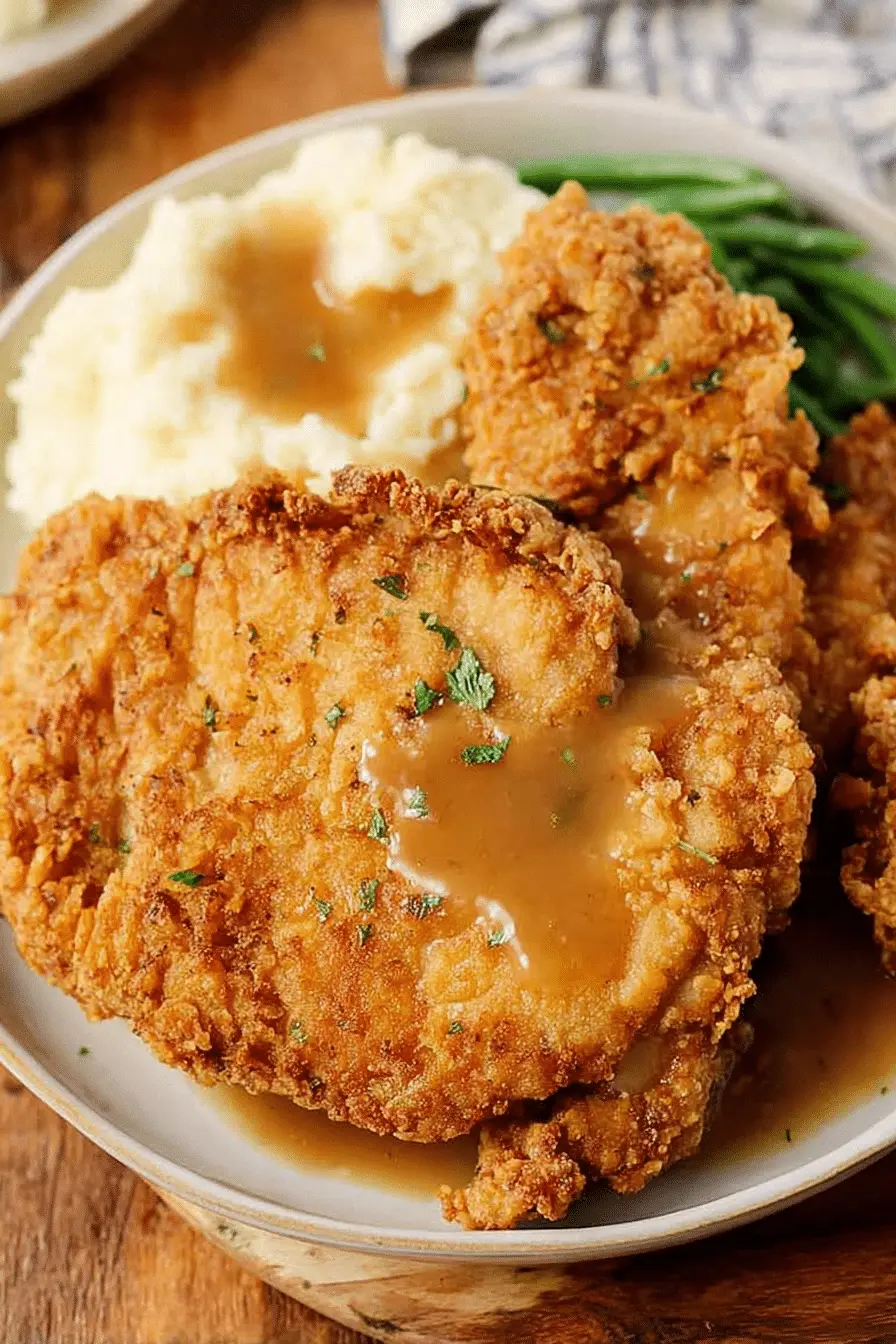
How I Finally Nailed Country Fried Chicken — Old-Fashioned & Crispy
- Prep
- 25 min
- Cook
- 40 min
- Total
- 95 min
- Serves
- 4
- Calories
- 348 kcal
- Protein
- 27.00 g
- Carbs
- 14.00 g
- Fat
- 20.00 g
Introduction
I grew up with the smell of sizzling chicken in my house — a smell that meant evening light, a wooden table pushed close to the stove, and someone calling the family to come and eat. I still make this exactly when I want that same quiet comfort: a breast pounded thin, soaked long enough so the meat invites the seasonings in, and fried until the crust sings when you cut into it. In my kitchen those small rituals are how Sunday evenings feel like home.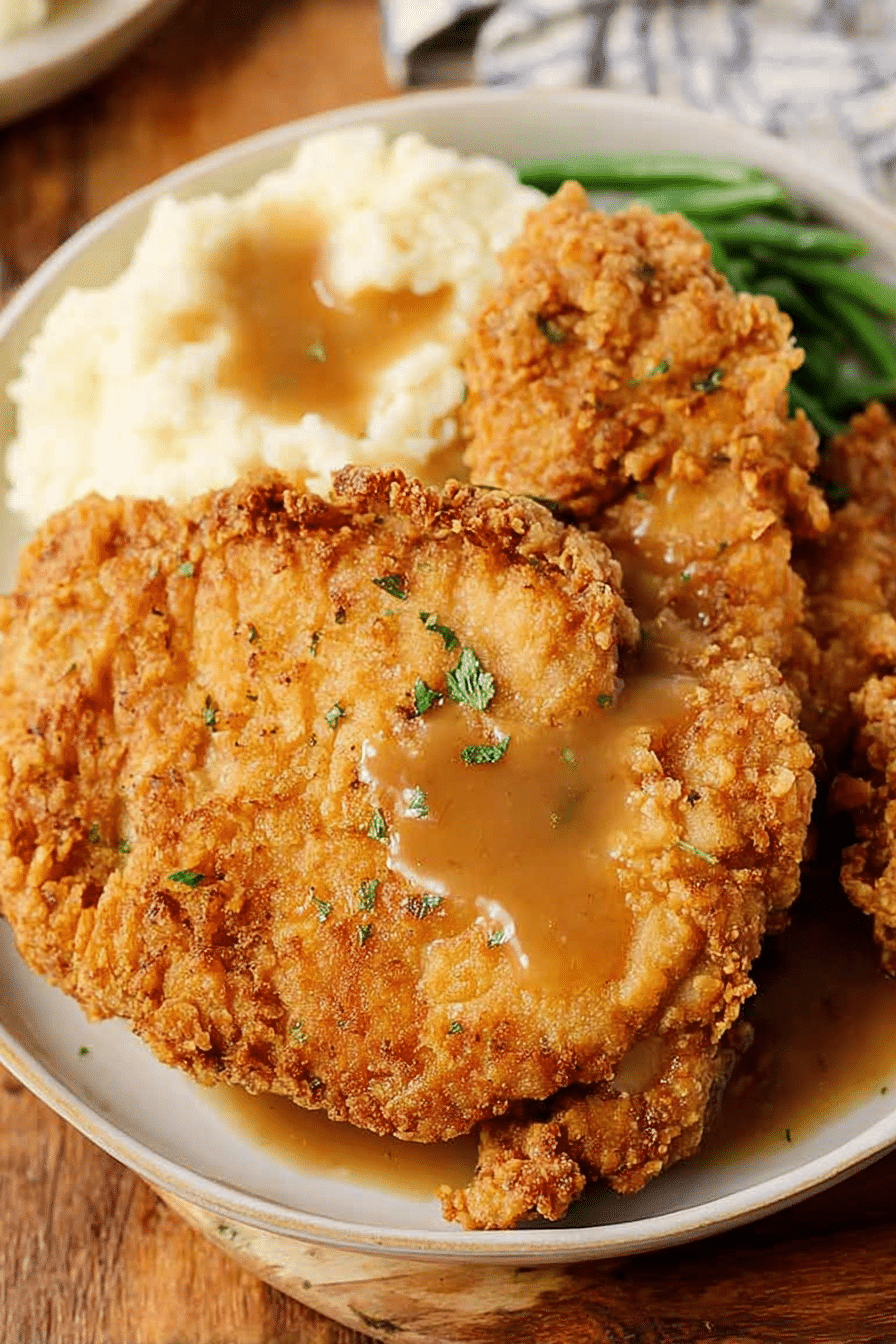
Everything You Need for Country Fried Chicken
Gathering your ingredients and tools before you begin will make the process smooth. The following notes focus on why each item matters and how you can substitute if needed.- Chicken breasts – The lean white meat is perfect when pounded thin; it cooks quickly and stays tender after a short marinade.
- Buttermilk – Acts as an acidic marinade that tenderizes and adds a subtle tang. (More on substitutes below.)
- Eggs – Help the breading adhere and give the crust a richer color.
- All-purpose flour – The base of the dredge that creates the familiar golden crust; you can swap part of it for whole-wheat flour for a nuttier note.
- Breadcrumbs or panko – Add extra crunch when used with flour; plain or seasoned work depending on how much extra seasoning you want.
- Seasonings (salt, pepper, paprika, cayenne) – Simple staples that lift the breading; adjust the heat to taste.
- Vegetable oil or other neutral oil – Use an oil with a high smoke point for frying; avocado or refined peanut oil are fine alternatives if you prefer.
- Cast iron skillet or heavy frying pan – Holds steady heat for an even, reliable fry; a heavy pan reduces hot spots.
- Wire cooling rack – Lets excess oil drip away so the underside stays crisp instead of soggy.
Why Buttermilk Matters (and Substitutes That Work)
Buttermilk is the quiet hero here. Its acidity gently breaks down proteins at the surface of the chicken, which keeps the meat tender while helping the breading cling. The tang also adds a subtle background flavor that tastes like home. If you don’t have real buttermilk on hand, you can use a few common substitutions. Plain yogurt thinned with a little water makes a similar texture and maintains acidity; milk mixed with a small amount of vinegar or lemon juice approximates the tang and is the quickest swap. For a lighter option, use low-fat yogurt or thinned kefir — the texture will be slightly different and the tang may be milder, but the meat will still benefit from the acidity.The Secret to Perfectly Crispy, Tender Chicken
I learned early that crispness and tenderness depend on three little rules: thorough drying before dredging, a well-seasoned breading that hugs the meat, and patience to let the oil do its work without rushing. When these are in place the crust browns evenly and the inside stays juicy.- Dry the chicken completely before you bread it; a tacky surface will steam instead of crisping.
- Press the breading into every fold and seam so it adheres well — the more contact, the better the crust stays on during frying.
- Let the breaded pieces rest briefly on a tray before frying; this helps the coating set and reduces shedding in the oil.
- Use a mixture of flour and breadcrumbs or panko to get both a golden color and a satisfying crunch.
Why Temperature and Timing Matter When Frying
Frying is largely a matter of controlled heat. Too cool and the crust soaks up oil; too hot and the outside burns before the center cooks. I aim for a steady medium-high heat and keep an eye on the pan so each piece cooks evenly.- Heat the oil until it reaches the target frying temperature and maintain it. A consistent temperature makes for a crisp, non-greasy crust.
- Don’t overcrowd the pan. Adding too many pieces drops the oil temperature and causes the chicken to cook slower and absorb oil.
- Look for a deep golden color at the edges before flipping; that visual cue usually means the crust is set and the inside is cooking through.
- If the crust is browning too quickly, lower the heat slightly and finish cooking a bit longer so the inside reaches a safe temperature without burning the exterior.
How to Make Country Fried Chicken (Step-by-Step)
- Pound each breast to an even thickness so they cook at the same rate; aim for a uniform, thin cut that will stay juicy.
- Pat the chicken dry, then whisk together the buttermilk and eggs with a good pinch of salt. Submerge the chicken and refrigerate for at least an hour for tender results.
- When ready to fry, let the marinated chicken sit at room temperature briefly so it cooks evenly.
- Combine your flour, breadcrumbs, and seasonings on a plate or shallow bowl. Dredge each piece thoroughly, pressing the mixture into the meat to cover every surface.
- Add oil to a heavy skillet until it comes about halfway up the sides of the chicken and heat to the proper frying temperature. A cast iron skillet is ideal for even heat distribution.
- Fry each piece until the edges begin to brown, then flip carefully with a thin spatula. Cook both sides until golden and the juices run clear.
- Transfer cooked pieces to a wire rack so excess oil drains away; this keeps the underside crisp and prevents sogginess.
- Serve hot with mashed potatoes, cornbread, and gravy for a classic meal.
Pro Tip for country fried chicken: Healthier Swaps That Keep the Crunch
- Bake instead of pan-frying: brush the breaded chicken lightly with oil and bake on a wire rack so air circulates — you’ll get a crisp surface with less oil.
- Air-fryer method: use panko and a quick spray of oil; cook at high heat for a shorter time to preserve crunch.
- Use whole-wheat flour or a mix of whole-wheat and all-purpose for a heartier crust with more fiber.
- Swap in panko for part of the breadcrumbs for a lighter, flakier crisp without losing the texture.
Troubleshooting
- If the crust falls off during frying: the coating likely wasn’t pressed on or allowed to rest; try pressing the breading firmly and letting it set briefly before frying — I always do this and it helps dramatically.
- If the chicken is greasy: the oil temperature was too low or the pan was overcrowded; let the oil return to temperature between batches and give each piece room.
- If the exterior browns too fast while the center is undercooked: lower the heat and cook a bit longer so the inside reaches the right doneness without burning the crust.
- If the breading tastes flat: don’t be shy with seasoning in the flour and breadcrumbs; salt and a touch of paprika brighten the whole dish.
Sides, Gravies, and Serving Ideas for a Southern Meal
This is a dish that wants company: creamy mashed potatoes and a ladle of gravy make it feel like a proper Southern dinner. For gravy, pan drippings turned into a simple brown or white gravy are traditional and comforting — whisk in a little flour to the drippings, add stock or milk, and simmer until slightly thickened. Classic pairings include cornbread, collard greens, and a simple cabbage slaw. For a savory twist to your Southern meal, try pairing your country fried chicken with our Parmesan crusted chicken recipe. For a hearty addition, try our baked rosemary chicken meatballs to complement your meal. A delicious side option is our creamy tomato pasta to balance the crispy chicken. Arrange the chicken on a platter with a bowl of gravy on the side so everyone can top their portion. The contrast of hot fried chicken, cool slaw, and fluffy potatoes is part of why this meal feels so complete.Variations
- Spicy Southern: add more cayenne or chopped cayenne pepper to the breading for extra heat.
- Herbed crust: mix dried thyme and sage into the flour for an herb-forward crust that pairs nicely with gravy.
- Panko crunch: replace breadcrumbs with panko for a lighter, flakier texture.
- Lightened-up: use an air fryer or oven-bake method (see Pro Tips) to reduce oil while keeping a satisfying crisp.
How to Store, Reheat, and Freeze Country Fried Chicken
Leftovers should be cooled on a rack and stored in an airtight container in the refrigerator for up to three days. When reheating, I always use the oven or a hot skillet so the crust re-crisps; a microwave will make the breading soft and unappealing.- Reheating: place pieces on a wire rack over a baking sheet and warm in a preheated oven until heated through so air circulates and the crust stays crisp.
- Freezing: flash-freeze pieces on a tray until firm, then transfer to a freezer-safe bag; freeze for up to one month for best quality.
- To reheat from frozen: bake directly from frozen at a moderate temperature until hot throughout and the exterior has re-crisped.
- If you have leftovers, consider making crock pot chicken and dumplings to utilize your extra country fried chicken in a comforting dish.
Frequently Asked Questions
What is the difference between fried chicken and country fried chicken? Country fried chicken typically comes with brown gravy and features a breading that's crispy, while traditional fried chicken is often bone-in, battered, and deep-fried. What seasoning is good for country fried chicken? A good seasoning mix for country fried chicken includes salt, pepper, garlic powder, and paprika. You can also experiment with your favorite spices! Can I use an alternative to buttermilk in the recipe? Yes! You can substitute buttermilk with a mixture of milk and vinegar (1 cup milk + 1 tablespoon vinegar), or use plain yogurt thinned with water. How do I ensure my chicken is crispy and tender? Marinating your chicken in buttermilk helps with tenderness, and frying at the right temperature (350°F) ensures a crispy outside without undercooking the inside. How should I store leftover country fried chicken? Store leftover chicken in an airtight container in the refrigerator for up to 3 days. To reheat, place it in an oven to retain crispiness rather than using a microwave.Recipe Card
How I Finally Nailed Country Fried Chicken — Old-Fashioned & Crispy
- Prep
- 25 min
- Cook
- 40 min
- Total
- 95 min
- Serves
- 4
- Calories
- 348 kcal
- Protein
- 27.00 g
- Carbs
- 14.00 g
- Fat
- 20.00 g
Ingredients
- 4 piecesboneless skinless chicken breasts
- 1.5 cupsvegetable oil
- 2 cupsbuttermilk
- 2 largeeggs (whisked)
- 3 teaspoonssalt
- 1.5 cupsall-purpose flour
- 0.5 cupsbreadcrumbs ((plain or Italian))
- 2.5 teaspoonsseasoned salt
- 0.75 teaspoonspaprika
- 0.5 teaspoonscayenne pepper
- 1.5 teaspoonsblack pepper
Instructions
- 1
Cover each chicken breast with saran wrap. Use a meat tenderizer and pound the chicken flat, about 1/2 inch thick.
- 2
Pat the chicken completely dry. Combine the whisked eggs, salt, and buttermilk. Add the chicken and marinade for 1-2 hours.
- 3
Let the chicken sit out for 25-30 minutes at room temperature before frying.
- 4
Transfer the marinated chicken to the breading mix and coat completely.
- 5
Heat oil in a skillet to 350°. Fry the chicken for 4-5 minutes per side.
- 6
Transfer to a wire cooling rack once browned and allow excess oil to drip.
- 7
Repeat for all chicken breasts and serve with cornbread, mashed potatoes, and gravy.
You might also like

Reviews
Be the first to review this.