

I make this baked rice pudding when I want a simple, old-fashioned dessert that feels like a hug. Over the years I’ve learned which small moves—cooking the rice just shy of done, folding warm rice into the egg-and-condensed-milk mix, and baking low and slow—turn a good pudding into one that’s silky and nostalgic. The result fills the kitchen with warm vanilla and cinnamon, and it’s the kind of dessert people ask for by name.
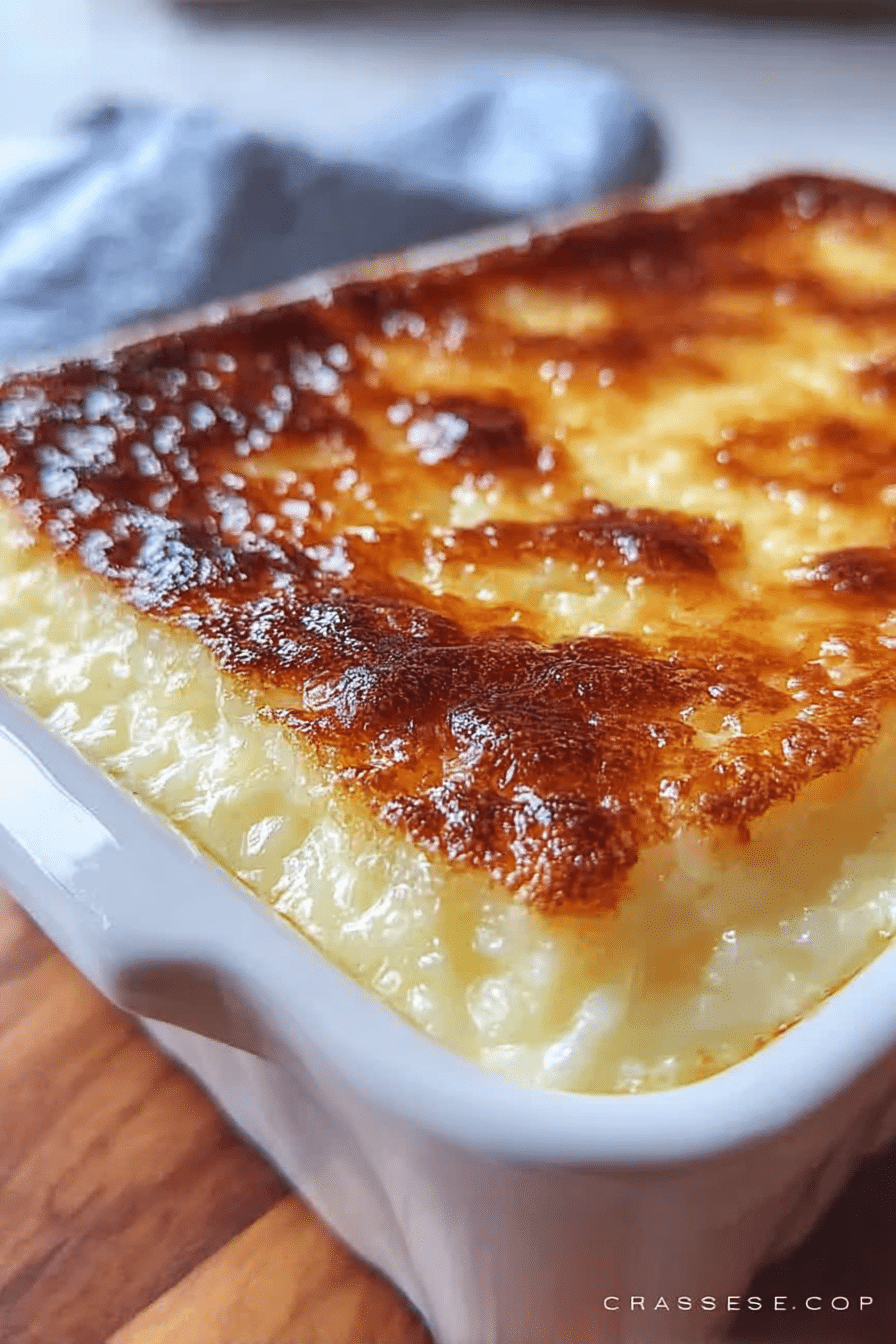
I like that this pudding asks for very little time up front—about fifteen minutes of hands-on work—and then it bakes gently while you do something else. When friends pop by unexpectedly, I can whisk it together from pantry staples and have the house smelling like comfort in under an hour and a half.
In my kitchen this goes straight from the oven to the table, spooned into bowls and finished with a sprinkle of cinnamon or a handful of toasted nuts. It’s forgiving, keeps well, and feels special without fuss—perfect for busy weeknights or for serving a crowd with minimal drama.
Why this creamiest condensed milk baked rice pudding is perfect for busy cooks
This pudding is a go-to because it uses ingredients you likely have on hand and requires very little attention while it bakes. It doesn’t demand constant stirring or last-minute finishing touches, which makes it ideal when you’re juggling work, kids, or last-minute guests. Imagine the warm scent of vanilla and cinnamon filling your home while you finish dinner—comfort with almost no fuss.
It’s also forgiving: a little extra milk early on or a slightly longer bake won’t ruin the dish the way some delicate desserts will. That reliability makes it my top pick when I want something that both tastes nostalgic and travels well to potlucks or family dinners.
Everything You Need for Creamiest Condensed Milk Baked Rice Pudding
Here’s what you’ll want on hand and why each piece matters so you feel ready before you start.
- Short-grain rice – Gives you natural creaminess because the grains release more starch as they cook; it’s the backbone of a smooth pudding.
- Sweetened condensed milk – Adds sweetness and an ultra-smooth, glossy texture that commercial sugar and milk alone can’t match.
- Whole milk – Provides richness and thins the condensed milk to the right custard-like consistency; you can swap for a plant-based milk if needed.
- Eggs – Give structure and silkiness once baked; temper them carefully with warm rice so they don’t scramble.
- Vanilla and cinnamon – Vanilla brings warmth and depth; cinnamon adds a comforting, toasty aroma—adjust to taste.
- Salt – A tiny pinch lifts the sweetness and rounds flavors.
- Butter – For greasing the dish and dotting on top for a golden finish while baking.
- Baking dish and whisk – Use a shallow, ovenproof dish so the pudding bakes evenly; a sturdy whisk helps get the custard smooth.
The Secret to the Perfect Silky Texture
Silkiness comes down to timing, temperature, and gentle handling. Cook your rice until it’s tender but still has a slight bite—overcooked rice can break down and become gluey, while undercooked rice stays grainy. Warm rice mixed into the egg-and-condensed-milk base helps everything come together without scrambling the eggs.
Achieving a silky texture in desserts is crucial, as seen in dishes like cream cheese stuffed peppers which also balance flavors beautifully.
- Cook rice until just tender; some chew keeps the pudding interesting and prevents a pasty finish.
- Whisk the eggs and condensed milk until slightly frothy so the custard is even and glossy.
- Temper the eggs by stirring a spoonful of warm rice and milk into the eggs before combining everything; this avoids scrambled bits.
- Fold gently—use a flexible spatula and combine with a few steady strokes to keep the mixture smooth.
- Bake at a moderate oven temperature so the custard sets slowly; you want the edges firm with a slight jiggle in the center.
Why Rice Type and Temperature Matter
Short-grain rice releases more starch as it cooks, which naturally thickens the mixture and makes the pudding velvety. If you use medium- or long-grain rice, expect a looser texture and more distinct, separate grains.
Temperature matters at two moments: when cooking the rice and when combining it with the egg mixture. Hot rice can scramble eggs; cool rice won’t meld as smoothly into the custard. Aim to have the rice warm—comfortably hot to the touch but not steaming—when you temper it into the eggs. Visually, perfectly cooked rice looks plump and glossy; tactilely, each grain should yield under gentle pressure.
How to Make Creamiest Condensed Milk Baked Rice Pudding (Step-by-Step)
- Preheat the oven to a moderate heat and thoroughly butter an ovenproof baking dish, including the sides so the pudding releases easily once baked.
- Rinse your short-grain rice under cold water until the rinse runs clearer, then combine it with milk and a pinch of salt in a saucepan and bring to a gentle simmer over medium-low heat.
- Cook, stirring occasionally, until the rice is tender but still slightly firm at the center—this usually takes under twenty minutes; you want plump, glossy grains, not a mush.
- While the rice cooks, whisk together eggs, sweetened condensed milk, vanilla, and cinnamon until the mixture is smooth and a touch frothy; this helps the custard be even.
- Temper the eggs by stirring a spoonful of the warm rice and milk into the egg mixture, then slowly fold the warmed rice into the eggs to avoid scrambling.
- Pour the combined mixture into the prepared baking dish and dot the top with butter for a golden finish; this also adds flavor as the butter melts and browns.
- Bake for about fifty to sixty minutes until the top is golden and the edges are set—the center should still have a slight jiggle.
- Remove from the oven and let cool at least fifteen minutes to finish setting; serve warm or at room temperature, with an optional sprinkle of cinnamon or toasted nuts.
Pro Tip for creamiest condensed milk baked rice pudding: cook rice just until tender before mixing
- I always taste the rice before I stop cooking it—if it has a tiny bit of resistance at the core, it’s ready. It will finish cooking in the oven while the custard sets.
- If the rice seems dry when you mix everything, stir in a splash of milk to loosen the texture before baking.
- Use room-temperature eggs so they incorporate more smoothly; cold eggs increase the risk of little curdled bits.
- For an extra-silky surface, dot with butter and bake uncovered; if you prefer a creamier top layer, tent with foil for the first half of the bake.
Easy Variations: Fruit, Spices, and Dietary Swaps
These small changes let you tailor the pudding to the season or to what’s in your pantry.
- Fruit additions – Stir in raisins, dried cranberries, or fresh berries before baking for bursts of sweetness and texture.
- Spice swaps – Try cardamom, nutmeg, or a pinch of ground ginger for a seasonal twist that pairs beautifully with the condensed milk base.
- Nutty finish – Toasted almonds or pecans add crunch and a toasty aroma; sprinkle them on just before serving.
- Dairy-free option – Substitute full-fat coconut milk or a rich almond milk and use a dairy-free condensed milk alternative to keep the creaminess without dairy.
- Lower-sugar approach – Use a lighter condensed milk or mix regular condensed milk with an unsweetened milk alternative to reduce sweetness while keeping texture.
If you’re looking for creative ways to customize your dessert, try adding flavors from our banana peanut butter oatmeal bars.
How to Store, Reheat, and Make-Ahead the Pudding
- Cool the pudding to room temperature before covering tightly and refrigerating; it will keep well for up to four days.
- To reheat, warm gently in the oven at a low temperature until heated through, or microwave in short bursts, stirring occasionally to keep the texture even.
- If you plan to make this ahead for a gathering, bake it earlier in the day and bring it to room temperature before serving, finishing with a quick reheat if you prefer it warm.
- Leftovers are great topped with fresh fruit or a sprinkle of toasted nuts to refresh the texture.
For a complete meal, consider pairing your pudding with dishes like our easy Mediterranean lamb meatballs for a delightful contrast.
Cultural Variations of Rice Pudding from Around the World
Rice pudding goes by many names and styles around the world—each uses local ingredients and cooking techniques to shape the final texture and flavor. In India, kheer is gently simmered with cardamom and often studded with chopped nuts. In Italy, rice pudding can be denser and sometimes enriched with mascarpone. Many Latin American versions add cinnamon sticks and citrus zest for a brighter finish.
These variations show how a simple base—rice, milk, and sweetener—can become something uniquely regional. Explore the diverse world of pudding desserts, such as the famous New Orleans bread pudding, to see how techniques and local ingredients shape textures and flavors.
Troubleshooting
- I sometimes see a grainy texture—this usually means the rice was undercooked or the egg mixture wasn’t tempered properly; make sure the rice is warm and temper the eggs slowly.
- If the top browns too quickly while the center is still liquid, tent the dish with foil and continue baking slowly until set.
- If the pudding feels too dense, I stir in a little warm milk before serving to loosen the texture and bring back a glossy finish.
- To fix curdled spots, strain the mixture before baking or scoop out any scrambled bits and rebalance with a touch of extra milk and whisking.
Frequently Asked Questions
Can I use other types of rice for this pudding?
While short-grain rice is recommended for its creamy texture, you can experiment with other types like medium-grain rice. Just be aware that the texture may vary!
How long can I store the baked rice pudding?
You can store the baked rice pudding in the refrigerator for up to 4 days. Just make sure to cover it tightly to keep it fresh.
Can I make this pudding ahead of time?
Yes! You can prepare the pudding in advance and store it in the refrigerator. Just reheat it gently in the oven or microwave before serving.
Is there a dairy-free version of this recipe?
Absolutely! You can substitute the whole milk and condensed milk with plant-based alternatives like almond milk and coconut cream for a dairy-free option.
What toppings pair well with this rice pudding?
Sprinkling cinnamon, adding toasted nuts, or serving with fresh fruits can elevate your rice pudding and add delicious flavors!
Creamiest Condensed Milk Baked Rice Pudding
Ingredients
Method
- Preheat your oven to 325°F (160°C). Butter a 9×9-inch baking dish thoroughly, including the sides.
- Rinse 1 cup of short-grain rice under cold water until clear.
- In a medium saucepan, combine rinsed rice, whole milk, and a pinch of salt. Bring to a gentle simmer and cook until rice is tender, about 18-20 minutes.
- While the rice cooks, whisk together eggs, condensed milk, vanilla extract, and ground cinnamon until smooth.
- Carefully stir the warm cooked rice into the egg and milk mixture gently.
- Pour the pudding mixture into the prepared baking dish and dot the top with butter.
- Bake in the preheated oven for 50 to 60 minutes until the top is golden and slightly puffed.
- Let the pudding cool for at least 15 minutes before serving.
- Serve warm or at room temperature, optionally sprinkled with cinnamon or toasted nuts.