

I make this skillet on the nights I have less than an hour between the door and the dinner table. I live for meals that respect both my time and my taste buds, and this creamy garlic-paprika shrimp skillet does exactly that—bright lemon, smoky paprika, garlic that perfumes the whole kitchen, and tender shrimp finished in a silky sauce. On my busiest evenings it’s the kind of dish that feels like a reward when you sit down to eat.
I still remember the first time I browned shrimp as the base for a quick cream sauce; the scent of garlic and paprika frying together made the whole apartment feel like a tiny restaurant. That aroma is one of the reasons this recipe works so well for weeknights—the cooking is fast, but the result feels composed and satisfying. If you’re juggling work, family, or late practices, this skillet gives you bold flavor without complicated steps.
Beyond speed, I love how forgiving the recipe is. A few smart prep moves (patting the shrimp dry, having your aromatics chopped) make a big difference, and the one-skillet finish keeps cleanup minimal. Read on and I’ll walk you through what to shop for, the small techniques that protect the shrimp from overcooking, and simple swaps if you need dairy-free or lower-sodium options.
Why this Creamy Garlic-Paprika Shrimp Skillet is perfect for busy weeknights
This recipe is built around speed and simplicity. The total on-the-stove time is about the same as a short TV episode, and everything cooks in a single skillet so there’s minimal cleanup when you’re done. I started making this on nights when I had only 30 minutes to feed my family; it became the go-to because it looks and tastes like more effort than it actually is.
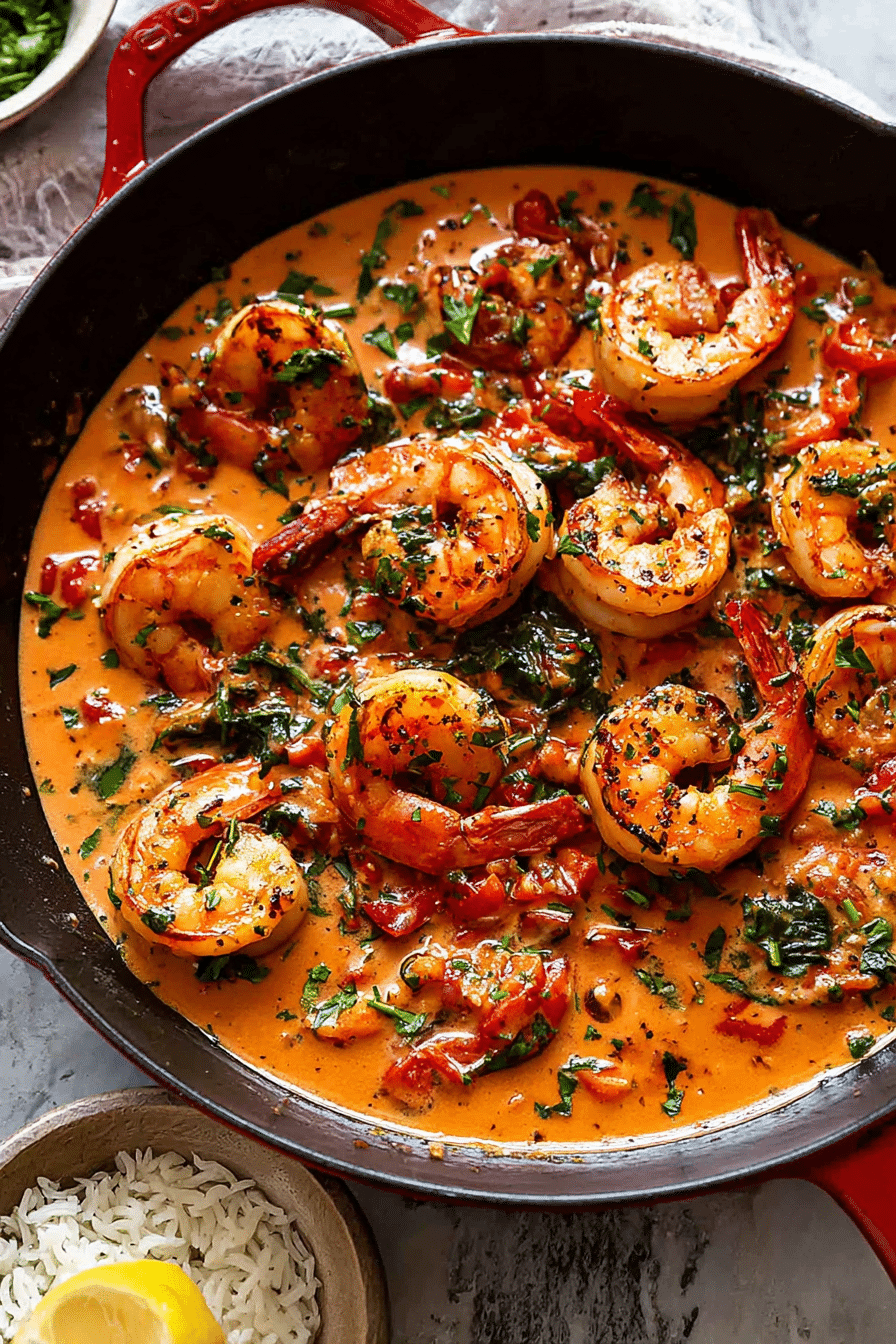
On busy nights, homemade meals are linked to better eating habits and reduced takeout spending—so this one-pan approach helps you cook more at home without added hassle. The sizzling garlic and paprika in the pan fill your kitchen with a warm, smoky aroma that makes the short cook time feel indulgent. The visual payoff is immediate: bright red pepper, glossy spinach, and pink shrimp in a creamy, lemon-bright sauce.
Everything You Need for Creamy Garlic-Paprika Shrimp Skillet
Here’s what to have on hand and why each item matters. I recommend sourcing sustainably caught shrimp when possible—it makes a flavor and ethical difference. Use the freshest produce you can find; the red pepper and spinach are really the color and texture heroes here. For tools, a roomy skillet and a sharp knife will save you time.
- Shrimp – The star protein; choose peeled and deveined shrimp for fastest prep and even cooking.
- Salt & Pepper – Seasoning backbone; adjust to taste and use lower-sodium options if needed.
- Olive Oil – For searing shrimp and sautéing aromatics; a neutral high-heat oil works too.
- Shallot – Adds sweet, mild onion flavor that melts into the sauce.
- Red Bell Pepper – For color, crunch, and a touch of sweetness.
- Garlic – Provides the savory backbone; mince finely so it blends into the sauce.
- Tomato Paste – Concentrates umami and adds depth and color when caramelized.
- Crushed Red Pepper Flakes – For controlled heat; you can scale this up or down.
- Broth – Deglazes the pan and builds a savory base; choose low-sodium broth if you’re watching salt.
- Paprika – Offers color and mild smokiness; smoked paprika or sweet paprika shifts the flavor subtly.
- Spinach – Wilts into the sauce for freshness and a juicy contrast to the cream.
- Heavy Cream – Creates a rich, silky sauce; see swaps below for dairy-free or lighter options.
- Lemon – Balances the creaminess with bright acidity; always add fresh lemon at the end.
- Fresh Parsley – Finishing herb for brightness and color.
- Kitchen Tools – A large skillet, spatula or tongs, sharp knife, and a small bowl for seasoning are the essentials.
The Secret to Tender, Juicy Shrimp Every Time
- Pat the shrimp dry – Moisture is the enemy of a good sear. When you pat shrimp completely dry, you get quick browning and a better texture.
- Hot pan, short time – Shrimp cook fast; high heat and brief searing keep them firm but tender. Overcooking makes them rubbery because the proteins contract too much.
- Don’t crowd the pan – Give each shrimp a little space so they sear instead of steam. If your pan is small, cook in two batches.
- Watch for the shape change – Shrimp go from translucent to opaque and curl into a loose “C”. If they curl into a tight “O”, they’re likely overcooked.
- Carryover heat matters – Remove shrimp from the pan a touch earlier than you think; residual heat will finish them while you build the sauce.
Why Paprika and Garlic Make the Sauce Sing
Garlic gives the sauce an aromatic, savory backbone—when it hits hot oil it releases those irresistible, toasty compounds that mingle with the shrimp’s seafood aroma. Paprika contributes more than color; it brings a mild peppery warmth and, if you use smoked paprika, a subtle smoky edge that complements the sweetness of the shrimp and red bell pepper.
I often reach for tomato paste and a quick simmer of broth to add umami depth before finishing with cream and lemon. The lemon juice is essential: its bright acid cuts through the richness, making the sauce feel lighter and more layered. When I taste the finished skillet, I look for that balance between creamy, smoky, garlicky, and citrus-bright.
How to Make Creamy Garlic-Paprika Shrimp Skillet (Step-by-Step)
- Season shrimp evenly and pat dry. Heat your skillet over medium-high and add oil until shimmering.
- Arrange shrimp in a single layer without crowding; sear until the underside is golden, flip once, and cook just until opaque. Transfer shrimp to a plate to avoid overcooking.
- Reduce heat to medium, add the remaining oil, then add shallot and red pepper. Sauté until softened and fragrant—the pan should smell sweet and slightly caramelized.
- Add garlic, tomato paste, and red pepper flakes; cook until garlic is aromatic and the tomato paste darkens slightly (this caramelization adds deep flavor).
- Pour in broth to deglaze the pan, scraping up any browned bits; simmer until reduced by about half for concentrated flavor.
- Stir in paprika and add the spinach, cooking until it just wilts and integrates into the sauce.
- Lower the heat and stir in the cream and fresh lemon juice, then taste and season with the remaining salt and pepper.
- Return the shrimp to the skillet to warm through and soak up the sauce for a minute. Finish with chopped parsley and serve over your preferred grain or with crusty bread for dipping.
- Common mistakes to avoid: cooking shrimp too long, skipping the pan deglaze step, and adding lemon too early (it can curdle a dairy sauce if the heat is too high).
- Time-saving hacks: chop the shallot and pepper while the pan heats, use pre-peeled shrimp, and have broth measured and ready to pour.
Pro Tip for creamy garlic-paprika shrimp skillet: dairy-free and low-sodium swaps
- Dairy-free cream alternatives – Use canned coconut cream for a rich, silky finish, or a thick cashew cream for a neutral flavor; both maintain texture without dairy.
- Lower-sodium broth – Choose low-sodium or homemade broth so you control salt; boost flavor with extra garlic, a splash of lemon, or a pinch more paprika instead of more salt.
- Thickening without heavy cream – If you want a lighter sauce, stir a small slurry of cornstarch and cold water into warm broth before adding lemon; it will thicken without dairy.
- Adjusting heat and spice – Reduce crushed red pepper for milder heat or swap in smoked paprika for a deeper flavor without more spice.
Troubleshooting
- If the sauce separates or looks oily, lower the heat and whisk in a small splash of broth; finish with lemon off the heat to bring it back together.
- If shrimp are rubbery, they were overcooked—next time remove them from the pan just as they turn opaque and finish in the sauce for a minute.
- If the sauce is bland, check salt first; then add a bit more tomato paste or a squeeze of lemon to brighten flavors.
- If the pan gets crowded and shrimp steam, cook in batches and keep finished shrimp warm on a plate while you finish the sauce.
Variations
- Smokier version – Use smoked paprika and finish with a touch of bacon or pancetta for extra depth.
- Tomato-forward – Add a can of diced tomatoes when deglazing for a lighter, chunkier sauce.
- Green herbs – Swap parsley for cilantro or basil for a different herbal profile.
- Gluten-free pairing – Serve over quinoa or rice instead of orzo to keep the meal gluten-free.
Quick Sides That Pair Perfectly with the Shrimp Skillet
Think simple and speedy: orzo or rice soaks up the sauce, and crusty bread is excellent for dipping into the creamy pan juices. A crisp green salad with a lemon vinaigrette offers a bright counterpoint, while quickly sautéed seasonal vegetables add color and fiber.
- Cooked orzo or long-grain rice to absorb the sauce.
- Crusty bread for wiping the skillet clean.
- Simple mixed green salad dressed with lemon and olive oil for freshness.
- Quick-blanched or sautéed seasonal vegetables like asparagus or green beans to round out the plate.
How to Store, Reheat, and Make-Ahead the Shrimp Skillet
Leftovers can be convenient, but shrimp are delicate—store properly and reheat gently to preserve texture.
- Storing: Cool to room temperature, then refrigerate in an airtight container. Use within 2 days for best texture and flavor.
- Reheating: Gently warm on the stovetop over low heat with a splash of broth or water to loosen the sauce; avoid high heat which will overcook the shrimp. Alternatively, reheat in a microwave in short bursts, stirring and checking often.
- Make-ahead strategy: Prepare the sauce (through the simmer and before adding cream) and keep it chilled; quickly reheat the sauce and finish with cream and freshly cooked shrimp when you’re ready to serve.
- Freezing: I don’t recommend freezing the finished dish—the cream can separate and shrimp can get rubbery. If you must freeze, freeze the sauce (without cream) and cook shrimp fresh when serving.
Frequently Asked Questions
Can I use frozen shrimp for this recipe?
Yes, frozen shrimp can be used! Just make sure to thaw them completely and pat them dry before cooking for the best results.
What can I substitute for heavy cream?
You can use coconut cream or a dairy-free cream alternative. For a lower-calorie option, try using milk with a bit of cornstarch for thickness.
Is this recipe spicy?
The recipe has a mild spice from the crushed red pepper flakes. You can adjust the amount to your taste or omit it for a milder flavor.
How can I make this dish gluten-free?
Simply use gluten-free broth and pair the shrimp skillet with a gluten-free grain like quinoa or rice.
What sides would go well with the shrimp skillet?
This dish pairs nicely with cooked orzo, rice, or crusty bread. A side salad or steamed vegetables would also complement it well!
Creamy Garlic-Paprika Shrimp Skillet
Ingredients
Method
- Pat shrimp dry with a paper towel, and season evenly with 1/2 tsp. each of salt and black pepper. Heat 2 Tbsp. of the oil in a large skillet over medium-high. Once hot, arrange shrimp in pan, avoiding any overlap (if possible), and cook 3 minutes. Flip, and cook 1 more minute, until the shrimp are firm to the touch and no longer opaque. Transfer to a plate.
- Reduce heat to medium. Add remaining 1 Tbsp. oil to pan, along with shallots and red bell pepper. Cook 3 to 4 minutes, until soft. Add garlic, tomato paste, and red pepper flakes; cook 2 to 3 minutes, until garlic is aromatic and tomato paste is caramelized. Pour in broth to deglaze pan; simmer 5 minutes, or until liquid is reduced by about half.
- Stir in paprika and spinach; cook 1 to 2 minutes, until spinach is wilted. Finally, stir in heavy cream and lemon juice, and season with remaining 1/2 tsp. sea salt and 1/4 tsp. black pepper. Nestle cooked shrimp back into skillet and garnish with fresh parsley. Serve over rice or orzo, or enjoy with crusty bread.