

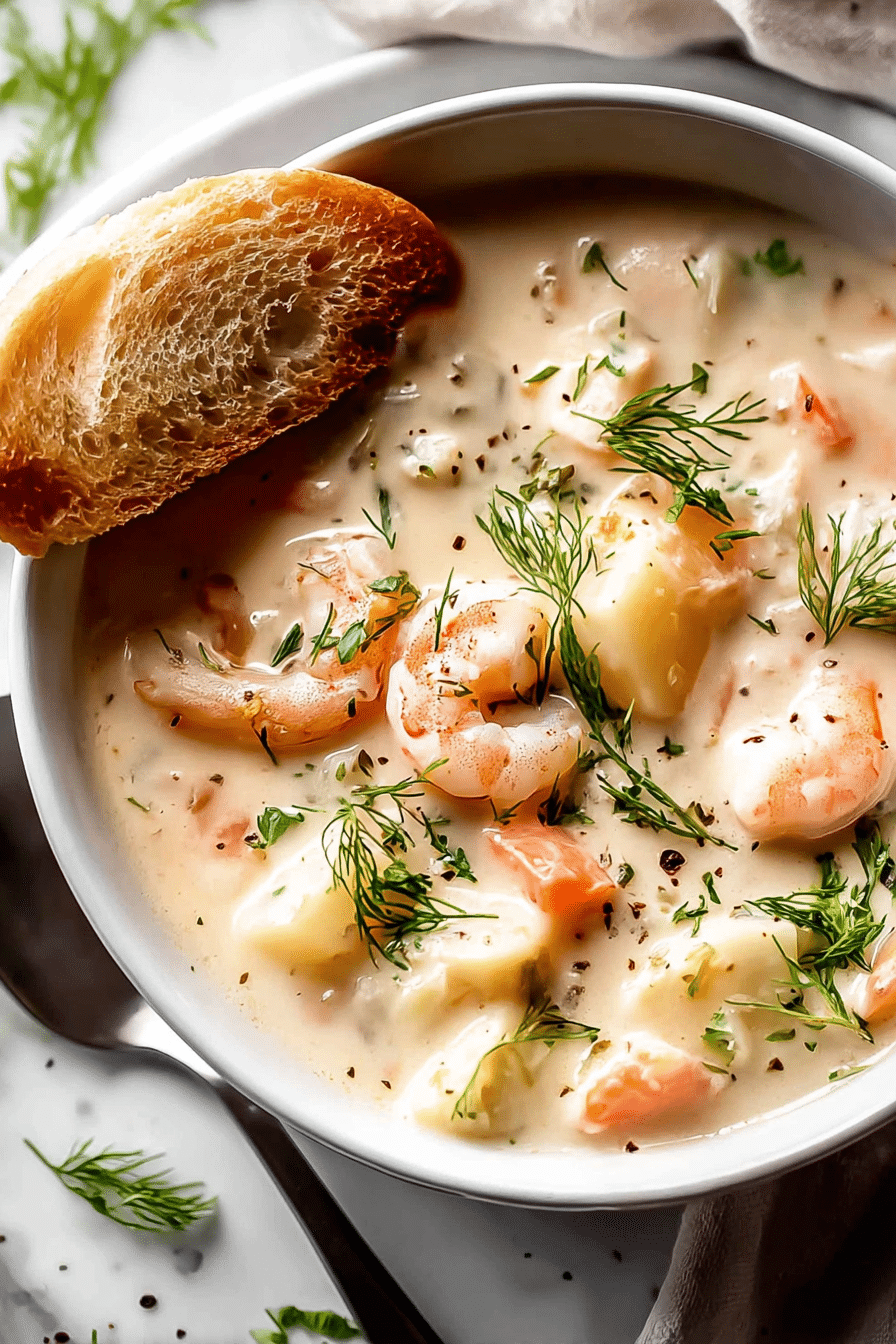
I make this creamy seafood chowder when my weeknight needs comfort and speed in equal measure. In my kitchen it has become the go-to for evenings when I want something satisfying without a lot of fuss — the aroma of bacon and seafood fills the house fast, and the texture is luxuriously silky while still feeling homey.
I like that this recipe scales and adapts: you can swap seafood based on what’s fresh or on sale, add a few more vegetables to stretch it, or lighten it up if you’re watching calories. The method is forgiving — once you get the timing right, it practically cooks itself while you set the table.
If you’re after a quick, hands-on weeknight meal that still feels special, this chowder is exactly that. It’s fast to prepare, fills the house with comforting smells, and yields leftovers that reheat beautifully with one small trick I’ll share below.
Why this creamy seafood chowder is perfect for busy weeknights
This chowder works for weeknights because it combines speed, minimal prep, and big, comforting flavor without demanding your full attention.
- Quick preparation and cook time — most steps happen in a single pot so cleanup is fast.
- Simple, accessible ingredients mean you won’t need a special shopping trip; pantry staples and a bag of frozen seafood get you most of the way there.
- Versatile — swap in whatever seafood is available, add extra veg, or leave out the bacon for a lighter version.
- Sensory payoff: the warming scent of rendered bacon fat, then garlic and onion, followed by gentle steam of seafood cooking — very inviting and satisfying after a busy day.
Everything You Need for Creamy Seafood Chowder
Below is a conversational, scannable ingredient breakdown for making this creamy seafood chowder. Read through so you’ve got everything ready before you start — mise en place saves time and stress.
- Bacon or pancetta – Builds smoky, savory base flavor; use as the fat for sautéing.
- Onion – Sweetness and depth when softened.
- Celery – Aromatic crunch that balances the creaminess.
- Carrot – Adds colour and a touch of natural sweetness.
- Garlic – For a gentle aromatic lift.
- Mixed seafood (shrimp, salmon, white fish, optional shellfish) – The stars of the chowder; choose a balance of textures.
- Potatoes – The textural backbone that helps thicken and make the chowder hearty.
- Flour – Acts as a thickening agent when cooked briefly with the vegetables.
- Seafood or chicken broth – The liquid base for cooking and flavour extraction.
- White wine (optional) – Adds brightness and acidity; cook off the alcohol before adding cream.
- Double cream / heavy cream – For the classic rich mouthfeel; alternatives are listed below if you want lighter options.
- Fresh parsley and thyme – Herbs to finish and lift the dish.
- Salt and pepper – Essential seasoning; adjust near the end so you don’t over-salt the seafood.
- Tools – A large, heavy-bottomed pot or Dutch oven, a wooden spoon, a ladle, and a slotted spoon for removing bacon or shellfish.
The best seafood to use — what to pick and why
Choose a mix of textures: a firm white fish for flakiness, salmon for richness, and shrimp for snap. Freshness matters — the better your seafood, the brighter the final chowder.
- White fish (cod, haddock) – Mild flavour and flaky texture that soaks up the broth without falling apart immediately.
- Salmon – Adds fat and colour; use chunks so they hold shape in the chowder.
- Shrimp or prawns – Quick-cooking and textural contrast; add near the end so they stay tender.
- Shellfish (mussels, clams) – Optional, but they add briny depth; cook them just until shells open.
- Freshness and sourcing – If possible, buy from a trusted fishmonger or choose responsibly sourced frozen seafood; frozen can be a great, consistent option for weeknights.
- Regional swaps – On the West Coast you might add Dungeness crab; in colder waters, hake or pollock are excellent and often affordable.
If you’re also interested in a classic, try our clam chowder for a delightful seafood experience.
How to keep it lighter: cream substitutions and smart swaps
You can keep the creamy mouthfeel while cutting calories and fat with a few smart swaps. Each option affects flavour and thickness differently — I’ll point out what to expect so you can choose what works for you.
- Coconut milk – A good dairy-free option with a naturally rich texture; it adds a subtle coconut note that pairs well with white fish and shrimp.
- Half-and-half or reduced-fat cream – Keeps the creamy texture but lowers fat; finish gently to prevent curdling.
- Pureed white beans or cashews (soaked and blended) – Adds body without dairy; cashew cream is exceptionally smooth and neutral in flavour.
- Greek yogurt (tempered) – Adds tang and richness but must be warmed slowly and tempered with hot broth to avoid splitting.
- More vegetables and broth – Increase veggies like leeks, corn, or fennel and reduce cream volume to cut calories while keeping volume and flavour.
- Slow cooker / Instant Pot adaptations – For lighter hands-on time, use an Instant Pot to cook the base quickly or a slow cooker for a gentle, low-fat braise; add delicate seafood and cream at the very end to prevent overcooking and curdling.
For a lighter meal option, you might also enjoy our creamy garlic chicken recipe, which has simple substitutions.
Another tasty alternative is garlic butter salmon, which features lighter flavors and healthy ingredients.
The secret to the perfect chowder texture
Texture comes down to three things: the thickening method, slow incorporation of liquid, and gentle simmering. Get these right and you’ll have that inviting, creamy swirl everyone loves.
- Roux and flour timing – Cook the flour briefly with the softened vegetables so the raw taste cooks out; this is the backbone of a smooth, stable chowder.
- Slowly add liquid – Whisk in broth a little at a time to prevent lumps; a steady stream while stirring keeps the base silky.
- Controlled simmer — Bring to a simmer, not a rolling boil, to let potatoes break down slightly and thicken the liquid without making the cream separate.
- Finish gently — Add cream and seafood at low heat so the emulsion stays intact and seafood remains tender.
Troubleshooting common texture issues:
- Too thin — Simmer uncovered until reduced, or mash a few potato pieces against the pot to thicken naturally.
- Lumpy — Whisk vigorously while adding broth; if lumps appear, strain or blend briefly with an immersion blender to smooth.
- Curdled cream — Remove from high heat, whisk in a splash of cold broth, and return to very low heat; next time temper yogurt or lower-fat dairy with hot broth first.
How to Make Creamy Seafood Chowder (Step-by-Step)
- Render the bacon or pancetta in a large pot until crisp; remove with a slotted spoon and leave the fat to sauté aromatics.
- Sauté onion, celery, and carrot in the rendered fat until soft and translucent, then add garlic briefly until fragrant.
- Sprinkle flour over the softened vegetables and cook for a minute or two to lose the raw flour taste while stirring constantly.
- Gradually whisk in stock and optional wine, keeping the liquid steady and smoothing out any lumps as you go.
- Add diced potatoes and simmer until just tender; reduce heat to low so the potatoes release some starch into the broth.
- Add seafood in order of cooking time — firmer white fish first, then salmon, and shrimp last — and cook gently until proteins are opaque and just cooked through.
- Stir in cream and chopped parsley, adjust seasoning with salt and pepper, and heat through without boiling.
- Ladle into bowls and finish with the reserved crispy bacon or pancetta and a sprinkle of fresh herb.
Pro Tip for creamy seafood chowder: timing seafood for tenderness
- Shrimp/prawns: add in the last few minutes; they go from underdone to rubbery quickly.
- Salmon: cut into bite-sized chunks and add with medium-fast cooking time so you keep some texture; it should be just opaque in the center.
- White fish (cod, haddock): adds early if in larger chunks, or later if cut small; it should flake easily but not disintegrate.
- Shellfish (mussels/clams): add early enough to allow shells to open, but discard any that remain closed.
- Factors: thickness, starting temperature (frozen vs fresh), and whether seafood is pre-seasoned all affect cooking time — when in doubt, cook at lower heat and check often.
- I’ve found that adding seafood in stages and using visual cues (opaque flesh, firm but springy) is the simplest way to avoid overcooking.
How to Store and Reheat Creamy Seafood Chowder (Make-Ahead & Variations)
Leftovers are doable, but there are a few tricks to keep texture and flavour intact. Proper storage and reheating will make your second-day chowder taste almost as good as the first.
- Refrigeration: Cool quickly and store in airtight containers for up to three days; remove large chunks of seafood if you plan to reheat multiple times.
- Freezing: Freeze before adding cream for best texture — cream can separate after freezing. Alternatively, use a freezer-friendly dairy substitute if you plan to freeze the finished dish.
- Reheating: Warm gently on the stovetop over low heat, stirring often; add a splash of broth or water if the chowder becomes too thick.
- Make-ahead: You can prepare the base (broth, potatoes, vegetables) and keep it chilled; add seafood and cream just before serving for the best texture.
- Variations: Swap in seasonal vegetables (corn in summer, leeks in spring), or try smoked fish for a different flavour profile.
For more tips on storing and reheating, check out our article on shrimp and corn soup.
Frequently Asked Questions
What seafood works best for creamy seafood chowder?
A combination of shrimp, salmon, and white fish is ideal for a well-rounded flavor. Adding some shellfish can enhance the chowder’s depth.
Can I make this chowder healthier?
Absolutely! You can reduce the heavy cream by substituting it with half-and-half or use a lower-fat cream alternative. Adding more vegetables can also help lighten the dish.
How do I store leftover chowder?
Store leftovers in an airtight container in the refrigerator for up to three days. To reheat, gently warm on the stovetop, adding a splash of broth or water if it thickens too much.
Is it possible to make this chowder in advance?
Yes! You can prepare the chowder ahead of time and store it in the fridge. Just remember to add the seafood just before serving for the best texture.
What can I serve with seafood chowder?
Crusty bread, biscuits, or a simple green salad pair wonderfully with seafood chowder for a complete meal.
Creamy Seafood Chowder
Ingredients
Method
- In a large pot over medium heat, cook the diced bacon or pancetta until crispy. Remove with a slotted spoon and set aside, leaving the rendered fat in the pot.
- Add the onion, celery, carrot, and garlic to the pot. Sauté until the onions are translucent and softened.
- Sprinkle the flour over the sautéed vegetables, stir well, and cook for 1-2 minutes until the flour is well combined.
- Gradually whisk in the broth, ensuring no flour lumps remain. Add the white wine if using.
- Add the diced potatoes to the pot. Bring to a boil, then reduce to a simmer until the potatoes are just tender, about 10-15 minutes.
- Add the mixed seafood to the pot and cook for an additional 5-10 minutes, or until the seafood is cooked through.
- Stir in the heavy cream, salt, pepper, parsley, and thyme if using. Continue to cook until everything is heated through.
- Ladle the chowder into bowls and garnish with the crispy bacon or pancetta.