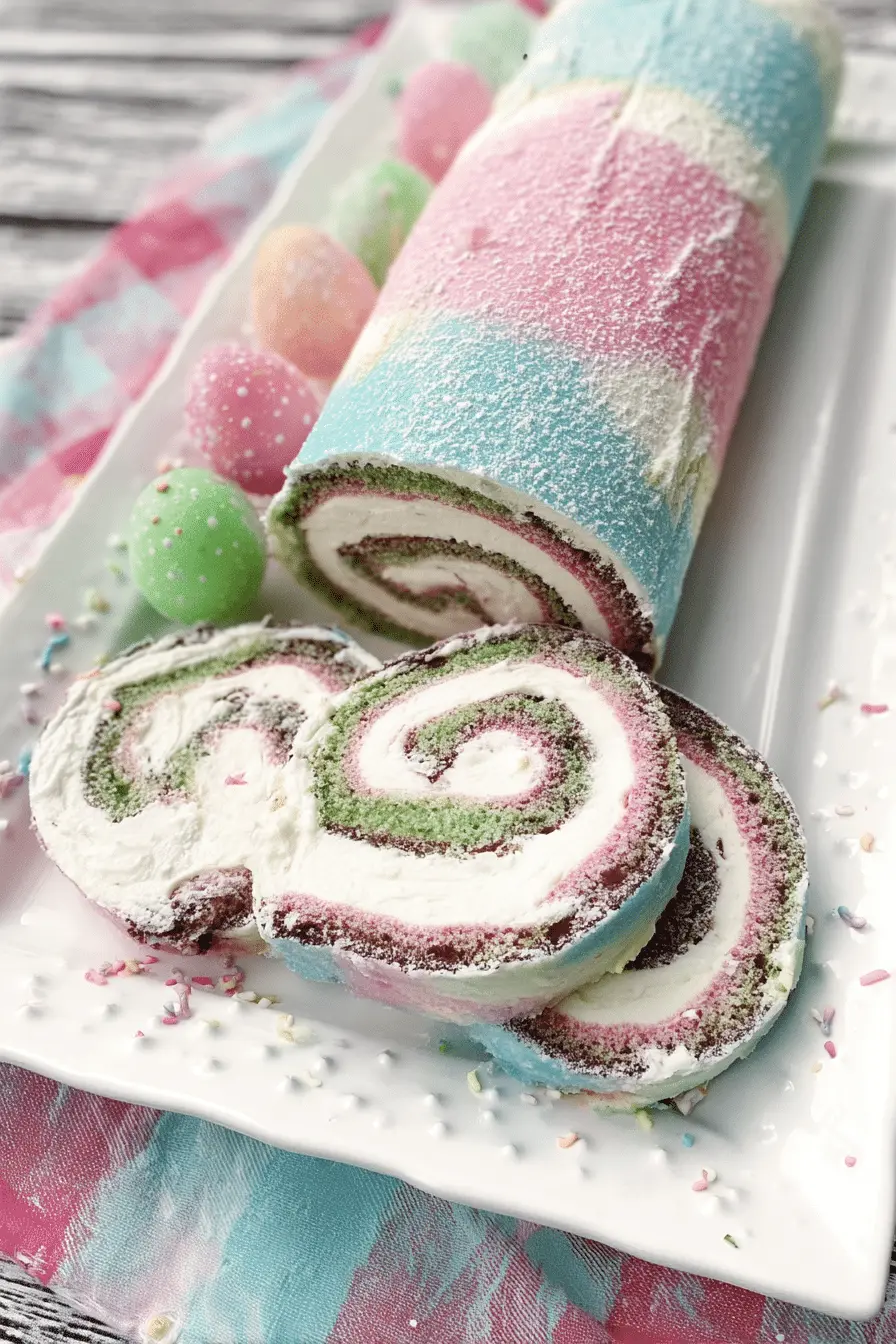
The Easter Cake Roll I Make Every Spring - Pastel & Playful
- Prep
- 20 min
- Cook
- 12 min
- Total
- 212 min
- Serves
- 8
- Calories
- 239 kcal
- Carbs
- 27.00 g
Introduction
I have a memory of little hands smudging pastel frosting on my sleeves and the whole kitchen smelling faintly of lemon and vanilla the moment this cake came out of the oven. I make a version of this Easter Cake Roll every spring — it's become our signature centerpiece when family gathers for the holiday. The ribbon of color inside always gets an audible 'ooh' when I slice it, and I love how a simple roll can look so celebratory on the table.
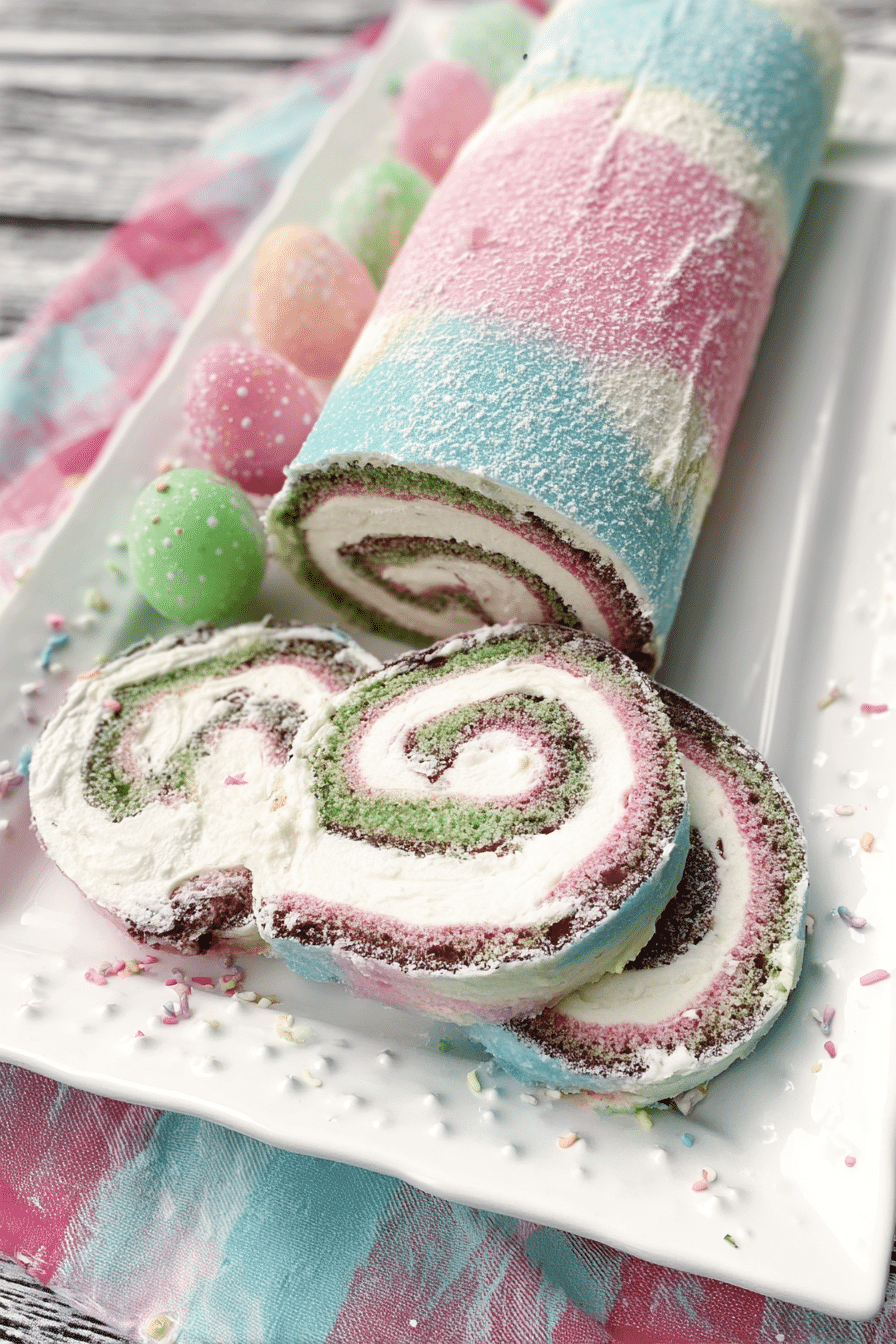
Making this cake roll became my ritual: mix, color, spread, roll. I learned the hard way that timing matters — too cool and the cake cracks, too soft and the filling oozes. Over the years I’ve tweaked the technique so you can get the same show-stopping look with a lot less stress. I’ll share the little tricks I learned (and the mistakes I made) so your first slice is as pretty as the one you see here.
Beyond Easter, this recipe is perfect for birthdays, spring brunches, or any time you want a dessert that's both playful and elegant. The pastel swirls let you match party themes, and the texture is light enough that a few slices feel indulgent rather than heavy. If you love a dessert that looks like it took all day but tastes like a breeze to make, this is the one I reach for.
Note: The Pro-Tips, Troubleshooting, and Variations sections below are formatted as bulleted lists for high scannability.
Everything You Need for Easter Cake Roll
- Egg whites (room temperature) – They give the cake lift and an airy crumb; letting them warm slightly helps them whip to fuller volume.
- Lemon juice – Adds a bright note and helps stabilize the whipped whites; fresh is best for that faint citrus aroma.
- Cake flour – Keeps the sponge light and tender; subbing all-purpose will work but the crumb will be denser.
- Sugar – Provides structure and sweetness; granulated keeps the sponge light while powdered smooths the filling.
- Pastel gel food coloring – Gels give vivid pastels without thinning the batter; you want concentrated color so you use less.
- Cream cheese and butter – For a silky, tangy frosting that holds its shape; dairy-free versions can use vegan cream cheese and plant-based butter.
- Vanilla extract – Rounds out the cream cheese filling; you can swap for almond or citrus extracts for different flavor notes.
- Powdered sugar (for dusting) – Keeps the top picture-perfect and prevents sticking while rolling.
Equipment to have ready: a rimmed baking sheet lined with parchment, a flat spatula for spreading, a clean kitchen towel and extra parchment for rolling, and a mixer with a whisk attachment for glossy egg whites. Pair this cake roll with a light fruit salad or a glass of sparkling elderflower lemonade to complement the delicate flavors.
How to Make Easter Cake Roll (Step-by-Step)
- Preheat and prepare your sheet pan: grease lightly and line with parchment so the sponge releases easily.
- Whip the room-temperature egg whites with a touch of lemon and salt until foamy; gradually add sugar and beat to soft peaks so the foam is stable but still pliable.
- Gently fold in the sifted cake flour with slow, deliberate strokes to keep as much air in the batter as possible; stop as soon as streaks disappear.
- Divide batter into bowls and tint each portion with a few drops of gel color until you reach the pastel shades you want; thicker gel means brighter pastels with less liquid.
- Drop alternating dollops of colored batter onto the prepared pan and use a flat spatula to gently spread into an even layer; avoid overworking the batter.
- Bake until the sponge springs back lightly; timing is precise here — you want a flexible cake, not one that pulls away from the pan too much.
- When it comes out, flip the cake onto a fresh sheet of parchment, remove the top parchment, dust lightly with powdered sugar, and roll tightly from the short end while still warm; wrap and chill to set the spiral.
- Beat the cream cheese and butter with powdered sugar and vanilla until smooth and spreadable; chill slightly if too soft before using.
- Carefully unroll the chilled cake, spread an even layer of filling, then re-roll gently but snugly; dust with powdered sugar right before serving.
The Secret to a Crack-Free Roll: Timing and Technique
- Bake just until the sponge springs back; overbaking dries it out and makes cracks inevitable.
- Flip the cake within a minute of coming out of the oven to transfer heat and prevent the top from drying; I learned this after my first cracked roll and it changed everything.
- Dust with powdered sugar before rolling to prevent sticking and to create a smooth inner surface.
- Roll while warm and wrap tightly in parchment and plastic to cool; this sets the spiral so when you unroll to fill it, the cake returns to shape without splitting.
- Troubleshooting tips I swear by: if your roll cracks slightly when you re-roll, press gently along the seam with the back of a spoon and use a ribbon of frosting to hide imperfections.
Pastel Decorating Techniques That Look Professional
- Create an ombré frosting by starting with a small amount of tinted filling at one end and gradually using more color as you move along; this gives a soft gradient when you slice.
- For a smooth finish, chill the rolled cake briefly after the final wrap, then dust with powdered sugar and use a soft pastry brush to remove excess—this keeps the look clean and airy.
- Simple tools that make a big difference: an offset spatula for even frosting, a small angled palette knife for neatening ends, and a piping bag with a round tip for dotted borders.
- Use edible decorations sparingly—tiny pastel candy eggs, a few sprigs of candied citrus peel, or a light sprinkle of colored sanding sugar keep the look playful without overwhelming the slices.
- Basic tutorial for novices: crumb-coat with a thin layer of frosting, chill until set, then finish with a smoother coat and minimal piping. Practice spreading on a scrap piece of parchment first to get the motion right.
Why Egg White Temperature and Mixing Matter for Texture
- Room-temperature egg whites whip to a greater volume because the proteins unfold more readily; cold whites can take longer and may not reach the same height.
- A small acid like lemon juice stabilizes the foam, helping it hold air during folding and baking so the sponge stays light.
- Stop whisking at soft peaks: overwhipping causes a dry, grainy foam that weeps and collapses; soft peaks give you structure with flexibility.
- Folding technique: use a wide spatula and cut through the center, lift and fold from the bottom, rotating the bowl—be patient so you keep most of the trapped air.
- Actionable prep tip: bring whites to room temp by leaving them on the counter for about 20 minutes before starting; if you’re in a hurry, place the sealed bowl in warm (not hot) water for a minute and dry thoroughly.
Pro Tip for Easter Cake Roll: Roll While Warm to Set a Seamless Spiral
- Roll the cake while it's still warm from the oven to train it into the spiral shape; I always wrap mine tightly in parchment and then plastic to hold that curve as it cools.
- Dust generously with powdered sugar before the first roll to prevent sticking between layers; it also creates a soft barrier that keeps the filling from seeping out later.
- If the cake resists when you unroll it to fill, chill just long enough to firm the exterior—too cold and it will crack, too warm and the filling will slide.
How to Store, Make-Ahead, and Serve Your Easter Cake Roll
- Wrap the rolled cake snugly in parchment and plastic wrap and refrigerate; this keeps the cake moist and the filling stable.
- You can make the roll a day ahead; bring it to room temperature for about 20 minutes before slicing for the best texture and flavor.
- To freeze: wrap tightly, place in an airtight container, and freeze for up to a month; thaw in the fridge overnight before serving and dust with powdered sugar just before plating.
- For serving, slice with a sharp serrated knife and wipe the blade between cuts for tidy pieces; arrange slices on a simple platter with a few fresh berries or edible flowers for a festive look.
Variations and Alternative Fillings for Your Cake Roll
- Fruit-forward: swap the cream cheese filling for stabilized whipped cream folded with fruit purée or spoonable jam for a brighter, lighter finish.
- Chocolate lovers: spread a thin layer of chocolate ganache before frosting for a richer spiral; orange zest in the filling pairs beautifully with chocolate.
- Allergen-friendly options: use a gluten-free cake flour blend in place of cake flour, and choose dairy-free cream cheese and vegan butter for a lactose-free version.
- Flavor swaps: replace some vanilla in the frosting with almond or citrus extract, or fold in a touch of ground spice like cardamom or cinnamon for warmth.
- Textural twist: add finely chopped toasted nuts or a smear of nut butter as a thin layer for crunch—just be mindful of guests with allergies.
Frequently Asked Questions
Can I use different colors for my Easter Cake Roll?
Absolutely! Feel free to mix and match pastel gel food colors to create a colorful and vibrant cake roll. Just make sure to keep the colors rich but not too overpowering!
How can I prevent my cake roll from cracking?
To avoid cracks, be sure to roll the cake while it is still warm and use a gentle touch when unrolling it. Timing and technique are key to perfecting that seamless spiral!
Can I make the cake roll in advance?
Yes! You can make the cake roll a day ahead of time. Just store it in the refrigerator wrapped tightly to keep it fresh. Dust with powdered sugar right before serving.
What are some alternative fillings I can use?
You can get creative with fillings! Consider using flavored whipped cream, fruit preserves, or chocolate ganache. Just choose what you love to make it your own!
How do I store leftover cake roll?
Store any leftover cake roll in an airtight container in the fridge. It should stay fresh for about 2-3 days. Just remember to dust it with powdered sugar again before serving!
Recipe Card
The Easter Cake Roll I Make Every Spring - Pastel & Playful
- Prep
- 20 min
- Cook
- 12 min
- Total
- 212 min
- Serves
- 8
- Calories
- 239 kcal
- Carbs
- 27.00 g
Ingredients
- 6 largeegg whites (room temperature)
- 1 tsplemon juice (freshly squeezed)
- ¼ tspkosher salt
- ¼ Cupsugar
- ½ Cupcake flour (+ 1 tbsp)
- —Pastel gel food coloring
- 1 8 ozcream cheese (softened)
- ½ Cupbutter (unsalted, softened)
- 1 Cuppowdered sugar
- 1 tsppure vanilla extract
- —Powdered sugar (for dusting)
Instructions
- 1
Preheat your oven to 350 degrees, spray with baking spray, and line a 13x18 baking sheet with parchment paper.
- 2
Using a standing mixer with the whisk attachment, beat the egg whites, lemon juice, and salt until foamy. Gradually whisk in the sugar. Continue to beat until the mixture forms soft peaks.
- 3
Gently fold in the cake flour until combined and smooth.
- 4
Divide the cake batter into 4 bowls and mix in a few drops of each color to get a nice vibrant shade. Alternate between all 4 colors, and drop dollops of the batters onto the parchment paper. Using a flat spatula, spread evenly.
- 5
Bake in the oven for 12 minutes or until it springs back at you! Remove and let the cake cool for 5 minutes before flipping the pan over onto another sheet of parchment paper.
- 6
Remove the top layer of parchment paper and tightly roll the cake into a spiral. Place into the fridge and allow to cool for a few hours.
- 7
Using the standing mixer, beat the cream cheese, butter, powdered sugar, and vanilla until combined and smooth.
- 8
Once the cake is chilled enough, carefully unroll the cake and then frost the entire top of the cake in the cream cheese frosting, make sure to spread the frosting evenly.
- 9
Carefully re-roll the cake. When ready to serve, dust the entire cake in powdered sugar. Enjoy!
You might also like

Reviews
Be the first to review this.