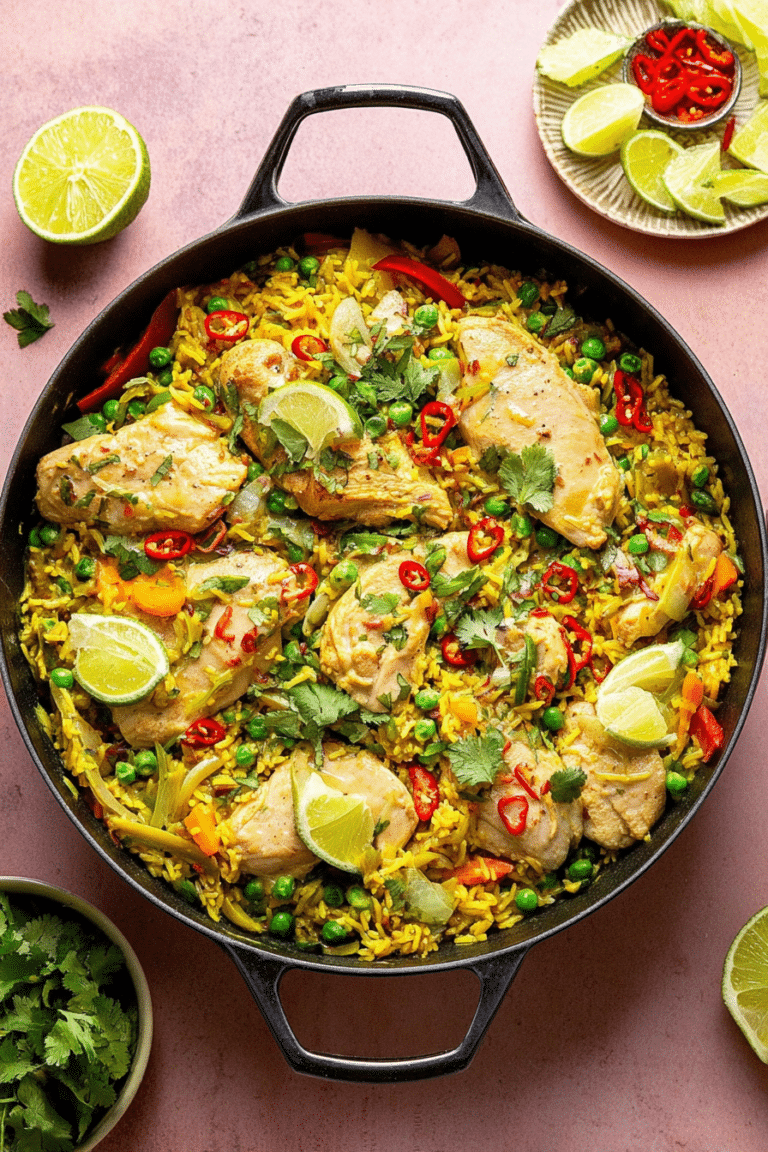


I cook this sheet pan salmon at least once a week when time is short and appetites are big. In my kitchen it reliably delivers a colorful plate—roasted golden potatoes, bronzed chickpeas that crackle, and moist fillets of salmon finished with a bright herby yogurt that keeps things fresh. It takes me about ten minutes to prep and one pan to wash, which is exactly what I need on weeknights.
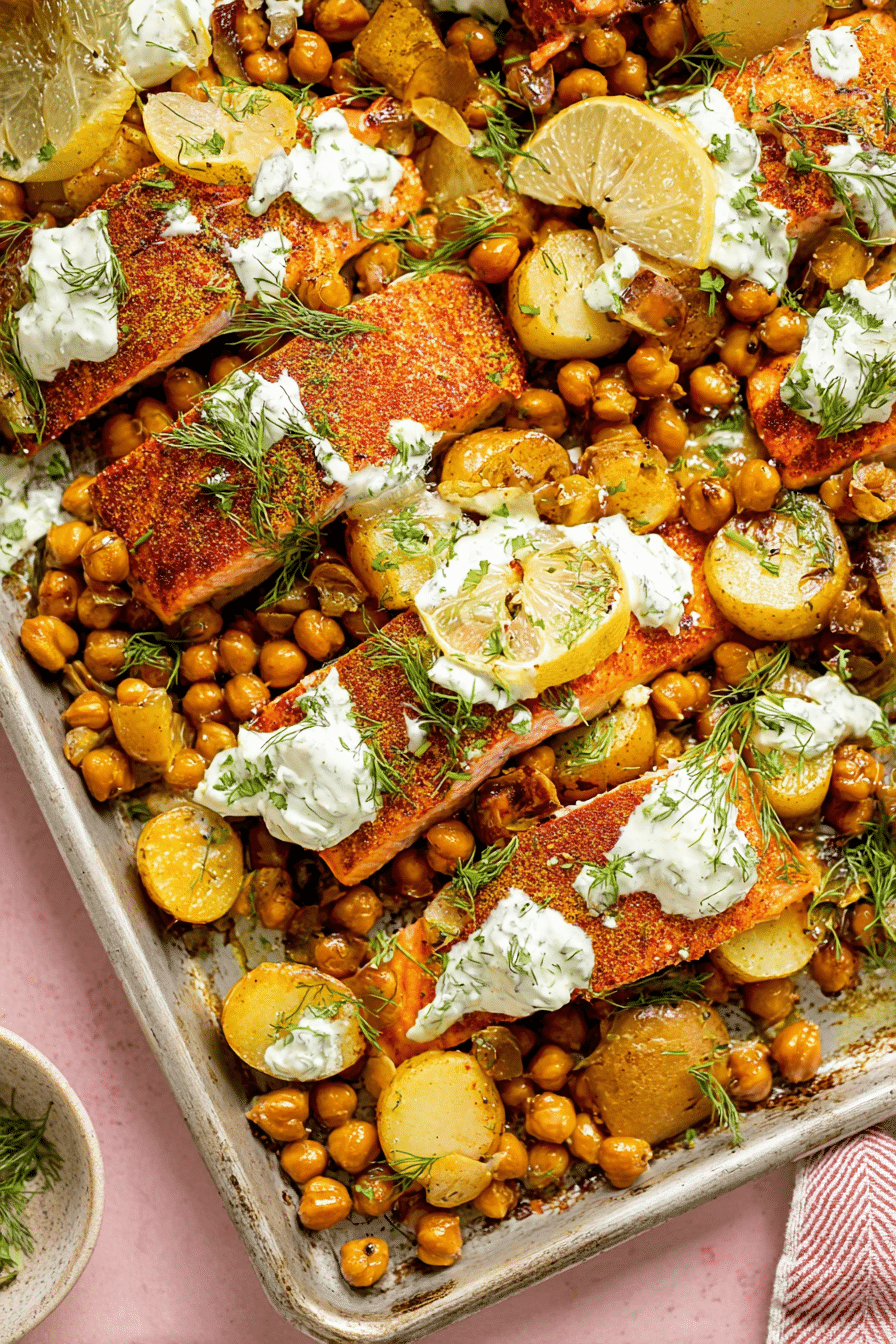
What I love most is how forgiving the method is: you can swap in what’s in your fridge, scale up for company, or portion into meal-prep containers for the week. The aroma of toasted spices fills my kitchen long before dinner is plated, and the bright herbs and lemon zest bring it all back to life just before serving.
I also like to pair this one-pan approach with other simple mains when I want variety—if you’re looking for another quick salmon idea, try our garlic butter salmon that cooks in no time.
Why This Easy Sheet Pan Salmon Dinner Is Perfect for Busy Weeknights
This recipe is built around three practical advantages that make weeknight cooking less stressful and more satisfying:
- Fast prep: Ten minutes of hands-on time means you can get dinner in the oven while finishing homework, emails, or a quick tidy.
- Minimal cleanup: One sheet pan and a blender bowl for the sauce — fewer dishes translate to less resistance when it’s time to cook.
- Balanced nutrition: Each portion delivers a solid serving of protein, healthy fats from salmon and olive oil, and energy from the potatoes—great for feeding hungry families without extra effort.
Visually, the plate pops: jewel-toned potatoes, speckled chickpeas, pink salmon and the pale green flecks of herb yogurt. Aromatically, the warm notes of cumin and smoked paprika mingle with fresh lemon and herbs; texturally, the crisp chickpeas provide a satisfying counterpoint to tender salmon and creamy sauce. If you want a different one-pan seafood idea, keep that garlic-butter option in your rotation.
Everything You Need for Easy Sheet Pan Salmon Dinner
Choosing good ingredients makes this recipe effortless and flavorful. A few selection tips I use in my kitchen:
- Salmon – Look for firm, bright-colored fillets with a clean smell; wild-caught or responsibly farmed choices are preferable for sustainability.
- Baby potatoes – Small, even-sized potatoes roast quickly and caramelize evenly; choose waxy types if you want a creamier interior.
- Chickpeas – Canned chickpeas are convenient—rinse and thoroughly dry for best crisping.
- Olive oil – Use a good-quality extra virgin olive oil for flavor; it impacts the final mouthfeel and aroma more than you might expect.
- Fresh herbs – Parsley, dill, chives or cilantro add brightness; pick leafy, fragrant bunches for the yogurt sauce.
- Feta – Crumbled at the end for a salty, creamy finish that contrasts the roasted elements.
For a complete meal idea, pair your salmon with easy Mediterranean lamb meatballs if you want an alternate protein or to feed a crowd with variety.
How to Make Easy Sheet Pan Salmon Dinner (Step-by-Step)
- Preheat the oven to a high roasting temperature so the potatoes and chickpeas start crisping right away; line your sheet pan so cleanup is simple.
- Toss potatoes, chickpeas and sliced onion with oil and the spice blend until every piece is coated; spread in a single layer to promote even browning.
- Roast the vegetables first so they develop deep color and tender centers while the salmon stays delicate when added later.
- While the vegetables roast, blitz the herbs, yogurt, garlic and lemon into a smooth sauce; taste and adjust salt and acidity to cut through the richness of the fish.
- Oil and season the salmon fillets, rub the spice mix into the flesh, then add them to the pan after the vegetables have had an initial roast—this staging prevents overcooking.
- Finish roasting until the salmon is opaque and flakes with a gentle fork; rest briefly, then dress with the herby yogurt, crumbled feta, lemon zest and extra herbs before serving.
The Secret to Crispy Chickpeas and Tender Potatoes
Getting the right texture is mostly methodical: remove surface moisture, apply enough fat, maintain high heat, and avoid overcrowding the pan. Here are the technical steps I use to get that winning contrast between crunchy chickpeas and soft potatoes:
- Dry the chickpeas thoroughly after rinsing—any surface water turns to steam and prevents crisping.
- Cut potatoes into uniform pieces so they all reach tenderness at the same time; choose a roasting temperature that encourages Maillard browning without burning.
- Space ingredients so air circulates; if the pan is crowded, roast on two sheets rather than compressing everything.
- Use a split-timing approach: start the potatoes and chickpeas first, then add the salmon later so the fish stays moist while the vegetables reach golden brown.
If you want extra inspiration for chickpea technique, check out our recipe for crispy roasted chickpeas—the methods there complement this sheet pan approach perfectly.
How to Know When Salmon Is Cooked Perfectly Every Time
Use both a thermometer and visual cues for consistent results. The USDA recommends an internal temperature of 145°F (63°C) for fish—measure at the thickest part of the fillet. Culinary cues I rely on:
- Color and translucency: Cooked salmon becomes opaque and loses that translucent sheen in the center.
- Flake test: Press a fork gently into the thickest part; perfectly cooked salmon flakes easily along the muscle lines but still looks moist.
- Carryover: Remove the fish a few degrees shy of target if it’s thick; residual heat will finish cooking as it rests.
Common pitfalls include baking too long at moderate heat (which dries the fish) or placing the salmon too close to dense vegetables that slow its cooking. If you suspect overcooking, reduce the oven time next go and check sooner—salmon cooks fast.
The One Spice Mix That Brings Big Flavor—No Extra Work
I make a simple, multi-use spice blend ahead of time and keep it in a jar for busy evenings. Each spice plays a clear role:
- Paprika adds color and a gentle sweetness that browns beautifully in the oven.
- Cumin offers warm, savory depth that pairs well with chickpeas and potatoes.
- Garlic powder brings background umami without the risk of burning fresh garlic on the tray.
- Turmeric provides earthy tone and a sunny hue; thyme adds herbal lift and complexity.
Blending this mix ahead saves time and creates a consistent flavor profile across the vegetables and fish. For a different profile, swap the cumin for smoked paprika and add a pinch of chili for warmth.
Pro Tip for easy sheet pan salmon dinner: Stagger Baking for Even Results
- I always start the potatoes and chickpeas first, because their caramelization takes longer than the fish needs; this staggered timing prevents mushy veg or dry fish.
- If your pan looks crowded, move vegetables to the outer edges and place the salmon in the center where heat is most even.
- If an item finishes early, tent it loosely with foil on the rim of the pan to keep warm while the rest finishes.
Troubleshooting
- If chickpeas are soft instead of crisp, they weren’t dried enough—pat them between paper towels next time and roast at a slightly higher temp.
- If potatoes brown too fast on the outside but are still firm inside, cut them smaller or parboil briefly before roasting.
- If salmon looks dry, check earlier; I’ve learned to start testing thick fillets a few minutes before the suggested finish time.
How to Store, Reheat and Meal-Prep This Sheet Pan Dinner
Leftovers store well if you separate components and use airtight containers. Keep the yogurt sauce apart from the roasted items to preserve texture—sauce can be refrigerated in a small jar and keeps for a few days. When reheating, I recommend warming the roasted potatoes and chickpeas on a baking sheet in a hot oven to restore crispness and gently warming the salmon for just a few minutes so it doesn’t dry out. For meal-prep, portion into containers with a small container of sauce and fresh herbs to finish right before eating.
Quick Variations and Swaps for Picky Eaters
- Protein swaps: Use cod, halibut, or seasoned tofu steaks if your family prefers a milder or plant-based option—cooking times will vary slightly.
- Vegetable swaps: Substitute carrots, Brussels sprouts, or sweet potatoes depending on seasonality and what you have on hand.
- Kid-friendly adjustments: Reduce or omit the turmeric and cumin, keep the seasoning simple with salt and a touch of smoked paprika, and serve the yogurt sauce on the side.
- Flavor twists: Finish with a drizzle of tahini or a squeeze of orange if you want a citrus change—if your family enjoys salmon, consider also trying our honey glazed salmon rice bowls for a different twist!
Frequently Asked Questions
How long does it take to prepare the Easy Sheet Pan Salmon Dinner?
This recipe takes just 10 minutes to prep, making it perfect for busy weeknights!
Can I use other vegetables instead of potatoes and chickpeas?
Absolutely! Feel free to swap in your favorite vegetables like carrots or Brussels sprouts for a different twist.
What is the best way to know if the salmon is cooked through?
The salmon is perfectly cooked when it flakes easily with a fork and reaches an internal temperature of 145°F (63°C).
Can I make this dish ahead of time?
Yes! You can prep the ingredients in advance and store them in the fridge. Just bake them fresh when you’re ready to eat.
What should I serve with the Easy Sheet Pan Salmon Dinner?
This dish is great on its own, but you can also serve it with a simple green salad or some crusty bread for a heartier meal.
Easy Sheet Pan Salmon Dinner
Ingredients
Method
- Preheat the oven to 400 degrees F. Line a large baking sheet with parchment paper.
- In a small bowl, add the spices: paprika, cumin, garlic powder, turmeric, thyme, salt and a few grinds of black pepper. Mix until well combined.
- Place potatoes, chickpeas and onions on the prepared baking sheet. Drizzle with 2 tablespoons of olive oil, then sprinkle with 1 tablespoon of the spice mixture. Toss until well coated then spread into an even layer. Bake for 20 minutes.
- Place the yogurt, leafy herbs, garlic, lemon juice and salt in a blender or food processor. Blend on high until well combined, about 30 seconds. Taste and adjust seasonings as necessary. Set aside until ready to serve.
- Drizzle the salmon with remaining 1 tablespoon of olive oil and rub into the flesh of the salmon. Evenly sprinkle the remaining spice mixture on the salmon.
- Once potatoes and chickpeas are done cooking, remove from the oven and gently flip and push to the edges, making space for the salmon. Add salmon fillets wherever you can fit them and bake for 10 to 15 more minutes until salmon is perfectly cooked to your liking.
- Remove from the oven and immediately drizzle with a few tablespoons of the herby yogurt sauce. Add on feta crumbles, lemon zest and extra dill and parsley. Serve over a bed of arugula and more sauce if desired.