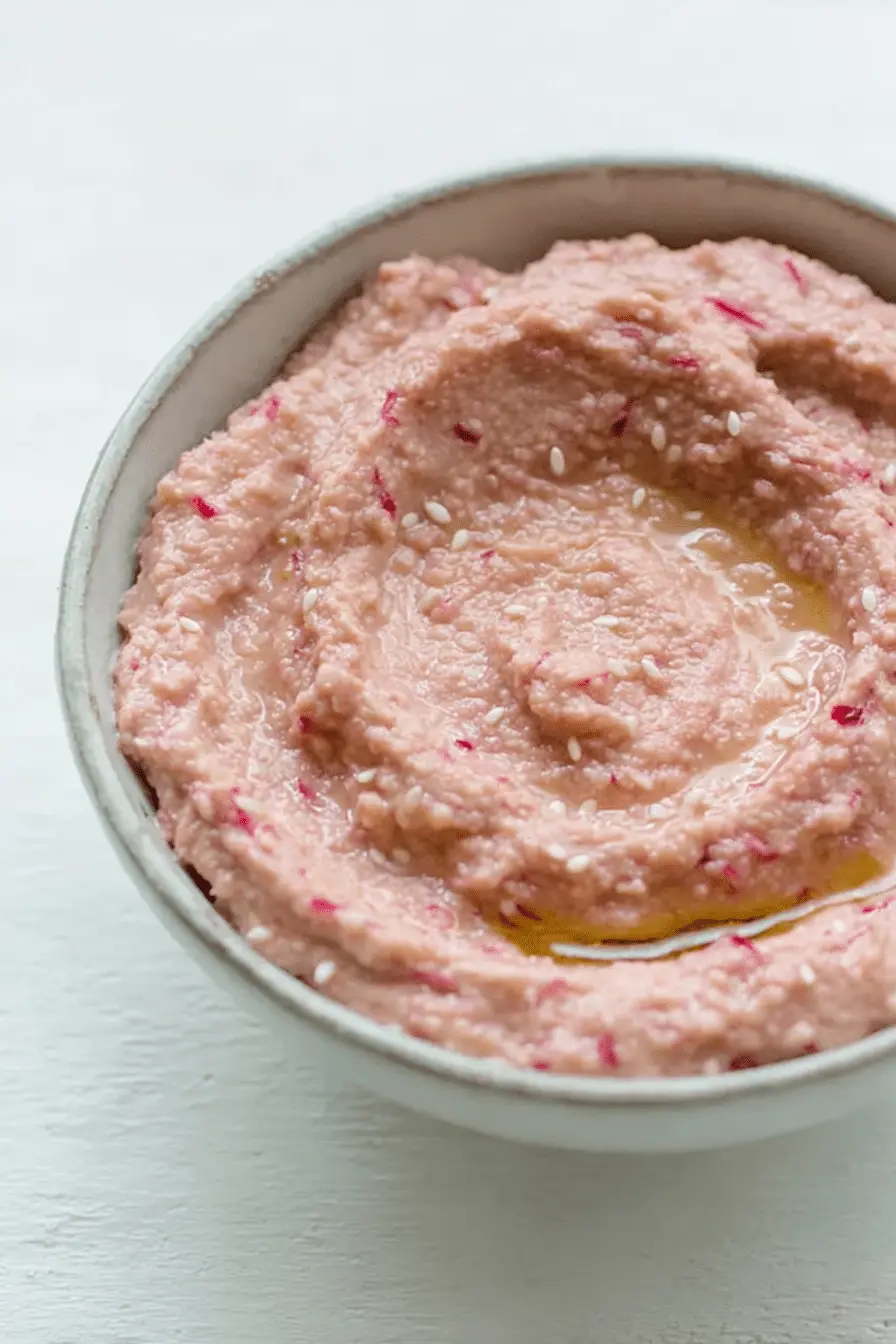
The Fresh Radish Hummus I Make for Healthy Snacks and Parties
- Prep
- 10 min
- Cook
- 20 min
- Total
- 30 min
- Serves
- 4
- Calories
- 120 kcal
- Carbs
- 6.00 g
Introduction
I first tasted radish hummus at a neighborhood block party and immediately brought the idea home to my kitchen. I was skeptical at first — radishes have a sharp, peppery snap — but once I blended them with the usual hummus anchors it became obvious that radishes bring a bright, lively angle that keeps the dip feeling light and fresh. After a few tweaks I landed on a version I reach for when I want a snack that's both nutritious and interesting.
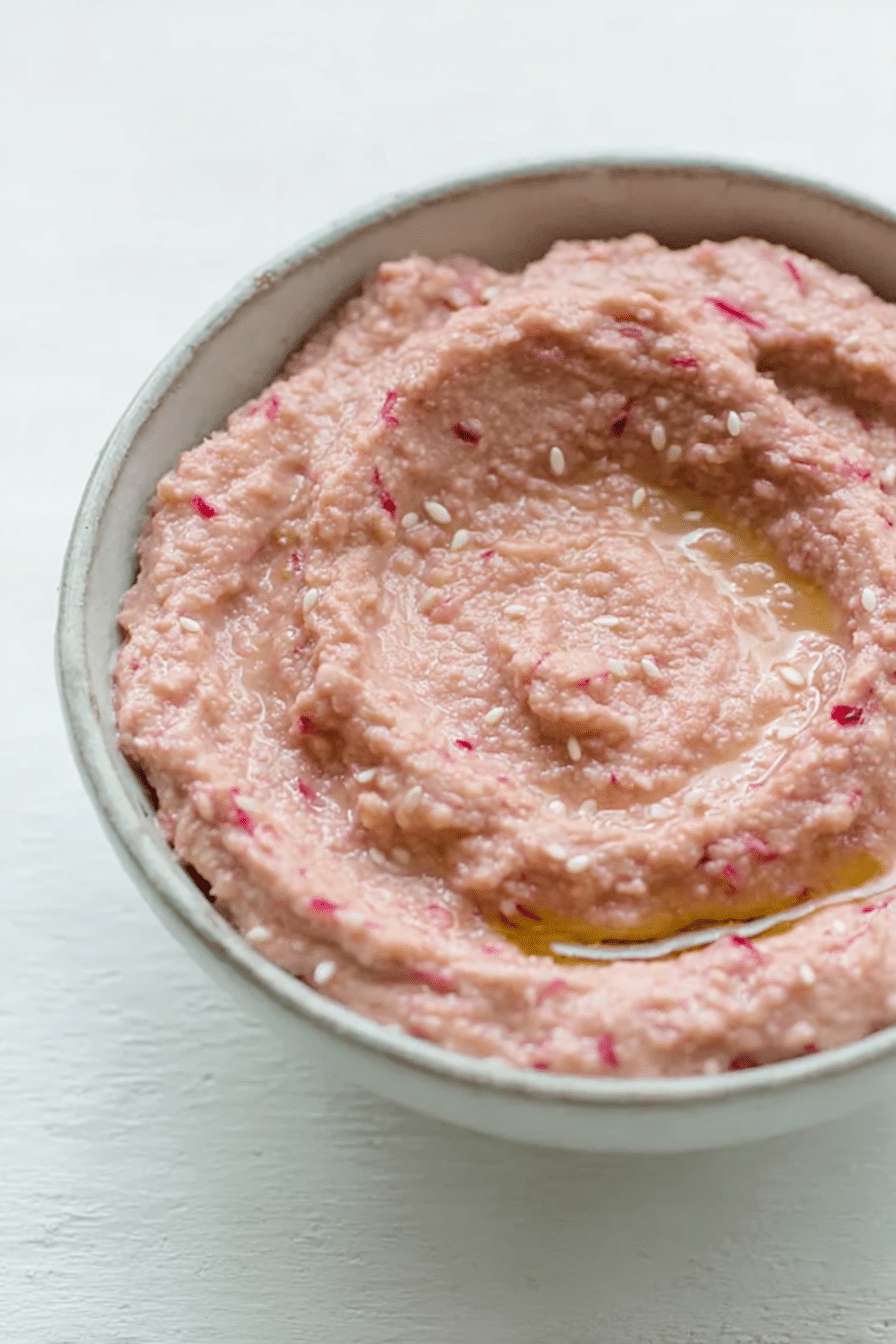
In my kitchen this hummus has become a go-to when I want something that contrasts creamy and peppery — the radishes add a rosier color and a little crunch when you keep some raw bits folded in at the end. I like to make a batch in the morning and nibble on it throughout the day; it keeps well and stays lively if stored properly. The hummus is dairy-free and easily adapted for common allergies.
I’ll walk you through what I keep in my pantry and fridge for this recipe, why the radish and its greens matter nutritionally, and the small technique adjustments that keep the texture silky without using any dairy. I also share my favorite ways to serve it and how to use leftover radish greens so nothing goes to waste.
Why Fresh Radish Hummus Is the Healthy Snack You Didn’t Know You Needed
Radishes are often overlooked, but they bring meaningful nutrition to a simple dip. They’re low in calories and deliver vitamin C and potassium while adding a peppery, refreshing note that lightens the usual richness of hummus. Compared to more calorie-dense hummus variations, this version lets you enjoy a creamy spread with a fresher profile.
Fiber from both the radishes and the chickpeas supports digestive health and helps the dip feel more filling without heaviness. The color of the finished hummus is an inviting pale pink that looks great on a snack platter — visually bright, with an aroma that hints at lemon and fresh greens.
Everything You Need for Fresh Radish Hummus
Gather ingredients that are fresh and bright. Select radishes that are firm with crisp greens if you plan to use them; look for a fruity, peppery olive oil and a creamy tahini or an allergy-friendly substitute.
- * Radishes – The fresh, peppery backbone of the recipe; choose firm bulbs for snap and bright color.
- * Tahini (or sunseed butter) – Adds that nutty, rounded depth; swap to a seed butter for nut allergies.
- * Lemon juice – Brings acidity to balance the peppery radishes and smooth the overall flavor.
- * Garlic – A small amount provides a savory lift; you can roast or omit if you prefer milder flavor.
- * Olive oil – Contributes silkiness and mouthfeel; use extra-virgin for the most flavor or a lighter olive oil if you want a milder finish.
- * Salt – Essential for brightening all components; finish and adjust to your taste.
- * Radish greens (optional) – Nutrient-rich and useful for color and binder when blended in; wash thoroughly before use.
If you follow a specific diet, substitutions are straightforward: use a seed butter for nut-free diets, omit garlic for FODMAP sensitivity, or serve with low-carb dippers for a reduced-carb option.
Why Radishes Boost This Hummus — Flavor, Fiber, and Nutrients
Radishes brighten the dip with a crisp, mildly spicy flavor that trims the density hummus can sometimes have. Nutritionally, they contribute vitamin C and potassium and add water-rich crunch with very few calories, meaning you get volume and micronutrients without extra heaviness.
The fiber in radishes complements the chickpeas’ fiber, supporting gut motility and creating a spread that keeps you feeling satisfied. Radishes also contain antioxidants; when paired with lemon and olive oil, the overall effect is a fresh-tasting, nutrient-forward spread that’s well suited to health-conscious snacks.
The Secret to Silky Texture — Tips for Creaminess Without Dairy
Silky hummus hinges on balance: control the blending time, add liquids gradually, and use a swirl of olive oil at the end for mouthfeel. Over-blending can heat the mixture and make it gummy, while under-blending leaves the texture coarse. I aim for smooth but not pasty.
- Start with short pulses and scrape the bowl often so ingredients emulsify evenly.
- Add liquid slowly — a little at a time — until you reach the texture you want; plain water is a neutral way to thin without adding fat.
- Reserve a small amount of olive oil to finish the hummus as you blend; it rounds the texture and adds sheen.
- If the mixture feels grainy, let it rest briefly and blend again at lower speed rather than continuing at high speed.
- Troubleshooting: If your hummus is too thin, add a small spoonful of tahini or a handful of drained chickpeas. If it’s too thick, thin with water or lemon juice rather than adding more oil.
How to Use Radish Greens (Reduce Waste & Add Fresh Flavor)
Radish greens are vibrant and often underestimated. They’re rich in vitamins A, C, and K and offer an herbaceous, slightly bitter edge that pairs well with lemon and garlic. You can blend them directly into the hummus for color and nutrition or use them as a garnish.
Ideas for leftover greens include tossing them raw into salads for peppery lift, blending into pesto as a sauce for grains or roasted vegetables, or sautéing them briefly with garlic as a simple side. Using the greens reduces waste and adds a fresh, leafy note to the hummus that I appreciate especially in spring.
How to Make Fresh Radish Hummus (Step-by-Step)
- Prepare your radishes: trim roots and greens, wash thoroughly, and slice so they blend evenly.
- Sweat or soften a small amount of radish if you want a milder heat, or use them raw for maximum peppery snap.
- Place chickpeas, tahini (or seed butter), garlic, lemon, and most of the radishes into a food processor.
- Pulse to combine, scraping down the sides frequently to keep the blend even.
- With the processor running, add olive oil gradually and monitor texture; add water a little at a time if you need to thin the dip.
- Taste and season with salt and more lemon as needed; fold in a few thinly sliced radishes at the end for texture if you like.
- Transfer to a bowl, drizzle with a touch of olive oil, and garnish with reserved greens or sliced radishes.
Pro Tip for Fresh Radish Hummus: Turn Leftover Greens into Flavor and Binder
- Blend radish greens with a bit of olive oil and lemon to create a quick green purée you can stir into hummus for color and binder.
- Make a small pesto with greens, nuts or seeds, and garlic to serve alongside the hummus.
- Wilt greens quickly in a hot pan and fold them through the hummus for a warm variation that adds body.
- Preserve extra greens by chopping and freezing in an oil-lined container for future use in dips or soups.
How to Store, Make-Ahead, and Reheat Fresh Radish Hummus
Store hummus in an airtight container in the refrigerator to keep it fresh and bright. For easy meal prep, make it a day or two ahead — flavors meld nicely — but keep garnishes separate until serving. When you’re ready to serve, give it a good stir and add a finishing drizzle of olive oil.
For a refreshing meal, serve your hummus with a side of Mediterranean Chickpea Salad, which stores well and complements the flavors perfectly.
- Best container: use an airtight glass jar or shallow container to minimize air exposure.
- Make-ahead tip: keep sliced radishes and greens separate to preserve crunch and color.
- Reheating: bring to room temperature rather than microwaving; if you do warm it, use short bursts and stir to avoid drying out.
- Storage window: refrigerated for up to a week; check for off smells or separation before using.
Easy Variations and What to Serve with Fresh Radish Hummus
Play with spices and add-ins to suit the occasion. You can make a smoky version with a pinch of smoked paprika, a green herby version by adding parsley or dill, or a richer spread by increasing tahini or seed butter slightly. The texture and flavor adapt well to both light snacks and heartier platters.
- Smoky variation: add smoked paprika and a drizzle of oil or a few charred radish slices.
- Herb-forward: blend in parsley, cilantro, or dill for a fresher profile.
- Low-carb: serve with cucumber rounds, celery sticks, or roasted cauliflower instead of pita.
- Nut-free: use sunflower or pumpkin seed butter in place of tahini for similar creaminess.
Pairings that work beautifully with radish hummus include raw vegetable sticks, warm pita, and simple grain bowls. Try pairing it with a light crostini to highlight the radish theme: Radishes and Butter Crostini makes a lovely companion on a platter. For a colorful spread, include stuffed or roasted vegetables — they add heft and variety: Vegetarian Stuffed Peppers make a great addition.
Frequently Asked Questions
Is radish good with hummus?
Absolutely! Radishes add a unique peppery flavor and a nice crunch to hummus, making it a delightful and healthy combination.
Can I use radish greens in the hummus?
Yes! Radish greens can be blended into the hummus for added flavor and nutrition. Just make sure to wash them thoroughly before use.
How long can I store fresh radish hummus?
You can store fresh radish hummus in an airtight container in the refrigerator for up to a week. Just give it a good stir before serving!
What can I serve with fresh radish hummus?
Fresh radish hummus pairs well with pita bread, fresh veggies like cucumbers and carrots, or even spread on whole grain bread for a tasty sandwich!
Can I make radish hummus ahead of time?
Yes! It’s perfect for meal prep. Just make it a day or two in advance and store it in the fridge until you’re ready to enjoy it.
Recipe Card
The Fresh Radish Hummus I Make for Healthy Snacks and Parties
- Prep
- 10 min
- Cook
- 20 min
- Total
- 30 min
- Serves
- 4
- Calories
- 120 kcal
- Carbs
- 6.00 g
Ingredients
- 2 cupssliced radishes
- 1/2 tablespoontahini
- 1 clovegarlic
- 1/4 teaspoonsea salt
- 1/3 cupolive oil
You might also like
Reviews
Be the first to review this.