The Green Tomato Salsa Recipe I Make Every Summer — 25 Min
- Prep
- 15 min
- Cook
- 10 min
- Total
- 25 min
- Serves
- 6
- Calories
- 18 kcal
- Carbs
- 4.00 g
Introduction
I make this green tomato salsa on busy weeknights when I want something fresh, bright, and fast. The roast-and-pulse method gives the tomatoes a little char without long cooking, so you get that tangy green tomato bite plus the soft, savory notes from blistered garlic and peppers. I like to keep a jar in the fridge for taco night — it livens up anything in minutes.
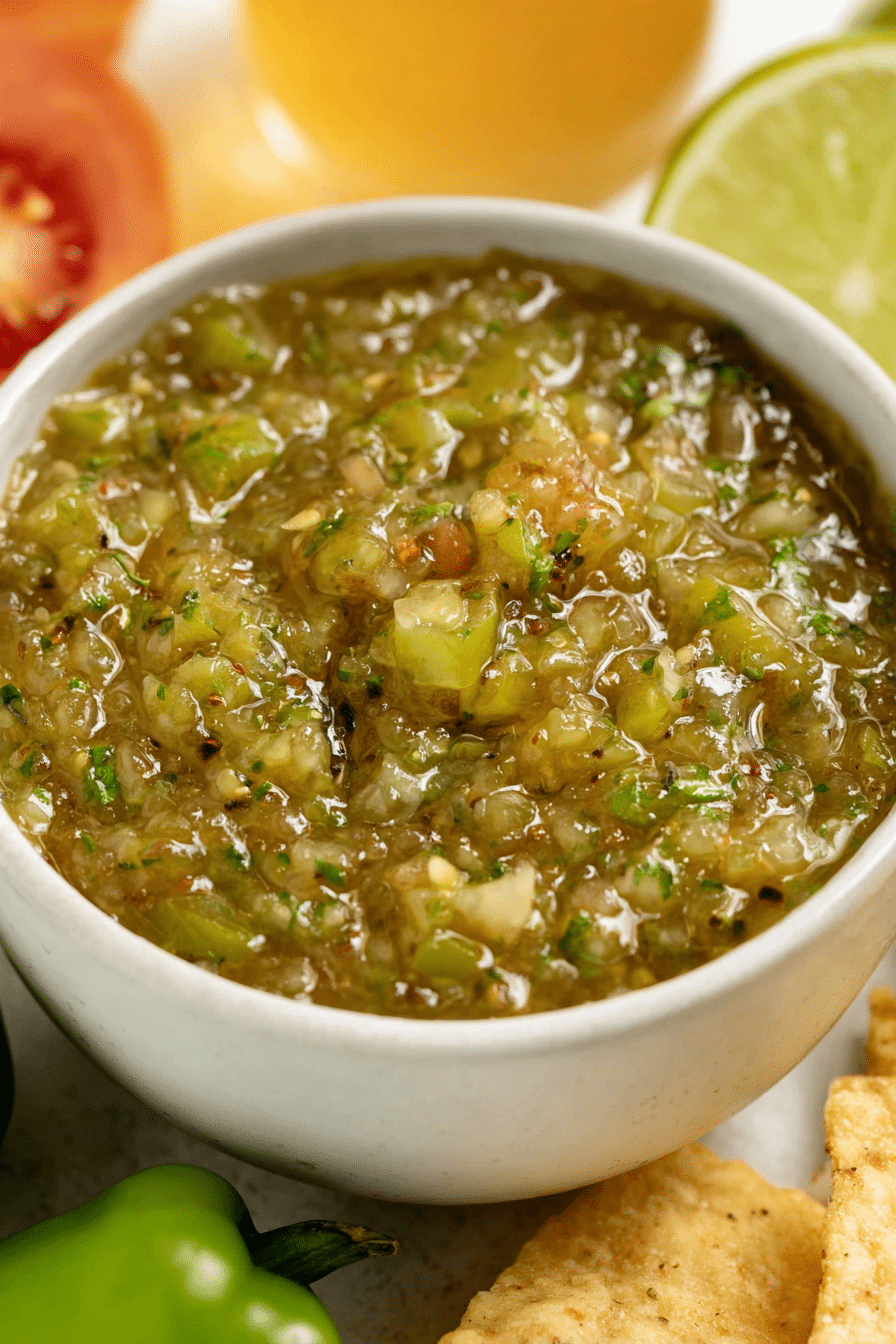
What makes this recipe work for a rushed evening is the small list of fresh ingredients and a single heat source — your broiler. I’ve cooked it in a flash on busy nights, and the trick is to watch for the first blackened bits and flip quickly so everything roasts evenly. The result is a vibrantly green salsa with a faint smokiness that still tastes fresh.
I also use this as a base to play around: a little more cilantro for herbal brightness, an extra squeeze of lime if the tomatoes are on the mellow side, or an added serrano seed or two when I want to push the heat. In my kitchen this salsa is an easy shortcut to brightening a plate, and I’ll share the tips that make it reliably good every time.
Why this green tomato salsa is the quick, tangy fix for busy cooks
This salsa is minimal prep with a big payoff: raw brightness from green tomatoes, a savory hit from roasted garlic, and zip from fresh lime and cilantro. Because the veggies hit the broiler for a few minutes only, you keep those raw, acidic notes that make green tomato salsa pop — but you also get a little char for depth. It’s a prep-and-go condiment that plays well with chips, tacos, grilled protein, or spooned over roasted vegetables.
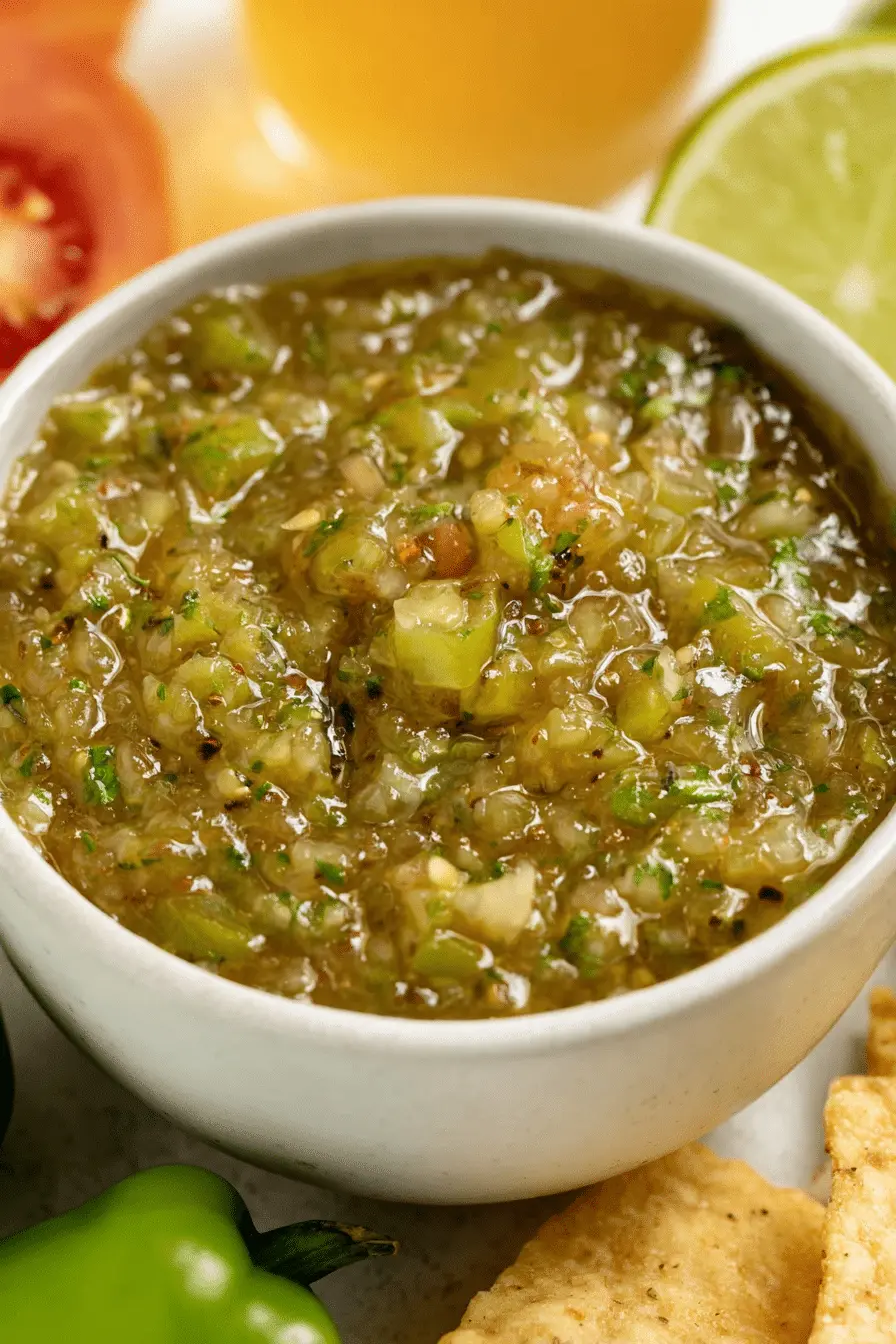
Sensory note: picture bright chartreuse tomato flesh, the sharp citrus aroma of lime, and the fresh, slightly peppery scent of cilantro. Texturally, the salsa sits between chunky and saucy, perfect for scooping and topping.
Everything You Need for Green Tomato Salsa
Before you start, gather the ingredients and the one or two tools that keep the process fast. Fresh produce makes the flavor; you don’t need anything fancy.
- Green Tomatoes – The backbone of this salsa; choose firm, tangy fruit for that signature zip. If they’re too soft they’ll be sweeter and less crisp.
- Serrano or Jalapeño – Adds heat. Use fewer seeds for milder heat, keep them for more punch.
- Fresh Garlic – Roasting tames harshness and adds a nutty depth.
- Fresh Cilantro – Brings herbal brightness and a clean finish.
- Fresh Lime – Acid brightens and balances the salsa; add more to taste.
- Salt – Brings out the tomatoes' flavor; adjust to taste.
- Food Processor or Blender – For quick pulsing to your desired texture.
- Baking Sheet and Broiler – For blistering and charring the vegetables evenly.
Using fresh ingredients matters here — canned tomatoes or dried herbs will change the fresh, tangy profile. The whole point is quick, bright flavor, so keep things as fresh as possible.
Pick the Best Green Tomatoes (and What to Do If You Only Have Ripe Ones)
Choose green tomatoes that are firm with a little give when pressed; they should feel heavy for their size. Look for smooth skin without soft spots — that firmness equals tang and structure in the salsa.
- If your tomatoes are almost-ripe (slight give, pale blush), they’ll be sweeter; compensate with a touch more lime and salt.
- If you only have fully ripe red tomatoes, the salsa will be sweeter and less tangy. Use a splash more lime and a touch of raw green apple or a small wedge of tomatillo (if available) to bring back acidity.
- To ripen green tomatoes at home, store them at room temperature in a single layer away from direct sun; placing a ripe banana nearby will speed ripening if you need them softened sooner.
The Secret to the Perfect Texture: Roast, Flip, and Pulse
The simple roasting step is the technique that builds flavor fast. A few minutes under a hot broiler breaks down the tomatoes and chars skins for depth, while a quick flip ensures even blistering. The food processor is used only to pulse — not purée — so you keep a chunky, scoopable texture.
- Arrange peppers, tomatoes, and garlic on a baking sheet with space between pieces so they blister rather than steam.
- Broil until you see the first areas blacken, then flip everything so both sides get that roast; watch closely — it happens fast.
- Transfer hot ingredients to your processor and start with short pulses; aim for a texture that still has small tomato pieces and flecks of cilantro, not a smooth sauce.
- Let the salsa rest briefly so the flavors meld; serving slightly cooled preserves freshness while letting the roasted notes shine.
How to Control Heat Without Killing Freshness
Heat control is the easiest way to make this salsa yours: remove seeds and ribs for milder heat, keep them for more intensity, and add peppers gradually so acidity and herb notes aren’t overwhelmed. Different peppers bring different flavors, too — serranos are bright and sharp, jalapeños are milder and fruitier.
If you want an easy bottled boost that won’t mask the fresh flavors, try adding a tiny splash of homemade hot sauce; for example, a milder vinegar-forward sauce can enhance heat without losing the salsa’s brightness. For readers who like options, I often add a spoonful of a hot sauce to the finished salsa rather than making it hotter during roasting — it’s easier to dial in.
Also consider balancing heat with sweet notes if spice gets assertive: small cubes of mango or peach can tame heat while adding color and a fruity counterpoint.
How to Make Green Tomato Salsa (Step-by-Step)
Follow these steps for a fast, reliable batch that stays bright and chunky.
- Preheat your broiler and position the oven rack about 8–10 inches from the heat source.
- Trim and halve peppers; remove stems and ribs for milder heat (reserve seeds if you want to add them later).
- Quarter large green tomatoes (or leave small ones whole) and scatter tomatoes, peppers, and unpeeled garlic on a baking sheet.
- Broil until the vegetables begin to blacken, then flip and broil the other side; total time is short, so watch for the first char marks.
- Carefully transfer the hot vegetables to a food processor; start by adding only half of the peppers so you can control heat.
- Add cilantro, lime, and salt, then pulse to your desired consistency — stop early for chunky salsa.
- Taste and adjust salt and lime; for more heat, blend in the reserved pepper or seeds.
- Cool to room temperature or chill before serving. If you want more salsa styles while you’re at it, you can also check a homemade salsa recipe for additional methods and ideas.
Pro Tip for green tomato salsa recipe: Simple Canning Notes for Preservation
If you want to preserve salsa, take canning seriously: low-acid salsas need special attention. Many green tomato salsas fall into a gray area, so either follow a tested, high-acid recipe or use a pressure-canning method for safety. I’ve worked through small batches to find the right balance — more vinegar or lime can increase acidity, but it changes the fresh profile.
- For short-term pantry storage, acidify the salsa with extra lime or bottled vinegar and process jars in a boiling-water bath only if the recipe you’re following is tested for water-bath canning.
- For long-term shelf stability, use a pressure canner and follow USDA or tested canning guidelines for peppers and tomato mixtures; this handles low-acid ingredients safely.
- Label jars with date and test seals; refrigerate any jar that fails to seal.
- Explore more on easy canning notes for preservation to keep your salsa fresh for longer.
How to Store, Can, and Remix Your Green Tomato Salsa
Storage is straightforward: refrigerated salsa will stay bright for several days to a week; longer-term storage requires proper canning. When you rework leftovers, small adjustments restore brightness.
- Refrigerate in a sealed container for up to a week; always use a clean spoon to avoid contamination.
- If canning, follow safe processing methods (see canning notes above) and store sealed jars in a cool, dark place for several months.
- To remix leftovers: fold in diced avocado for a creamy dip, stir in roasted corn for sweetness and texture, or spoon over warm grilled chicken — it’s especially good with creamy garlic chicken for a complete meal idea: creamy garlic chicken.
- When reheating or repurposing, taste and adjust salt and acid — flavors mellow in the fridge and often need a fresh squeeze of lime.
Unique Flavor Variations
- Mango or peach cubes — add a fruity counterpoint that softens heat and adds color.
- Cumin and smoked paprika — a pinch of warm spice gives a subtle smoky edge without masking freshness.
- Roasted tomatillo blend — swap some tomatoes for tomatillos to amplify tang and deepen green color.
- Charred onion — a quick roast adds savory sweetness and balances the acidity.
Health Benefits of Green Tomatoes
Green tomatoes are low in calories and contribute vitamin C, fiber, and a range of antioxidants that support general health. Fresh salsa is mostly produce and provides hydration, micronutrients, and a low-fat way to add flavor to meals.
Antioxidants in tomatoes and other salsa ingredients have been associated in several studies with reduced markers of inflammation and improved heart-healthy diets; pairing the salsa with protein or fiber-rich foods makes it a nutritious condiment choice for everyday meals.
Cultural Influences of Green Tomato Salsa
Salsa is rooted in Mexican home cooking where fresh, tangy salsas — often made with whatever is on hand — are central to everyday meals. Green tomato or tomatillo-based salsas have regional variations across Mexico and beyond, adapted to local produce and heat preferences. This green tomato version sits comfortably alongside those traditions: quick, adaptable, and built to complement tortillas, beans, and grilled meats.
In my experience, using green tomatoes gives a familiar Mexican-style tang but also makes it easy to fold into other cuisines — spoon it onto grain bowls or use it as a zesty dressing substitute when you want something light and bright.
Pro Tips
- Always taste for salt and lime after pulsing — both are the quickest levers for brightening flavor.
- Only pulse in the food processor; overprocessing turns the salsa too smooth.
- Start with half the pepper and add more — you can always add heat but you can’t take it away.
- Roast on a roomy baking sheet so vegetables blister instead of steaming.
Troubleshooting
- If the salsa is too watery, strain or press out excess liquid on a sieve before pulsing for a chunkier finish.
- If it’s bland, add small increments of salt and lime rather than large jumps.
- If the salsa is too spicy, stir in a little sweet fruit or a spoonful of plain yogurt/avocado to calm the heat.
- If flavors taste muddled after canning, brighten jars with fresh lime juice when serving.
Variations
- Grilled green tomato salsa — grill tomatoes and peppers outdoors for smoky char.
- Fruit-forward — mix in mango or pineapple for a sweet-spicy salsa perfect with fish.
- Herb swap — try half cilantro, half parsley for a milder herbal note.
Frequently Asked Questions
Can I use ripe tomatoes instead of green tomatoes for this salsa?
Yes, you can use ripe tomatoes if you can't find green ones. Just keep in mind that the flavor will be different, as green tomatoes are tangier and less sweet.
How spicy is this green tomato salsa?
The spice level can be adjusted based on how many serrano peppers or jalapeños you include. Start with half of the pepper and add more for extra heat if desired!
How long can I store this salsa?
This salsa can be stored in the refrigerator for up to a week. If you want to preserve it longer, consider canning it following safe canning practices.
What do you serve with green tomato salsa?
Green tomato salsa pairs well with tortilla chips, tacos, grilled meats, or as a topping on enchiladas or burritos.
Can I make this salsa ahead of time?
Absolutely! Making it ahead of time can enhance the flavors as they meld together. Just refrigerate it until you're ready to serve.
Recipe Card
The Green Tomato Salsa Recipe I Make Every Summer — 25 Min
- Prep
- 15 min
- Cook
- 10 min
- Total
- 25 min
- Serves
- 6
- Calories
- 18 kcal
- Carbs
- 4.00 g
Ingredients
- 1-2 wholeserrano peppers (or jalapeño pepper)
- 1 poundgreen tomatoes (approximately 3 large green tomatoes)
- 3 clovesfresh garlic (peeled)
- ½ cupchopped fresh cilantro
- 1 teaspoonsalt (plus more to taste)
- 1 tablespoonfresh lime juice (plus more to taste)
Instructions
- 1
Set broiler to high. Place oven rack approximately 8 to 10 inches below heating element.
- 2
Remove stem, ribs, and seeds from 1-2 whole serrano peppers (or jalapeño pepper). Save seeds for hot salsa if desired.
- 3
Quarter 1 pound green tomatoes if tomatoes are large. If tomatoes are small, leave tomatoes whole.
- 4
Arrange peppers, tomatoes, and 3 cloves fresh garlic on large baking sheet. Place baking sheet under broiler.
- 5
Broil ingredients 4 to 5 minutes or until ingredients just begin to blacken.
- 6
Once ingredients begin to blacken, carefully flip ingredients over. Return baking sheet to broiler. Broil ingredients 4 to 5 minutes more.
- 7
Carefully remove baking sheet from broiler. Transfer ingredients to bowl of food processor, using only half of serrano peppers (or jalapeño) to start.
- 8
Add ½ cup chopped fresh cilantro, 1 teaspoon salt, and 1 tablespoon fresh lime juice to food processor. Secure lid on appliance and process ingredients until desired consistency is achieved.
- 9
Taste mixture. Adjust salt and lime juice as desired. For hotter salsa, add remaining pepper(s) and/or seeds from pepper(s).
- 10
When satisfied with flavor and consistency of salsa, transfer salsa to serving container. Let salsa cool to room temperature or refrigerate salsa until chilled. Serve as desired.
You might also like


Reviews
Be the first to review this.