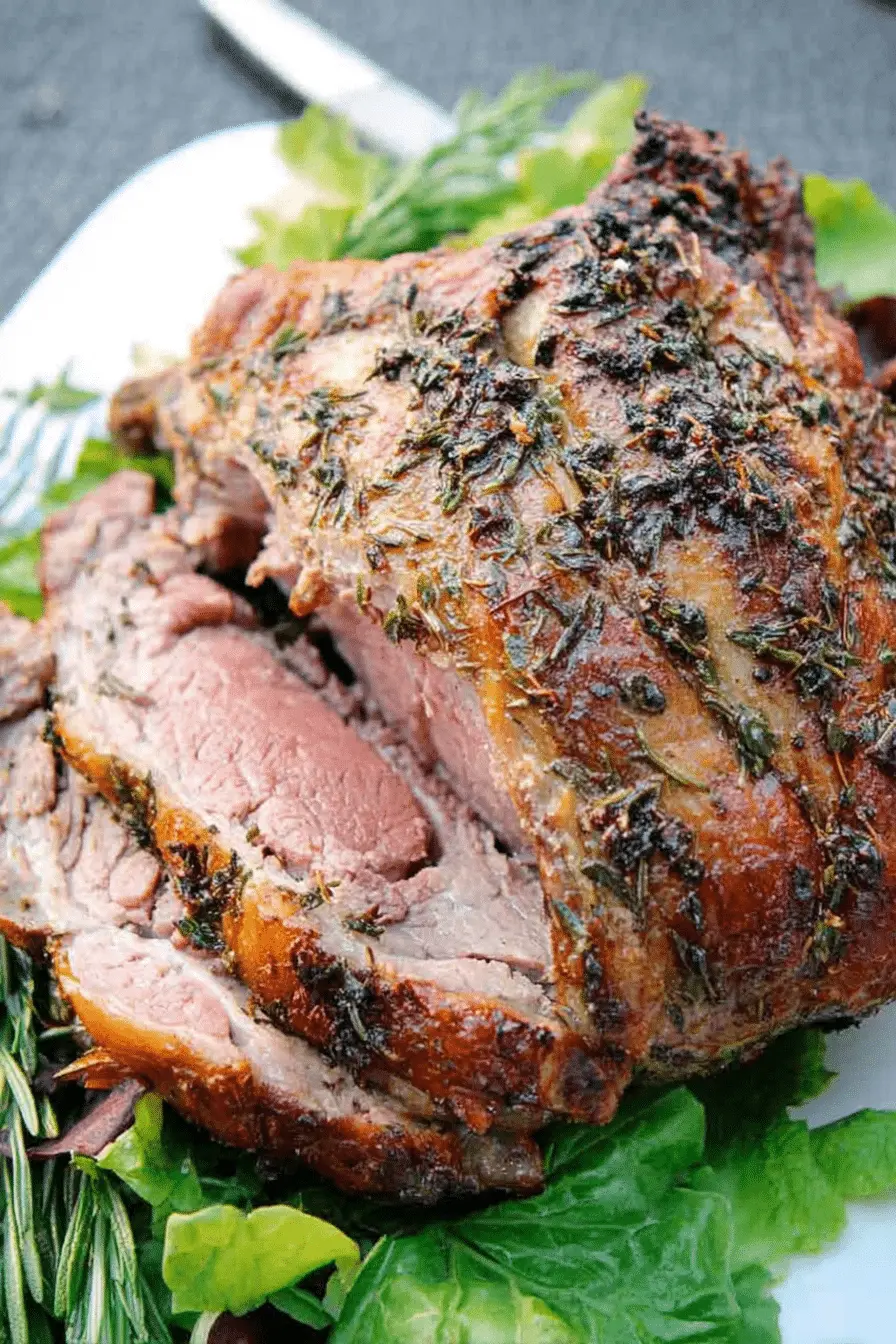
The Roast My Guests Ask For: Herb Roast Leg of Lamb Recipe
- Prep
- 10 min
- Cook
- 60 min
- Total
- 70 min
- Serves
- 4
- Calories
- 531 kcal
- Protein
- 74.00 g
- Carbs
- 2.00 g
- Fat
- 23.00 g
Introduction
When I roast a leg of lamb for company, I want something that looks like a centerpiece but doesn’t keep me chained to the stove. In my kitchen this herb roast leg of lamb does exactly that: a brisk high-heat sear at the start, a smear of mustard and fresh herbs pressed into the surface, and a short finish in a moderate oven give you a glossy, herb-crusted exterior and tender, rosy slices inside.
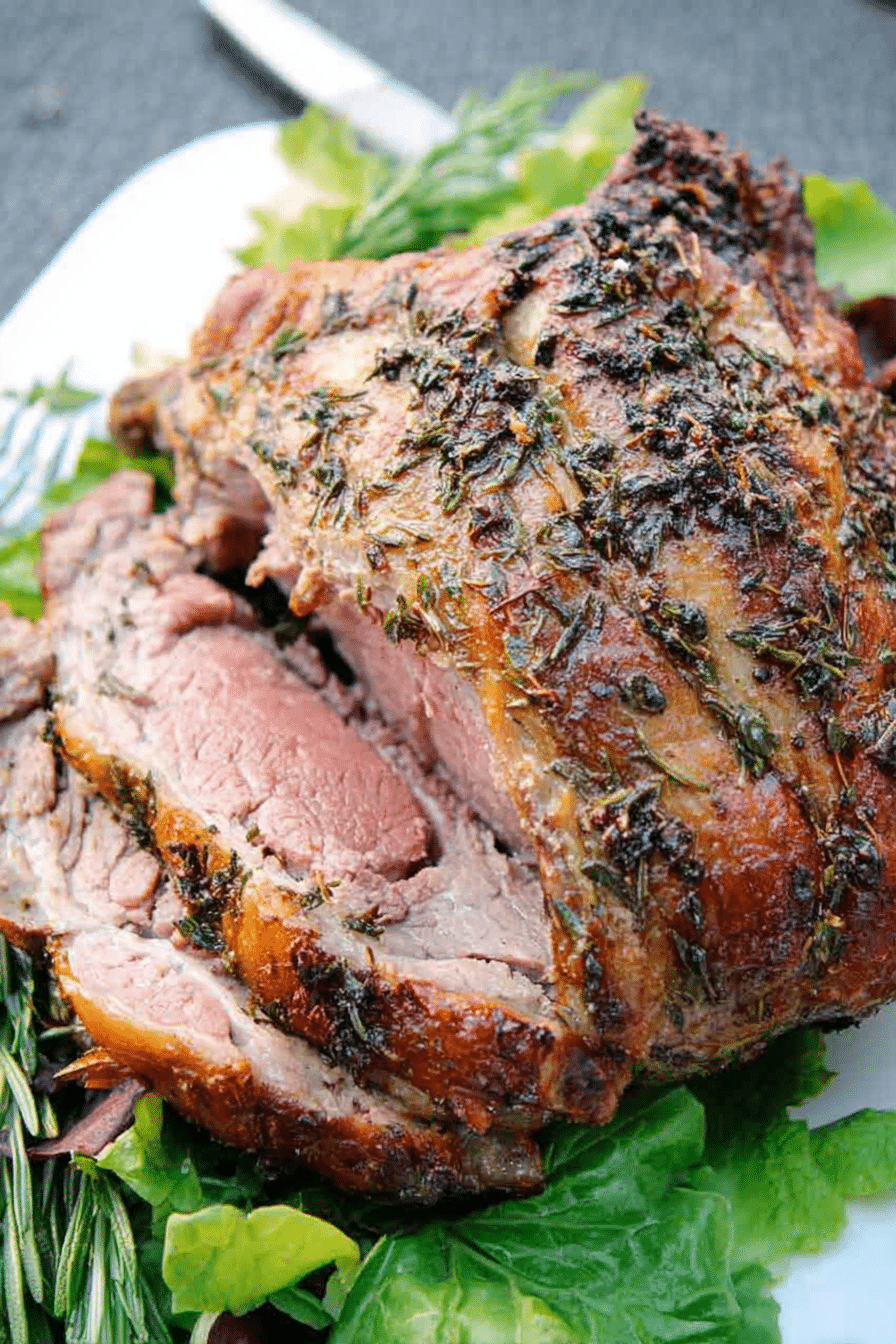
I love the moment I pull the roast from the oven: the room fills with the piney scent of rosemary and the warm, earthy perfume of thyme. The crust has a satisfying snap when you slice into it, and the garlic tucked into slits seeps into the meat for pockets of caramelized flavor. I’ll admit — the first time I tried pressing fresh herbs into mustard I was skeptical, but it makes the difference between a good roast and one your guests remember.
This recipe is made for entertaining because it’s mostly hands-off after the initial prep. You can season the lamb several hours ahead or the night before, which frees you to finish sides and set the table. Serve it carved on a wooden board and watch how easily it becomes the visual and aromatic anchor of the meal.
Why This Herb Roast Leg of Lamb Is Perfect for Entertaining
This roast presents beautifully: a bronzed exterior studded with herbs and garlic, and slices arranged in a neat fan. The fresh-herb aroma drifting through your dining room sets an inviting tone before anyone has even tasted a bite. The flavor runs confident and straightforward — herbaceous, garlicky, lightly tangy from the mustard — which makes it an excellent centerpiece that pairs well with a range of sides and sauces.
Everything You Need for Herb Roast Leg of Lamb
- Boneless leg of lamb – The boneless version roasts evenly and is easier to carve for a crowd; choose a size that fits your oven and guest list.
- Fresh garlic – Thinly sliced and tucked into slits for bursts of roasted garlic flavor; you can crush or mince if you prefer a subtler distribution.
- Coarse salt and black pepper – Coarse salt helps form the crust while pepper adds a warm bite.
- Dijon mustard – Acts as a binder for the herbs and adds a bright, tangy background note.
- Fresh rosemary and thyme – Their oils crisp and brown in the oven; use freshly chopped leaves for the best aromatic punch rather than dried herbs.
- Olive oil – A light coating helps heat conduct across the surface and promotes browning.
- Optional condiments – Mint jelly or a chimichurri-style sauce to serve alongside for guests who like an extra tangy or herbal lift.
If you love lamb, don’t miss our garlic and herb crusted lamb chops for an easy yet impressive dish.
How to Make Herb Roast Leg of Lamb (Step-by-Step)
- Preheat your oven to a very high temperature so it’s screaming hot when the lamb goes in; this initial blast creates the crust that seals juices.
- Lay a few sprigs of fresh herbs and a thin slick of olive oil in the roasting pan so the lamb has an aromatic bed and won’t stick.
- On a clean surface, pierce the surface of your boneless leg with a sharp knife and push thin garlic slices into the slits to distribute flavor internally.
- Season the outside well with coarse salt and freshly cracked pepper, then spread a thin layer of Dijon mustard over the surface to help the herbs adhere.
- Press finely chopped rosemary and thyme into the mustard so the herb oils roast into the crust rather than burning off loose in the pan.
- Place the lamb on the bed of herbs and roast at the high temperature for a short period to form the crust, then reduce the oven to a moderate heat to finish cooking gently.
- Use an instant-read thermometer and remove the lamb when it reaches your target internal temperature; tent and rest the roast before carving so the juices redistribute.
The Secret to a Crisp, Herb-Crusted Exterior
- Start with a very hot oven to quickly brown the surface — this Maillard reaction is what creates that golden, flavorful crust you want.
- A thin coating of oil on the lamb and in the pan helps transfer heat and encourages even browning without burning the herbs.
- Smearing mustard under the herb layer gives the herbs something to cling to so they brown into the surface instead of sliding off.
- Fresh herbs behave differently than dried: fresh leaves will char at the edges and release bright aromatics, while dried herbs can burn; when in doubt, chop fresh and press them in just before roasting.
Why Oven Temperature and Resting Time Matter
- High initial temperature creates a crust that traps juices; finishing at a lower temperature ensures even doneness without overcooking the interior.
- Resting the roast for about a quarter hour allows the muscle fibers to relax and the juices to redistribute, so slices stay moist rather than releasing a flood of liquid onto the cutting board.
- Troubleshooting quick tips:
- If the exterior browns too quickly, reduce the initial high time and lower the finish temperature slightly.
- If the center is underdone but the outside is done, tent the roast with foil and let carryover heat finish cooking while resting.
- Always use a thermometer for the most reliable doneness check rather than relying solely on time.
Selecting and Preparing a Boneless Leg: Trims, Size, and Garlic Slits
- Choose a leg that’s evenly sized so it cooks uniformly — irregular thicknesses lead to uneven doneness.
- Trim excess silver skin and large fat caps where necessary so seasonings penetrate and the crust forms evenly; leave a modest fat layer for flavor and moisture.
- Create garlic slits with a small sharp knife and push thin slices of garlic into the pockets so the garlic roasts rather than burns on the surface.
- For ease of carving and even cooking, roll and tie a boneless leg if it arrives unrolled; this also makes a prettier presentation.
Pro Tip for herb roast leg of lamb recipe
- Use an instant-read meat thermometer to target your preferred doneness precisely and avoid overcooking.
- High heat at the start locks in juices; finish at a lower temperature for even internal color and tenderness.
- Season the lamb ahead of time if you can — a few hours or overnight in the fridge deepens flavor without extra hands-on work before guests arrive.
- Resting is not optional: tent the roast and wait before carving so you get neat slices that hold their juices.
How to Store, Reheat, and Make-Ahead Your Roast
- Store leftover lamb in an airtight container in the refrigerator; it keeps well for several days and can be used for sandwiches or salads.
- Reheat gently in a low oven to avoid drying — cover loosely with foil and warm until just heated through, or slice and briefly sear slices in a hot pan to refresh the crust.
- Make-ahead: season the lamb and press the herb mustard onto it the night before; bring to room temperature before roasting for even cooking.
Easy Side Pairings and Sauce Ideas to Complete the Holiday Table
Bright or earthy sides both work beautifully with herb roast lamb. Roasted root vegetables, garlic mashed potatoes, or a crisp green salad help balance the rich meat. For a fresh contrast, serve a chilled Mediterranean-style chickpea salad that adds color and brightness to the plate.
Classic condiments like mint jelly are a simple, familiar match, while a tangy herb sauce brings a fresher note. You can also offer a vibrant chimichurri for guests who prefer a zesty finish.
Complement your herb roast leg of lamb with a refreshing Mediterranean chickpea salad for a vibrant and nutritious side.
Elevate your dish with a tangy chimichurri sauce that pairs wonderfully with herb roast lamb.
Variations and Unique Herb Combinations
- Classic Mediterranean – rosemary, thyme, and a touch of lemon zest for a sunny, herbal profile.
- Provencal twist – herbes de Provence mixed with fresh tarragon and a hint of garlic for floral complexity.
- Middle Eastern note – replace some herbs with chopped mint and parsley and finish with a sprinkle of ground cumin.
- Bold and peppery – add crushed black peppercorns and a little smoked paprika pressed into the crust for warmth and color.
Troubleshooting Tips for Perfecting Cooking Times and Temperatures
- Overcooked exterior but underdone center: reduce the high-temperature sear time and lower the finishing temperature; consider butterflying thicker areas for even thickness.
- Lamb seems dry after reheating: slice thinly and warm gently in a low oven with a splash of stock or sauce to restore moisture.
- Crust not crisping: make sure the surface is dry before applying oil and herbs; a brief blast in a very hot oven will help if the roast started out damp.
- Uneven cooking from your oven’s hot spots: rotate the pan halfway through the finish time or move the roast to a different rack for even heat.
- If you’re looking for more slow-roasting tips, check out our slow cooker beef brisket recipe that shares valuable cooking insights.
Frequently Asked Questions
How do I achieve a crispy crust on the leg of lamb?
To achieve a crispy crust, start by preheating your oven to a high temperature of 500 degrees Fahrenheit for the first 20 minutes. This will help create a nice crust. Make sure to also rub the leg with Dijon mustard and press fresh herbs into it for added flavor and texture.
What is the ideal cooking temperature for lamb?
The ideal cooking temperature for leg of lamb depends on your preference for doneness. For rare, aim for 125°F, medium-rare for 135°F, medium for 145°F, and medium-well for 150°F. Use a meat thermometer for best results!
Can I prepare the herb roast leg of lamb in advance?
Yes, you can prepare the lamb in advance by seasoning it and letting it marinate in the refrigerator for a few hours or even overnight. Just make sure to allow it to come to room temperature before roasting.
What are some good side dishes to serve with this recipe?
Some great side dishes to complement herb roast leg of lamb include roasted vegetables, garlic mashed potatoes, or a fresh green salad. You can also consider serving it with mint jelly for a classic pairing.
How should I store leftovers of the herb roast leg of lamb?
Store any leftover lamb in an airtight container in the refrigerator for up to 3-4 days. To reheat, simply warm it in the oven at a low temperature or use the microwave, taking care not to overcook it.
Recipe Card
The Roast My Guests Ask For: Herb Roast Leg of Lamb Recipe
- Prep
- 10 min
- Cook
- 60 min
- Total
- 70 min
- Serves
- 4
- Calories
- 531 kcal
- Protein
- 74.00 g
- Carbs
- 2.00 g
- Fat
- 23.00 g
Ingredients
- 5-6 poundsboneless leg of lamb (*)
- 2-3 cloveslarge garlic (thinly sliced)
- 1 tablespooncoarse sea salt
- 1 teaspoonblack pepper
- 2 tablespoonsDijon mustard
- 1.5 tablespoonsfresh rosemary (finely chopped)
- 1.5 tablespoonsfresh thyme (finely chopped)
- 4-5rosemary and thyme sprigs
- 2 tablespoonslight extra virgin olive oil
- —Mint jelly (optional)
Instructions
- 1
Preheat oven to 500 degrees. Prepare a 9x13 roasting pan by spreading light extra virgin olive oil in the bottom and laying springs of fresh herbs in the center, creating a bed of aromatics for the lamb.
- 2
Place the boneless leg of lamb on a clean surface, pierce the top with a knife to make slits for garlic. Fill with garlic, rub with sea salt and pepper, then slather with Dijon mustard, pressing in fresh rosemary and thyme.
- 3
Transfer the lamb to the prepared roasting dish and place in the hot oven for 20 minutes to create a crust.
- 4
After 20 minutes, lower heat to 350 degrees and roast for an additional 40-60 minutes, depending on size and desired doneness.
- 5
Remove from oven, let rest for 15 minutes before carving. Serve with mint jelly if desired.
You might also like
Reviews
Be the first to review this.