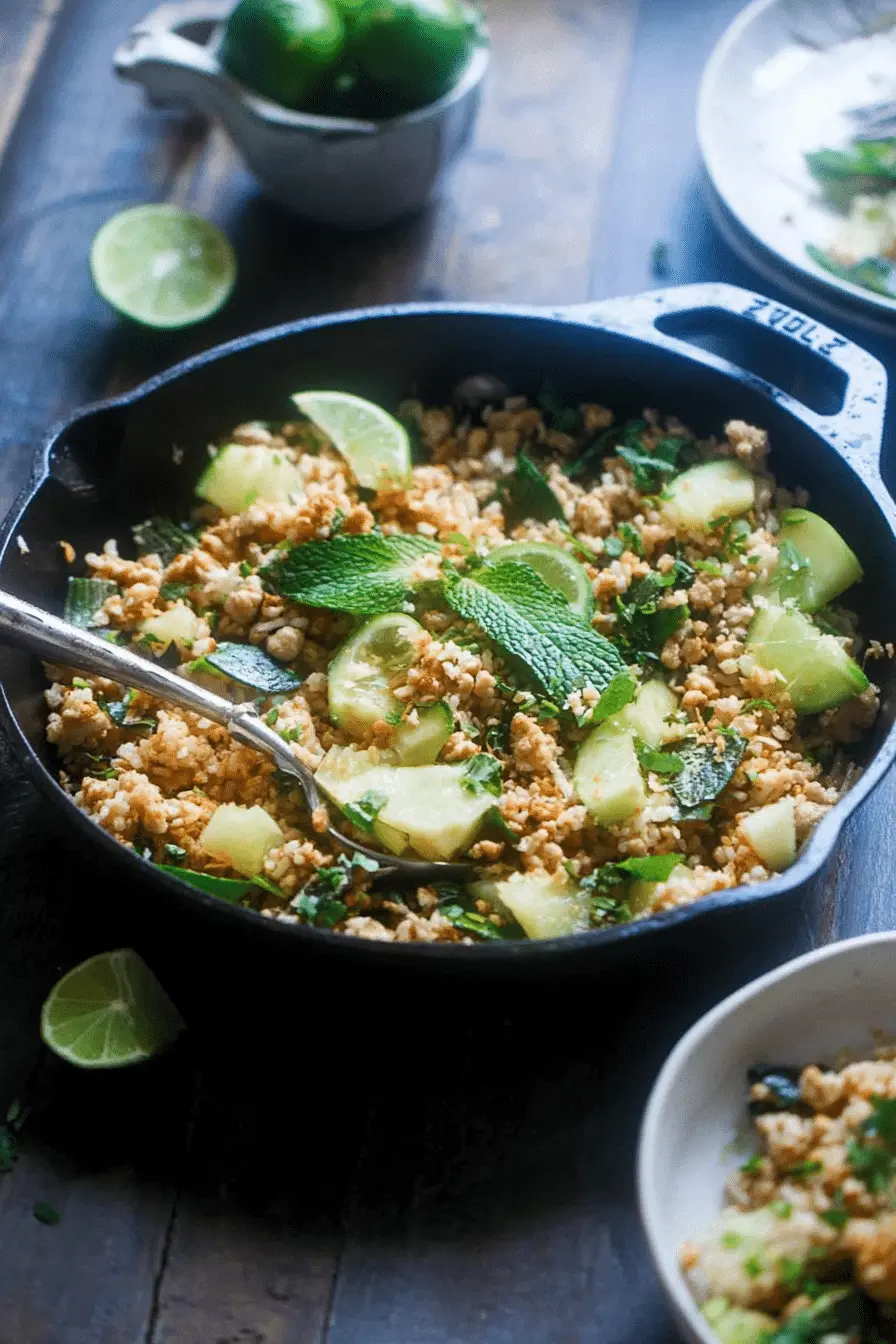
My Go-To Larb Gai Thai Chicken Skillet — Ready in 20 Minutes
- Prep
- 10 min
- Cook
- 10 min
- Total
- 20 min
- Serves
- 3
- Calories
- 197 kcal
- Carbs
- 13.90 g
Introduction
I make this Larb Gai Thai Chicken Skillet on weeknights when I want bright Thai flavors without a lot of fuss. In my kitchen it’s become the go-to one-pan meal—fast, fresh, and forgiving if you’re short on time. I like to keep the herbs and lime on hand so the dish finishes with an aromatic pop.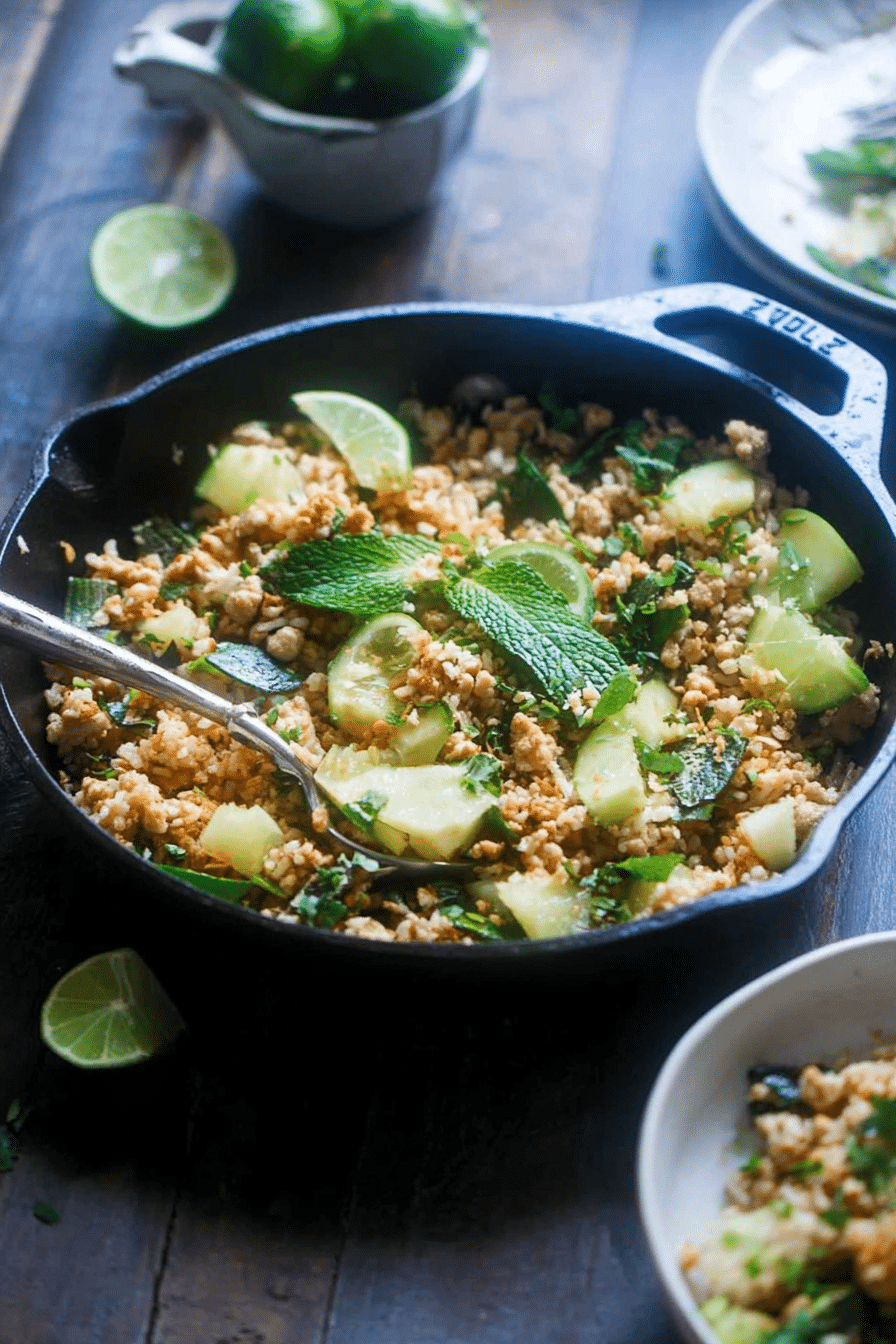
Why this Larb Gai Thai Chicken Skillet is perfect for busy weeknights
This skillet checks the boxes for speed, nutrition, and clean-up simplicity. Preparation and cook time is only 20 minutes, and everything is done in one pan so you spend less time washing dishes and more time eating. Visually, the dish is vibrant—the pale cauliflower rice contrasts with green herbs, bright cucumber, and slivers of cabbage. Aromatically, expect fresh lime and mint to cut through the savory chicken, which gives a lively finish that reads like a restaurant plate even on a Tuesday night.Everything You Need for Larb Gai Thai Chicken Skillet
Fresh ingredients make the difference here. I prefer coconut oil for the warm, slightly sweet base fat, but you can substitute a neutral oil if needed. Using fresh herbs and a crisp cucumber keeps the dish lively—avoid pre-wilted herbs for best results. Below I’ll walk through each ingredient’s role so you understand why it’s included and what to swap if necessary.- Cauliflower – The low-carb stand-in for rice; gives body and bulk without heaviness.
- Ground chicken – Lean protein that soaks up the sauce; you can use turkey or pork for a different mouthfeel.
- Coconut oil – Adds a subtle sweetness and helps brown the meat; use avocado oil for a neutral flavor.
- Green onion – Mild allium flavor that cooks quickly and melds into the skillet.
- Napa cabbage – Adds crunch and bulk; substitutes like regular cabbage or bok choy work too.
- Pineapple juice – Gives natural sweetness and a fruity acidity without refined sugar.
- Fish sauce – The savory, umami backbone; tamari or soy sauce can replace it if you need gluten-free.
- Lime juice – Bright acidity that lifts the whole dish; fresh is best for the cleanest flavor.
- Sriracha – Heat source with a touch of vinegar; swap for fresh chilies to increase freshness and intensity.
- Cucumber – Cooling contrast to the savory meat and spicy sauce.
- Cilantro – Herbal brightness and citrusy aroma that’s essential to the profile.
- Mint – Adds freshness and a cooling counterpoint to the heat; don’t use dried—fresh mint is crucial here.
- Sea salt – Used sparingly to finish and balance flavors if the fish sauce isn’t enough.
How to Get the Right Texture with Cauliflower Rice
The feel of the cauliflower is key: you want light, grainy pieces that resemble rice, not mush. Moisture level and processing method determine whether you get a pleasant bite or a soggy mess. When I make cauliflower rice, I pay attention to the size of the pieces and how long I cook them so the final texture holds up against the juicy chicken and liquid.- Pulse cauliflower in a food processor until pieces are small and fairly uniform—too fine and it turns mushy, too coarse and it won’t blend with the chicken.
- Pat any wet cauliflower with a paper towel if it seems damp—excess moisture leads to a soggy skillet.
- Cook cauliflower briefly with the meat to let it toast slightly; those light brown bits add a toasty flavor and better mouthfeel.
- Avoid overcooking after you add liquid—long simmering will soften it too much. Aim for tender but still slightly toothsome.
Balancing Sweet, Sour & Spicy: Pineapple Juice, Lime & Sriracha Tips
This dish lives and dies by balance: pineapple juice brings a gentle sweetness, lime cuts through richness, and sriracha provides heat. Tasting and adjusting as you go is essential—start conservative with heat, then build. The interplay should be sweet-tangy-spicy, not one-note.- Use pineapple juice for subtle sweetness—if your pineapple is very sweet, reduce the amount slightly so acidity still shines.
- Add lime juice at the end of cooking for the brightest citrus note; cooking it too long dulls the flavor.
- Start with a small amount of sriracha and add more to taste; fresh chilies are great when you want immediate heat and texture.
- If the mix tastes too salty from fish sauce, temper it with a bit more pineapple or a squeeze of lime.
Fresh Herbs Matter: Using Mint and Cilantro for Authentic Flavor
Fresh herbs are non-negotiable here—mint and cilantro provide the signature aroma and lift for larb gai. Dried herbs lack the volatile oils that give the dish its perfume. I buy herbs with bright green leaves and store them with stems in a glass of water when possible for maximum longevity.- Chop herbs roughly and add them at the end off the heat so their oils remain vibrant.
- Rub and smell the leaves before using—if they smell weak, replace them; the dish depends on that fresh aroma.
- Store herbs wrapped in a damp paper towel in the fridge to extend freshness for several days.
How to Make Larb Gai Thai Chicken Skillet (Step-by-Step)
- Rice your cauliflower—pulse until it’s the size of small grains and set aside.
- Heat oil in a large, high-sided skillet over medium-high heat, then add the ground chicken and green onion. Break up the chicken as it cooks so it browns evenly.
- Add the cauliflower rice to the pan and stir to combine; allow a couple minutes for the cauliflower to pick up a bit of color alongside the meat.
- Fold in the chopped Napa cabbage, cover, and reduce to medium heat briefly so the cabbage softens but keeps a little crunch.
- Uncover and stir in pineapple juice, fish sauce (or your substitute), fresh lime juice, and sriracha. Increase heat to bring the mixture to a gentle boil—then let it reduce until most of the liquid has evaporated, stirring frequently to prevent sticking.
- Remove the pan from the heat and immediately fold in chopped cucumber, cilantro, and minced mint. Taste and add a pinch of sea salt if needed.
- Serve hot, finished with extra herb leaves and lime wedges if you like.
Pro Tip for Larb Gai Thai Chicken Skillet: Finish with herbs off the heat for brightest flavor
- Add herbs only after removing the pan from heat so the volatile oils don’t cook off.
- If you must reheat leftovers, refresh with extra herbs and a squeeze of lime right before serving.
- For a crisper finish, reserve some finely sliced cabbage and cucumber to scatter on top at the end.
Troubleshooting (Quick fixes from my kitchen)
- If the skillet tastes flat: I add a little more lime juice—acidity wakes the whole dish.
- If it’s too salty from the fish sauce: I stir in a touch more pineapple juice or a few extra cucumber pieces to mellow the salt.
- If the cauliflower turns mushy: I reduce cooking time next time and pulse the cauliflower less in the processor.
- If the herbs lose their brightness during reheating: I add fresh mint and cilantro right before serving.
How to Store, Reheat, and Make-Ahead Larb Gai Thai Chicken Skillet
This skillet stores and reheats very well, which makes it perfect for meal prep. Keep herbs and any crunchy garnishes separate from the cooked mixture if you want to preserve texture during storage.- Store leftovers in an airtight container in the fridge for up to 3–4 days; keep herbs and cucumber separate when possible.
- Reheat gently on the stovetop over low heat with a splash of water or lime to loosen the mixture; avoid high heat which will dry out the chicken.
- For make-ahead prep, rice the cauliflower and chop herbs ahead of time; cook the skillet the night you plan to eat it for the best herb flavor.
Variations for Dietary Preferences
- Make it vegetarian: swap ground chicken for crumbled firm tofu or chopped mushrooms and increase the umami with a splash of tamari.
- Gluten-free option: use tamari or coconut aminos instead of soy if needed; fish sauce is usually gluten-free but check labels.
- Higher-carb option: serve over cooked rice instead of cauliflower rice if you prefer a more traditional texture.
- Extra-heat version: add sliced fresh chilies during cooking and finish with a drizzle of chili oil.
The Cultural Significance of Larb Gai
Larb gai is a classic Thai dish originating from northern Thailand and Laos, traditionally served at gatherings and enjoyed for its bright, herbal flavors and simple preparation. It’s often made with minced meat, lime, fish sauce, and toasted rice powder in regional versions—those toasted rice crumbs bring a nutty aroma that contrasts beautifully with fresh herbs. This skillet version keeps the spirit of larb by layering savory, sour, and fresh elements while streamlining it for a quick weeknight meal. Serve this skillet when you want a fast, flavorful dinner that still feels thoughtful. The herbs and citrus are what give it that unmistakable larb character—treat them with respect and the results will sing.Frequently Asked Questions
Can I use regular rice instead of cauliflower rice? Yes, you can use regular rice, but keep in mind that the dish will no longer be low-carb. Adjust the cooking time accordingly to ensure the rice is cooked through. What can I substitute for fish sauce? If you're looking for a substitute, try soy sauce or tamari for a gluten-free option. Just keep in mind that it may change the flavor profile slightly. How can I make this dish spicier? You can add more sriracha or include some diced fresh chili peppers to the mix. Adjust to your taste for the perfect heat level! Can I meal prep this dish for the week? Absolutely! Larb Gai Thai Chicken Skillet stores well in the fridge for a few days. Just reheat it on the stovetop or in the microwave when you're ready to enjoy it. Is this recipe suitable for Whole30 or paleo diets? Yes, this recipe is Whole30 and paleo-friendly as it contains whole foods without any grains or processed sugars.Recipe Card
My Go-To Larb Gai Thai Chicken Skillet — Ready in 20 Minutes
- Prep
- 10 min
- Cook
- 10 min
- Total
- 20 min
- Serves
- 3
- Calories
- 197 kcal
- Carbs
- 13.90 g
Ingredients
- 3 cupscauliflower (cut into bite-sized florets)
- 1 tablespooncoconut oil
- 1/2 poundlean ground chicken
- 1/4 cupgreen onion (sliced)
- 4 cupsNapa cabbage (chopped)
- 3 tablespoons100% pineapple juice
- 2 tablespoonsfish sauce
- 2 tablespoonsfresh lime juice
- 1/2 tablespoonsriracha (or to taste)
- 1/3 largecucumber (chopped)
- 1/4 cupcilantro (roughly chopped)
- 3 tablespoonsfresh mint (minced)
- —Sea salt (to taste)
Instructions
- 1
Place the cauliflower into a food processor and process until broken down and rice-like. Set aside.
- 2
Heat the coconut oil in a large, high-sided frying pan on medium-high heat. Add in the chicken and green onion and cook, breaking up the chicken, for 2 minutes.
- 3
Add in the cauliflower rice and cook until the chicken is lightly browned, about 2-3 minutes.
- 4
Add in the Napa cabbage, stirring to combine. Cover the pot, turn to medium heat, and cook, stirring occasionally, for 3 minutes.
- 5
Uncover the pot and add in the pineapple juice, fish sauce, lime juice, and sriracha, stirring to combine. Turn the heat to high and bring to a boil. Once boiling, boil for 3 minutes or until most of the liquid evaporates, stirring frequently so the bottom doesn't burn.
- 6
Remove the pan from the heat and stir in the cucumber, cilantro, and mint. Season to taste with salt, if needed.
You might also like
Reviews
Be the first to review this.