

I make this lemon blueberry cake whenever I want a centerpiece that reads bright, summery, and celebratory on the table. The first time I tested this recipe in my kitchen, the whole house hummed with the scent of lemon; guests kept reaching for seconds because the cake manages to be both tender and lively at once. When I serve it, people always comment on the color—pale lemon sponge flecked with deep blue berries—and that really sets the tone for the party.
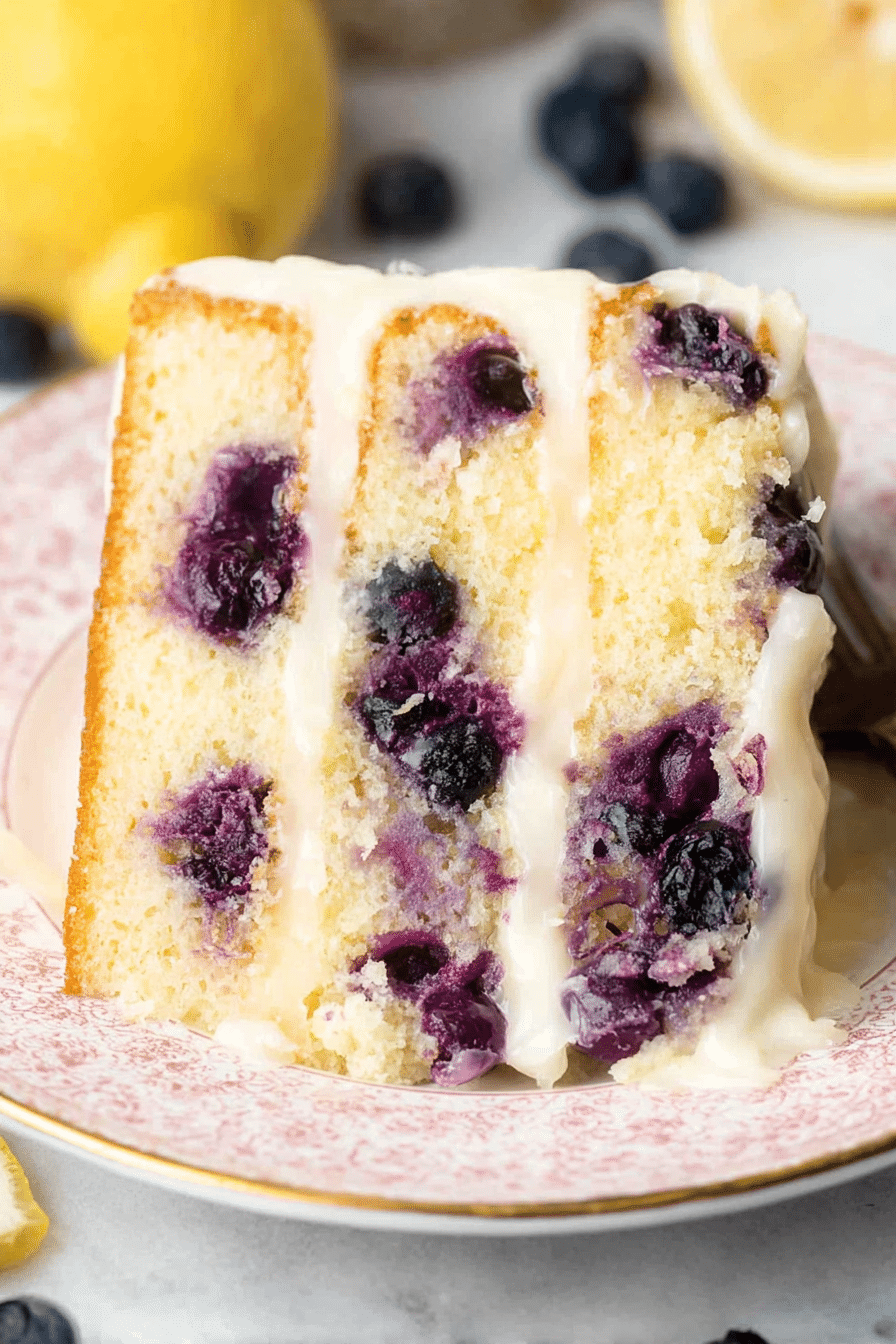
I’ll be honest: this cake looks fancier than the effort it takes. I keep the method straightforward so your prep time stays reasonable, but I focus on little technical details that lift the final result—a silky crumb, even blueberry distribution, and a cream cheese frosting that carries just the right hint of lemon. Those small choices are what make the cake feel special for birthdays, showers, or an impromptu weekend celebration.
In my kitchen, presentation matters as much as flavor. I like to top the finished cake with a scatter of fresh berries and thin lemon slices so it reads like a celebration the moment you carry it in. Whether you’re serving a casual get-together or a more formal gathering, this cake adapts easily: it can be a buffet hero, a plated dessert, or the bright focal point of a dessert table.
Brighten Your Gathering with Lemon Blueberry Cake
This cake balances sweet and tart in a way that feels festive and refreshing. The lemon in the cake and frosting gives a clean acidity that cuts through the richness of the cream cheese topping, while the blueberries pop with sweet bursts when you bite into them. Visually, the contrast between the pale yellow crumb and jewel-like berries makes the cake a striking centerpiece—perfect for drawing eyes (and forks) at any party.
Presentation makes a difference when you entertain: a few simple garnishes—fresh berries, thin lemon rounds, and a scatter of finely grated lemon zest—turn a homemade cake into something that looks professionally finished. The cake’s versatility is one of its greatest strengths: you can dress it up for a shower with edible flowers, or keep it casual for a backyard picnic with a rustic, single-layer finish.
Everything You Need for Lemon Blueberry Cake
Below I talk through the ingredients and tools that matter most so you show up prepared. I’ll note easy swaps for dietary needs and point out the items that really influence texture and flavor. If you gather these ahead of time, the assembly flows smoothly and your kitchen will smell like lemons in no time.
- All-purpose or cake flour – Provides structure; cake flour gives a lighter crumb, while a good all-purpose blend keeps things sturdy for layers.
- Baking powder & baking soda – Leaveners that help the cake rise evenly; keep them fresh for best lift.
- Buttermilk – Adds tenderness and a slight tang that complements the lemon; buttermilk also helps create a moist crumb.
- Fresh lemons – For both juice and zest; the zest carries concentrated citrus oils that give the cake its bright aroma.
- Unsalted butter – For creaming with sugar; use room-temperature butter for even incorporation. For dairy-free versions, a high-quality vegan butter works well.
- Granulated sugar – Sweetens and aerates during the creaming step.
- Eggs – Provide structure and richness; bring them to room temperature for better emulsification.
- Blueberries – Fresh berries give the best color and texture; if you must use frozen, toss them with a little flour before folding in.
- Cream cheese – The base of the frosting for tang and richness; opt for brick-style full-fat cream cheese for stability. For a dairy-free option, use a cultured plant-based cream cheese.
- Powdered sugar – For smoothing and thickening the frosting; sifted for a silky finish.
- Whipping cream – Helps loosen the frosting to the perfect spreading consistency when needed.
- Baking pans & tools – A 9×13 or layer pans, parchment rounds, a rubber spatula, and an offset spatula make the process easier and cleaner.
The Secret to a Moist, Tender Lemon Cake
A few technique choices give this cake its soft, delicate crumb. First, buttermilk is the unsung hero: its acidity tenderizes gluten and reacts with baking soda for lift, which keeps the cake light. Second, creaming the butter and sugar until fluffy traps air that expands in the oven—this is how you get loft without a dry texture.
Avoid overmixing once you add the flour. When you fold wet and dry together, stop as soon as the streaks disappear—overworking develops gluten and makes the cake dense. The batter should feel smooth and silky, and the aroma of lemon will become prominent as it bakes.
Why Temperature and Ingredient Prep Matter for This Cake
Room-temperature ingredients are not just a suggestion—they matter. When your eggs and butter are at room temperature, they emulsify more easily and give you a homogenous batter so the cake rises evenly. If butter is too cold, you’ll end up with a lumpy batter; if eggs are too cold, the butter can seize when combined.
Coating the blueberries in a little flour before folding them in prevents sinking: the flour clings to the berry skins and creates a light barrier so they stay suspended in the batter. Also, chilling the cake briefly after a thin crumb coat helps the final frosting layer go on smoothly and keeps the edges neat—particularly useful when you’re aiming for a picture-perfect party cake.
Creative Frosting & Decoration Ideas for Parties
Think beyond a flat spread—small decorative touches turn a familiar cake into a celebration piece. Try these ideas to give your cake personality and seasonal flair:
- Lavender or lemon-thyme infused frosting: steep the herb briefly in warm cream before adding to the frosting and strain for a floral lift.
- Swirled frosting effect: tint small amounts of frosting with natural fruit purees or gel color and pipe alternating dollops, then drag a skewer to create soft swirls.
- Ombre frosting sides: tint frosting from pale to stronger lemon color and apply in vertical bands, smoothing to blend the gradient.
- Garnish with seasonal fruit and edible flowers: arrange clusters of blueberries, thin lemon rounds, and a few edible petals for a fresh, celebratory look.
- Textured top: use the back of a spoon to create scalloped waves that catch light—simple but elegant for a party spread.
How to Make Lemon Blueberry Cake (Step-by-Step)
- Preheat your oven to a moderate temperature and prepare your pan(s) with grease and parchment so the cake releases cleanly.
- Whisk together your dry ingredients in one bowl so they are evenly distributed before adding to the batter.
- Combine buttermilk with freshly squeezed lemon juice and let it sit while you cream butter and sugar until light and fluffy—this step builds the cake’s lift.
- Add eggs one at a time to the creamed mixture, pausing to scrape the bowl so everything emulsifies evenly.
- Alternate adding the dry ingredients and the buttermilk-lemon mixture in thirds, beginning and ending with dry ingredients; mix on low and stop as soon as the batter is just combined to avoid toughness.
- Toss blueberries with a spoonful of flour, then gently fold them into the batter so they stay suspended while baking.
- Pour the batter into the prepared pan(s), smooth gently, and bake until the top is set and a tester comes out clean; the cake should spring back slightly when pressed.
- Cool the cake in the pan for a short period, then transfer to a wire rack to cool completely before frosting—work with cooled layers for neat assembly.
- Make the cream cheese frosting by beating butter until soft, adding cream cheese until smooth, then mixing in lemon juice and sifted powdered sugar to achieve desired sweetness and spreadability; add a splash of cream if the frosting needs loosening.
- For layer cakes, apply a thin crumb coat, chill briefly to set, then finish with a final decorative coat and garnish with fresh berries and lemon slices.
Pro Tip for lemon blueberry cake: Coat berries with flour to prevent sinking
- I always toss the berries with a little flour before folding them in—I learned this the hard way after blueberries sank in one of my early test bakes. The flour helps the berries stay suspended and gives even distribution through the crumb.
- Use fresh berries when possible for the brightest color and juiciest texture; if using frozen berries, keep them frozen until ready to fold in and expect a slightly bluer tint to the batter.
- For the brightest lemon aroma, zest the lemons before juicing them and reserve a little extra zest for finishing—those oils make a big sensory difference.
Troubleshooting
- Cake too dense? Check that your leaveners are fresh and avoid overmixing after adding flour—stop when the batter is just combined.
- Blueberries sinking? Make sure they are dry and lightly dusted with flour before folding in.
- Frosting too runny? Chill briefly and add more sifted powdered sugar gradually; beat well after each addition.
- Cake domed unevenly? Level with a serrated knife once cooled, or reduce oven temperature slightly and bake a bit longer next time for a gentler rise.
- Crumbly slices? Let the cake chill so the frosting and crumb firm up before slicing for cleaner pieces.
Variations
- Gluten-free version: substitute a 1:1 gluten-free baking blend and add a tablespoon of extra moisture (like yogurt or applesauce) if the batter seems dry.
- Dairy-free option: use plant-based butter and cultured dairy-free cream cheese; choose a non-dairy buttermilk substitute (plant milk + acid) for tenderness.
- Berry swap: try raspberries or a mix of berries for a different tartness; reduce overall lemon in the frosting if using naturally tart berries.
- Flavor twist: stir a small amount of lemon-thyme syrup into the frosting for a fragrant herbal note, or fold a few tablespoons of blueberry compote into a portion of the frosting for a marbled look.
How to Store, Make-Ahead, and Adapt the Lemon Blueberry Cake
You can bake the layers a day or two ahead and wrap each layer tightly in plastic wrap; chill them so they’re easier to trim and frost when you’re ready to assemble. For longer storage, freeze unfrosted layers wrapped well for up to a month—thaw in the refrigerator overnight before finishing.
To keep the cake fresh after serving, store slices covered in the refrigerator; the cream cheese frosting benefits from being chilled, and the flavors actually meld and taste better the next day. If you need to transport the cake to a party, refrigerate after a crumb coat so the finished frosting is stable during travel.
Adapting this recipe for occasions is simple: scale up for a crowd in a sheet-pan format, or assemble as a tall layer cake with extra frosting for a birthday. Using seasonal berries and edible flowers can tailor the look to the event—spring showers get delicate pastels, while summer picnics call for bold, ripe fruit.
Frequently Asked Questions
Can I use frozen blueberries for the Lemon Blueberry Cake?
Yes, you can use frozen blueberries! Just be sure to toss them in a little flour before folding them into the batter to help prevent them from sinking.
How do I make the cream cheese frosting fluffier?
To make your cream cheese frosting fluffier, beat the butter and cream cheese together until smooth and fluffy before adding the powdered sugar. You can also add a bit more whipping cream if you want a lighter texture.
Can I make this cake ahead of time?
Absolutely! You can bake the cake layers in advance and store them covered in plastic wrap in the fridge. Frost the cake the day you plan to serve it for the best taste and texture.
What can I do if my cake layers domed while baking?
If your cake layers are domed, you can simply use a serrated knife to gently level them off before frosting. This will give you a nice, flat surface to work with!
Is there a gluten-free option for this recipe?
Yes, you can substitute the all-purpose cake flour with a gluten-free flour blend designed for baking. Just follow the instructions on the package for best results.
Lemon Blueberry Cake
Ingredients
Method
- Preheat the oven to 350F (180C) degrees. Grease and flour a 9x13 inch cake pan. For a layer cake, line the bottom of the cake tins with rounds of parchment paper. Then grease and flour the sides of the pans.
- In a medium bowl sift together the flour, baking powder, baking soda and salt. Whisk together and set aside.
- Combine the buttermilk and freshly squeezed lemon juice. Whisk with a fork and set aside.
- In a large bowl beat together the butter, sugar and lemon zest until fluffy. (About 2-3 minutes).
- Add in the vanilla extract and beat in the eggs 1 at a time. Turn off the mixer and scrape down the sides of the bowl after each addition.
- With the mixer on low speed, beat about 1/3 of the flour mixture into the butter mixture. Then mix in about 1/2 of the milk and lemon juice mixture. Turn off the mixer and scrape down the sides and bottom of the bowl. Repeat the process - beat in about 1/3 of the flour mixture, followed by the rest of the milk and lemon juice mixture. Lastly, beat in the last 1/3 of the flour mixture. Do not overmix.
- Toss the blueberries with the 2 teaspoons of flour, then gently fold into the batter with a spatula or rubber spoon.
- Pour the batter into the prepared pan/pans. Bake for 30-35 minutes for a 9x13 inch pan, or about 25-30 minutes for layer cakes. When done baking, the top should look set and an inserted toothpick comes out clean. If you gently press on the top of the cake it should feel firm and slightly springy to the touch, but not gooey.
- Cool the cakes in the pan. If making a layer cake, be careful when inserting the pans. Do not try to invert the cake pans while they are still hot.
- Beat the butter until soft, then mix in the cream cheese.
- Add in the lemon juice and mix in 3 cups of the powdered sugar, starting with the mixer on low speed and then turning up to medium as it starts to combine.
- Beat in the rest of the powdered sugar about 1/2 cup at a time until the desired sweetness and thickness is reached. If the frosting seems too thick, beat in 1 tablespoon whipping cream.
- For a 9x13 inch cake, frost the cooled cake and optionally decorate with blueberries and lemon slices.
- For a layer cake, ensure that the layers are fully cooled first. If the tops are domed, use a serrated knife or cake leveler to gently cut off the rounded top. Place one cake layer on the plate or cake stand that you plan to serve it on. Frost the top with about 3/4 cup frosting. Place the second cake layer on top and frost the top with another 3/4 cup of frosting. Then place the third cake layer on top. Frost the sides of the cake with a thin layer of frosting (the crumb coat) and place in the fridge for about 20-30 minutes. Once the thin layer of frosting has hardened, frost the sides and top of the cake with swirls of frosting. Optionally, decorate with blueberries.
- Slice with a thin, sharp knife.