

I make these lemon blueberry sweet rolls whenever I want the brunch table to stop conversations and get photographers out of their pockets. The first time I baked them for a spring gathering, the room filled with a clean citrus perfume and the warm, jammy scent of blueberries — people kept coming back for second helpings. I love how the zesty lemon and sweet-tart berries feel both festive and familiar, and I’ll tell you the small tricks I use to keep the centers pillowy every single time.
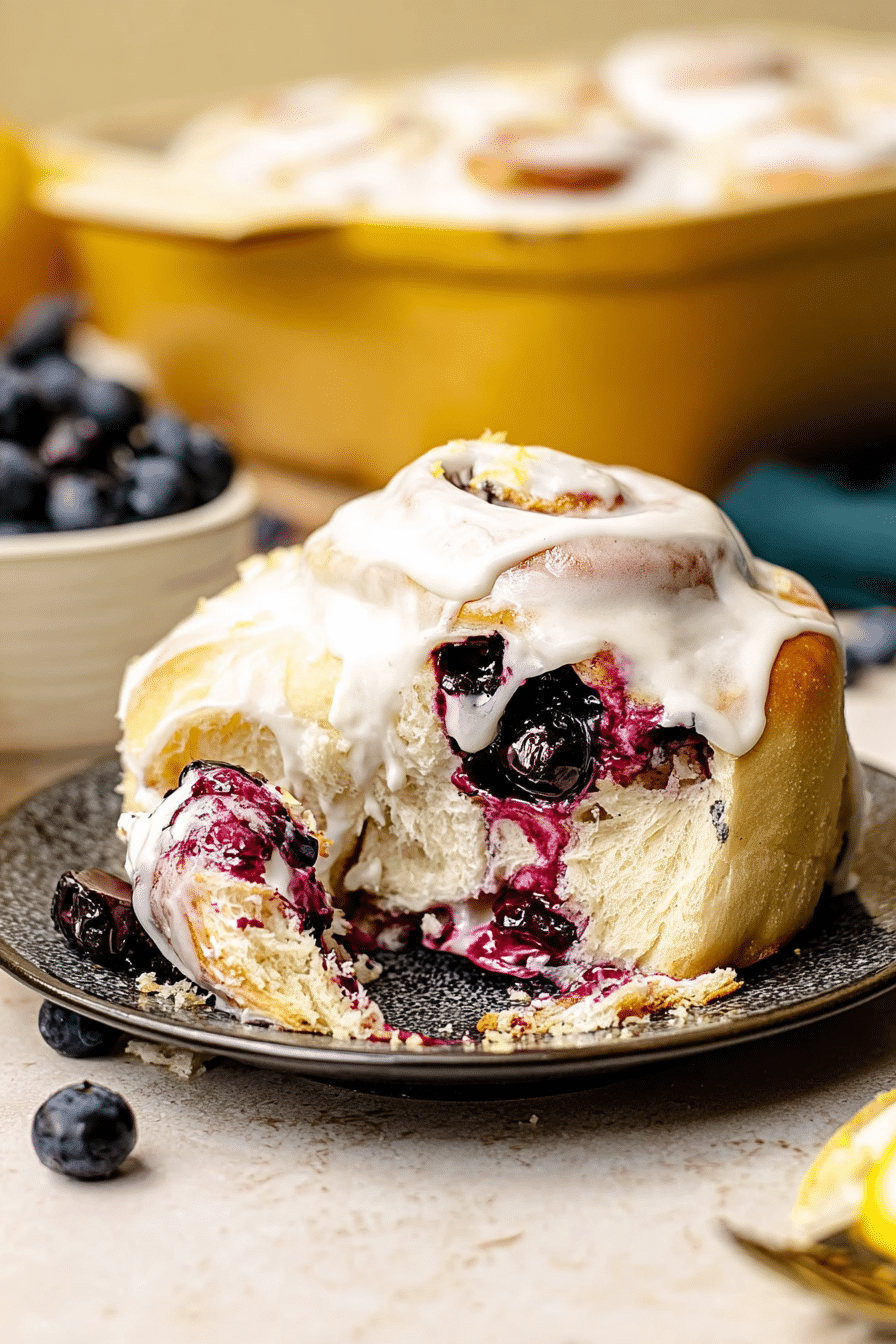
These rolls are an elevated take on the classic sweet roll — bright lemon zest folded right into the dough for an aromatic lift, a quick blueberry jam-like filling that holds its shape while baking, and a silky lemon cream cheese frosting that melts into crevices. In my kitchen they’ve become my go-to for holiday brunches, birthday mornings, and backyard brunches where people linger over coffee and pastry.
I’m sharing what worked (and what tripped me up) so you can make a showstopping batch without stress. Below I break down the ingredients, the dough behavior you should expect, how thick to get the filling, and the exact cues I watch during rising and baking. If you enjoy lemon-and-blueberry combos, consider adding lemon blueberry cupcakes to your menu as a petite companion for guests who want a lighter portion.
A Burst of Summer: Why Lemon Blueberry Sweet Rolls Are Perfect for Your Gatherings
Bright citrus notes cut through rich brunch fare, and the jewel-toned blueberry filling makes a beautiful centerpiece on any spread. The contrast between the soft, golden dough and the glossy purple filling is striking on a platter, and the frosting adds a festive white contrast that photographs beautifully. These rolls work well for casual backyard brunches, elegant bridal showers, or a make-ahead holiday breakfast where you want something that feels special but isn’t fussy.
Sensory cues: imagine the clean lemon scent the moment you unbox the pan, the slight give when you press a roll that tells you it’s still soft inside, and the sweet-tart taste of berry against tangy cream cheese frosting. If you love lemon and blueberry in other formats, try pairing this spread with lemon crinkle cookies for a sweet variation on the dessert table.
Everything You Need for Lemon Blueberry Sweet Rolls
Quality and temperature of ingredients make a big difference. Use ripe, flavorful blueberries (or good frozen ones that are well drained) and a butter you enjoy for flavor. Room-temperature eggs and dairy help the dough come together without shocking the yeast.
- Lemon (zest & juice) – Adds bright citrus aroma in the dough and tang in the filling and frosting; zest concentrates flavor where heat won’t dull it.
- Sugar – Feeds the yeast and balances the tartness of lemon and berries; use granulated for the dough and confectioners for the frosting.
- Milk – Warms the dough and contributes to a tender crumb; it should feel comfortably warm to the touch when you add it to the yeast.
- Yeast – Gives the rolls lift and an airy texture; check that it foams when proofed in warm milk.
- Eggs – Add richness and help with structure and color in the finished rolls.
- Butter – For flavor and tenderizing the crumb; softened butter in the dough and a little melted butter used in assembly help richness.
- Bread flour – Gives structure and chew that holds the swirl; you can use all-purpose in a pinch but expect slightly softer, less structured rolls.
- Salt – Balances sweetness and strengthens gluten for a better rise.
- Blueberries – Fresh or good-quality frozen for the filling; they provide jammy pockets of flavor.
- Cornstarch – Thickens the filling so it doesn’t run; it’s the difference between a neat swirl and a soggy mess.
- Almond extract (optional) – A tiny amount lifts the fruitiness of the berries without tasting almond-forward.
- Cream cheese & butter (for frosting) – Combine for a tangy, creamy finish that complements the tart berries.
- Tools – Stand mixer with dough hook (or a sturdy bowl and elbow grease), rolling pin, bench scraper or dental floss for cutting, baking pan lined with parchment, instant-read thermometer for milk, and an oven thermometer for consistent baking.
And if you want to offer a variety of citrus treats, include some delightful lemon crinkle cookies in your dessert lineup for a sweet variation that complements the rolls.
The Secret to Pillowy Rolls: Dough Tips for Reliable Results
The dough’s texture and gluten development determine how soft, airy, and well-structured your rolls will be. I’ve learned to look for specific tactile cues rather than guessing by time alone.
- Start with warm, not hot, milk — it should feel like a warm bath. Too-hot liquid will kill the yeast; too-cool will slow the rise.
- When mixing, rub lemon zest into the sugar first to release essential oils; this gives the dough a brighter lemon aroma.
- Knead until the dough is smooth and elastic. It’s okay for the dough to be slightly tacky — it should pull away from the bowl in a cohesive ball and feel springy when pressed.
- Hydration matters: this dough is on the slightly sticky side by design so the finished crumb is tender. Resist the urge to add too much extra flour; instead, use light dusting when necessary to handle the dough.
- Use the finger-poke test for the first rise: when you press an inch into the dough the indentation should fill slowly but not bounce back immediately. That tells you the gluten has relaxed and the yeast has done its work.
Perfect Blueberry Filling: How Thick is Thick Enough?
The filling needs to be thick enough to stay in place during rolling and baking but still spreadable. Think ‘soft jam’ rather than a loose compote — a glossy, coat-the-spoon viscosity that won’t leak through the dough layers.
- Cook the berries with sugar and a small amount of cornstarch until the mixture becomes glossy and thick and coats the back of a spoon.
- Break open the berries as they heat so the mixture becomes uniform; this also releases pectin and bright berry flavor.
- Cool the filling completely before spreading. Warm filling will make the dough sticky and can cause the rolls to slough filling during the second rise.
- Visual cue: the filling should fall in a thick ribbon from a spoon and hold shape for a couple of seconds before settling — that’s your sweet-roll-ready consistency.
Why Temperature and Timing Matter for Consistent Rises
Yeast responds to temperature and food. Small shifts in environment change rise times more than most bakers expect. I always prepare for variability rather than rely on exact minutes.
- Yeast activation temperature: milk or liquid should be warm but not hot. Aim for a temperature that feels comfortably warm to the touch; if it’s too hot it will stop the yeast, and if too cool the dough will rise very slowly.
- Room conditions change rising times — humidity and ambient temperature can speed up or slow down fermentation. On a humid, warm day the first rise may finish well ahead of schedule; in a cool kitchen it can take longer.
- Speeding the rise: place your bowl in a slightly warmed (turned off) oven with the light on, or near a warm appliance, but avoid hot spots that can cook the dough surface.
- Don’t overproof. If the dough doubles and then collapses, it has exhausted its food and the final structure will be weak. Use visual cues like doubling in size and the gentle finger-poke test rather than strict timing.
Step-by-Step Guide to Making Lemon Blueberry Sweet Rolls
Below are the major stages with practical cues and troubleshooting notes to keep the process straightforward.
- Make the filling: simmer berries with sugar, cornstarch, lemon zest, lemon juice, and optional extract. Cook until thick and glossy; it should coat the back of a spoon. Cool completely before using.
- Proof yeast: warm the milk until comfortably warm and sprinkle yeast on top. Wait until the surface becomes bubbly and foamy — that’s a sign the yeast is active.
- Mix dough: rub zest into sugar, then combine warm milk with yeast, eggs, and melted butter. Stir in flour and salt until a shaggy dough forms.
- Knead: knead until smooth and elastic. The dough will be slightly tacky but should come together in a cohesive ball.
- First rise: transfer to a lightly oiled bowl, cover, and let rise until doubled. Use the finger-poke test to confirm readiness.
- Roll out and fill: roll the dough into a rectangle, spread the cooled blueberry filling leaving a thin margin, and roll tightly from the short side. Trim ends and compact the log gently to even out the pieces.
- Cutting: use unflavored dental floss or a serrated knife to make even slices; floss creates a clean cut without squashing the layers.
- Second rise: arrange rolls snugly in a parchment-lined pan, cover, and let them puff until they fill the pan and touch one another.
- Bake: bake until edges are golden but centers remain soft. Overbaking dries them out; pull them when they’re lightly golden and springy to the touch.
- Frost while warm: whip the cream cheese frosting smooth, then spread it over the warm rolls so it melts into crevices and creates those irresistible nooks of flavor.
Troubleshooting notes: if your filling runs during baking the first time, make it thicker next time by cooking a little longer or adding a touch more cornstarch. If the dough rises too quickly and collapses, reduce proofing temperature and shorten the rise slightly.
Pro Tip for lemon blueberry sweet rolls: substitutions, freezing & scaling
Note: Generate the “Pro-Tips,” “Troubleshooting,” and “Variations” sections as bulleted lists for high scannability.
- Substitutions – Use lime in place of lemon for a slightly different tartness; swap in a dairy-free butter and a plant-based cream cheese for the frosting if you need dairy-free options. For a denser, gluten-free option you can experiment with a tested gluten-free flour blend, but expect textural changes and adjust hydration accordingly.
- Scaling – To make more rolls, scale ingredients proportionally and use a larger pan; smaller batches can be shaped into fewer rolls and baked in a loaf pan as another format.
- Freezing – The rolls freeze well either before or after baking. Freeze tightly wrapped and thaw at room temperature. Reheat gently and spread frosting after warming for best texture.
- Variation idea – If you want another crowd-pleasing lemon-and-blueberry bake, consider making a blueberry cream cheese loaf as an alternative treat for guests who want slices rather than rolls.
How to Store, Reheat and Make Ahead Lemon Blueberry Sweet Rolls
These rolls hold up well when handled correctly. Store cooled rolls tightly wrapped in the refrigerator for several days, or freeze wrapped for longer storage. For reheating, go low and gentle to avoid drying out the centers.
- Short-term storage: cover the cooled rolls with plastic wrap and foil or place individual rolls in airtight containers in the fridge for up to five days.
- Freezing: cool completely, wrap tightly in plastic, then foil, and freeze. Thaw overnight in the refrigerator or for a few hours at room temperature before reheating.
- Reheating: microwave individual rolls in short bursts (start with 15 seconds) until warm; alternatively, reheat in a low oven until warmed through and then add frosting.
- Make-ahead: assemble rolls the night before, cover, and refrigerate. In the morning, let them come to room temperature while you preheat the oven, then bake as directed for fresh-baked flavor with minimal morning effort.
For a matching citrus pairing, serve these with glazed lemon cookies to brighten your dessert table and offer a crunchy contrast to the soft rolls.
User Reviews: Building Community Around Lemon Blueberry Sweet Rolls
Invite guests and readers to share photos and variations — I love seeing how people adapt the filling, try different frostings, or turn the recipe into a loaf format. Encourage them to tag a common hashtag or create a shared album so everyone can swap tips and inspiration. When readers post their versions, highlight a few creative twists (like a lemon-thyme garnish or a streusel topping) in your next post to build a sense of community around the recipe.
Practical prompts to invite sharing: ask people to note whether they used fresh or frozen berries, any swaps they made, and how they handled rising in different climates. Those details help others replicate success and foster friendly troubleshooting exchanges.
Frequently Asked Questions
Can I use frozen blueberries for the filling?
Absolutely! Frozen blueberries work just as well as fresh ones in this recipe. Just make sure to thaw and drain any excess liquid before using them to prevent a soggy filling.
How can I make the dough rise faster?
To speed up the rising process, place your dough in a warm, draft-free area. You can also preheat your oven to the lowest setting for a minute, turn it off, then place the dough inside with the oven light on to create a warm environment.
What can I substitute for lemon juice if I don’t have any?
If you don’t have lemon juice, you can use lime juice as a substitute, or a bit of citric acid diluted in water. While it won’t have the exact same flavor, it will still add a nice tartness.
Can I prepare the rolls ahead of time?
Yes! You can assemble the rolls, let them rise, then refrigerate them overnight. The next morning, just let them come to room temperature while the oven preheats and bake as directed.
How long do the sweet rolls keep fresh?
These sweet rolls can be stored in the refrigerator for up to 5 days. Just cover them with plastic wrap and foil or store them in airtight containers. You can also freeze them for longer storage.
Lemon Blueberry Sweet Rolls
Ingredients
Method
- Make the blueberry filling by cooking blueberries, sugar, cornstarch, zest, juice, and extract in a pot until thickened.
- Prepare the dough by combining sugar, lemon zest, warm milk, yeast, egg, yolk, and butter in a bowl and mixing well.
- Knead the dough until smooth and let it rise until doubled in size.
- Roll out the dough, spread the blueberry filling, and roll it tightly before cutting into slices.
- Place the rolls in a baking dish, let them rise, then bake until golden.
- Prepare the frosting and spread it over the warm rolls before serving.