

I make this lemon bundt cake whenever I want something that looks special on the table without being fussy in the kitchen. In my kitchen it’s the cake I bring to summer potlucks and backyard birthdays — the crumb is tender and buttery, the crumb soaks up the glaze just enough to stay moist, and the house fills with that bright lemon aroma that signals something festive is baking. I like to keep the flavors straightforward so the lemon feels fresh, not harsh.
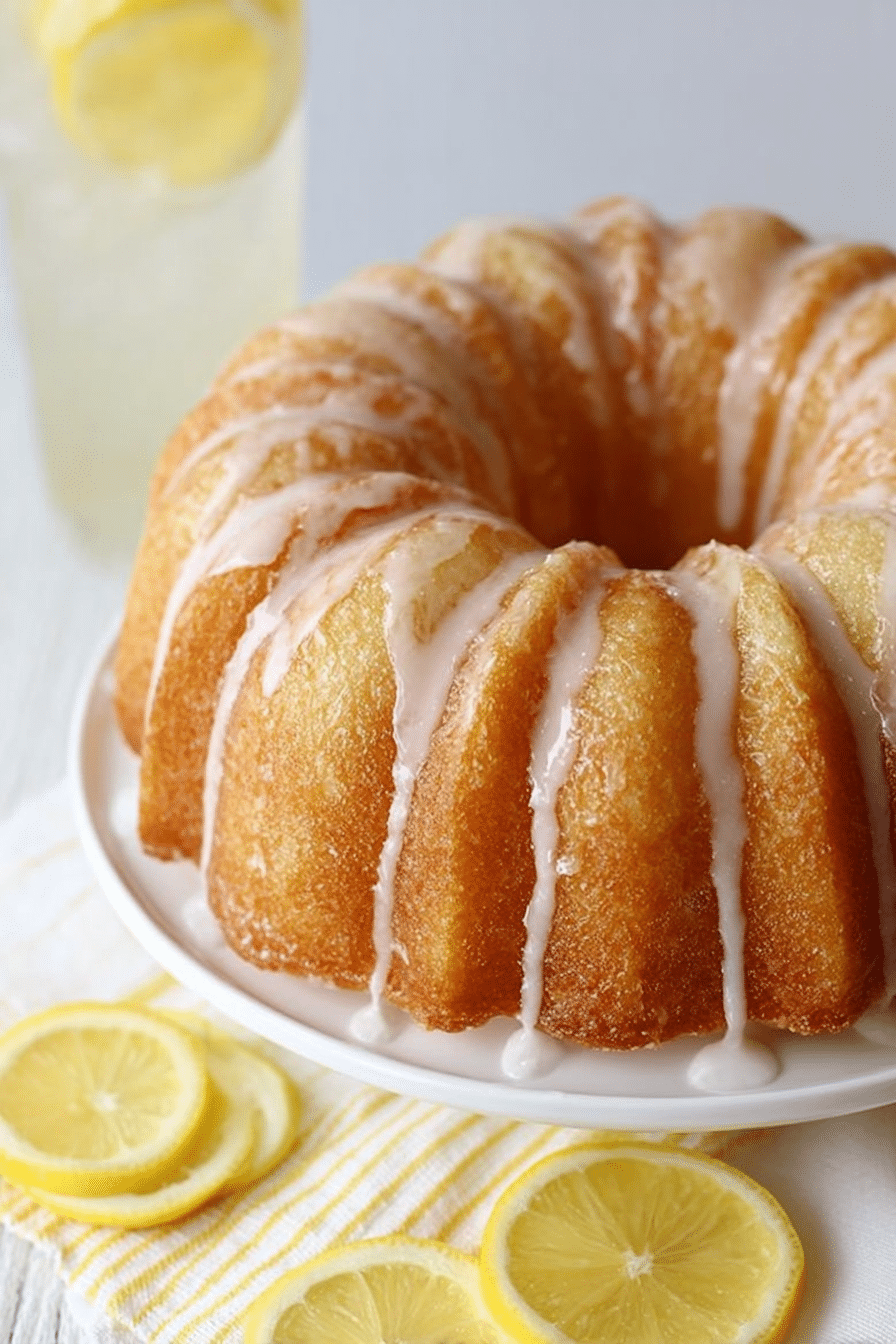
I remember the first time I over-zested lemons and the cake turned slightly bitter — lesson learned. Since then I keep the zest measured and focus on fresh juice for brightness. When guests cut into the cake, they notice the glossy glaze first and then the soft, rich interior that still feels light enough for a second slice.
Baking this with friends or kids is one of my favorite ways to make a party out of prep time. I’ll hand over safe, supervised tasks — stirring the glaze, measuring flour (with guidance), or decorating with fresh berries — and let the helpers feel proud when the cake leaves the pan cleanly and looks like it belongs on a celebration table.
Why This Lemon Bundt Cake Is a Party & Potluck Favorite
This cake’s appeal comes from a few honest things: a buttery, tender crumb that isn’t too dense; bright but balanced lemon flavor; and the polished look a bundt pan gives with minimal effort. The color is a warm, sunny yellow and the glaze adds a glossy finish that glints under party lights. It’s versatile — slice it thin for a light dessert or thick for a proper cake moment — and it travels well, which is why it’s my go-to for gatherings.
Everything You Need for Lemon Bundt Cake
- All-purpose flour – Gives structure; for a lighter texture, gently spoon and level when measuring.
- Baking powder & baking soda – Leavening that helps the bundt rise evenly and produces a tender crumb.
- Salt – Balances sweetness and enhances the lemon notes.
- Unsalted butter – The backbone of that rich, buttery flavor; using a high-quality butter makes a noticeable difference.
- Sugar – Sweetens and helps with creaming to create lift.
- Lemon zest – Concentrated lemon aroma without the acidity; use a microplane for best results.
- Eggs – Add structure and help the cake set; room temperature eggs mix more evenly.
- Vanilla extract – Rounds out the citrus and deepens overall flavor.
- Milk – Adds moisture; you can use your preferred milk but avoid non-fat for best texture.
- Sour cream – Adds richness and keeps the crumb tender and moist.
- Fresh lemon juice – For the glaze and a touch in the batter to lift the lemon profile; fresh tastes brighter than bottled.
- Powdered sugar – For the glaze; it makes a glossy finish and smooth texture.
Essential tools: a standard bundt pan (the recipe is written for a classic-size pan), an electric mixer for creaming, a spatula, a microplane for zesting, and a wire rack for cooling. If you need a complete meal idea to go with your dessert table, consider serving the bundt cake after a savory main like garlic lemon chicken.
How to Make Lemon Bundt Cake (Step-by-Step)
- Preheat your oven so it’s at the right temp when the batter is ready; this helps even rise.
- Thoroughly grease and flour the bundt pan so the cake releases easily; pay attention to the center tube and crevices.
- Whisk the dry ingredients together in a bowl so they’re evenly distributed before adding to the batter.
- Cream the butter and sugar until light and fluffy; this step traps air that helps the cake rise.
- Add lemon zest to the creamed butter and sugar so the oils bloom into the fat and perfume the batter.
- Beat in the eggs one at a time so the batter remains emulsified and smooth.
- Alternate adding the dry mixture and the milk (and vanilla) in batches, beginning and ending with the dry — this prevents over-mixing while keeping the batter cohesive.
- Fold in sour cream and lemon juice just until incorporated; don’t overwork the batter or you’ll lose the air you built up.
- Pour the batter into the prepared bundt pan and smooth the top with a spatula so the cake bakes evenly.
- Bake until a toothpick comes out clean or with a few moist crumbs — ovens vary, so watch the cake closely toward the end of baking.
- Cool the cake in the pan on a wire rack until the pan is just barely warm to the touch, then loosen the edges and invert. A gentle tap on the bottom of the pan will help release the cake.
- Melt butter, whisk in powdered sugar, and add lemon juice to make a glossy glaze; let it thicken to your preferred consistency before drizzling.
- Family-friendly note: if you’re baking with kids, assign safe tasks like zesting (with supervision), stirring the glaze, or decorating with berries. Keep hot and sharp steps to adults only and explain each step so children learn kitchen safety while having fun.
The Secret to a Tall, Tender Bundt Cake
The differences between a flat cake and a tall one are mostly small decisions adding up: accurate flour measurement, gentle mixing, and proper leavening. Measuring flour correctly prevents a dry, dense cake; spooning into the measuring cup and leveling is a simple habit that pays off. Over-mixing develops gluten and deflates air — stop mixing as soon as the flour is incorporated. Proper oven temperature and not opening the door during the first part of baking also preserve rise. Finally, using the right amount of leavening and fresh baking powder/soda ensures the structure forms at the right time, so you get that perfect dome and tender crumb you’ll want to show off.
Why Room-Temperature Butter & Eggs Matter
Room-temperature butter creams more easily with sugar, which traps tiny air pockets that expand in the oven and give the cake lift. If butter is too cold it won’t incorporate well; if it’s too soft the batter becomes greasy and can collapse. Eggs at room temperature blend uniformly into the batter, creating a stable emulsion that holds air. If eggs are cold, they can seize the butter and make the batter look curdled — it rarely affects the final cake irreparably, but it can reduce rise and create an uneven texture. For best results, take eggs and butter out of the fridge about 30–60 minutes before baking.
How to Get Bright Lemon Flavor Without Overdoing It
Lemon zest is where the real citrus aroma lives — it delivers intense lemon oils without the acidity that can overwhelm a cake. I always zest before juicing the lemons so I don’t lose any zest in the process. Fresh lemon juice adds brightness but too much can alter the batter structure and make the crumb gummy. If you want a subtler citrus, reduce juice slightly and rely more on zest. For gentle variations, try folding in a hint of lavender or a handful of blueberries for bursts of fruit that pair nicely with lemon.
Pro Tip for lemon bundt cake: Prevent Sticking & Get a Clean Release
- Grease every nook: use a brush or your fingers to smear butter or shortening into the center tube and all crevices of the pan.
- Flour after greasing: dust flour over the greased surface and tap out excess so the flour settles into the crevices and helps the cake release.
- Use baking spray with flour for an easier one-step application, especially on intricate molds.
- Cool the cake until the pan is only slightly warm — too hot and the cake can stick; too cool and moisture can cause sticking as well.
- If the cake seems stubborn: run a thin spatula gently around the center tube and edges, then invert and give the pan a confident tap on the underside.
- Troubleshooting (quick bullets I use in my kitchen):
- If the cake sticks in spots, I loosen those areas with a thin metal spatula before attempting to invert again.
- If the pan looks clean but the cake resists, I chill the pan briefly — this can sometimes help the cake contract slightly and release.
How to Store and Serve Lemon Bundt Cake (+ Make-Ahead Tips)
Store the cake at room temperature in an airtight container for a few days to keep it tender; refrigeration will extend life but can dry the cake if not wrapped well. For make-ahead plans, bake the cake up to two days ahead, cool completely, wrap tightly in plastic, and keep at room temperature. You can also freeze slices individually wrapped for longer storage. When serving, bring the cake to room temperature if chilled so the glaze shines and the crumb is soft.
- Make-ahead tip: bake a day early, glaze on the day you serve for the brightest finish.
- Transport tip: place the cake on a flat board in a snug box so it doesn’t shift during travel.
- Refreshing tip: if slightly dry, brush slices with a thin lemon syrup before serving to add moisture and shine.
Creative Serving Suggestions or Pairings
Pairings that complement the cake’s citrus brightness make for an appealing dessert spread. Fresh berries and a softly whipped cream add color and a creamy counterpoint; a scoop of vanilla or lemon ice cream is always welcome. For a dessert table with variety, consider adding complementary lemon treats alongside the bundt cake.
For a delightful dessert spread, consider adding lemon raspberry cookies alongside your lemon bundt cake.
Another great addition to your dessert table might be lemon blueberry cupcakes, which complement the bundt cake beautifully.
For lemon lovers, pair our lemon bundt cake with soft chewy lemon cookies for a citrusy feast.
- Serve slices with a pile of fresh berries and a dollop of lightly sweetened whipped cream.
- Offer a small scoop of vanilla ice cream for a crowd-pleasing plate.
- Garnish with thin lemon slices or edible flowers for a party-ready presentation.
Variations: Gluten-Free and Flavor Infusions
- Gluten-free swap – Use a high-quality gluten-free all-purpose blend that includes a binder (like xanthan gum) for best results; expect a slightly different crumb but similar flavor. Reduce mixing slightly and watch baking time as GF flours can brown sooner.
- Lower-sugar option – Replace part of the sugar with a sugar substitute designed for baking, but test for sweetness and texture—the glaze may need adjustment.
- Blueberry lemon – Fold fresh or lightly coated frozen blueberries into the batter for a juicy contrast.
- Herb-infused – Add a small amount of finely chopped fresh herbs like rosemary or thyme for an adult, aromatic twist; keep it subtle so the lemon remains front and center.
- Other citrus – Swap in orange or lime zest for variation; combine zests for a layered citrus flavor.
Frequently Asked Questions
How do I prevent my lemon bundt cake from sticking to the pan? To prevent sticking, make sure to thoroughly grease and flour your bundt pan. You can use cooking spray, butter, or shortening followed by flour, ensuring every nook and cranny is covered!
Can I use a different type of flour for this recipe? Yes! You can try using gluten-free all-purpose flour if you are looking for a gluten-free option. Just ensure the blend you choose is suitable for baking.
How do I store leftover lemon bundt cake? Store the leftover cake in an airtight container at room temperature for up to 3 days. If you want to extend its life, you can refrigerate it for up to a week.
Can I make this lemon bundt cake ahead of time? Absolutely! You can bake the cake a day or two in advance. Just let it cool completely, wrap it tightly, and store it at room temperature until you’re ready to serve.
What can I pair with lemon bundt cake for serving? Lemon bundt cake pairs well with fresh berries, whipped cream, or a scoop of vanilla ice cream. It’s also delightful served with a cup of tea or coffee!
Lemon Bundt Cake
Ingredients
Equipment
Method
- Preheat oven to 325°F.
- Grease and flour the bundt pan thoroughly.
- In a medium bowl, whisk together the flour, baking powder, baking soda, and salt. Set aside.
- Blend the butter in the electric mixer until fully smooth.
- Add sugar and beat on medium speed until light and fluffy.
- Add lemon zest and blend. Add eggs one at a time.
- While mixing, add half of the flour mixture, then the vanilla and milk.
- Add the remaining flour, sour cream, and lemon juice. Mix until well incorporated.
- Pour batter into prepared pan and smooth the top.
- Bake for 60-70 minutes until a toothpick comes out clean.
- Allow cake to cool in the pan for about 1 hour before inverting onto a plate.
- For the glaze, melt the butter and whisk in powdered sugar and lemon juice until smooth.