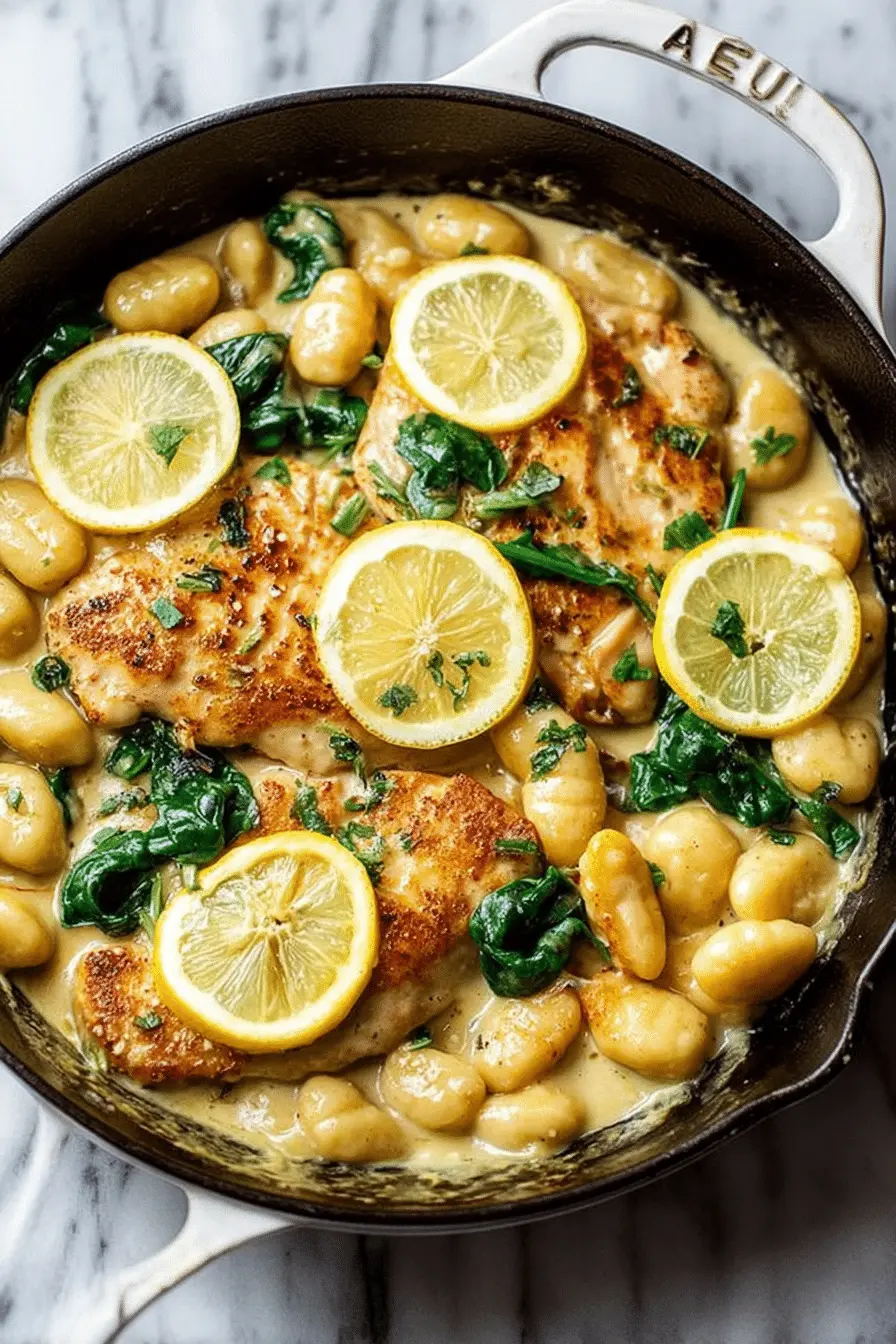
The One-Pan Lemon Chicken Gnocchi I Make for Busy Weeknights
- Prep
- 10 min
- Cook
- 20 min
- Total
- 30 min
- Serves
- 4
- Calories
- 638 kcal
- Carbs
- 44.00 g
Introduction
I make this lemon chicken gnocchi whenever I need a weeknight dinner that feels special but refuses to steal my evening. The pan fills with the bright scent of lemon and garlic while the chicken sizzles to a golden crust and little pillows of gnocchi puff up in a silky cream-parmesan sauce. It’s fast, it’s comforting, and it cleans up quickly — exactly what I want after a long day in my kitchen.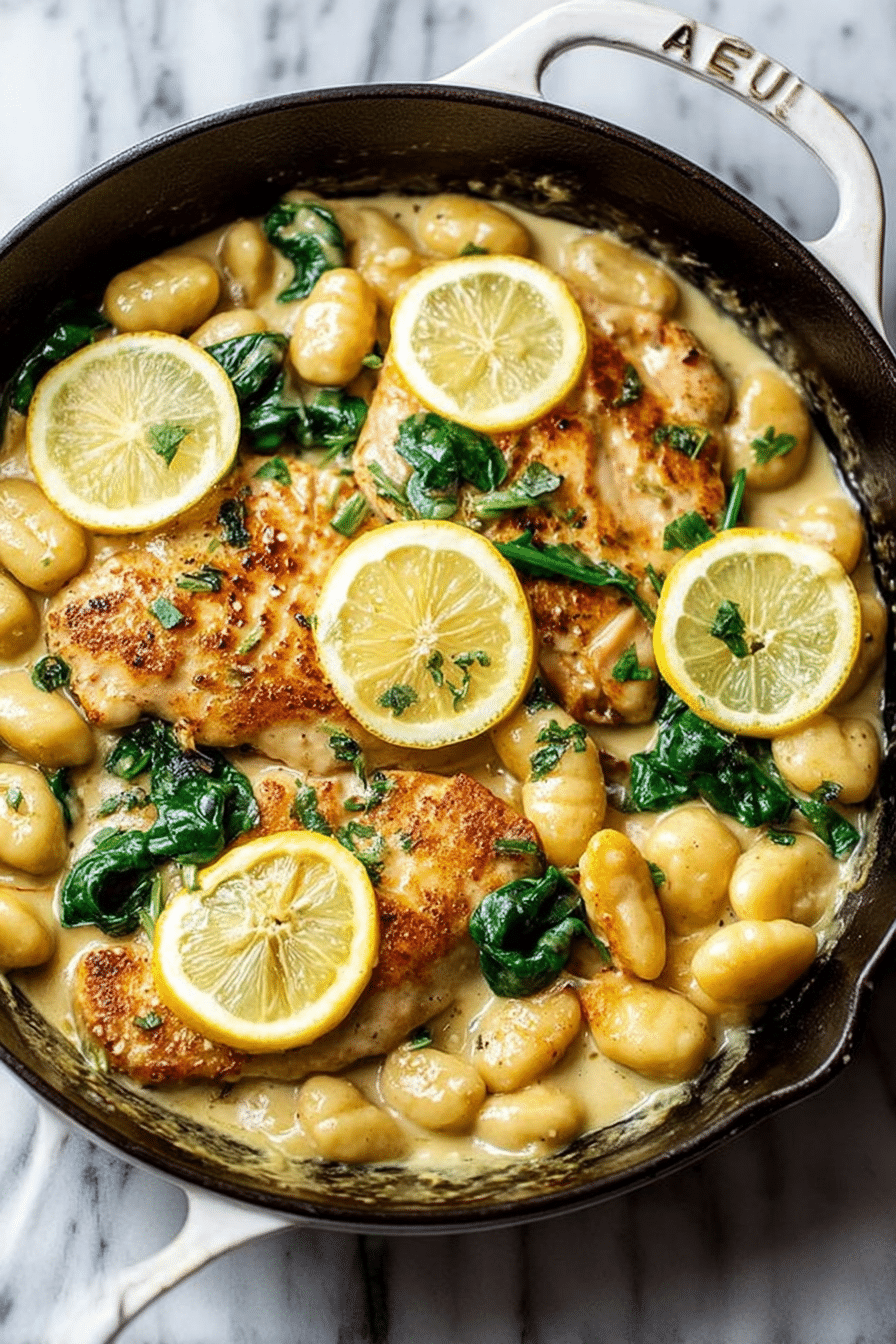
Why Lemon Chicken Gnocchi Works for Busy Weeknights
This dish is built for speed and ease without feeling like a shortcut: the total time sits around 30 minutes and everything cooks in one pan, which means minimal cleanup. The formula is simple and forgiving — seasoned chicken, store-bought gnocchi, a quick pan sauce finished with cream and parmesan — so even cooks who don’t make a lot of weeknight meals can pull it off. Sensory note: picture a glossy lemon-colored sauce coating each gnocchi and chicken piece while the scent of garlic and lemon brightens the air. Because the components are straightforward you can swap or add ingredients depending on what's on hand. I also include dietary options below so you can adapt this for gluten-free needs or to lighten the dish.Everything You Need for Lemon Chicken Gnocchi
Gathering ingredients and tools ahead of time saves a lot of stress. Use high-quality chicken and freshly grated parmesan where possible — they make a noticeable difference. Heavy cream gives the sauce its luxurious mouthfeel, while chicken broth thins or seasons the sauce as needed. A wide, heavy skillet helps you sear chicken evenly and gives space for the gnocchi to cook in the sauce.- Chicken breasts or cutlets – Provide the main protein; slice thinly if you prefer faster cook times or buy pre-cut cutlets.
- Gnocchi (store-bought) – Quick, pillowy starch; fresh and shelf-stable varieties behave slightly differently (see notes below).
- Heavy cream – Gives the sauce body and richness; you can thin with broth if needed.
- Chicken broth – Balances richness and loosens the sauce; useful for adjusting thickness.
- Parmesan – Adds salty, nutty depth and helps thicken the sauce when stirred in off-heat.
- Lemon juice and lemon pepper or zest – Provide the bright acidity that lifts the cream.
- Garlic – Aromatic backbone; quickly sautés to fragrant without burning.
- Spinach or quick greens – Bright finish and color contrast.
- Olive oil and butter – Use a combination for flavor and reliable browning.
- Key tools – Wide skillet with a lid or splatter guard, tongs, microplane or grater for cheese, and a small bowl for pre-measured ingredients.
The Secret to Pillowy Gnocchi Texture
The trick to gnocchi that stays light instead of gummy is gentle cooking and relying on the gnocchi’s own starch to thicken the sauce. You do not need to pre-cook store-bought gnocchi; add it raw to the simmering sauce so it cooks through while releasing starch that enriches the sauce. Overcooking will make it dense and gummy, so keep an eye on the recommended simmer time. Fresh gnocchi (from the refrigerated section) will cook faster and can be softer out of the package; shelf-stable gnocchi often needs a touch more simmering time. For gluten-free options, use a certified gluten-free gnocchi — many brands now offer rice- or potato-based gnocchi that behave similarly. When the gnocchi is done, it should feel light and tender in the mouth, not heavy or gluey.Why Searing the Chicken Makes a Big Difference
Searing does two things: it builds a deeply flavored crust through caramelization, and it locks in juices so the chicken stays tender inside. Heat your oil until it shimmers, and use a hot, well-preheated skillet so the chicken browns quickly without overcooking. Avoid overcrowding the pan; work in batches if needed so you maintain that contact and color. Rest the cooked chicken briefly off the heat so juices redistribute — this keeps each bite moist. Sensory detail: listen for that sharp sizzle as protein hits the pan and watch the color transform to a golden, appetizing crust. For a variation that leans into lemon-forward flavors, try using garlic lemon chicken in your recipe to boost aromatic notes. For a delicious twist, try using garlic lemon chicken in your recipe to enhance the flavor profile.How to Balance Cream and Lemon Without Overpowering Either
Acid and fat are friends here — lemon brightens but too much will curdle the cream or overpower the sauce. Add lemon juice to the broth first, taste, then fold in cream. Finish with grated parmesan off the heat so the sauce remains smooth. If the sauce tastes too sharp, a splash more cream or a pinch of sugar will tame it; if it feels flabby, an extra squeeze of lemon or a few turns of black pepper will sharpen it back up. If you have a citrus allergy or want a milder acid, a splash of light vinegar or a small amount of white wine will play a similar role. While you’re building the sauce, taste frequently and make small adjustments so you keep the balance bright and creamy. If you're looking for a similar creamy base, check out our creamy garlic paprika shrimp skillet for inspiration.How to Make Lemon Chicken Gnocchi (Step-by-Step)
- Prepare the chicken: slice or pound breasts into thinner cutlets so they cook quickly and evenly; season both sides with garlic powder and lemon pepper (include salt if your seasoning lacks it).
- Heat the pan: add oil and butter to a wide skillet over medium-high heat until shimmering; a properly preheated pan gives an instant sear.
- Sear the chicken: cook until golden and cooked through, about 5–6 minutes per side depending on thickness; transfer to a plate and tent to rest.
- Build the sauce: reduce heat to medium, add minced garlic and cook briefly until fragrant (about 30 seconds), then pour in chicken broth and lemon juice, scraping up browned bits from the pan.
- Add cream and gnocchi: add the cream and uncooked gnocchi, pressing the gnocchi below the surface so it simmers in the liquid; allow a gentle bubble for the recommended time until gnocchi is tender and the sauce has thickened slightly.
- Finish off-heat: remove from heat, stir in freshly grated parmesan and handfuls of baby spinach until wilted; return chicken and any accumulated juices to the pan and spoon sauce over the top.
- Season and serve: taste for salt and pepper, adjust as needed, then serve immediately with extra parmesan if you like.
Pro Tip for lemon chicken gnocchi: Fix Sauce Thickness & GF Swaps
Below are practical, scannable tips so you can adjust the sauce and swap ingredients easily. Pro-Tips- If the sauce gets too thick while simmering, loosen it with additional chicken broth a splash at a time until you reach the desired consistency; remember it will thicken as it cools.
- Stir parmesan in off the heat to avoid gritty or grainy texture and to keep the sauce smooth.
- For extra brightness, add a little lemon zest at the end rather than more juice — it boosts aroma without increasing acidity.
- Gnocchi turning gummy: shorten simmer time and avoid vigorous boiling; a gentle simmer is all you need.
- Sauce separating or looking curdled: reduce heat and stir in a splash of warm broth, then whisk gently; adding cheese off-heat helps re-emulsify the sauce.
- Chicken dry or tough: sear quickly in a very hot pan and don’t overcook; thin cutlets cook faster and stay juicier.
- Gluten-free: use certified gluten-free gnocchi; many potato-based brands are perfect substitutes.
- Lighter option: swap half-and-half or a lower-fat cream alternative and increase broth to maintain saucy texture.
- Veg-forward: swap chicken for sautéed mushrooms and roasted cauliflower for a vegetarian twist, finishing with the same lemon-parmesan sauce.
How to Store, Reheat, and Freeze Lemon Chicken Gnocchi
- Storage: cool the dish to room temperature, then store in airtight containers in the refrigerator for up to 3 days; acidic components help preserve flavor but dairy shortens fridge life.
- Reheating: reheat gently on the stovetop over low heat with a splash of broth to loosen the sauce; avoid high heat to prevent curdling and preserve gnocchi texture.
- Freezing: the cream-based sauce can change texture after freezing; if you plan to freeze, undercook the gnocchi slightly and freeze in a well-sealed container for up to 1 month. Thaw overnight in the refrigerator and reheat gently with added broth to restore consistency.
Pairing Side Dishes or Salads
Because the gnocchi is rich, choose sides that add brightness or crisp texture. A simple green salad with a lemon vinaigrette or steamed asparagus keeps the plate balanced, while crusty bread or focaccia is excellent for sopping up any remaining sauce. Seasonal vegetables roasted with a touch of olive oil and lemon pair especially well. For a more substantial spread, consider serving alongside a lemon-forward fish for variety; to complement the flavors of this dish, try pairing it with baked lemon garlic butter salmon for a refreshing contrast. To complement your lemon chicken gnocchi, consider serving it with baked lemon garlic butter salmon for a refreshing flavor combination.Frequently Asked Questions
How long does it take to make lemon chicken gnocchi? This delicious recipe can be prepared in about 30 minutes! Can I use store-bought gnocchi? Absolutely! Store-bought gnocchi works perfectly for this recipe and saves you time. What if I don't have lemon pepper seasoning? If you don't have lemon pepper, you can use a mix of salt, pepper, and a little extra lemon juice or zest to season your chicken. How can I make this dish gluten-free? You can use gluten-free gnocchi to make this recipe gluten-free! What side dishes pair well with lemon chicken gnocchi? Light salads, steamed vegetables, or garlic bread make great side dishes to complement the flavors of lemon chicken gnocchi.Recipe Card
The One-Pan Lemon Chicken Gnocchi I Make for Busy Weeknights
- Prep
- 10 min
- Cook
- 20 min
- Total
- 30 min
- Serves
- 4
- Calories
- 638 kcal
- Carbs
- 44.00 g
Ingredients
- 2 largechicken breasts
- 1/2 teaspoongarlic powder
- 1 teaspoonlemon pepper seasoning
- 1 tablespoonolive oil
- 1 tablespoonbutter
- 2 clovesgarlic (minced)
- 1/2 cupchicken broth
- 1 tablespoonlemon juice
- 1 cupheavy/whipping cream
- 1 pounduncooked potato gnocchi
- 1/2 cupfreshly grated parmesan cheese
- 2 cupsfresh baby spinach (packed)
- —Salt & pepper (to taste)
Instructions
- 1
Cut the chicken in half lengthwise so you've got 4 thinner cutlets. Season each side with the garlic powder and lemon pepper. If the lemon pepper seasoning you're using doesn't contain salt, be sure to salt the chicken as well.
- 2
Add the oil and butter to a skillet over medium-high heat and let the pan heat up for a few minutes. Sear the chicken for about 5-6 minutes/side or until it's golden and cooked through. Transfer the chicken to a plate (tent with foil to keep warm if you wish).
- 3
Reduce the heat to medium and add the garlic to the skillet and cook for about 30 seconds.
- 4
Stir in the chicken broth and lemon juice and scrape up any brown bits from the bottom of the pan.
- 5
Add in the cream and gnocchi. Give it a good stir and ensure the gnocchi is submerged in the liquid. Let it bubble gently, uncovered, for 5-7 minutes, stirring occasionally, or until the gnocchi is cooked and the sauce has thickened.
- 6
Take the pan off the heat and add in the parmesan cheese and spinach. Toss until the spinach has started to wilt and it's nicely mixed in.
- 7
Add the chicken back into the skillet (along with any juices from the plate) and spoon some sauce over top. Season with salt & pepper as needed and serve immediately.
You might also like
Reviews
Be the first to review this.