

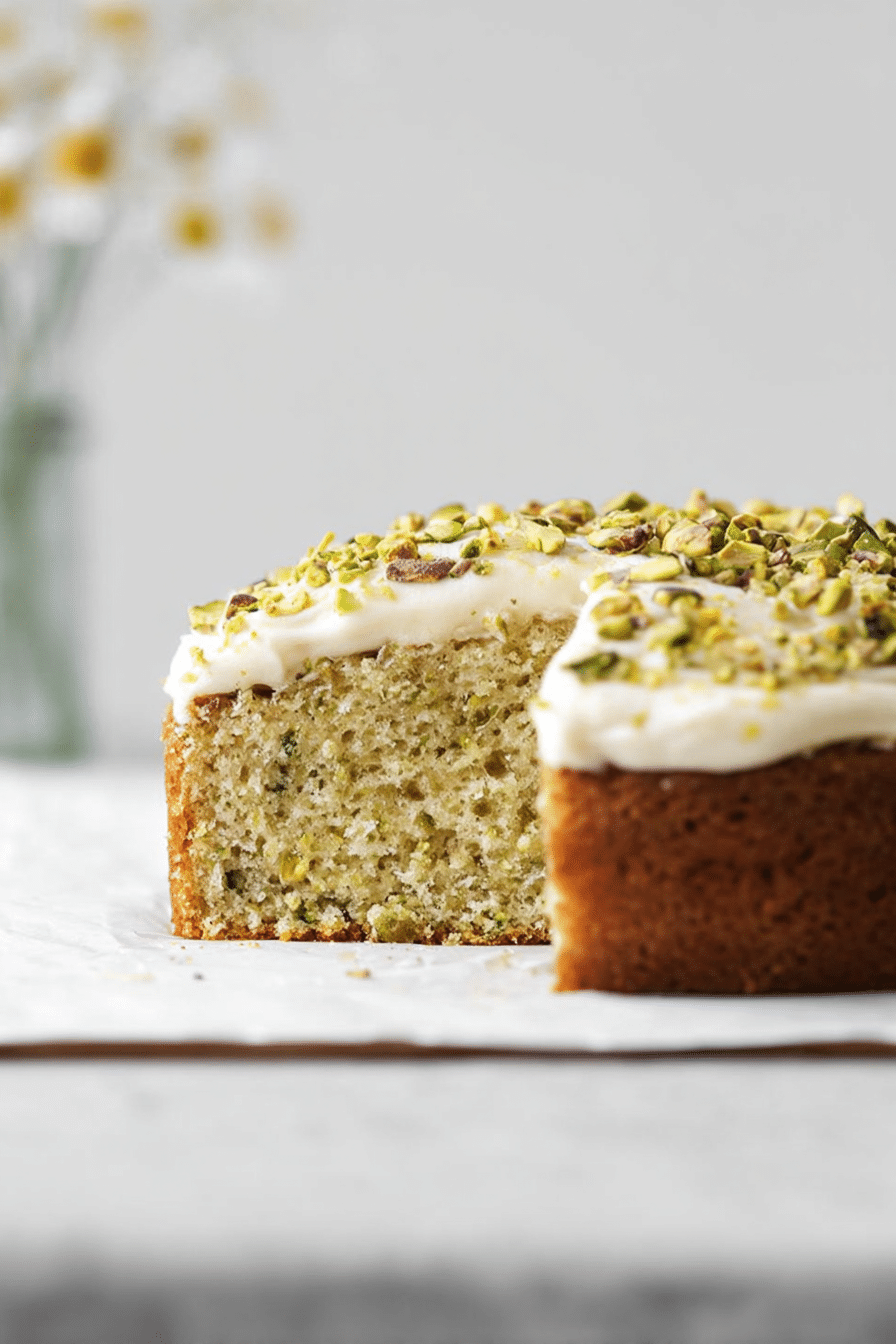
This lemon pistachio cake is one of those recipes I find myself turning to when friends drop by unannounced or when I want a dessert that feels both bright and comforting. The first time I made it I was surprised at how the scent of lemon filled the whole kitchen — it practically woke up the house. The pistachios give a subtle, nutty crunch and a green flecked crumb that makes each slice interesting to look at and to eat.
I usually make this in an 8×8 pan for a casual dessert or double it in a 9×13 for parties. It’s light enough for spring and summer, but the pistachios and mascarpone give it enough substance to work on cooler evenings too. In my kitchen I’ve tested this a few different ways: a slightly tangier version for when the lemons are amazing, and a more rounded, buttery version when my lemons were a little mellow. Both worked — but the details matter, and I’ll tell you what to watch for as we go.
Ingredients Overview
- Pistachios – give the cake a nutty texture and flecks of green; pulse them lightly so they’re chopped, not turned into butter.
- Fresh lemons – zest and juice bring bright citrus lift; fresh lemon zest is far more aromatic than bottled.
- Cake flour – keeps the crumb tender; if you want a gluten-free version, swap with almond flour or a gluten-free blend (see the Gluten-Free Variations section).
- Baking powder & baking soda – provide lift; make sure they’re fresh for the best rise.
- Unsalted butter – creamed with sugar to add structure and a tender crumb; room temperature matters here.
- Sugar – sweetens and helps with creaming; granulated sugar gives a classic texture.
- Kosher salt – balances sweetness and enhances the lemon and pistachio flavors.
- Eggs – bind and add richness; add them one at a time for an even emulsion.
- Full-fat sour cream – adds moisture and tang; it keeps the cake tender and prevents it from drying out.
- Vanilla extract – rounds the citrus notes and adds depth.
- Whole milk – thins the batter to the right consistency and gives a light crumb.
- Mascarpone cheese – makes the frosting silky and not overly sweet; it balances the lemon with creaminess.
- Powdered sugar – sweetens the frosting without making it gritty.
- Heavy whipping cream – adjusts frosting texture so it spreads smoothly.
- Extra chopped pistachios – for garnish and crunchy contrast.
- Gluten-free options – almond flour or a 1:1 gluten-free baking blend work well; you may need to tweak liquid and binder (see Gluten-Free Variations).
Full Ingredient List (for accuracy)
- 3/4 cup shelled roasted pistachios, plus extra for topping
- Zest from 2 lemons
- 1 1/2 cups cake flour
- 1 tsp baking powder
- 1/4 tsp baking soda
- 1 stick unsalted butter, at room temperature
- 1 cup granulated sugar
- 3/4 tsp kosher salt
- 3 large eggs
- 1/4 cup full-fat sour cream
- 1 tsp vanilla extract
- 1/3 cup whole milk
- 6 oz (3/4 cup) mascarpone cheese, at room temperature
- 3/4 cup powdered sugar
- 1 tbsp heavy whipping cream
- 1 tsp finely grated lemon zest (for the frosting)
- 1 tsp fresh lemon juice (for the frosting)
- 1/8 tsp kosher salt (for the frosting)
Step-by-Step Instructions
Below are the chronological steps I follow every time I make this cake. I include small troubleshooting notes where I’ve learned things can go sideways.
- Preheat the oven to 350°F (175°C). Butter an 8×8-inch baking pan, line the bottom with parchment paper, and butter the paper. This double-buttering ensures the cake releases cleanly. If you skip the parchment, the edges can stick and tear when you invert the pan.
- In a food processor, combine the 3/4 cup shelled roasted pistachios and the zest from 2 lemons. Pulse until finely ground. Be careful: pulse in short bursts. You want fine bits, not pistachio butter. If it looks oily, you’ve gone too far — stop and scrape it out. Transfer this mixture to a bowl and mix with the 1 1/2 cups cake flour, 1 tsp baking powder, and 1/4 tsp baking soda. Whisk to combine and set aside. This step distributes pistachio flavor and prevents dense pockets of nuts in the batter.
- In a small bowl, whisk together the 1/4 cup full-fat sour cream, 1 tsp vanilla extract, and 1/3 cup whole milk. Set aside. The sour cream gives moisture and a touch of tang that balances the lemon. If your sour cream is cold straight from the fridge, let it sit a few minutes so it blends smoothly.
- In the bowl of a stand mixer fitted with the paddle attachment, cream the 1 stick unsalted butter, 1 cup sugar, and 3/4 tsp kosher salt at medium speed until light and fluffy — about 3 minutes. You’ll notice the sugar looks more dissolved and the butter lightens in color. If you under-cream, the cake can be dense; over-cream and you’ll trap too much air which can cause doming or cracking.
- Add the 3 eggs one at a time, mixing until each is fully incorporated. Scrape down the sides and bottom of the bowl between additions. This ensures an even emulsion and avoids streaks of butter or egg.
- With the mixer on low, alternate adding the dry pistachio-flour mixture in three additions and the sour cream/milk mixture in two additions, starting and finishing with the dry ingredients. Mix just until combined — don’t overmix. Overmixing activates gluten (even in cake flour) and will give a tighter crumb. The batter should be smooth, thick, and slightly shiny. If it seems too thick, a tablespoon of milk will loosen it; if it’s too loose, a tablespoon more flour helps.
- Pour the batter into the prepared pan and smooth the top with an offset spatula. Tap the pan gently on the counter once to release large air bubbles. Bake for 35–40 minutes, or until a toothpick inserted in the center comes out clean or with a few moist crumbs attached. In my oven 36 minutes is usually perfect; ovens vary, so start checking at 32 minutes if yours runs hot.
- Allow the cake to cool in the pan for about 10 minutes. You’ll notice the cake will slightly pull away from the sides — that’s a good cue it’s ready to be inverted. Carefully turn the cake out onto a work surface, remove the parchment, then invert onto a wire rack to cool completely. If you frost a warm cake, the frosting will slide and melt — be patient.
- Once cooled, spread the mascarpone frosting over the top (see the Mascarpone Frosting Recipe section). Sprinkle with chopped pistachios and serve at room temperature. The texture should be slightly dense but tender, with a moist crumb and a bright lemon lift.
Mascarpone Frosting Recipe
This frosting is intentionally silky and not too sweet — it’s meant to balance rather than overpower the lemon and pistachio.
- 6 oz (3/4 cup) mascarpone cheese, at room temperature
- 3/4 cup powdered sugar, sifted
- 1 tbsp heavy whipping cream
- 1 tsp finely grated lemon zest
- 1 tsp fresh lemon juice
- 1/8 tsp kosher salt
Method: In a medium bowl, combine all frosting ingredients. Use a hand mixer on low to combine until smooth. Stop frequently and scrape the bowl — mascarpone can be temperamental: overmix and it can break or become grainy. If your frosting looks a bit loose, chill it for 10–15 minutes; chilling firms it without making it cold-hard. If it curdles slightly (rare but possible if ingredients are at very different temperatures), let it sit at room temperature for a bit and gently whisk by hand until smooth.
Variations: For more lemon fragrance, add another 1/2 tsp of finely grated zest. For texture, fold in a couple tablespoons of crushed pistachios just before spreading. If you prefer a tangier frosting, swap 2 oz of mascarpone for cream cheese — blend well and taste as you go.
Serving Suggestions and Pairings
This cake is lovely plain or dressed up. I like to serve modest slices so people can enjoy the bright lemon without feeling weighed down. A warm slice fresh from the pan (once cooled) is comforting, while chilled slices are compact and slice beautifully.
This cake pairs wonderfully with a refreshing glass of blueberry tea lemonade.
For dessert enthusiasts, serving this cake with delightful strawberry cream puffs can be a showstopper.
Garnish ideas: scatter chopped pistachios for crunch, add thin lemon slices or candied lemon peel for show, or top with edible flowers (lavender or violets) for spring events. For beverages, iced herbal tea or a crisp prosecco are perfect — the acidity in the drinks plays nicely with the cake’s lemon notes.
Storage Tips for Your Cake
Room temperature: If you plan to eat the cake within 24 hours, store it covered at room temperature in an airtight container or cake dome. Keep it out of direct sunlight. The cake should remain moist and the frosting will stay spreadable.
Refrigeration: Because mascarpone is dairy-based, if you won’t finish the cake within a day, refrigerate it. Wrap the cake loosely with plastic wrap or keep it in an airtight container to prevent it from absorbing fridge odors. If the frosting firms up in the fridge, let slices sit at room temperature for 20–30 minutes before serving to soften.
Freezing: Yes, you can freeze this cake. For the best results, freeze unfrosted slices or layers wrapped tightly in plastic wrap and then foil to prevent freezer burn. When ready, thaw in the fridge overnight, then bring to room temperature before frosting. If you freeze a fully frosted cake, flash-freeze uncovered for an hour to set the frosting, then wrap tightly. Thaw overnight in the fridge to avoid condensation on the frosting.
Longevity: Baked and unfrosted, the cake keeps for about 3 days at room temperature in an airtight container, and up to 5 days refrigerated. Fully frosted and refrigerated, eat within 3–4 days for best texture.
Gluten-Free Variations
Gluten-free baking changes texture and structure, so I’ve tested a few swaps that work well for this cake.
- Almond flour swap – Replace the 1 1/2 cups cake flour with 1 1/2 cups almond flour. Almond flour makes a moist, denser crumb. Because almond flour lacks gluten, add 1 extra egg or 1 tablespoon of xanthan gum to help structure. Reduce milk by 1–2 tablespoons if the batter seems too loose.
- 1:1 gluten-free baking blend – Use the same volume (1 1/2 cups) of a quality gluten-free 1:1 baking blend that includes xanthan gum. Expect a similar crumb to the original, though slightly crumblier. If your blend is heavier, add 1–2 tablespoons of milk to reach the right batter consistency.
- Tips – Almond flour browns differently; watch the cake in the last 5–10 minutes of baking. Because gluten-free flour often absorbs liquid differently, you may need to adjust by a tablespoon at a time. Let the cake cool fully before slicing — gluten-free cakes set as they cool and are easier to cut once chilled briefly.
Creative Twists and Seasonal Variations
Swap in fresh berries for a summer version, or stir in lemon curd between layers for more punch. You can also make cupcakes with this batter for individual servings.
Consider adding a twist by trying our lemon blueberry tart for another fruity dessert option.
Other ideas: use a crunchy streusel of chopped pistachios and brown sugar on top for texture, or fold in a handful of raspberries just before baking for a marbled look. For a floral note, add 1/2 tsp culinary lavender to the batter, but be sparing — lavender is strong.
FAQ
Can I use almond flour instead of cake flour for a gluten-free version?
Absolutely! You can substitute cake flour with almond flour or a gluten-free baking blend. Just keep in mind that the texture may be slightly different, so you may need to adjust the liquid ingredients for the right consistency.
How can I ensure my cake stays moist?
To keep your cake moist, avoid overbaking it. Always check for doneness a few minutes before the suggested baking time. Additionally, make sure to store it properly, either at room temperature in an airtight container or in the fridge to maintain its moisture.
What can I do if I don’t have mascarpone cheese?
If you can’t find mascarpone cheese, you can use cream cheese as a substitute. Mix it with a bit of heavy cream to mimic the creamy texture of mascarpone.
What are some good beverage pairings for this cake?
This lemon pistachio cake pairs wonderfully with iced herbal tea, prosecco, or a refreshing lemonade. The brightness of these drinks complements the flavors of the cake perfectly!
Can I freeze the lemon pistachio cake?
Yes, you can freeze the cake! Wrap it tightly in plastic wrap and aluminum foil to prevent freezer burn. When you’re ready to enjoy it, thaw it in the fridge overnight for the best results.
Conclusion and Final Thoughts
This lemon pistachio cake is one of those reliable recipes that strikes the right balance between bright and comforting. It’s not fussy, but it rewards attention — like keeping the pistachios from turning oily in the processor and allowing the cake to cool fully before frosting. I’ve made it for casual weeknight treats and also for bigger gatherings; either way, it’s consistently well received.
If you’re looking for more citrus delights, don’t miss our delicious lemon poppy seed cupcakes!
Go ahead and give it a try this weekend. Start with perfectly room-temperature butter and mascarpone, pulse the pistachios carefully, and trust your nose — the moment the kitchen smells like lemon, you’re nearly there. If you make it, I’d love to hear how you adapted it: did you swap in almond flour, add berries, or sprinkle a crunchy topping? Share your tweaks and any tips you discover — that’s half the fun of baking.
Lemon Pistachio Cake with Mascarpone Frosting
Ingredients
Method
- Preheat the oven to 350°F. Butter an 8x8-inch baking pan, line the bottom with parchment paper and butter the paper.
- In a food processor, combine the pistachios and lemon zest, and pulse until finely ground. Transfer to a bowl and mix with flour, baking powder, and baking soda. Whisk to combine, and set aside.
- In another small bowl, whisk together the sour cream, vanilla, and milk, then set aside.
- In the bowl of a stand mixer with a paddle attachment, cream the butter, sugar, and salt at medium speed until light and fluffy, about 3 minutes.
- Add the eggs one at a time, ensuring each is fully incorporated. Scrape the sides and bottom of the bowl as necessary.
- With the mixer on low, alternate between adding the dry ingredients and the wet ingredients, starting and finishing with the dry ingredients.
- Pour the batter into the prepared pan and smooth the top. Bake for 35-40 minutes or until a toothpick inserted in the center comes out clean.
- Allow to cool in the pan for about 10 minutes. Carefully turn the cake out onto a work surface, remove the parchment, then invert onto a wire rack to cool completely.
- Spread the frosting on top, sprinkle with chopped pistachios, and serve at room temperature.
- In a medium bowl, combine all frosting ingredients. Mix with a hand mixer until smooth, being careful not to overmix as the frosting may curdle.