

I started baking these lemon poppy seed cheesecake cookies because I wanted a dessert that felt both special and easy to serve to a crowd. In my kitchen they’ve become my go-to when guests arrive with short notice: the cookies have enough presence on a platter to look carefully composed, but they bake quickly and can be finished with a glossy swirl of cheesecake frosting right before serving.
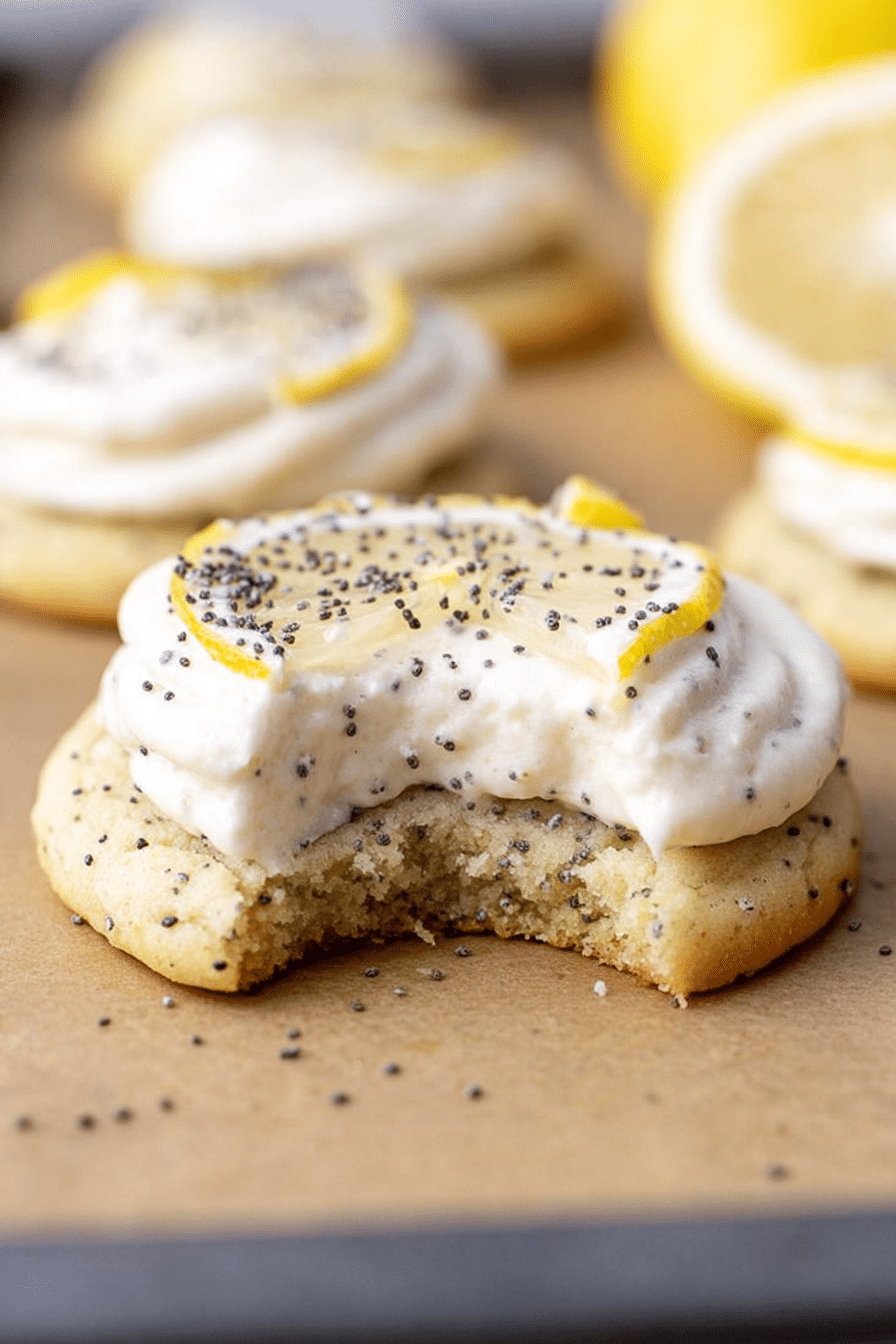
When I plate them, I want guests to see the contrast: pale lemon cookies dusted with flecks of poppy seed, topped with a creamy, piped cheesecake swirl and a tiny hit of bright zest or a thin lemon slice. The aroma of fresh lemon zest is immediate—the bright citrus cuts through the richness of the frosting and pulls everything into balance. I love how each bite offers a tender, slightly crisp edge followed by a soft, buttery center and a cool, tangy frosting on top.
If you’re planning a brunch, baby shower, or spring evening soiree, these cookies are the type of small dessert that behaves like a statement piece. I often make the dough the day before and pipe the frosting the morning of; the result is a dessert that feels composed and refined without demanding a full day in the kitchen.
Why These Lemon Poppy Seed Cheesecake Cookies Are Ideal for Entertaining
These cookies present beautifully and travel well from kitchen to gathering table—exactly what I look for when I’m planning a menu for friends. The cheesecake frosting gives a glossy, elevated look that makes an ordinary cookie feel special, and the poppy seeds add just enough visual texture so every cookie reads as crafted.
Sensory notes I emphasize when serving: the bright citrus scent when the platter is uncovered, the creamy tang of the frosting that contrasts the buttery cookie base, and the way the cookies hold shape so guests can pick them up without the frosting losing definition. If you love citrus desserts, try making our lemon cookies to impress your guests.
Everything You Need for Lemon Poppy Seed Cheesecake Cookies
Here’s what I lay out on the counter before I start—seeing the ingredients and tools ready helps the process flow and ensures accurate results. The nutritional snapshot (per cookie, approximate) I use for menu planning is: 357 kcal, 19 g fat, 43 g carbs, 4 g protein, which helps guests with dietary awareness.
- Granulated sugar + lemon zest – Rubbing these together releases aromatic oils; this step makes the lemon flavor pop.
- Butter – Controls texture; temperature matters for spread and tenderness.
- Egg and vanilla – Binders that add structure and depth; vanilla rounds the lemon.
- All-purpose flour, baking powder, baking soda, salt – Provide structure and lift; choose a reliable flour for consistent results.
- Poppy seeds – Tiny visual and textural bursts; don’t skip them if you want that classic look.
- Cold cream cheese – Essential for a stable, pipeable cheesecake frosting; cold cream cheese whips up with heavy cream and powdered sugar into peaks that hold their shape.
- Heavy cream and powdered sugar – Create volume and sweetness in the frosting; their ratio determines spreadability.
- Optional garnishes – Poppy seeds and thin lemon slices for a polished finish.
- Measuring tools and equipment – Use a kitchen scale for consistent cookie size, a cookie scoop for uniform portions, and a stand mixer or hand mixer for smooth frosting. For piping, fit a disposable piping bag with a star tip for classic swirls.
For another delightful lemon treat, don’t miss out on our soft chewy lemon cookies recipe if you’re building a citrus-forward dessert spread.
The Secret to a Thick, Tender Cookie Texture
Texture is everything here. The balance between fat and flour determines whether a cookie spreads thin or remains thick and tender. I use technical control—managing butter temperature, minimal mixing, and precise flour incorporation—to keep the interiors soft and the edges slightly set.
In practical terms: if your butter is too warm, the dough will be loose and the cookies will flatten; too cold and the dough won’t come together, creating dry, crumbly cookies. I aim for butter that’s fully melted and then cooled before combining with the sugar and zest—this gives a smooth, cohesive dough that still benefits from a chill to firm up the fat so the cookies hold their height during baking. Avoid over-mixing once the dry ingredients go in; vigorous mixing develops gluten and makes cookies tough rather than tender.
Why Chilling the Dough Makes the Difference
Chilling does three things I rely on: it solidifies the fat so cookies bake taller and spread less, it lets the flour hydrate for a more cohesive texture, and it gives the lemon and butter time to marry so the flavor becomes more layered. There’s also a convenience bonus: dough chilled overnight is one less thing to do the day of your event.
From a science perspective, colder dough slows the rate at which fats melt in the oven. When fat melts too quickly, the cookie flattens before the structure sets; chilled dough keeps the cookie compact long enough for the edges to set and the inside to remain tender. I often make the dough in the morning and chill it to get an even, controlled bake.
Cheesecake Frosting: Tips for Stable, Pipeable Swirls
- Start with cold cream cheese and cold heavy cream; this keeps the mixture chilled while you whip, which helps the frosting reach and hold stiff peaks.
- Beat the cream cheese first until smooth before adding powdered sugar—this prevents lumps and gives a silky base.
- Add powdered sugar gradually, then pour in heavy cream a little at a time while whipping at medium-high speed until you reach a texture that holds peaks but still pipes smoothly; stiff peaks are ideal for swirls that keep their shape on a warm day.
- If the frosting looks too loose, chill it briefly in the refrigerator and then re-whip; if it’s too stiff, a splash of extra cream will make it more pipeable.
- For piping: use a medium-sized star tip for classic swirls—start in the center and spiral outward for a neat rosette. Practice on parchment first to dial in pressure and speed.
Our glazed lemon cookies also pair beautifully with any cream cheese-based frosting and are a good visual reference when you’re deciding how bold to pipe your swirls.
How to Make Lemon Poppy Seed Cheesecake Cookies (Step-by-Step)
- Start by melting your butter gently and then cooling it to room temperature; you want it liquid but not hot.
- In a small bowl, rub granulated sugar with fresh lemon zest until it looks like wet sand—this releases the lemon oils and amplifies flavor.
- Mix the cooled melted butter with the lemoned sugar until combined, then beat in the egg and vanilla until smooth.
- Whisk together your dry ingredients—flour, leaveners, salt—and fold them into the wet mixture with poppy seeds, mixing only until just combined to avoid overworking the dough.
- Portion the dough with a cookie scoop for even cookies, roll into balls, and chill the shaped dough for at least 30 minutes so the cookies hold their height.
- Preheat the oven and bake the chilled cookies one tray at a time until the edges are set and the centers look slightly soft—remove and cool briefly on the tray before transferring to a rack.
- For the frosting, whip cold cream cheese smooth, add powdered sugar, and whip in cold heavy cream until stiff peaks form; transfer to a piping bag and pipe swirls on fully cooled cookies. Finish with a sprinkle of poppy seeds and a touch of lemon zest or a thin lemon slice for garnish.
Pro Tip for Lemon Poppy Seed Cheesecake Cookies: Best Swaps for Gluten-Free or Vegan Versions
- Gluten-free – Use a high-quality gluten-free all-purpose blend that contains a binder such as xanthan gum to mimic the structure of wheat flour; expect a slightly different crumb but very pleasant results.
- Vegan butter – Choose a plant-based block-style butter that behaves like dairy butter when melted; avoid soft tub spreads for predictable texture.
- Egg replacement – For a vegan version, an aquafaba (chickpea brine) or a commercial egg replacer works best to bind the dough while keeping it tender.
- Frosting alternatives – Use a dairy-free cream cheese and a thick coconut cream for the frosting; chill thoroughly and whip until it holds peaks. Texture and tang will be slightly different but still elegant.
If you’re looking for a dessert option, consider our lemon blueberry cupcakes that are both delicious and accommodating for various diets.
Pro-Tips
- I always rub the lemon zest into the sugar—this small step makes the lemon aroma unmistakable.
- Weigh your dough portions so all cookies bake evenly; a small scale is a host’s best friend for consistent plating.
- If your kitchen is warm, chill the piping bag for a few minutes before you pipe to keep the frosting from softening too quickly.
- For an elegant presentation, pipe the frosting just before serving so the swirls stay glossy and defined.
Troubleshooting
- If the cookies spread too much, your butter was likely too warm—next time chill the shaped dough longer or refrigerate the tray briefly before baking; I’ve fixed flattened batches this way.
- If frosting weeps or separates, the cream cheese may have been too warm—chill it and re-whip to bring the mixture back together.
- If the centers are underbaked while edges brown, lower the oven temperature slightly and bake a minute or two longer; ovens vary, and I often adjust by 10–15°F for best results.
- If the frosting is grainy, beat it a bit longer and strain powdered sugar lumps beforehand; a quick sift prevents this issue.
How to Store, Make-Ahead, and Gift Lemon Poppy Seed Cheesecake Cookies
- Short-term storage – Store unfrosted cookies in an airtight container at room temperature for up to 3 days; add parchment between layers to prevent sticking.
- Refrigeration – Frosted cookies keep best refrigerated for up to a week; bring to room temperature before serving to restore creaminess.
- Freezing – Freeze unfrosted cookie dough balls or baked, unfrosted cookies; freeze between layers on a tray then transfer to a sealed bag for up to 3 months. Thaw and finish with frosting just before serving.
- Make-ahead strategy – Prepare dough and chill or freeze it ahead of time; prepare the frosting a day early and re-whip briefly before piping.
- Gift packaging – Layer cookies in a decorative box with tissue paper and small parchment discs between layers; include a small chilled gel pack if the frosting is already piped. Tie with ribbon and a handwritten card for a personal touch.
Frequently Asked Questions
Can I use a different type of flour for these cookies?
Yes, you can use gluten-free all-purpose flour as a substitute to make these cookies gluten-free. Just ensure that the flour blend contains xanthan gum for better texture.
How do I store leftover cookies?
Store leftover cookies in an airtight container at room temperature for up to 3 days. If you want to keep them longer, consider refrigerating them for up to a week.
Can I make the cheesecake frosting in advance?
Absolutely! You can prepare the cheesecake frosting a day ahead and store it in the refrigerator. Just give it a quick whip before using.
Is it necessary to chill the cookie dough?
Chilling the cookie dough is important as it helps the cookies maintain their shape and prevents them from spreading too much while baking.
What can I substitute for cream cheese in the frosting?
You can use Greek yogurt or a dairy-free cream cheese alternative for a lighter frosting, though the taste and texture may vary slightly.
Lemon Poppy Seed Cheesecake Cookies
Ingredients
Method
- Melt the butter in the microwave or in a small saucepan over low-medium heat until it reaches room temperature. Mix the granulated sugar and lemon zest together.1 tbsp lemon zest, 110 g butter, 1 large egg (59-60 g with shell)
- Whisk together the melted butter, sugar, and zest, then add the egg and vanilla until combined.1 tbsp lemon zest, 1 tsp vanilla extract, 210 g all-purpose flour
- In a separate bowl, combine dry ingredients, then mix with wet ingredients until combined.1/2 tsp baking powder, 1/2 tsp baking soda, 1 tbsp poppy seeds, 1/2 tsp salt, 200 g cream cheese (cold)
- Scoop out and shape the cookie dough, chill for 30 minutes, then bake for 10-11 minutes.
- Make the cheesecake frosting and pipe it onto the cooled cookies before serving.1 tsp vanilla extract, 75 g powdered sugar, 1 tbsp agave or honey, 120 g heavy cream, Poppy seeds for sprinkling on top (optional)