
Irresistible Lemon Poppy Seed Cupcakes: A Fresh Take on a Classic Treat
Introduction
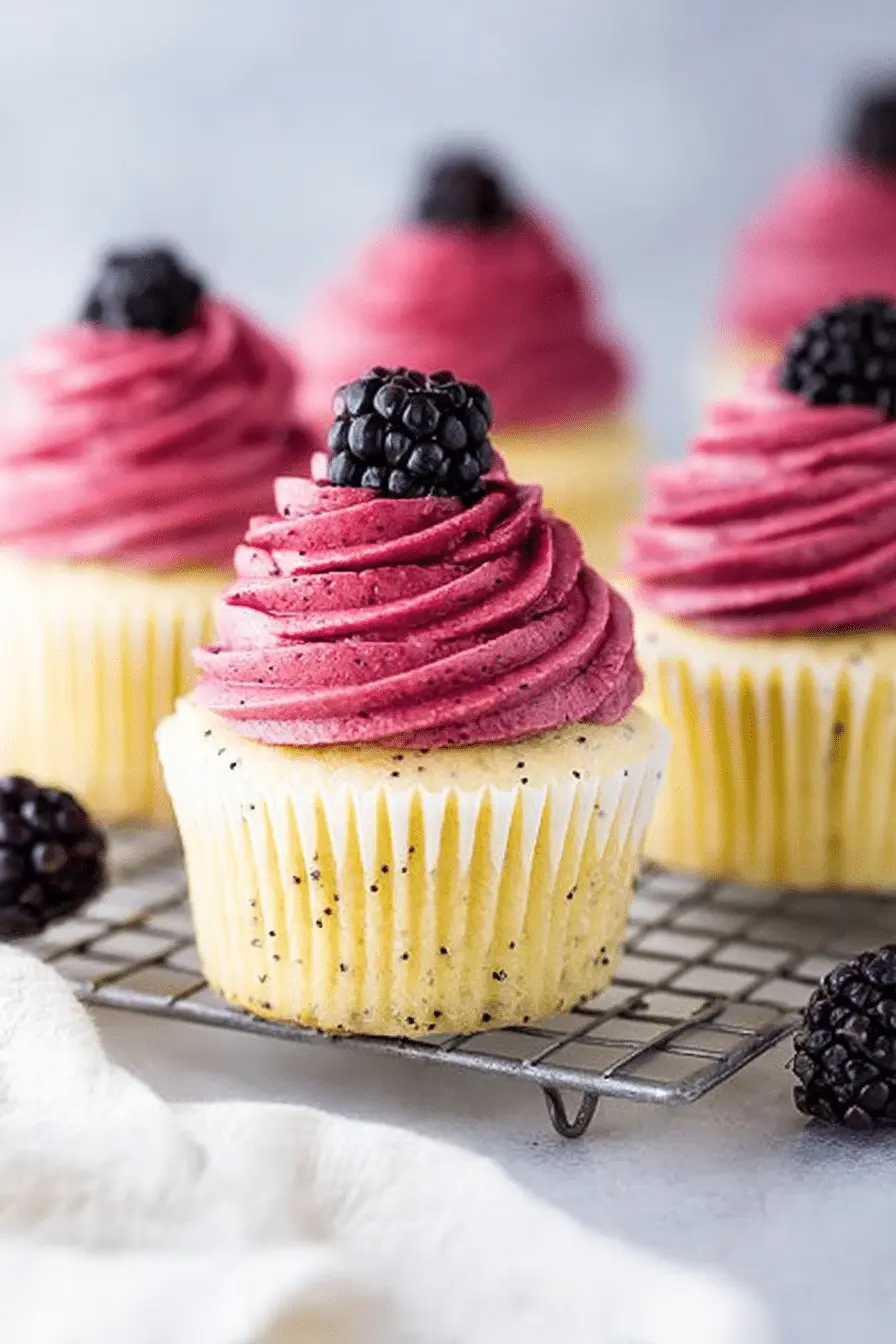
There are a few things that instantly feel like spring in my kitchen: the first lemons at the market, sunlight on the counter, and the tiny crackle of poppy seeds when you bite into something soft. These lemon poppy seed cupcakes hit that same note — bright, citrusy cake with a little nutty crunch and a glossy blackberry frosting to finish. I first made this batch on a rainy Saturday afternoon; the house smelled like lemon bright enough to chase the gloom away, and the tops rose with that slight dome that always makes me smile.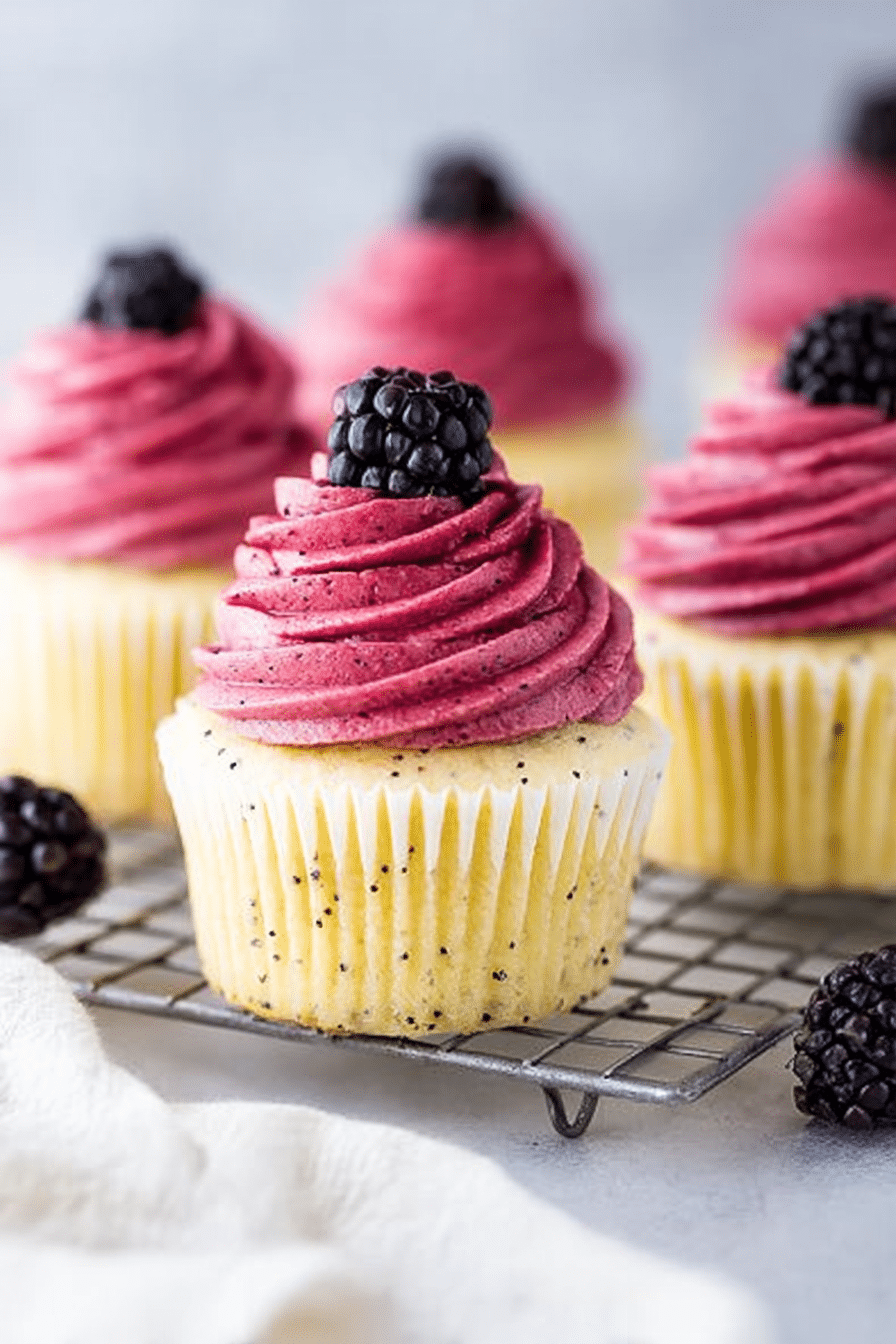
Ingredients You’ll Need
Below I describe each ingredient and why it matters. I’m keeping the descriptions conversational — measurements are in the recipe steps so you can follow precisely while understanding the role each ingredient plays.- All-purpose flour – the structure for the cupcakes; gives a tender crumb when not overworked.
- Baking powder & baking soda – the leavening team. Baking powder gives lift; a little baking soda helps the sour cream and lemon react for extra rise.
- Salt – tiny but essential: boosts lemon flavor and balances sweetness.
- Unsalted butter – provides richness and flavor; use softened (but not melted) for proper creaming with sugar.
- White sugar – sweetens and helps with the cupcake’s tender texture when creamed with butter.
- Lemon zest – concentrated lemon oils live here. It gives the vibrant citrus aroma that defines these cupcakes.
- Eggs – bind and add structure; room temperature eggs incorporate more evenly.
- Vanilla extract – rounds the lemon and deepens overall flavor.
- Sour cream – my moisture secret. It keeps the crumb tender and slightly tangy; yogurt can be a substitute.
- Fresh lemon juice – provides bright acidity; freshly squeezed tastes markedly better than bottled.
- Poppy seeds – for the signature crunch and tiny nutty flavor. Use fresh, whole seeds for that satisfying texture.
- Blackberries – for the frosting: they bring tartness and color. Fresh or thawed frozen both work.
- Powdered sugar – for the frosting structure and sweetness; sift if it’s clumpy.
- Cream (optional) – used only if your frosting needs thinning to pipe smoothly.
Step-by-Step Baking Instructions
I’ll walk you through the recipe exactly as I make it. These are the measurements and timing I tested; they produced 14 evenly risen cupcakes with a moist crumb and a bright lemon flavor.- Prep and preheat. Preheat the oven to 350°F (175°C). Line two muffin pans with liners — you’ll get about 14 cupcakes total. I always use liners and a light spray so the bottoms peel cleanly; it saves me fiddling later.
- Dry ingredients. In a large bowl, sift together 1 1/2 cups all-purpose flour, 1 teaspoon baking powder, 1/2 teaspoon baking soda, and 1/4 teaspoon salt. Whisk them to combine. Sifting helps aerate the flour so the cupcakes are lighter; if your flour is lumpy, don’t skip this step.
- Cream butter, sugar, and zest. In a separate large bowl, beat 1/2 cup unsalted butter (softened to room temperature) with 1 cup white sugar and 2 tablespoons lemon zest until light and fluffy. This usually takes 3–4 minutes in a stand mixer. You’ll notice the butter becomes paler and the bowl smells intensely lemony — that’s what you want. If it still looks shiny and dense, beat a bit longer; the air incorporated here helps your cupcakes rise.
- Add eggs and vanilla. Beat in 2 large eggs, one at a time, then 1 teaspoon vanilla extract. If your eggs are cold, they can make the butter seize up; room-temp eggs blend smoothly and keep the batter homogenous.
- Alternate sour cream and dry mix. With the mixer on low speed, beat in about half of 2/3 cup sour cream (room temperature), then about half of the flour mixture. Turn off the mixer and scrape down the sides of the bowl — always scrape, especially when you’re alternating additions. Repeat with the remaining sour cream and flour mixture until just combined. Overmixing at this stage will develop gluten and make the cupcakes tough. The batter should be thick but spoonable.
- Fold lemon juice and poppy seeds. Gently fold in 3 tablespoons fresh lemon juice and 1 1/2 tablespoons poppy seeds. The lemon juice gives a faint sparkle and reacts slightly with the baking soda to help lift the cakes. If your batter looks curdled after adding the juice, don’t panic — a few gentle folds will bring it back together.
- Fill the pans. Spoon the batter into the prepared muffin pans, filling each about two-thirds full. A standard cookie scoop is my go-to here for even portions. I tap the pan lightly on the counter to settle the batter and pop any big air bubbles.
- Bake. Bake one tray at a time on the middle rack for 16–20 minutes, or until the tops look set and an inserted toothpick comes out clean. I usually check at 16 minutes: the tops should spring back slightly when touched and have a pale golden edge. If they brown too quickly, lower the oven temperature by 10–15°F next time or move a tray to the lower rack. Let the cupcakes cool in the pan for at least 10 minutes, then release them to a wire rack to cool completely before frosting.
- Blackberry puree — seeds out. While the cupcakes cool, make the blackberry reduction. Add 1 1/2 cups blackberries (fresh or thawed frozen) to a blender and blend until smooth. Press the puree through a fine-mesh sieve into a small-medium saucepan (I do it in halves, pressing with the back of a metal spoon). You’ll be left with smooth, seedless puree and a bit of pulp in the sieve. It’s a little fussy, but worth it for silky frosting.
- Reduce to jammy thickness. Over low heat, bring the seedless puree to a gentle simmer and cook, stirring occasionally, for 10–20 minutes until it thickens to a jam-like consistency. You’re looking for something that’s sticky and slow-moving. Remove from heat and cool completely — you should end up with about 2–4 tablespoons of reduced puree (concentrated flavor, not a lot of volume).
- Buttercream base. In a large bowl, beat 1 cup unsalted butter (softened) until smooth and pale. Turn the mixer down to low and beat in 2 cups powdered sugar and 1/4 teaspoon salt. Then beat in 2 tablespoons of the cooled, thick blackberry puree. Taste and adjust: if you want brighter fruit, add a touch more puree; if it’s too loose, add more powdered sugar a half-cup at a time.
- Finish the frosting. Beat in the remaining powdered sugar until you reach your desired sweetness and stiffness (total 4 cups powdered sugar in the original recipe). If the frosting is too stiff, beat in up to 1 tablespoon cream (or a splash of milk) to loosen. Transfer to a piping bag fitted with a 1M tip (or simply spread with a knife) and frost the cooled cupcakes. I like to top each with a whole blackberry for color and a tiny burst of texture.
Creating the Perfect Blackberry Frosting
The blackberry frosting is what lifts these from pleasant to memorable. That concentrated blackberry reduction — not just straight blended berries — gives deep flavor without thinning the buttercream. When I first tried using straight blackberry purée, the frosting wept and never set properly. Reducing the puree concentrates the flavor and removes excess water. Tips I learned from testing:- Always strain out the seeds. Even a few will make buttercream gritty.
- Reduce gently. High heat makes the fruit bitter and can over-thicken quickly.
- Cool completely before adding to butter. Warm puree will melt the buttercream.
Common Mistakes to Avoid
I’ve made every one of these mistakes in the early days of developing this recipe, so consider these my “learned the hard way” tips.- Over-mixing batter – The moment you see long streaks of flour disappear, stop mixing. Overworked batter gives tight, rubbery cupcakes.
- Using cold ingredients – Cold eggs or sour cream can make the batter curdle. If that happens, let everything come to room temp or briefly warm the bowl over a pan of hot water and whisk gently.
- Skipping sour cream – Omitting or replacing too much of the sour cream will dry out the cupcakes. If you must substitute, use full-fat yogurt or add a tablespoon or two of neutral oil.
- Not reducing blackberries – Straight puree adds too much water and thins the frosting. Reduce the berries down so you get that jammy concentration.
- Baking too long – Cupcakes continue to cook after coming out of the oven. Pull them as soon as a toothpick comes out clean and the tops spring back.
Creative Variations and Flavor Additions
Once you’ve got the base, it’s fun to tweak. I’ve played with several variations and these are the ones I kept returning to.- Cardamom and almond – Add 1/2 teaspoon ground cardamom to the dry mix and swap half the vanilla for almond extract. It pairs beautifully with the lemon.
- Lavender – Use culinary lavender sparingly (1/2 teaspoon, finely ground) in the butter-sugar step for a floral hint. Too much becomes perfumey fast.
- Lemon curd filling – Hollow the cooled cupcakes slightly and pipe in a tablespoon of lemon curd for a tart surprise. Seal with a dab of frosting so it doesn’t seep out.
- Nuts and crunch – Fold finely chopped toasted pistachios into the frosting or sprinkle on top for contrast.
- Streusel top – For a textural twist, mix a little flour, cold butter, and sugar into a crumb and sprinkle before baking (reduces doming slightly).
Vegan and Gluten-Free Options
I’ve adapted this recipe a few times to accommodate guests with dietary needs. Each swap changes the texture slightly, but you can retain big flavors. Vegan swaps – Replace butter with a firm plant-based margarine (stick-style), use a flax egg (1 tablespoon ground flax + 3 tablespoons water per egg, let gel), and use a dairy-free sour cream or full-fat coconut yogurt. For the frosting use vegan spread and ensure powdered sugar is vegan-friendly. Be aware vegan butter can be softer, so refrigerate frosting briefly if it won’t pipe well. Gluten-free swaps – Use a trusted 1:1 gluten-free flour blend. Check for xanthan gum; some blends include it. Because gluten-free flours absorb liquids differently, you may need a touch more sour cream or an extra tablespoon of liquid to reach the same batter consistency. Also, let the batter rest 10–15 minutes before baking — it often hydrates the flours and gives a better crumb.Pairing Suggestions for Beverages
These cupcakes are bright and a little tart, so I prefer beverages that feel light and refreshing. Here are my favorite pairings:- Strong, floral tea — Earl Grey or a light chamomile complements lemon nicely.
- Fresh lemonade — mirror the citrus for a sunny brunch.
- A crisp, dry white wine — a Sauvignon Blanc brings herbaceous notes that play with the poppy seeds.
Storage, Make-Ahead, and Serving Notes
Real life means leftovers. Here’s how I handle them so the cupcakes stay delicious:- If frosted, store cupcakes in an airtight container in the fridge for up to 4–5 days. The blackberry frosting benefits from the chill and keeps the color fresh.
- At room temperature, unfrosted cupcakes are best within 1–2 days; the fridge can dry them out if left for longer.
- You can freeze unfrosted cupcakes for up to 2 months. Thaw completely at room temperature, then frost before serving.
- Make the blackberry puree ahead and refrigerate for up to 3 days — it’ll make frosting day much faster.
FAQ
Can I use frozen blackberries for the frosting? Yes — thaw them first, blend and press through a sieve as the recipe instructs, then simmer to reduce into a thick puree. You can also use store-bought blackberry preserves to save time. What’s the secret to keeping these cupcakes moist? Use room-temperature ingredients, don’t overmix the batter, and rely on the sour cream in this recipe for moisture. If you want extra moistness, you can add a tablespoon or two of neutral oil or substitute some sour cream with yogurt. Should poppy seeds be soaked before baking? Soaking poppy seeds 30–60 minutes in warm water softens them and intensifies flavor, but it’s optional. If you skip soaking, they’ll still add crunch and the characteristic nutty note to the cupcakes. How can I make these cupcakes vegan or gluten-free? For vegan: swap butter for plant-based margarine, eggs for flax eggs or applesauce, and use dairy-free sour cream/cream and non-dairy milk. For gluten-free: use a 1:1 gluten-free flour blend and check that leavening is fresh; you may need a little xanthan gum for structure depending on the blend. How should I store the cupcakes and how long do they last? Store frosted cupcakes in an airtight container in the fridge for up to 4–5 days (blackberry frosting benefits from refrigeration). At room temperature they’re best within 1–2 days. You can freeze unfrosted cupcakes for up to 2 months; thaw completely and frost before serving.Conclusion and Final Thoughts
These lemon poppy seed cupcakes with blackberry frosting are the kind of recipe I come back to when I want something that’s bright and a little nostalgic. They’re approachable to make — the trickiest part is the blackberry reduction, which is more patience than technique — and they travel well to picnics or tea parties. I’ve tested them with variations (cardamom, lavender, lemon curd centers) and they each have their merit, but the combination of sour cream in the cake and concentrated blackberry in the frosting is what I keep reaching for. If you try them, I’d love to hear what twist you added or how you paired them. Share a photo and tag it with #lemonpoppycupcakes so other bakers can find your version. Happy baking — and remember, a little lemon zest goes a long way.Recipe Card
Irresistible Lemon Poppy Seed Cupcakes: A Fresh Take on a Classic Treat
Ingredients
- 10 ouncesLasagna Noodles (About 10 noodles)
- 15 ouncesWhole Milk Ricotta Cheese
- ½ cupFreshly Grated Parmesan Cheese
- ½ cupFreshly Grated Romano Cheese
- ½ cupFreshly Grated Asiago Cheese
- ½ cupFreshly Grated Mozzarella Cheese
- 2 tablespoonsItalian Seasoning
- 2Large Eggs
- 1 ½ cupsItalian Bread Crumbs or Panko
- 2 tablespoonsOlive Oil
- ½ cupFinely Grated Parmesan
- 2Large Eggs
- —Olive Oil Spray
- —Canola Oil
- —Homemade Alfredo Sauce (If you have leftover Parmesan, Romano, or Asiago cheese, it is perfect to throw in this recipe.)
- —Jar of Marinara Sauce
Instructions
- 1
Boil 10 ounces of lasagna noodles according to package directions until al dente. Once cooked, place in a colander and rinse with cold water for easy handling.
- 2
In a medium-sized bowl, mix together 2 large eggs, 15 ounces of whole milk ricotta cheese, ½ cup of freshly grated Parmesan cheese, ½ cup of freshly grated Romano cheese, ½ cup of freshly grated Asiago cheese, ½ cup of freshly grated mozzarella cheese, and 2 tablespoons of Italian seasoning until well combined.
- 3
Lay the cooked lasagna noodles flat on a clean surface. Spread the cheese mixture evenly over the top of the noodles. Roll the noodles into about a 2-3 inch length, creating small rolls.
- 4
Place the rolled lasagna in a container lined with parchment or wax paper to prevent them from sticking together, and freeze for 1-2 hours.
- 5
In a shallow dish, scramble 2 large eggs. In a microwave-safe dish, blend 2 tablespoons of olive oil and 1 ½ cups of Italian breadcrumbs or panko. Microwave for 1-2 minutes, stirring every 30 seconds until they begin to turn golden brown. Let cool and add ½ cup of finely grated Parmesan cheese.
- 6
One by one, dip each rolled lasagna in the scrambled egg, followed by the breadcrumb mixture. Make sure to shake off any excess between steps to ensure even coating.
- 7
Spray the inside basket of the air fryer with olive oil. Place the lasagna frittas in the basket, arranging them in a single layer. Lightly spray the top of the lasagna frittas with olive oil as well.
- 8
Set the air fryer to 400 degrees Fahrenheit. Cook for 8 minutes; then flip the frittas and cook for another 6-8 minutes, or until they are golden brown and crispy. If they appear dry as they cook, lightly spray with olive oil. Remove from the basket and serve with marinara and/or Alfredo sauce.
- 9
Heat canola oil in a pan at medium-high temperature. Carefully place the lasagna frittas in the hot oil. Cook for about 2 minutes on one side, then flip and fry for 2 more minutes until they achieve a golden brown color.
- 10
Remove the frittas and place them on a paper towel-lined plate to absorb excess oil. Serve warm with marinara and/or Alfredo sauce.
You might also like
Reviews
Be the first to review this.