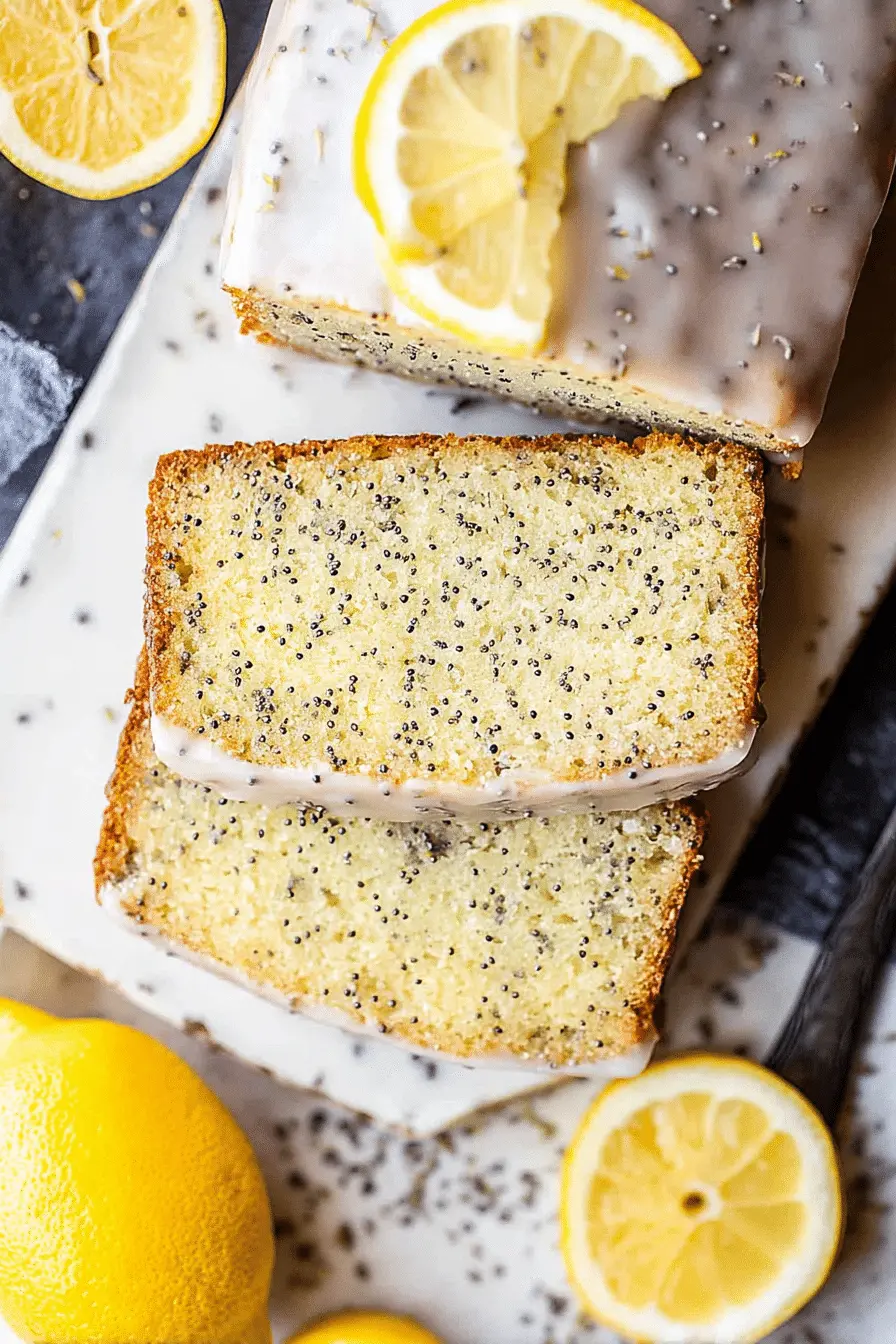
The Lemon Poppy Seed Loaf I Make Almost Every Weekend
- Prep
- 15 min
- Cook
- 50 min
- Total
- 75 min
- Serves
- 10
- Calories
- 250 kcal
Introduction
I keep this lemon poppy seed loaf in heavy rotation on hectic weekends and for last-minute guests — it comes together quickly and fills the kitchen with the comforting scent of butter and citrus. I love how the tiny poppy seeds add a subtle crunch against a soft crumb; it’s the kind of loaf I slice while it’s still warm, with that thin crackle of glaze on top and the bright lemon aroma floating up.
Everything You Need for Lemon Poppy Seed Loaf
Below I break ingredients into dry and wet categories and note a few simple tools that will make the whole process less stressful. I always recommend using the best-quality butter you have for the most flavor—it makes a real difference in a simple cake like this.
- Dry ingredients – Provide structure and leavening; you can swap a portion for whole wheat for a nuttier flavor or use baking powder that’s fresh for reliable rise.
- Sugar – Adds sweetness and helps with browning; try a milder option or slightly reduce the amount if you prefer less sweet.
- Butter – The primary flavor carrier; higher quality butter yields a richer loaf. If you need lower fat, an oil or applesauce swap will change texture but can work.
- Eggs – Bind and leaven; they give structure and help the crumb stay tender.
- Milk or dairy alternative – Keeps the batter soft and adds moisture. Buttermilk or yogurt will add tang and give a slightly denser, tender crumb.
- Lemon (zest + juice) – Zest gives concentrated lemon oil and bright yellow flecks; juice adds acidity to balance sweetness and react with dairy for a softer crumb.
- Poppy seeds – For that pleasant nutty crunch and visual interest; toast them lightly if you want a deeper aroma.
- Tools – A loaf pan, a hand mixer or stand mixer for creaming, a spatula, and a toothpick or skewer to test doneness.
Pair your Lemon Poppy Seed Loaf with delightful treats like our Mini Lemon Cakes with Lavender Glaze for a perfect afternoon tea spread.
The Secret to a Moist, Tender Texture
Getting a loaf that’s soft inside with a delicate crust comes down to technique and a few small choices. Creaming butter and sugar traps tiny air pockets that help with rise, while the right balance of wet to dry keeps the crumb tender without being gummy.
- Cream the butter and sugar until light and slightly fluffy — this builds air into the batter for a lifted crumb.
- Alternate adding the dry ingredients with milk so you don’t overwork the flour; overmixing develops gluten and yields a denser loaf.
- Acid from lemon juice reacts with dairy to tenderize the crumb and brighten flavor; a small amount goes a long way.
- Watch baking time rather than relying solely on the clock — ovens vary. Start checking a few minutes before the recipe’s minimum time, and look for a lightly golden top and a clean toothpick.
- Allow the loaf to cool briefly in the pan so it settles, then remove and cool completely before glazing for a neat finish.
Why Butter and Eggs at Room Temperature Matter
When ingredients are at room temperature they mix more evenly. Cold butter can stay clumpy when creamed with sugar, and cold eggs can cause the batter to seize up. The result of working with room-temperature ingredients is a smoother batter that traps air well and translates into a lighter, more tender loaf.
- If your butter is too cold, give it a few minutes on the counter; it should be soft to the touch but not oily.
- Room-temperature eggs incorporate more easily and help maintain an even texture and consistent rise.
- Starting with very cold ingredients often leads to a denser loaf because the batter won’t emulsify properly.
Easy Flavor Twists: Blueberry, Almond & Reduced-Sugar Options
These variations let you adapt the loaf for different tastes or dietary preferences. I like to fold in add-ins gently so the batter keeps its lift.
- Blueberry twist – Fold in fresh or frozen berries at the end; the bright fruit pairs beautifully with lemon and adds juicy pockets throughout. If you enjoy lemon flavor, you might also love our Lemon Blueberry Cake as another delightful dessert option.
- Almond version – Replace a small portion of the flour with almond flour and add a touch of almond extract for a nutty depth; sprinkle sliced almonds on top before baking for texture.
- Reduced-sugar option – Cut the sugar modestly and boost lemon zest or add a spoonful of plain yogurt to maintain moisture; using a natural sweetener can also work but may alter browning.
- Other ideas – Swap citrus for orange for a mellower profile, or fold in a handful of seeds or nuts for extra bite.
For those who appreciate lemon desserts, consider trying our Lemon Pound Cake that features a rich, buttery texture.
How to Make Lemon Poppy Seed Loaf (Step-by-Step)
- Preheat your oven and prepare a loaf pan by greasing it — this helps the loaf release cleanly after baking.
- Sift together the dry ingredients in a bowl so the leavening is evenly distributed and there are no lumps.
- Cream the softened butter and sugar until pale and slightly fluffy; if the mixture looks crumbly, stop and press it with a spatula until smooth — you should feel a silky butter-sugar paste.
- Add eggs one at a time while mixing on low, then stir in lemon zest and a bit of lemon juice for brightness.
- With the mixer on low, alternate adding half the dry mix with half the milk, then finish with the remaining halves; fold in poppy seeds gently by hand if needed.
- Transfer the batter to the pan, smooth the top, and bake until a skewer inserted in the center comes out clean or with a few moist crumbs.
- Let the loaf rest in the pan briefly so it firms up, then transfer to a rack to cool completely before adding glaze so the icing sets without melting away.
If you like lemon flavor, you might also enjoy trying a slightly different take in our Lemon Blueberry Cake, which carries a similar bright profile.
Troubleshooting
- Dense loaf — I’ve seen this when ingredients were too cold or the batter was overmixed. Let butter and eggs come to room temperature and mix just until combined.
- Gummy center — This can happen if the loaf was underbaked or sliced too soon. If you notice a heavy, wet center, return it to the oven for a few minutes and test again.
- Sunken top — I once removed a loaf too quickly from the oven; avoid opening the oven door in the final minutes and ensure your leavening is fresh.
- Cracked glaze — If your glaze is too thin or loaf still warm, it can run. I let the loaf cool fully and adjust glaze thickness with small splashes of milk until it’s spreadable but not watery.
Pro Tip for Lemon Poppy Seed Loaf: How to Keep It Moist
- Wrap the cooled loaf tightly in plastic wrap to trap moisture while it rests — this keeps slices soft for days.
- Store in an airtight container at room temperature for short-term freshness; refrigeration speeds drying unless well wrapped.
- If you plan to freeze, slice first and wrap portions individually so you can thaw only what you need.
- When reheating a slice, warm it briefly in the microwave with a damp paper towel nearby or in a low oven to revive softness.
How to Store, Freeze, and Reheat Lemon Poppy Seed Loaf
- Room temperature: Keep the loaf in an airtight container or wrapped for up to three days to maintain moistness.
- Freezing: Wrap the whole loaf or individual slices tightly in plastic wrap and place in a freezer bag to prevent freezer burn; it will keep well for a few months.
- Defrosting: Thaw overnight in the fridge or at room temperature for a few hours; if frozen in slices, microwave briefly to serve warm.
- Reheating: Warm slices for 10–20 seconds in the microwave or 5–7 minutes in a 300°F (low) oven to refresh texture without drying.
Nutritional Information and Dietary Swaps
Below are rough estimates to give you a general idea — actual values vary by ingredient brands and serving size. One typical slice (1 of 10) is approximately 280–340 calories, with carbohydrates as the largest component, moderate fat from butter, and protein from eggs. If you’re tracking macros, expect roughly 12–18g fat, 35–45g carbs, and 4–6g protein per slice.
Healthy swaps that keep good texture:
- Use part whole wheat flour for added fiber — reduce slightly to avoid a dry loaf and keep mixing minimal.
- Replace some butter with neutral oil or Greek yogurt to reduce saturated fat while maintaining moisture.
- Try natural sweeteners or reduce sugar modestly; add extra lemon zest to compensate for any lost sweetness.
- For gluten-free options, experiment with a cup-for-cup gluten-free blend and a binder like xanthan gum if the mix lacks it.
If you're interested in healthy baking, check out our Glazed Lemon Cookies that offer a lighter alternative to traditional sweets.
Frequently Asked Questions
Can I use a different type of flour for this recipe?
Yes, you can try using whole wheat flour or almond flour, but keep in mind that this may change the texture and flavor of the loaf.
How can I tell when the loaf is done baking?
Insert a toothpick in the center of the loaf—if it comes out clean, your loaf is done. Otherwise, continue baking and check every few minutes.
Can I add other flavors to the loaf?
Absolutely! You can experiment with flavors like blueberries, almonds, or even reduced sugar for a healthier option.
How should I store the lemon poppy seed loaf?
Store the loaf in an airtight container at room temperature for up to three days. For longer storage, wrap it tightly and freeze.
Is it necessary to use room temperature butter and eggs?
Yes! Room temperature butter and eggs help to create a smoother batter, leading to a better texture in the finished loaf.
Recipe Card
The Lemon Poppy Seed Loaf I Make Almost Every Weekend
- Prep
- 15 min
- Cook
- 50 min
- Total
- 75 min
- Serves
- 10
- Calories
- 250 kcal
Ingredients
- 1 ¾ cupsall-purpose flour, sifted
- 1 teaspoonbaking powder
- ½ teaspoonsalt
- ¾ cuphigh quality butter, softened at room temperature ((NOT MELTED)*)
- ¾ cupsugar
- 3 largeeggs
- 2 Tablespoonsfresh lemon juice
- Zest of 2lemons
- 2 Tablespoonspoppy seeds
- ¾ cupmilk
- 1 Tablespoonlemon juice
- 1 cuppowdered sugar, sifted
- 3 teaspoonsmilk
Instructions
- 1
Preheat the oven to 350°F (180°C) and grease the bottom and the sides of a 9×5-inch (23×13 cm) loaf pan with melted butter or vegetable oil. Set aside.
- 2
Sift flour in a medium size bowl. Add baking powder, salt, and mix well. Set aside.
- 3
In the bowl of a stand mixer fitted with a whisk or using hand mixer on low-speed setting, cream softened butter (NOT MELTED)* and sugar until pale and fluffy. If you end up with a chunky texture while mixing butter and sugar, stop everything, then use a rubber spatula, and press butter and sugar until creamy.
- 4
Slowly add the beaten eggs to the mixer, one at a time. Add the lemon juice, zest, and poppy seeds. Keep the mixer running on low speed and pour in half the milk with half of the flour mixture. Beat until all ingredients are combined.
- 5
Transfer the batter to the prepared loaf pan and bake for 50-55 minutes or until a toothpick inserted in the center comes out clean. Let cool for about 10 minutes in the pan, then transfer to a cooling rack and cool completely.
- 6
When the cake is cooled, make the icing. Start with adding 1 Tablespoon lemon juice to the powdered sugar then add milk, adjusting quantity if needed. The icing should be thick and not too runny. Spoon icing over the cake and let harden before serving.
You might also like




Reviews
Be the first to review this.