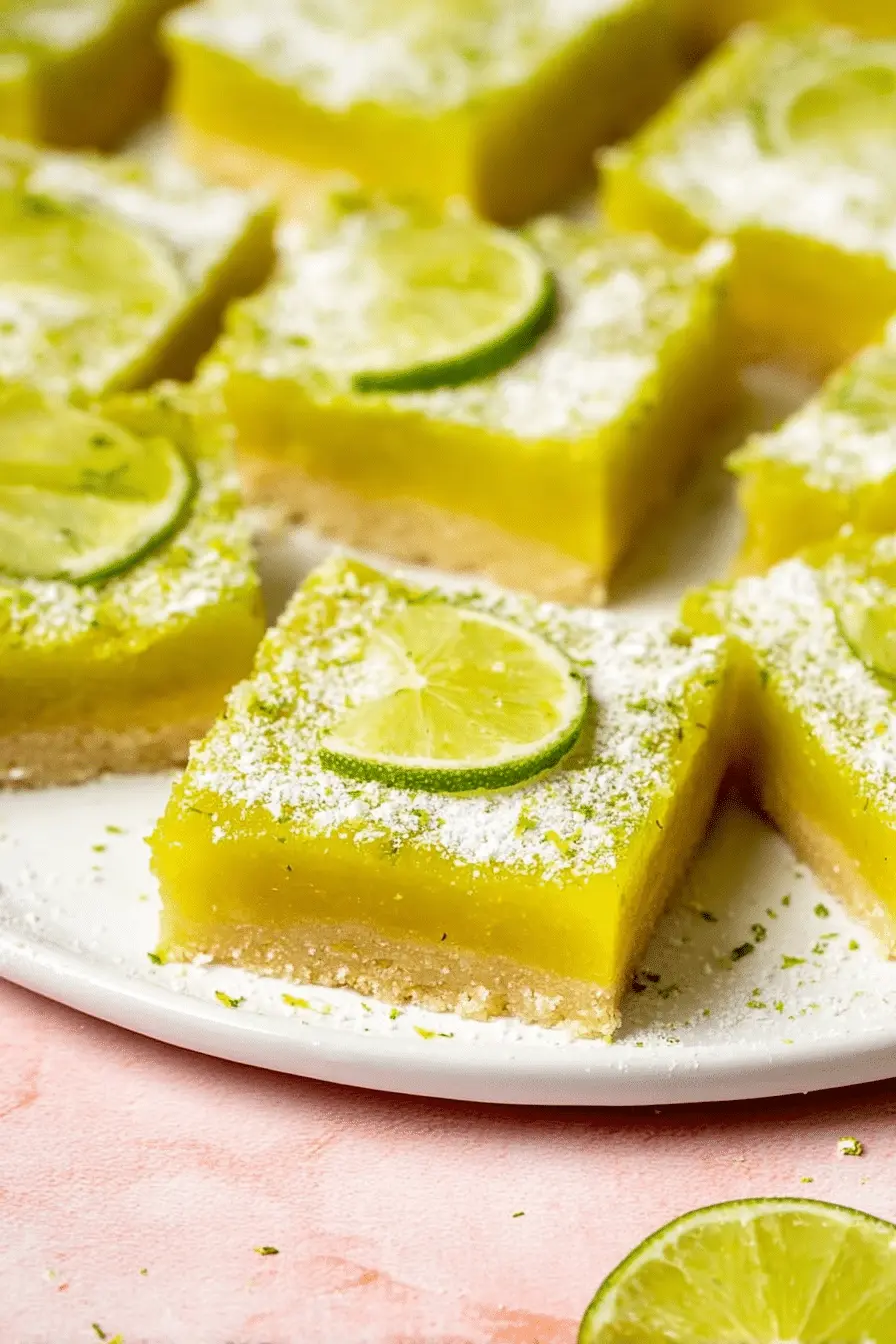
The Lime Bars I Bring to Every Summer Party — Bright & Easy
- Prep
- 20 min
- Cook
- 20 min
- Total
- 100 min
- Serves
- 16
- Calories
- 173 kcal
- Carbs
- 18.50 g
Introduction
I bring these vibrant lime bars to summer gatherings because they always disappear first. I remember the first time I served them at a backyard barbecue: the scent of fresh lime drew people to the dessert table before the grill cooled. I love how the shortbread base gives a gentle, buttery counterpoint to the tart, glossy lime custard—simple to make yet striking on the plate.
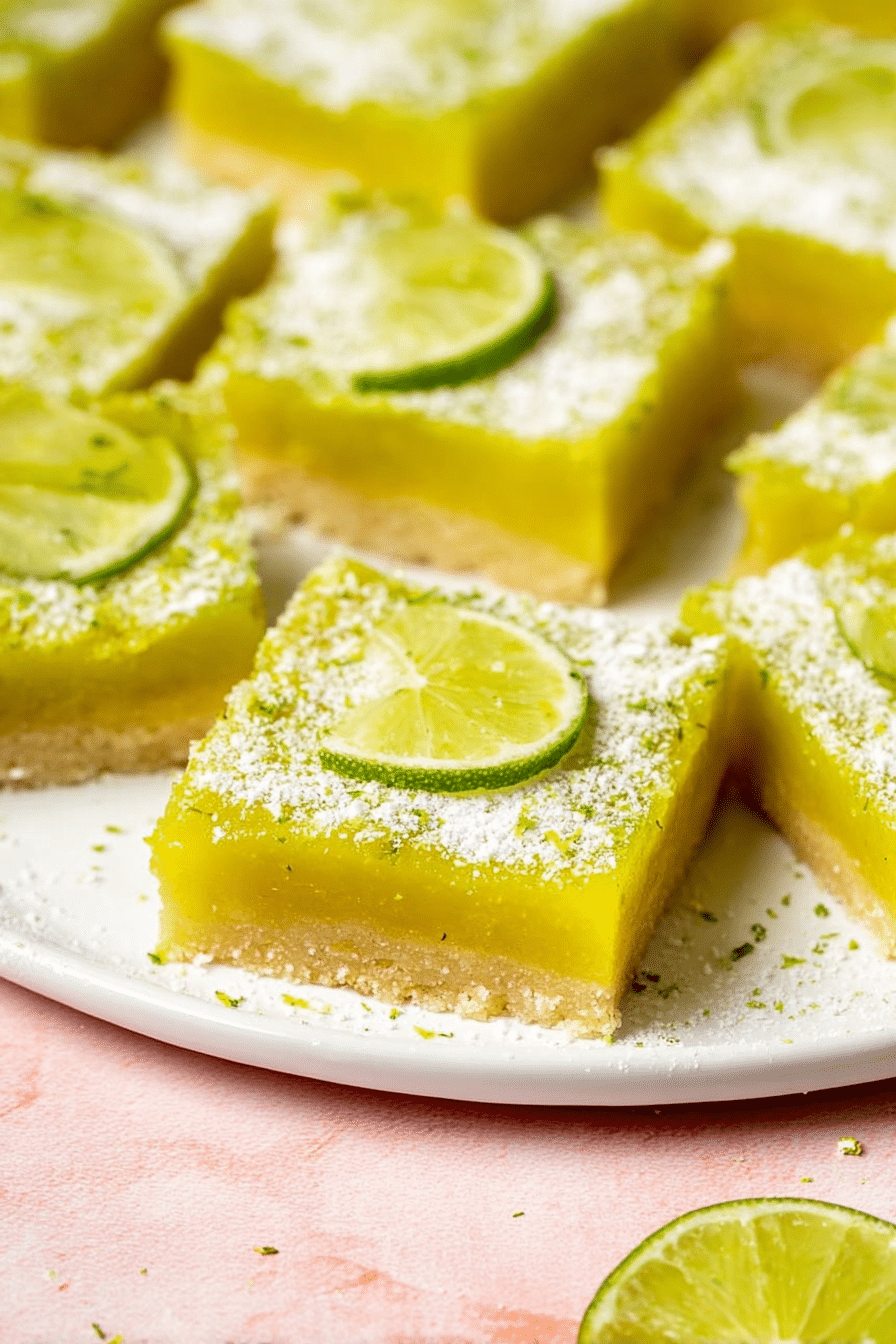
I tend to squeeze my limes over a small sieve to catch any stray seeds and zest first so the oils are still fresh when they hit the custard. In my kitchen, timing matters: while the crust is warm I pour the filling so the custard settles into the crumb for a clean edge when you cut the bars. The bright green hue makes a bowl of vanilla ice cream beside it feel almost too predictable—this is a dessert that announces summer.
Over the years I’ve adapted the crust to be gluten-free and dairy-free without losing the satisfying crunch. These bars are easy to scale and travel well to picnics or potlucks, and they pair beautifully with light cocktails and iced drinks. If you want a dessert that tastes like sunshine and still looks like you cared, these lime bars are a reliable party favorite.
Why These Lime Bars Are Perfect for Summer Parties
Bright citrus cuts through heavy summer menus. These lime bars offer a clean, tart flavor that refreshes the palate after grilled meats or rich salads. Their glossy, slightly jiggly custard and golden shortbread base create a pleasing contrast: the first bite gives you a buttery crunch, then a silky, tangy finish.
Visually, the bars pop on a platter. A light dusting of powdered sugar and a scatter of lime zest make them feel both elegant and casual—perfect for outdoor entertaining. They’re also versatile: serve them alongside lighter desserts or with a simple scoop of sorbet for a composed dessert plate.
Everything You Need for Vibrant Lime Bars
Below I walk through the ingredients and tools in conversational terms so you can gather everything before you start. Remember: I recommend fresh limes for flavor; bottled lime juice is convenient but won’t give the same brightness.
- Fresh limes – The star for both juice and zest; fresh juice gives bright acidity and zest provides aromatic oils.
- Granulated sugar – Balances the tartness and helps set the custard; you can reduce it slightly if you prefer less sweet.
- Eggs – Provide structure and a silky texture when tempered properly; swap with a flax egg or applesauce if you need a vegan version.
- All-purpose flour – Stabilizes the custard so it sets cleanly; if making gluten-free, an alternative binder in the filling helps the same role.
- Butter or vegan butter – Adds richness and sheen to the filling; use room-temperature so it incorporates smoothly.
- Almond flour – Makes a tender, nutty crust that’s naturally gluten-free; it’s my go-to when I want a slightly chewy base.
- Coconut oil or butter – Binds the almond crust and gives a delicate crunch; use melted so it presses evenly.
- Maple syrup or sweetener – Adds a touch of caramel complexity to nutty crusts; swap for another liquid sweetener if needed.
- Vanilla & salt – Tiny amounts round out the flavor and temper the tartness.
- Kitchen tools – You’ll want a small sieve for straining the custard, a whisk for smoothness, an 8x8 pan (or equivalent), parchment paper for easy release, and a sharp knife for neat slices.
The Secret to That Silky Lime Custard
- Temper the eggs: whisk some warm lime mixture into the eggs a bit at a time to bring them up to temperature before returning everything to the pot. This prevents curdling and keeps the texture smooth.
- Low-and-slow heat is your friend: cook the custard over medium-low, whisking constantly so the eggs thicken gently rather than scrambling—look for a glossy, ribbon-like consistency that coats the whisk.
- Add butter at the end while the custard is warm: the fat enriches the mixture and gives it a silky sheen. If the butter is too cold it can seize, too hot and it will separate; room-temperature works best.
- Strain before pouring: push the cooked custard through a fine sieve to remove any tiny cooked egg bits and zest particles for an impeccably smooth finish.
How to Make Vibrant Lime Bars (Step-by-Step)
- Preheat your oven and line an 8x8 pan with parchment so you can lift the slab out later for neat slicing.
- Make the crust: combine the almond flour and binding ingredients until crumbly, press firmly into the pan, and bake until the edges are lightly golden. You want a set base that still yields slightly when pressed.
- Meanwhile, zest your limes before juicing so the oils are fresh; whisk together sugar and zest, then add the lime juice, eggs, and a bit of flour in a pot. Stir to combine.
- Cook the filling over medium-low, whisking constantly until it thickens to a custard consistency—about several minutes. It should coat the back of a spoon and look glossy.
- Pass the custard through a sieve into a bowl, then stir in room-temperature butter until fully incorporated and smooth. If you want a brighter hue, add your chosen natural colorant sparingly now.
- Pour the warm custard over the hot crust and return to the oven just until set; the center should wobble slightly but not be liquid when you gently nudge the pan.
- Cool at room temperature to finish cooking before chilling thoroughly in the fridge for several hours. Cold chilling firms the custard for clean slices.
- For neat bars: run a sharp knife under hot water, dry it, and make decisive cuts—wipe the blade between passes for perfect edges. Dust with powdered sugar and zest just before serving.
Crust Swaps: Gluten-Free, Nut-Based, or Classic Shortbread
Switching the crust changes the texture and mood of the bars. Here are reliable options I use depending on the occasion and guests' needs.
- Almond-based crust – Naturally gluten-free with a tender, slightly chewy bite. It pairs beautifully with lime because the nuts soften the tartness.
- Classic shortbread – Use a buttery flour-based crust if you want that crisp, sandy texture that contrasts the creamy filling. It’s a crowd-pleaser at formal gatherings.
- Graham or oat crust – For a more rustic bar, a pressed graham or toasted oat base adds caramel notes and a bit more chew.
- Alternative sweeteners – Swap maple or honey into nut crusts for complexity and slightly lower refined sugar; expect a darker, deeper flavor.
For those who enjoy citrus desserts, my lemon curd tartlets are a wonderful option to explore alongside lime bars.
How to Plate and Serve Lime Bars for Maximum Visual Impact
Presentation sells the first bite—here are ways to make your platter sing at a summer party.
- Arrange bars on a rectangular platter in offset rows so the bright green layers show; scatter lime zest and a light dusting of powdered sugar over top for contrast.
- Garnish with small edible flowers or thin slices of lime for pops of color and a garden-fresh look. I love adding tiny mint sprigs when serving mojitos alongside.
- Use varied serving vessels for a dessert buffet: small dessert plates for formal service or staggered wooden boards for a relaxed picnic vibe. For a stunning dessert display, consider adding a few lemon poppy seed cheesecake cookies to your plate along with the lime bars.
Pro Tip for lime bars: Get Bright Color Without Artificial Dyes
- I often use a tiny pinch of spirulina powder for a clean green that doesn’t taste vegetal when used sparingly—start small and build until you get the shade you want.
- Matcha gives a warmer, earthy green and pairs surprisingly well with lime if you want a complex flavor note; it will change the flavor profile slightly, so test a small batch first.
- For a milder approach, blend a small amount of fresh spinach with a touch of water and strain. The brightness increases when mixed into the warm custard, but use very little to avoid changing the texture.
- Combine citruses—lime with a touch of yellow lemon juice or zest—to make the filling appear lighter and more vibrant without adding colorants.
Pairing Ideas: Drinks and Desserts to Serve with Lime Bars
These bars are flexible at a dessert table. Serve them with iced tea, lemonade, or a light mojito to mirror the lime notes. For a non-alcoholic option, a sparkling cucumber water keeps the palette fresh between bites.
On the dessert side, light fruit salads, coconut sorbet, or shortbread cookies make complementary partners. For a contrasting cake that’s still citrus-forward, try a lemon blueberry zucchini cake for a delightful contrast. For a charming dessert spread, include glazed lemon cookies alongside your lime bars to offer guests a balance of textures and flavors.
How to Store, Make-Ahead, and Freeze Lime Bars
- Refrigerate: store bars in an airtight container and they’ll keep well for several days; chilling firms the custard and maintains clean slices.
- Make-ahead: bake the day before your event and chill overnight; bring to room temperature briefly before serving if you prefer a softer custard.
- Freeze: freeze bars individually wrapped in parchment and then in a freezer-safe bag. Thaw in the fridge overnight and dust with powdered sugar just before serving.
- Transport tips: keep chilled in a cooler for outdoor events and place on a flat tray so the filling doesn’t shift.
Pro-Tips, Troubleshooting, and Variations
Pro-Tips (quick reference)
- I always zest before juicing so I capture the fragrant oils while the fruit is intact.
- Press the crust firmly into the pan with the bottom of a measuring cup for an even base that bakes uniformly.
- Chill fully before slicing for the cleanest edges; a warm custard will smear and tear.
Troubleshooting
- If the custard curdles, whisk it vigorously over low heat and strain; if it’s beyond repair, repurpose as a lime sauce for ice cream.
- If the crust is too soft, bake it a minute or two longer until the edges are golden—watch carefully so it doesn’t overbake.
- If bars are too tart, a light sprinkle of powdered sugar or a shortbread cookie alongside each serving tames the sharpness.
Variations
- Add coconut flakes to the crust for a tropical note that pairs beautifully with lime.
- Use key limes for a more floral, intense lime flavor when they’re in season.
- Fold in a tiny amount of finely grated ginger to the filling for a warm, spicy thread beneath the citrus.
Frequently Asked Questions
Can I make lime bars gluten-free? Absolutely! Use almond flour as the base for a gluten-free version, just like in this recipe.
How can I store leftover lime bars? Store your leftover lime bars in an airtight container in the fridge for up to 4 days.
What can I substitute for eggs in this recipe? You can use a flax egg or applesauce as a substitute for eggs to make the lime bars vegan.
How do I achieve a bright green color without artificial dyes? You can use natural food colorings like spirulina powder or blended spinach to get that vibrant green color.
What drinks pair well with lime bars? Lime bars pair wonderfully with refreshing drinks like iced tea, lemonade, or even a light mojito!
Recipe Card
The Lime Bars I Bring to Every Summer Party — Bright & Easy
- Prep
- 20 min
- Cook
- 20 min
- Total
- 100 min
- Serves
- 16
- Calories
- 173 kcal
- Carbs
- 18.50 g
Ingredients
- 1 cupgranulated sugar
- 2 tablespoonslime zest
- ½ cupfresh squeezed lime juice
- 4 largeeggs
- ¼ cupall-purpose flour (*gluten-free option available)
- 2 tablespoonssalted butter ((or vegan butter))
- 1 ½ cupsfine blanched almond flour
- 3 tablespoonsmelted coconut oil ((or melted butter))
- 2 tablespoonspure maple syrup
- 1 teaspoonvanilla extract
- ¼ teaspoonsalt
- —powdered sugar (for dusting)
- —additional lime zest (optional)
Instructions
- 1
Preheat the oven to 350 degrees F. Line an 8x8 inch square pan.
- 2
In a medium pot, add the sugar and lime zest and rub together. Add lime juice, eggs, and flour and whisk until combined.
- 3
In a medium bowl, mix almond flour, coconut oil, maple syrup, vanilla extract, and salt until crumbly. Press into the pan and bake for 8-9 minutes.
- 4
While the crust cooks, whisk the lime filling over medium-low heat until thickened.
- 5
Strain the lime filling to remove lumps, then stir in butter and food coloring.
- 6
Pour over the warm crust and bake for 8-11 minutes until set.
- 7
Cool at room temperature for 1-2 hours, then chill in the fridge for at least 6 hours.
- 8
Dust with powdered sugar and cut into bars.
- 9
Store in an airtight container in the fridge for up to 4 days.
You might also like
Reviews
Be the first to review this.