

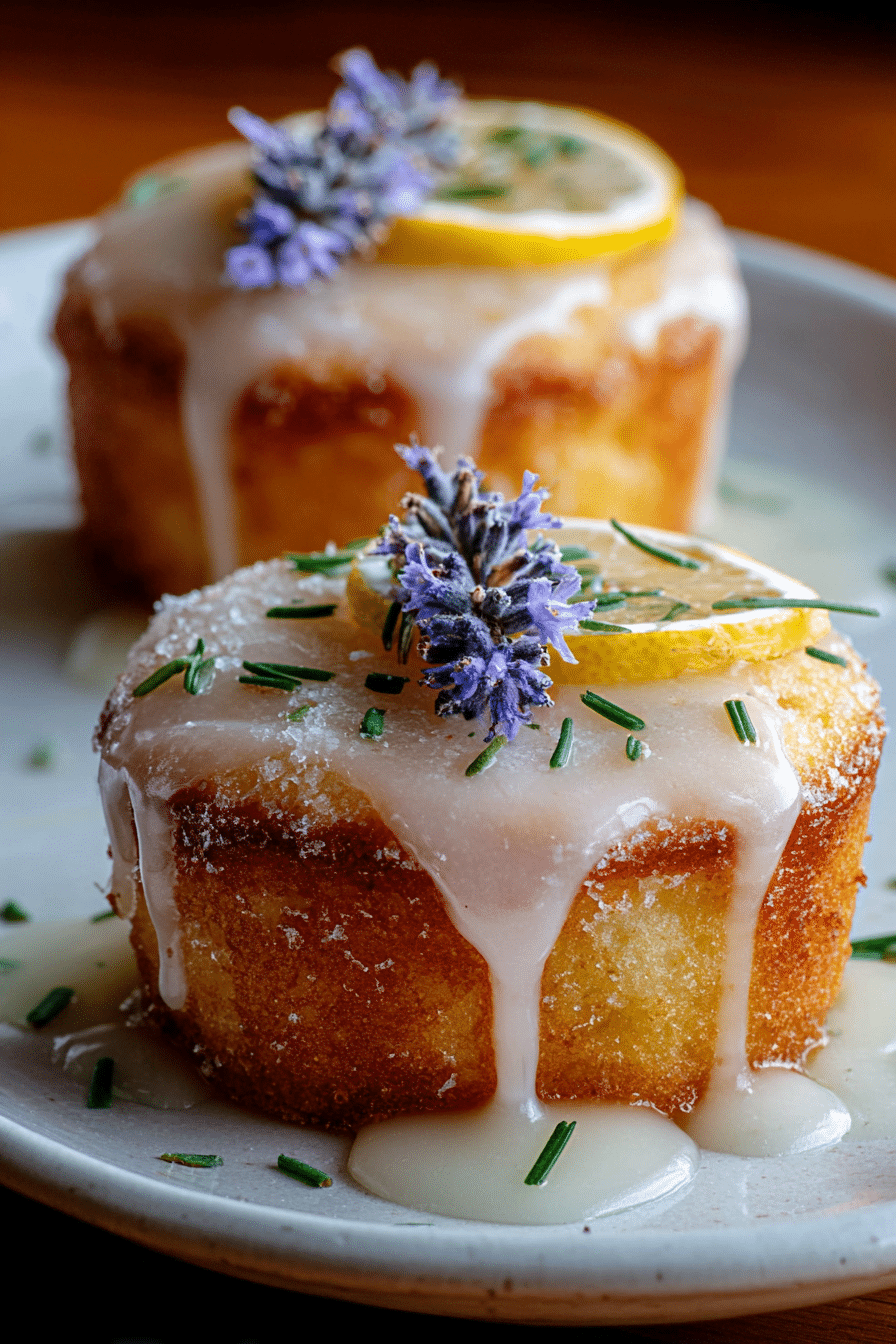
I make a lot of small cakes for friends and the ones that keep coming back to the table are these mini lemon cakes finished with a lavender glaze. I learned early on that the visual charm of a petite cake—golden tops, pale yellow crumb and a glossy pale-lavender drizzle—sets a tone for a gathering before anyone has tasted a thing. Guests lean in, noses first; the lemon hits bright and citrusy, the lavender whispers behind it.
I remember the first time I served these at a spring brunch; the kitchen smelled like a small orchard. Making them taught me two important things: small cakes reveal texture flaws quickly, and a tiny bit of lavender can make a big impression. Over several test bakes I adjusted mixing, resting and the steeping time for lavender until the cakes tasted refined rather than floral-forward.
If you entertain often, these are a reliable, elegant choice—easy to portion, pretty on a platter and flexible enough to pair with tea, Champagne or a citrus-forward cocktail.
Why These Mini Lemon Cakes With Lavender Glaze Are Ideal for Hosts
Mini cakes are an underrated host advantage: they read as special without the fuss of slicing and plating a large cake. The bright yellow crumb contrasts beautifully with a pale glaze and a scatter of edible flowers—an instant centerpiece for a dessert table. The lemon provides that lively, palate-cleansing acidity while the lavender adds floral depth; served together they feel both sophisticated and approachable. Because each portion is compact, guests can sample multiple desserts without waste, and you can plate them quickly so you spend more time with your company.
Everything You Need for Mini Lemon Cakes With Lavender Glaze
Gather everything before you begin so your bake flows without interruptions. Room-temperature ingredients come together more smoothly, and choosing culinary-grade lavender—not decorative lavender—keeps the flavor clean. A shallow, well-greased mini cake pan gives you a delicate rise and an elegant silhouette.
- All-purpose flour – Provides structure while keeping the crumb tender; use a reliable brand for consistent results.
- Kosher salt – Balances sweetness and brightens lemon flavor.
- Baking soda – Gives a gentle lift appropriate for small cakes.
- Unsalted butter – Contributes richness and helps with browning; bring to room temperature for even creaming.
- Granulated and brown sugars – Granulated for sweetness and lift; brown sugar adds a whisper of caramel and moisture.
- Lemon zest – The concentrated citrus aroma that defines these cakes; zest from unwaxed lemons is best.
- Eggs – Bind and emulsify; use at room temperature so they incorporate cleanly.
- Sour cream – Adds tang and moisture, keeping the crumb fine and tender.
- Whole milk – Keeps the batter supple; it also acts as the medium for steeping lavender for the glaze.
- Vanilla extract – Rounds and supports the citrus and floral notes.
- Culinary lavender – Use the dried buds labeled “culinary” to avoid bitter or soapy flavors; a little goes a long way.
- Powdered sugar – For a smooth, glossy glaze.
- Edible flowers and lemon zest – For garnish and visual drama; choose fresh, food-safe flowers.
- Equipment – A mini cake pan (or silicone mini bundt), a stand mixer (or hand mixer), a fine-mesh strainer for the lavender, and a wire rack for cooling.
Don’t forget to try our Glazed Lemon Cookies for an additional lemony treat when hosting your event.
The Secret to a Tender, Moist Mini Lemon Cake
The textural secret is gentle incorporation and moisture-rich ingredients. Butter at room temperature traps air during creaming, which gives structure and lift; overbeating after adding the eggs will break down that structure, so I stop as soon as the batter is uniform. Alternating additions of dry ingredients and the sour-cream/milk mixture yields a batter with minimal overmixing while ensuring even distribution of fat and liquid. Sour cream and milk keep the crumb fine and resilient; they act as simple emulsifiers and add tang that complements lemon.
You should notice a batter that is thick but smooth, with bright flecks of zest. After baking, a quick tap on the cakes should sound slightly hollow and the tops should spring back gently—those are signs you’ve got a moist but baked-through crumb.
How to Use Culinary Lavender Without a Soapy Finish
- Select culinary-grade lavender and smell it first; it should be herbaceous and floral, not perfumed.
- Steep lavender in hot milk—do not simmer the milk with the buds—so the oils infuse gently without releasing bitter compounds.
- Limit the amount: start small. You can always add a touch more steeped liquid to intensify flavor, but you can’t take it away once it’s in the glaze.
- Strain carefully through a fine-mesh sieve or cheesecloth to remove all tiny bits that can continue to infuse and go bitter.
- Balance the floral with bright lemon zest; the citrus cuts through and makes the lavender seem fresher and cleaner on the palate.
Timing, Temperature, and Mixing: Small‑Cake Rules That Matter
- Preheat the oven fully so the cakes begin to rise immediately and set properly; small cakes respond quickly to temperature.
- Use the specified oven temperature and position the rack in the center for even heat circulation; avoid opening the oven door in the first two-thirds of baking time.
- Check doneness with a wooden pick inserted into the center; it should come out clean or with a few moist crumbs, not wet batter.
- Let the cakes cool briefly in the pan to set the shape, then invert onto a wire rack to cool completely; glazing warm cakes will run off and dilute the flavor.
- When creaming butter and sugar, stop when the mixture is pale and aerated—overbeating after adding eggs will create a fragile crumb.
How to Make Mini Lemon Cakes With Lavender Glaze (Step‑by‑Step)
- Prepare pans: thoroughly grease and flour or spray your mini cake pans so the cakes release cleanly.
- Whisk the dry ingredients together to ensure even leavening throughout the batter.
- Cream butter, granulated sugar and brown sugar with lemon zest until light and airy; add eggs one at a time, mixing until incorporated.
- Whisk sour cream, milk and vanilla in a small bowl; add the dry and wet mixtures to the mixer in alternating batches, beginning and ending with the dry, and mix only until combined.
- Divide the batter evenly among the prepared pans, tapping them gently on the counter to release trapped air pockets.
- Bake until a wooden pick comes out clean; allow the cakes to rest in the pans for a short time before inverting onto a wire rack to cool completely.
- Heat milk briefly, add culinary lavender and steep for a short, controlled time; strain and whisk into powdered sugar until you have a smooth, pourable glaze.
- Drizzle or spoon the glaze over fully cooled cakes and finish with lemon zest and edible flowers for an elegant presentation.
If you love lemon desserts, you must try our Lemon Bundt Cake for another delightful treat.
Pro Tip for mini lemon cakes with lavender glaze: How to Steep Lavender for Balanced Flavor
- Heat milk until very warm but not boiling; pour over lavender and cover to trap steam—this tames harsh compounds and extracts floral oils gently.
- Steep for a short, precise window; start with a conservative time and taste the milk after straining to decide if you need more intensity.
- If the lavender feels too strong, dilute the steeped milk with a little fresh milk before adding to the powdered sugar.
- If the lavender is too faint, reserve a small amount of powdered sugar and re-mix with an extra teaspoon of the steeped infusion rather than adding more buds.
- Always strain through a fine-mesh sieve or cheesecloth to remove buds that can continue to infuse and turn bitter on the tongue.
How to Store, Gift, and Adapt These Mini Cakes for Any Event
- Short-term storage: keep cakes in an airtight container at room temperature for up to three days; add the glaze just before serving for freshest flavor.
- Longer storage: refrigerate for up to a week (glaze optional) or freeze unglazed cakes individually wrapped for up to a month; thaw fully before glazing.
- Gifting: package each cake in a small box with tissue and a sprig of dried lavender or a strip of lemon zest; use parchment to prevent sticking to the lid.
- Plating for events: arrange on tiered stands or in neat rows on a long platter; garnish sparingly so each cake looks intentional and refined.
- Flavor swaps: pair the lemon base with other glazes or fillings—berry compotes or a light mascarpone work beautifully for seasonal variations.
Consider giving our Lemon Poppy Seed Cheesecake Cookies as a delightful complementary gift along with your mini cakes.
Variations: Gluten-Free and Vegan Options
- Gluten-free – Use a quality gluten-free all-purpose blend that includes xanthan gum or add a binder; expect a slightly different crumb but similar flavor.
- Vegan – Replace butter with a neutral vegan butter and swap eggs for a commercial egg replacer or aquafaba; use a plant-based yogurt or sour cream alternative to maintain moisture.
- Dairy-free glaze – Steep lavender in a plant milk such as oat or almond for a dairy-free glaze that still carries floral notes.
- Fruit-forward – Fold in small pieces of berry or a citrus curd into the center for a surprise element while keeping the cakes mini and elegant.
For a fantastic twist, check out our Lemon Blueberry Zucchini Cake, perfect for those looking for gluten-free options.
Troubleshooting Tips for Mini Lemon Cakes
- Dry crumb: I found this happens when batter is overmixed or cakes are baked too long—mix until just combined and check early with a wooden pick.
- Collapsed centers: often caused by underbaking or opening the oven too soon; ensure the cakes are set and remove them only when a pick is clean or has a few moist crumbs.
- Soapy lavender flavor: reduce steeping time, strain thoroughly, or use less lavender in the infusion next time—taste the steeped milk before adding it to the glaze.
- Uneven tops: rotate pans halfway through baking if your oven has hotspots and use the center rack when possible.
- Glaze runs off: make sure cakes are completely cool; if glaze is too thin, add a touch more powdered sugar to thicken it slightly.
Frequently Asked Questions
Can I make these mini lemon cakes ahead of time? Absolutely! You can bake the cakes a day in advance. Just make sure to store them in an airtight container at room temperature. The glaze can be made right before serving for the best flavor.
What can I substitute for culinary lavender if I can’t find it? If culinary lavender is unavailable, you could use a few drops of lavender extract, but be cautious with the amount, as it can be more concentrated. Alternatively, you may omit it altogether and stick to just the lemon flavor.
How should I store leftover mini cakes? Store any leftover mini cakes in an airtight container at room temperature for up to 3 days. For longer storage, you can refrigerate them for about a week, or freeze for up to a month (without the glaze).
Can I use other flavors instead of lemon? Yes! You can experiment with other citrus fruits like orange or lime. Just adjust the zest and juice amounts to maintain the balance in flavor!
What type of flour works best for these cakes? All-purpose flour works perfectly for this recipe, ensuring the cakes have the right texture. However, if you’re looking for a gluten-free option, you can substitute with a gluten-free all-purpose blend.
Mini Lemon Cakes With Lavender Glaze
Ingredients
Method
- Preheat oven to 325°F. Thoroughly coat 2 (6-cup) mini cake trays with baking spray. Whisk together flour, salt, and baking soda.
- In a stand mixer, beat butter, sugars, and lemon zest on medium speed until light and fluffy, about 3 minutes. Add eggs, 1 at a time, beating well after each.
- In a small bowl, whisk together sour cream, milk, and vanilla. With the mixer on low, gradually add the flour mixture and sour cream mixture in alternating batches, beginning and ending with flour. Mix just until combined.
- Divide batter evenly among prepared trays. Tap trays on the counter to release air bubbles. Bake for 18 to 20 minutes, until a wooden pick comes out clean.
- Let cool in trays for 10 minutes, then invert onto a wire rack to cool completely, about 1 hour.
- When cakes are cool, microwave 1/4 cup milk for 1 minute until hot. Add lavender and let steep for 10 minutes. Strain the milk through a fine mesh strainer, discarding the lavender.
- In a medium bowl, combine powdered sugar, salt, and vanilla. Gradually stir in the steeped milk, 1 teaspoon at a time, until you have a smooth, pourable glaze.
- Drizzle the cooled cakes with the lavender glaze. Garnish with additional lemon zest and edible flowers, if desired.