How I Finally Nailed Paleo Orange Kissed Loaf with Dark Chocolate
- Prep
- 10 min
- Cook
- 40 min
- Total
- 50 min
- Serves
- 10
- Calories
- 249 kcal
- Carbs
- 18.60 g
Introduction
I baked this orange-kissed loaf over and over in my kitchen until the texture and balance felt right — not too dense, not too sweet, and fragrant with fresh citrus. I love recipes that rely on whole-food ingredients, and this loaf checks those boxes: bright orange juice and zest, nut-forward almond flour, and just enough maple to let the fruit shine. Baking it taught me how small technique changes (like warming eggs or cooling melted oil) make a huge difference in paleo baking.
Why this Paleo Orange Kissed Loaf Is Perfect for Health-Conscious Bakers
This loaf uses whole-food, minimally processed ingredients so you get real flavor without refined sugar or gluten. Fresh orange juice and zest add vitamin C, bright acidity, and natural moisture that reduce the need for heavy sweeteners. Almond and coconut flours provide higher protein and fiber than refined wheat flour, helping the loaf feel satisfying and keep you full longer. Because it’s naturally gluten-free, it’s a great option for people with sensitivities or those following a paleo approach.
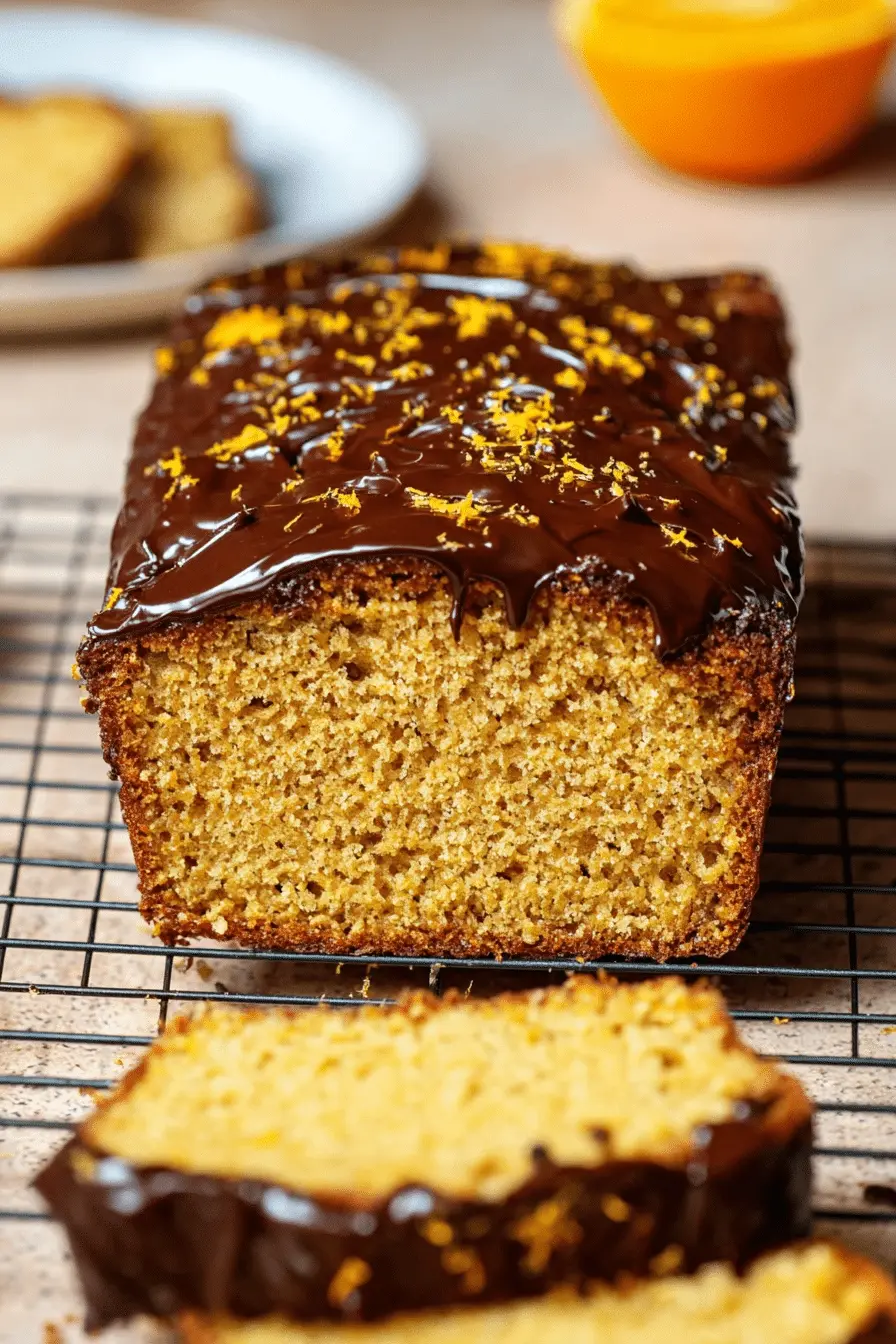
Visually and aromatically, imagine a warm golden crumb flecked with orange zest and a glossy dark chocolate veil that slightly cracks when sliced. The orange aroma becomes more pronounced as the loaf cools — that zesty lift makes each bite feel fresh rather than cloying. For readers paying attention to ingredient quality: choose pure maple syrup and a solid dark chocolate bar for the cleanest, truest flavor.
Everything You Need for Paleo Orange Kissed Loaf with Dark Chocolate Glaze
Below I walk through the key ingredients and simple equipment so you feel ready before you start. Measure carefully—paleo flours behave differently than wheat flour and accuracy matters for texture.
- Almond flour – Provides structure, protein, and a rich, nutty base. If you want a different texture, choose a superfine grind.
- Coconut flour – Absorbs liquid and adds fiber; it keeps the crumb tender but requires wet ingredients to balance it.
- Baking soda & salt – Essential for lift and flavor balance.
- Eggs – Bind and leaven. Use room-temperature eggs so the batter forms evenly.
- Coconut oil – Adds moisture and a subtle coconut note; melted and cooled so it blends smoothly.
- Pure maple syrup – Natural sweetener with depth; it pairs better with citrus than refined sugar.
- Fresh orange juice & zest – Juice adds acidity and moisture; zest supplies concentrated citrus aroma and flavor.
- Unsweetened plant milk – Keeps the loaf moist without adding sweetness; almond milk is traditional but swap as needed.
- Quality dark chocolate bar – Melts into a glossy glaze; choose a bar you enjoy eating for the best result.
Equipment: a loaf pan of the proper size, parchment paper or good nonstick spray, a mixing bowl, and a small pot for melting chocolate. If you want more loaf inspiration while you plan, consider this Blueberry Cream Cheese Loaf for a different twist: Blueberry Cream Cheese Loaf.
The Secret to a Moist, Tender Paleo Loaf
- Bring your eggs to room temperature so they emulsify with the cooled oil and avoid a clumpy batter.
- Mix dry ingredients separately from wet ingredients to ensure even distribution of coconut flour, which can clump if not sifted or whisked well.
- Combine wet and dry just until incorporated — overmixing can make paleo loaves dense because these flours don’t develop gluten.
- Let the baked loaf cool completely in the pan before turning out; cooling helps the crumb set and prevents the loaf from falling apart.
- For a professional-looking glaze, melt chocolate gently over low heat and stir until completely smooth before pouring; if it’s too warm it can run off, and too cool it will clump.
Why Almond & Coconut Flour Make This Loaf So Nutritious
Almond and coconut flours create a nutrient-dense base that supports sustained energy and satiety. Almond flour contributes healthy monounsaturated fats and protein, while coconut flour adds soluble fiber that aids digestion and slows sugar absorption. Together they lower the overall glycemic response compared with wheat flour, which helps steady blood sugar for people mindful of carbs. The resulting loaf has a delicate nutty aroma and a tender, slightly crumbly crumb that browns to a warm golden color when baked.
If you want to read more about the nutritional properties of these flours, this overview is helpful: Almond and Coconut Flour Benefits.
Nutrition Breakdown: Calories, Macros, and What They Mean
A single slice of this loaf runs in the neighborhood of 249 calories with approximately 18.5 g fat, 18.6 g carbohydrates, and 6 g protein. Here’s what that means for the health-conscious eater:
- Calories – A reasonable portion size for a treat that can fit into a balanced day when paired with protein or a fresh fruit salad.
- Fats – Mostly from almond flour and coconut oil; these are primarily heart-healthy monounsaturated and medium-chain triglyceride fats that help keep you full.
- Carbohydrates – Come from the orange juice and maple syrup as well as the flours; because the loaf contains fiber from coconut and almond flours, the net impact on blood sugar is gentler than a refined-sugar loaf.
- Protein – Moderate protein from almond flour and eggs contributes to satiety and helps the loaf serve as a more substantial snack or breakfast than a typical sweet bread.
For a deeper look at nutritional choices and how to balance treats like this in your diet, see this primer: Nutrition Breakdown of Healthy Foods.
How to Make Paleo Orange Kissed Loaf with Dark Chocolate Glaze (Step-by-Step)
- Preheat your oven and prepare an appropriately sized loaf pan by lining it with parchment or applying a generous nonstick spray so the loaf releases cleanly.
- Whisk together the dry ingredients in one bowl so the coconut flour and baking soda are evenly distributed; break up any lumps.
- In a separate bowl, whisk the wet ingredients: room-temperature eggs, cooled melted oil, maple syrup, orange juice, zest, and plant milk until smooth and glossy.
- Gently fold the dry ingredients into the wet mixture until just combined; avoid overmixing to keep the crumb light.
- Transfer the batter to the prepared pan, smooth the top, and bake until a tester inserted in the center comes out clean and the edges are lightly golden. Timing will vary with your oven; start checking near the shorter end of the bake time range.
- Allow the loaf to cool completely in the pan — this helps the texture set so slices don’t crumble.
- Warm a small pot over low heat and melt the dark chocolate slowly, stirring frequently until glossy and smooth. Pour the glaze over the cooled loaf and spread toward the edges; finish with fresh orange zest.
Pro-Tips, Troubleshooting, and Variations are presented as bulleted lists below for easy scanning.
Pro Tip for Paleo Orange Kissed Loaf with Dark Chocolate Glaze: Nut-Free Swaps & Serving Sizes
- Nut-free flour swaps – I’ve had great results swapping almond flour for finely ground sunflower seed flour or pumpkin seed flour; note the crumb color will be greener and the flavor slightly different.
- Sweetener swaps – If you prefer, use honey or agave in place of maple syrup; the sweetness level changes slightly so taste the batter beforehand if you want it less or more sweet.
- Serving sizes – For snacks, slice thinner; for dessert, serve thicker slices alongside fresh berries or a scoop of coconut yogurt. For gatherings, cut into smaller portions and serve on a platter.
- Add-ins – Fold in chocolate chips or chopped nuts sparingly; they change calorie density but add texture and flavor.
- Flavor pairings – Bright berries, a smear of citrus ricotta (if dairy is allowed), or a citrus-mint salad complement the loaf nicely.
- If you need another nut-free dessert idea for guests, try this option: Carrot Cake Bars.
How to Store, Reheat, and Customize Your Paleo Orange Kissed Loaf
- Short-term storage – Keep at room temperature in an airtight container for a few days; the loaf stays moist thanks to the oils and fresh juice.
- Refrigeration – Store in the fridge up to a week; let it come to room temperature before serving, or give slices a brief warm-up in the oven to refresh texture.
- Freezing – Slice and wrap individual pieces tightly in plastic wrap and a sealed bag; freeze up to three months. To serve, thaw overnight in the fridge and warm gently if desired.
- Reheating tips – Warm slices in a low oven or give them a 10–15 second blast in the microwave to slightly soften the chocolate glaze without melting it completely.
- Seasonal customizations – Swap orange for blood orange or tangerine when in season; add a teaspoon of warm spices like cinnamon or cardamom for fall iterations.
- Troubleshooting – If you find the crumb too dense, I noticed that adding lighter mixing (and ensuring eggs are room temperature) improves lift. If the glaze seizes, warm it gently and stir in a touch of neutral oil to smooth it.
Frequently Asked Questions
Can I use a different type of flour instead of almond and coconut flour?
For this recipe, almond and coconut flour provide the best texture and flavor. If you need to substitute, consider using a gluten-free all-purpose flour blend, but keep in mind that the results may vary!
How should I store the Paleo Orange Kissed Loaf?
You can store the loaf in an airtight container at room temperature for up to 3 days, or in the refrigerator for up to a week. For longer storage, freeze individual slices wrapped in plastic wrap for up to 3 months!
Can I make this loaf nut-free?
Absolutely! You can use sunflower seed flour or pumpkin seed flour as a nut-free alternative to almond flour. Just be aware that it may slightly alter the flavor and color.
What can I use instead of maple syrup to sweeten the loaf?
You can try using honey or agave syrup as alternatives to maple syrup. Just remember that this may change the flavor slightly but will still provide sweetness!
How do I know when the loaf is fully baked?
The loaf is done when a toothpick or tester inserted in the center comes out clean. It should also be lightly golden on the edges. If it's still wet, continue baking for a few more minutes!
Recipe Card
How I Finally Nailed Paleo Orange Kissed Loaf with Dark Chocolate
- Prep
- 10 min
- Cook
- 40 min
- Total
- 50 min
- Serves
- 10
- Calories
- 249 kcal
- Carbs
- 18.60 g
Ingredients
- 1 ½ cupsfine almond flour
- ⅓ cupcoconut flour
- 1 teaspoonbaking soda
- ¼ teaspoonsalt
- 2 eggsat room temperature
- ¼ cupmelted and cooled coconut oil
- ⅓ cuppure maple syrup
- ½ cupfreshly squeezed orange juice
- Zest of 1large orange
- ¼ cupunsweetened almond milk
- 3.5 oz85% dark chocolate bar
- Zest of 1orange
Instructions
- 1
Preheat oven to 350 degrees F. Line an 8x4 inch loaf pan with parchment paper or spray pan generously with nonstick cooking spray.
- 2
In a large bowl, whisk together dry ingredients.
- 3
In a separate large bowl, whisk together wet ingredients.
- 4
Add dry ingredients to wet ingredients and mix well to combine. Pour batter into loaf pan and spread out evenly.
- 5
Bake for 40-45 minutes until tester comes out clean. Allow loaf to cool completely in the pan before removing.
- 6
To make the dark chocolate glaze: Add dark chocolate bar to a small pot and place over low heat, stirring until melted and smooth.
- 7
Pour glaze over the loaf and spread evenly towards the sides. Garnish with zest from 1 orange. Cut into 10 slices and enjoy!
You might also like


Reviews
Be the first to review this.