

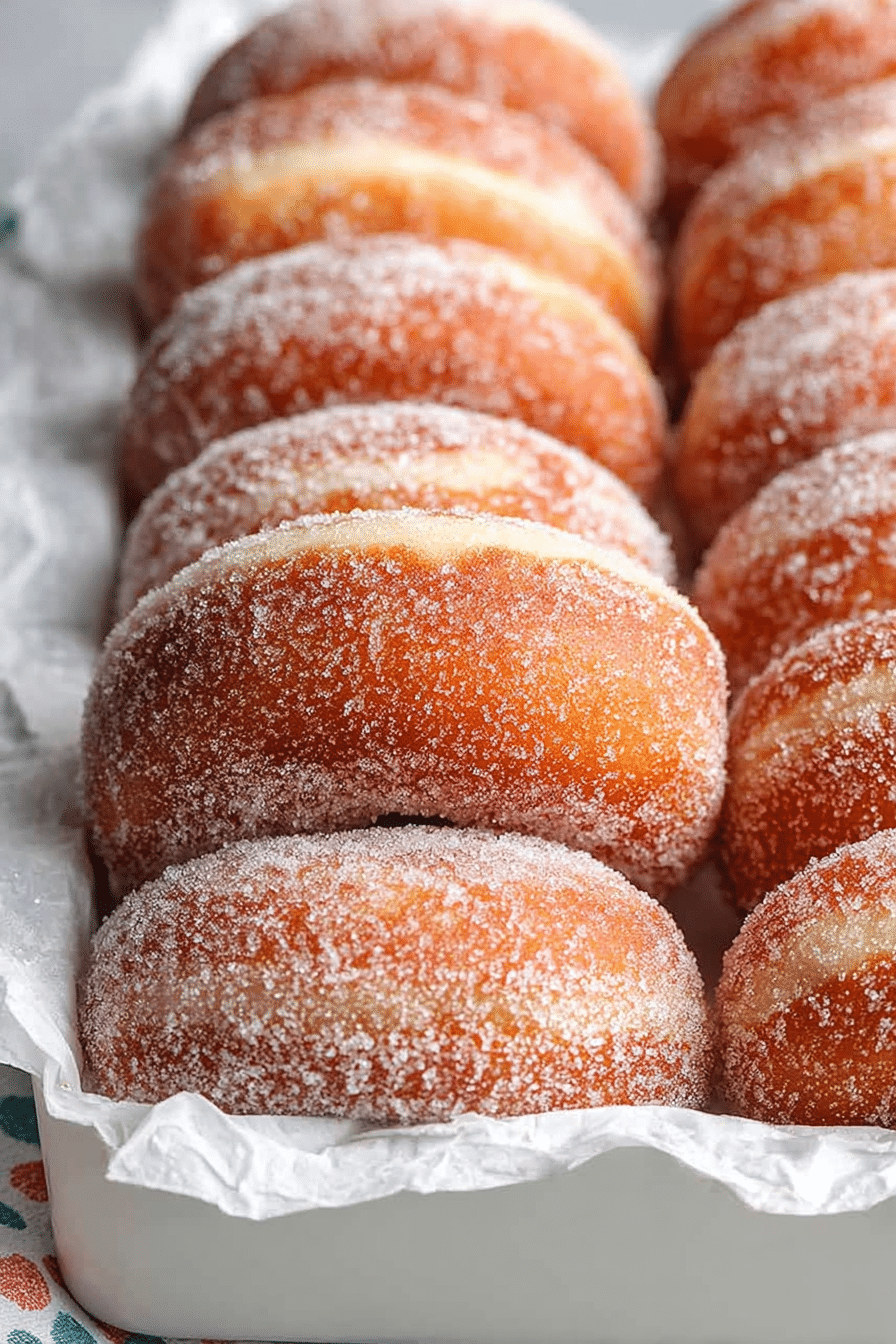
I’ve been making sugar donuts on and off for years — for sleepy weekend breakfasts, school bake sales, and the occasional midnight craving. Donuts have a long, cozy history: from early fried cake confections in many cultures to the ring-shaped treats that showed up in American cookbooks in the 19th century. Sugar donuts are one of the simplest, most honest versions — a yeasted dough fried until golden and tossed while still warm in plain granulated sugar. They’re nostalgic and universal: kids love them, adults reach for second helpings, and the smell of frying dough always gets attention in my kitchen.
This post is a hands-on guide to mastering perfect sugar donuts — not just a set of instructions but notes from the stove: what worked, what I’ve learned to watch for, and how to rescue the dough when things go sideways. Looking for more baking ideas and complementary recipes? Browse our All Recipes Index to discover more sweet treats.
Ingredients Needed for the Best Sugar Donuts
Below I walk through each key ingredient and why it matters. I include a precise ingredient list after this short discussion so you can measure exactly when you’re ready to bake.
- Whole milk – gives the dough richness and helps create a soft crumb; warmer milk helps activate the yeast.
- Dry active yeast – the leavening agent that gives donuts their lift and chewy texture; freshness is important.
- Granulated sugar – feeds the yeast and sweetens the dough; extra sugar is used for coating.
- All-purpose flour – the structure builder; protein content affects chewiness.
- Salt – balances sweetness and strengthens gluten.
- Unsalted butter – adds tenderness and flavor; room temperature butter incorporates best.
- Egg + egg yolks – add richness, help with structure, and give a tender crumb.
- Vanilla extract – simple aroma that rounds the flavor.
- Corn oil (for frying) – neutral, high smoke point oil; other neutral oils work but test the flavor.
Exact ingredients (yields about 16 donuts)
- 1 cup whole milk (warm)
- 2½ tsp dry active yeast
- 2 tablespoons granulated sugar (for yeast mixture)
- 3 1/2 cups all-purpose flour
- 1/2 cup granulated sugar (in dough)
- 1/2 teaspoon salt
- 3 tablespoons unsalted butter (room temperature)
- 1 large egg
- 2 large egg yolks
- 1/2 teaspoon vanilla extract
- Corn oil for frying (about 2–3 inches in a heavy-bottomed pot)
Step-by-Step Instructions to Make Perfect Sugar Donuts
Below are precise, tested steps. I include cues you can watch and smell so you’ll know you’re on the right track.
- Make the yeast mixture (5–10 minutes).Warm the milk to about 100–110°F (warm to the touch but not hot). Stir in the measured yeast and the small amount of sugar, whisk gently, and let it sit. In 5–10 minutes it should look foamy and smell faintly yeasty — a sign the yeast is alive. If it never becomes frothy, the yeast may be old or the milk too hot; start again with new yeast.
- Mix the dough (10–15 minutes mixing time).In a stand mixer fitted with the dough hook, combine the flour, the larger portion of sugar, salt, butter, whole egg, egg yolks, vanilla, and the frothy yeast mixture. Start on low until the dry patches disappear, then increase to medium-high to knead for about 10–15 minutes. The dough should become soft, slightly tacky, and elastic — pull a bit and it should stretch rather than tear. If it’s painfully sticky, add a tablespoon of flour at a time; if it’s dry and cracks, a teaspoon of warm milk brings it back.
Why this matters: thorough kneading develops gluten, which creates the donut’s chew. Under-kneaded dough will be dense; over-kneaded dough can become too tight and springy.
- First rise (1–2 hours).Transfer the dough to a greased bowl, cover with plastic wrap or a damp towel, and let it rise in a warm, draft-free spot until doubled or even tripled. In my kitchen, near a warm oven it takes about 60–90 minutes. You’ll know it’s ready when an indent from your finger holds and the dough smells slightly sweet and yeasty.
- Shape the donuts (15–20 minutes including bench time).Turn the dough onto a floured surface, punch it down, and roll it to about 1/2-inch thickness. Use a 3-inch round cutter for the donuts; if you want holes, use a smaller cutter for the centers. Re-roll scraps once — overworking scraps too many times makes them tough. Place cut donuts on a parchment-lined sheet, cover loosely, and let them rise again for about 30 minutes until puffy.
Note: If your donuts flatten while frying, they were under-proofed. If the donuts smell strongly of alcohol or have collapsed, they were over-proofed.
- Heat the oil (10 minutes to heat).Pour corn oil to about 2 inches deep in a heavy-bottomed pot and heat to 340°F. Use a candy thermometer or an instant-read probe to be accurate. Too hot and the outside will brown while the inside stays raw; too cool and donuts absorb excess oil and turn greasy.
- Fry the donuts (about 4 minutes per donut).Fry each donut about 2 minutes per side until golden brown. I like to fry two at a time in my 10-inch pot. They should puff and sizzle gently; a loud bubbling means the oil is too hot. Transfer to paper towels to drain briefly — don’t let them steam and soften under a lid. When they’re warm (not hot), toss them in a bowl of granulated sugar until fully coated. If you roll them too hot, the sugar dissolves into a paste; too cool and the coating won’t stick.
- Cool and serve.Serve warm for the best texture: a slightly crisp exterior, a tender, chewy center, and a soft sugar crust. Leftovers are fine at room temperature for a day or two (see storage below).
Common Troubleshooting Tips for Perfect Results
- Donuts are too dense – Usually under-proofed or under-kneaded. Let the dough rise fully; the dough should double or triple and feel airy. If the dough feels heavy after mixing, knead a few more minutes.
- Oil-soaked / greasy donuts – Oil temperature too low. Maintain around 340°F and avoid overcrowding the pot, which drops the temperature. Drain on a rack on top of paper towels, not directly on towels.
- Donuts flatten or don’t puff – Could be over-proofed or the oil too cool. Check the dough’s spring-back during proofing: it should be soft and springy. If over-proofed, shape into smaller donuts or bake them instead.
- Yeast won’t foam – Yeast may be dead or milk was too hot. Always proof yeast in warm (not hot) liquid and check yeast’s expiration.
- Sugar doesn’t stick – Roll when donuts are warm but not scalding. For powdered sugar, a quick spritz of oil helps it cling.
Dietary Modifications: Gluten-Free & Vegan Options
I test these variations when friends have dietary needs. They won’t be identical to the classic version, but they can still be delicious.
Gluten-free sugar donuts
- Use a high-quality gluten-free all-purpose blend that’s a 1:1 substitution and contains xanthan gum; if your blend lacks it, add about 1 teaspoon per 3 1/2 cups flour to mimic gluten’s binding.
- Expect a softer, slightly more cake-like interior rather than an elastic chew. Treat gently when shaping to avoid crumbling.
- Proofing time can be slightly shorter; keep watch for puffiness rather than time alone.
Vegan sugar donuts
- Replace dairy milk with unsweetened soy or oat milk warmed to the same temperature; these mimic protein and body of whole milk best.
- Swap butter for plant-based butter or neutral oil (coconut oil will give subtle coconut notes).
- Replace egg and yolks with a combination of 2 flax ‘eggs’ (2 tbsp ground flax + 6 tbsp water, rested until gelled) or use aquafaba (3 tablespoons aquafaba per egg). Texture will be slightly lighter and less rich; extra fat (a tablespoon more butter or oil) helps compensate.
- Rise times may vary; look for the same visual cues: puffy, slightly domed donuts before frying.
Flavor Variations: Unique Twists on Classic Sugar Donuts
Once you have the basic dough down, these variations are fun and reassuringly simple to execute.
- Cinnamon sugar – Mix about 1/4 cup ground cinnamon with 1 cup granulated sugar and toss warm donuts until evenly coated. The spice cuts through sweetness and gives warmth.
- Chocolate glaze – Heat 1/2 cup chocolate chips with 1/4 cup heavy cream until smooth; dip warm donuts and set on a rack. Add a pinch of salt to balance the chocolate.
- Filled donuts – Fry small rounds (no hole). Once cooled slightly, use a piping bag to inject pastry cream, jam, or lemon curd. To avoid soggy pockets, don’t overfill and pipe while still slightly warm.
For a cinnamon-forward twist, try our cinnamon donut bread for inspiration on spice blends and coatings.
Alternative Frying Methods: Air Fryer Options
I use the air fryer when I want less oil and an easier clean-up. They won’t be exactly like deep-fried ones, but the result is tasty and crisp on the outside.
- Preheat the air fryer to 350°F (175°C).
- Lightly spray both sides of the shaped donuts with neutral oil (use a mister or brush a tiny amount of oil).
- Place donuts in a single layer without crowding. Air-fry 4–6 minutes, flip once at 2–3 minutes, until golden. Times vary by model; look for a golden, slightly crisp exterior.
- Roll in sugar while warm.
Pros: less oil, faster cleanup. Cons: slightly less tender interior and different crust texture. For best results, spray liberally and avoid stacking.
Nutritional Information for Sugar Donuts
Below is the nutrition for the classic sugar donut (per donut) as provided with the original recipe. Modifications will change values — I give estimated ranges and explain variables.
- Classic sugar donut (per donut) – Calories: 275 kcal; Fat: 4 g; Carbohydrates: 30 g; Protein: 5 g.
- Gluten-free (estimate) – Calories: roughly similar to classic, but may be slightly higher if blends contain more starches; expect 270–310 kcal per donut depending on the flour blend and any added xanthan gum.
- Vegan (estimate) – Calories may be close to the classic if using plant butter and plant milk; if using neutral oil instead of butter, calories might be slightly higher per donut (by ~10–20 kcal) depending on oil absorption.
Factors that change nutrition: size of the cutter, amount of oil absorbed, how much sugar you coat them in, and whether you fill or glaze them.
Storage, Freezing, and Make-Ahead Notes
- Room temperature – Store coated donuts in an airtight container for 1–2 days; they’re best on day one.
- Reheating – Warm gently in a 300°F oven for 4–6 minutes or microwave 10–15 seconds for a quick fix. If reheating from frozen, thaw at room temperature and reheat briefly.
- Freezing – Freeze uncoated donuts in a single layer until firm, then transfer to a freezer bag for up to 2 months. Thaw and roll in sugar before serving.
FAQ
- What type of sugar do they put on donuts? Granulated sugar (or caster/superfine sugar) is most common for sugar donuts — roll warm donuts in plain granulated sugar for a classic coating; superfine gives a slightly smoother finish.
- What’s the secret to good donut dough? Don’t overwork the dough — mix until smooth, soft, and elastic, then let it rise fully. Over-mixing or re-rolling scraps too many times makes donuts tough.
- How do I get sugar to stick to the donuts? Roll donuts in sugar while they’re still warm (not piping hot). For powdered sugar, a light spritz of vegetable oil or cooking spray helps it adhere.
- Can I air-fry or bake these instead of deep-frying? Yes — for an air fryer, preheat to about 350°F (175°C), lightly spray the donuts with oil, and air-fry 4–6 minutes, flipping once or until golden. Baking will give a different texture (less crisp outside) but can work if you brush or spray with oil and bake at 375°F until golden.
- How should I store or freeze sugar donuts? Store coated donuts in an airtight container at room temperature for 1–2 days. To freeze, freeze uncoated donuts in a single layer, then transfer to a freezer bag for up to 2 months; thaw, warm slightly, and roll in sugar before serving.
Conclusion and Serving Suggestions
Try these donuts warm straight from the pan; the moment when the sugar crunches gently and the interior yields to your bite is why I keep making them. If you want to serve them for a small gathering, fry early and reheat briefly in a low oven (300°F) for a few minutes; then toss in sugar just before serving for the freshest coating.
Pair warm sugar donuts with simple drinks for a classic combo: a strong coffee, a creamy latte, or a cold glass of milk. Pair warm sugar donuts with a soothing copycat Starbucks matcha latte for a delightful breakfast combo.
For a decadent pairing or dip, serve these donuts with a rich peanut butter milkshake.
If you try this recipe, please come back and tell me what you changed — did you use an air fryer, or fill them with lemon curd? I’ve tested a lot of versions of this, and the simple one here is what I come back to when I want dependable, fluffy sugar donuts. Happy frying and share a donut with someone you love.
Perfect Sugar Donuts
Ingredients
Equipment
Method
- Make the yeast mixture: In a large measuring cup, combine warm milk, yeast, and granulated sugar. Let froth for 5-10 minutes.
- In a stand mixer, combine flour, sugar, salt, butter, egg, egg yolks, vanilla, and the frothy yeast mixture. Mix on low, then high speed for 10-15 minutes.
- Place the dough in a greased bowl, cover, and let rise until doubled (1-2 hours).
- Punch down the dough, roll out to 1/2 inch thick, and cut out circles. Let rise for 30 minutes.
- Heat corn oil to 340°F. Fry each donut for 2 minutes per side until golden brown. Transfer to paper towels.
- Once cooled, roll donuts in sugar.