

I have a soft spot for one-pot dinners that taste like they’ve been simmering for hours even when my week has been hectic. This Persian lamb stew is that kind of meal: it fills the kitchen with warm spices, toasted nuts and the bright, dark tang of pomegranate molasses while asking very little of you. I make a big pot on a Sunday and then rely on it for quick, soulful dinners during the week — it’s forgiving, flavourful and somehow feels celebratory even on dull nights.
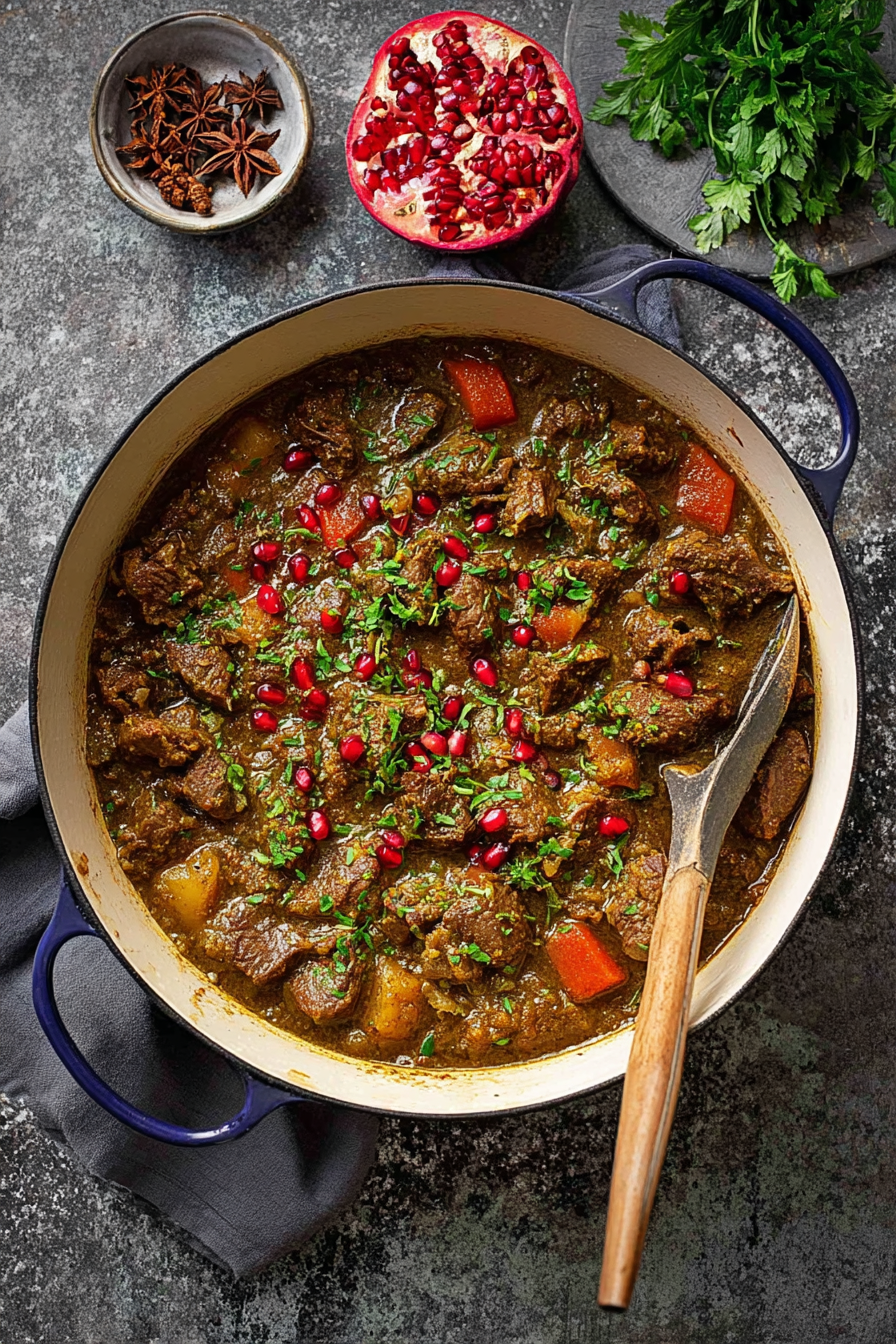
On a busy school-night I’ll do a quick sear, pop the lid on and let it do the rest; the real magic happens while you tidy up, set the table and pour a glass. If you prefer gadgets, this stew translates beautifully to the Instant Pot or slow cooker — or make it in a heavy casserole on the hob. If you want other easy weeknight one-pot ideas, try my slow cooker beef stew for a similarly comforting, hands-off dinner:
If you’re looking for other easy weeknight meals, check out our slow cooker beef stew, which is equally delicious and hassle-free.
What keeps me coming back is how the texture and depth deepen with time: toasted walnuts folded into the sauce lend a silken body, while pomegranate molasses cuts through with a bright acidity. I’ll often serve it with fragrant basmati rice and scatter mint and parsley over the top — simple touches that make the plate feel special.
Everything You Need for Persian Lamb Stew
The ingredients are straightforward but choosing the right quality and tools makes a big difference. Use fresh spices, good-quality lamb, and take a moment to toast your walnuts — it changes everything. Below I list the essentials and a few optional extras so you can adapt the stew for dietary needs.
- Lamb shoulder – The best cut for slow, moist cooking; it has enough fat to keep pieces tender and flavourful. Trim any excessively large outer pieces of fat if you prefer leaner stews.
- Walnuts – Ground walnuts thicken the sauce and add a toasty, nutty backbone. Toast them first for more depth.
- Pomegranate molasses – Provides sweet-tart complexity; balance with a little honey or sugar if your batch is very sharp.
- Dried fruit (cranberries or barberries) – Adds sweet-tart bursts that cut through richness; swap with raisins if needed.
- Onion & garlic – The aromatic base; cook gently for caramel notes that support the spices.
- Warm spices (cinnamon, cumin, turmeric, nutmeg) – Use fresh ground spices for the brightest aroma; toast whole spices briefly if you have them.
- Chicken or vegetable stock – Builds a savoury backbone; use low-sodium if you’re watching salt.
- Herbs (parsley, mint) – Fresh herbs finish the dish and add a cooling contrast to the warm spices.
- Tools – A heavy casserole or Dutch oven for hob cooking, a pressure cooker/Instant Pot for speed, or a slow cooker if you like set-and-forget convenience.
- Optional/ dietary swaps – Use vegetable stock and swap lamb for hearty mushrooms or eggplant for a vegetarian version; for gluten-free make sure any pre-made stocks or condiments are certified GF.
A Short History: The Roots of Persian Lamb Stew
This style of lamb stew sits within a long Persian tradition of simmered dishes — often called khoresh or, in some regional forms, abgoosht — that balance meat, sour elements and nuts. Historically, stews allowed cooks to stretch tougher cuts of meat into celebratory plates for family gatherings, festivals and everyday hospitality.
Regional variations determine what goes into the pot: some versions lean more on sour fruit like quince or sour plums, others add beans or root vegetables. In Persian homes the stew is as much about generosity as it is about flavour — large pots are shared family-style, and the aroma of warm spices often announces a special meal.
Imagine a low-slung copper pot on a wooden table, steam rising as guests lean in to taste; that’s the scene these recipes summon in my mind — fragrant, communal and comforting.
Why Walnuts and Pomegranate Molasses Define the Flavor
These two ingredients are the axis around which this stew turns. Toasting the walnuts amplifies their richness and oils, giving the sauce a velvety mouthfeel and a toasty aroma that complements the lamb. Pomegranate molasses brings an acidic-sweet lift that balances the dish’s richness and gives it a distinctly Persian character.
- Toast the walnuts briefly until fragrant and slightly darker — you should smell a warm, toasty note without any bitterness.
- Pomegranate molasses should be added toward the end to preserve its bright tang; taste and temper with a little honey if the molasses is assertively sour.
- Swaps: if you don’t have pomegranate molasses, a reduction of pomegranate juice with a splash of vinegar and honey can work; ground almonds or hazelnuts can replace walnuts for a milder nuttiness.
The Secret to Melt-in-the-Mouth Lamb
Fat and connective tissue are your allies here: choose a cut like shoulder that has collagen which breaks down under low, slow heat into a silky, unctuous texture. Browning the meat first builds deep, savoury flavor and fond on the pan that becomes the stew’s backbone.
When I make it, I sear the lamb in batches so the pieces brown rather than steam. If you’re short on time, the Instant Pot shortens the braise without losing tenderness — and if you want other ways to enjoy fall-apart lamb, try this pulled lamb method for a different take:
For more ways to enjoy tender lamb, check out our pulled lamb recipe that will melt in your mouth.
Cooking timing: low and slow is best on the hob or slow cooker; pressure cooking reduces time but still benefits from a brief natural release to keep juices in the meat.
How to Make Persian Lamb Stew (Step-by-Step)
- Toast the walnuts until aromatic, then grind them to a coarse powder — this will thicken the sauce and add a nutty backbone.
- Gently sweat finely diced onions in olive oil and a knob of butter over very low heat until soft and sweet; this stage builds the stew’s base flavour and aroma.
- Add garlic and the warm spices briefly to bloom their oils and perfume the pan — you should smell them immediately.
- Increase the heat, add the lamb in batches and brown the pieces to develop a rich crust; deglaze with a splash of stock if the pan tightens up.
- Stir in pomegranate molasses and honey, fold in dried fruit, then add the stock and the ground walnuts — bring to a gentle simmer.
- Reduce the heat, cover and cook slowly until the lamb is tender and the sauce has a glossy, thickened finish; adjust seasoning with salt and pepper.
- Finish with chopped parsley and mint for a fresh contrast and serve with fluffy rice or flatbreads.
Troubleshooting
- If the sauce is too thin, simmer uncovered to reduce or stir in a little more ground walnuts to thicken and add body.
- If the lamb is tough, continue to cook on low heat — tougher cuts need more time; alternatively, a short resting period off heat can relax fibers before serving.
- If the stew tastes flat, a splash of acid (lemon juice or a touch more pomegranate molasses) and a pinch of salt usually brightens everything.
- If the dish is too sweet, balance it with a touch more stock or a squeeze of lemon to lift the flavours.
Pro Tip for Persian Lamb Stew: Consistency
- For a thicker, velvety finish, use ground walnuts — they both thicken and enrich the sauce without masking the spices.
- To loosen the stew into a saucier consistency, add warm stock in small amounts rather than cold water so you don’t chill the pot.
- Watch visual cues: a glossy surface that clings to the back of a spoon signals the right finish; if it’s runny, reduce gently until the juices coat the meat.
- Adjust seasoning at the end — the stew concentrates as it reduces, so final salt and acid adjustments are essential.
Dietary Swaps & Timings
- Gluten-free: ensure your stock and any condiments are certified gluten-free; the stew itself is naturally GF if you avoid wheat-based thickeners.
- Low-carb/Keto: omit dried fruit and serve over mashed cauliflower or a simple herb salad instead of rice.
- Vegetarian: replace lamb with meaty aubergine or portobello mushrooms, increase walnuts for body and use vegetable stock; slow-cook to let flavours meld.
- Instant Pot timing: sear on sauté, then pressure cook for a shorter time than stovetop; allow natural release for juicier meat.
- Slow cooker timing: brown meat first, then transfer to the slow cooker for a long, gentle braise (4–8 hours depending on heat setting) — the flavours will deepen beautifully.
- Quick prep: chop onions and toast nuts ahead of time, then finish the stew in one evening; prepping the walnuts and aromatics the night before saves time.
What to Serve with Persian Lamb Stew (Sides & Rice Pairings)
This stew loves a fragrant bed of long-grain basmati to soak up the sauce, and the contrast of bright herbs keeps the plate lively. For more pairing ideas and rice suggestions, see our sides & rice pairings guide:
If you’re wondering about the perfect accompaniments, be sure to check out our guide on sides & rice pairings for your Persian lamb stew.
- Fluffy basmati rice spiked with a little turmeric and whole cardamom pods is classic and aromatic.
- A simple salad of cucumber, tomato and red onion dressed lightly with lemon and olive oil adds a bright, crunchy counterpoint.
- Flatbreads or warm naan are perfect for scooping; for a refreshing twist try a cilantro-lime rice alongside the stew:A delicious option to pair with the stew is cilantro lime rice, which brings a refreshing flavor to your meal.
- Finish the plate with mint and parsley and, if you like, a scattering of pomegranate seeds for colour and a pop of tartness.
How to Store, Reheat and Make-Ahead Persian Lamb Stew
- Refrigerate: Cool the stew to near room temperature, then store in an airtight container in the fridge for up to 3–4 days; flavours often deepen overnight.
- Freezing: Freeze in portion-sized containers for up to 3 months. Label with the date and protein so you can rotate your freezer meals easily.
- Thawing: Thaw overnight in the refrigerator, then reheat gently on the hob over low heat to preserve texture; add a splash of hot stock if it feels tight.
- Reheating: Warm slowly to avoid drying the meat; a gentle simmer restores the sauce’s texture and allows flavours to bloom again.
- Make-ahead: Prepare the stew a day ahead — chilling intensifies the flavours and makes reheating effortless when you need a comforting dinner.
Frequently Asked Questions
What is Persian lamb stew called?
Persian lamb stew is often referred to as khoresh or, in some regional forms, abgoosht. Names and specific ingredients vary by region and family tradition.
How do you make Persian lamb stew?
Start by sautéing onions and garlic, bloom the spices, brown the lamb, then add walnuts, pomegranate molasses, dried fruit and stock. Simmer slowly until the lamb is tender and the sauce is glossy.
What are common mistakes to avoid when making lamb stew?
Avoid rushing the aromatics (they need gentle cooking), undercooking the meat, letting the stew stay too watery, or overloading it with bitter ingredients. Taste and adjust seasoning near the end.
How long should lamb be cooked for it to be tender?
Cook lamb low and slow; plan on at least 1.5 to 2 hours on the hob for shoulder to become melt-in-the-mouth tender. Pressure cooking or slow cookers reduce or extend that time respectively.
What should I serve with Persian lamb stew?
Serve with basmati rice, flatbreads or a fresh salad to balance the rich flavours. Fresh herbs, a squeeze of lemon and pomegranate seeds make excellent finishing touches.
Persian Lamb Stew
Ingredients
Method
- Toast your walnuts for maximum flavor. Transfer them to a mini chopper and grind to a fine powder.
- Heat olive oil and butter in your casserole until butter starts foaming. Add the onions, cover the pot and cook over very low heat for 20 minutes, stirring occasionally.
- Stir in the garlic, cinnamon, cumin, turmeric, nutmeg, salt, cinnamon stick and orange peel, cooking for a minute or two.
- Add the lamb, stirring to coat in the aromatic spices. If the pan gets dry, add a little of the stock and scrape any browned bits in the pan.
- Drizzle in the pomegranate molasses and honey. Add the dried cranberries, stirring to combine. Pour in the stock and bring to a simmer.
- Add the ground walnuts, stir to combine then cover the pot and cook on very low heat for about an hour.
- Discard the cinnamon stick and orange peel. Taste and season with salt and pepper. Garnish with chopped parsley and mint. Serve.