How I Finally Nailed Persian Love Cake at Home
- Prep
- 25 min
- Cook
- 33 min
- Total
- 58 min
- Serves
- 8
- Calories
- 484 kcal
- Carbs
- 53.00 g
Introduction
There are recipes that feel like heirlooms and then there are recipes that feel like a letter—this Persian Love Cake is the latter for me. I remember the first time I baked it for someone I loved: the kitchen filled with a rosewater-sweet steam and the bright lift of orange zest, and the cake felt like a message in pastry. Over several trials in my kitchen I've learned the small adjustments that keep the crumb tender and the aromas clear, not cloying.
I like to think of this cake as an amplified version of the sweets you find on a Persian table: pistachios for texture, fragrant cardamom for warmth, and rosewater for perfume. In my kitchen I learned to balance those perfumes so the cake smells like a garden rather than a perfume counter. The result is intimate, floral, and bright—perfect for a small celebration or an afternoon with tea.
As you read on I'll share why certain ingredient choices matter, the tricks I use to keep the cake moist, and how to dress it so it looks like something from a pastry case. If you love ornate flavors but want something straightforward to make, this recipe will repay the attention you give it.
Why Persian Love Cake is the Romantic Cake to Share
Persian Love Cake isn't a single antique recipe passed unchanged through centuries; rather, it is a contemporary interpretation built from long-standing Persian flavor traditions. In Persian cuisine, floral and citrus notes have long been associated with celebrations—weddings, Nowruz, and other gatherings—because they feel fresh and generous. This cake borrows that sensibility: rosewater and cardamom speak of courtship and ceremony, while pistachios offer a jewel-like finish that makes every slice feel like a gift.
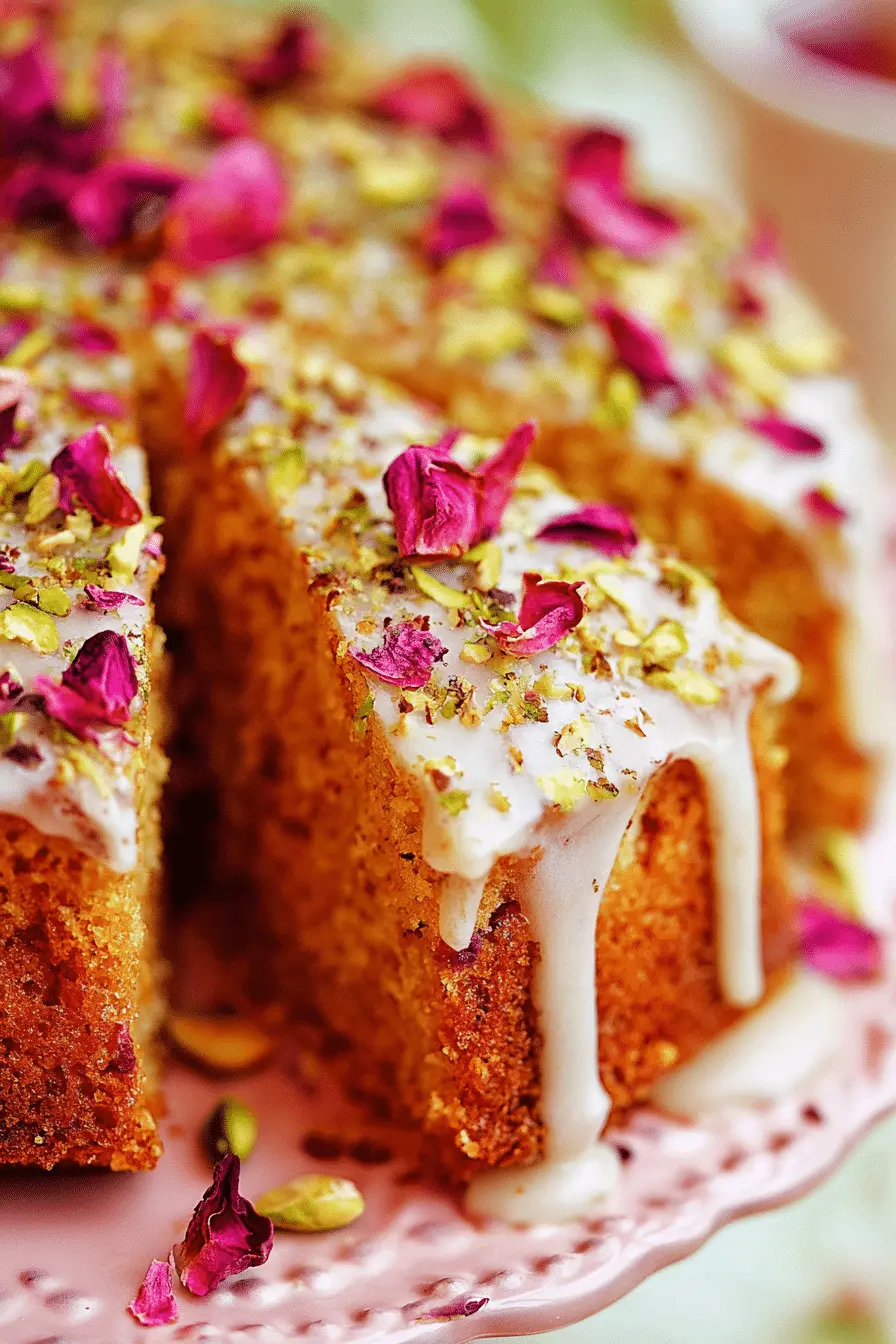
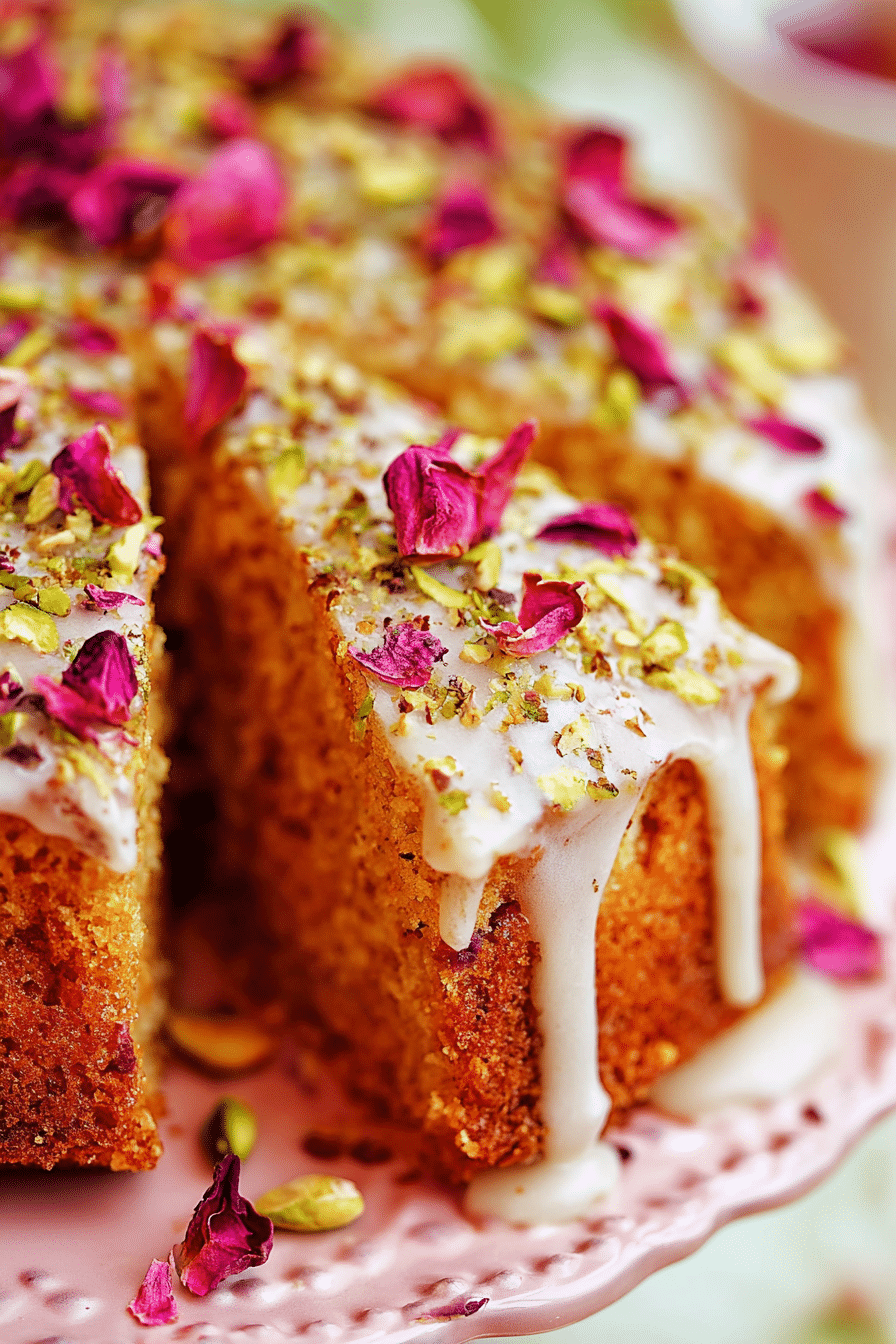
Part of its romance is visual as much as aromatic. The pale cake, the soft glaze veined with orange zest, and the scatter of green pistachios and rose petals turn a simple dessert into something ceremonious. If you want to pair this cake with other dishes that reflect Persian flavors, try a slow-simmered stew to complete a meal; one accessible option that captures the region’s spirit is a rich lamb stew that pulls the same fragrant notes into a savory course. Try my Persian Lamb Stew for a complementary main that celebrates the same culinary tradition.
Everything You Need for Persian Love Cake
Before you begin, assemble your ingredients and tools so the process flows. Fresh spices and floral extracts matter here: stale cardamom will blur the profile, and a heavy-handed rosewater can overwhelm. An 8-inch cake pan gives the cake the right height and crumb structure; a bowl for creaming and a spatula for gentle folding are essential. Below I explain each ingredient’s role and suggest easy substitutions if something isn’t on hand.
- Granulated sugar – Provides structure, tenderness, and a surface for zest oils to bloom when rubbed together.
- Orange zest & orange juice – Brightens the flavor and cuts through the floral notes, making the cake lively rather than syrupy.
- Eggs – Give lift and richness; for vegan versions you can use flax or chia gels as a binder.
- Sour cream or Greek yogurt – Adds moisture and a touch of acidity to react with baking soda for lift; plant-based yogurts work well in swaps.
- Butter – Delivers richness and helps the crumb set; a neutral oil will make a slightly denser but still moist cake.
- All-purpose flour – The cake’s structure; swap with a reliable gluten-free blend if needed (see variations).
- Almond flour – Contributes tenderness and a subtle nutty note that complements pistachios.
- Leaveners (baking powder & baking soda) – Create lift; the soda also reacts with cultured dairy for a finer crumb.
- Ground cardamom – The spice’s bright, resinous warmth anchors the floral notes.
- Pistachios – Provide texture and a characteristic color contrast; use roasted for depth or raw for a milder finish.
- Pistachios and rose petals (for garnish) – Add a decorative, fragrant finish that signals celebration.
The Secret to Its Fragrant, Moist Texture
The cake’s tenderness comes from an intentional balance of wet and dry elements and the way they’re combined. Sour cream (or yogurt) adds acidity and moisture; that acidity interacts with a touch of baking soda to create gentle lift without drying out the crumb. Almond flour and a portion of all-purpose flour provide soft structure while keeping the texture tender rather than cakey.
Temperature matters: use room-temperature eggs so they emulsify easily with melted butter and dairy, which encourages a smoother batter and better volume. Take care not to overmix once the dry ingredients are added—overworking develops gluten and creates a tougher crumb. Finally, fold in the pistachios by hand so they stay dispersed without deflating the batter.
Why Cardamom, Rosewater, and Orange Work Together
Cardamom is warm and aromatic with eucalyptus-like notes; it provides backbone. Rosewater gives a floral lift that reads as delicate and romantic when used sparingly. Orange zest cuts through both with citrus brightness, keeping the cake from feeling too sweet or perfumed. Together they form a classic trio in Persian and broader Middle Eastern sweets: the spice for depth, the floral for contrast, and the citrus for clarity.
Using fresh orange zest rather than bottled oils preserves volatile aromatics and ensures each aroma remains distinct in the final bite—cardamom for resonance, rose for perfume, orange for a bright finish.
How to Make Persian Love Cake (Step-by-Step)
- Preheat and prepare your pan so it’s ready when the batter is mixed—this helps the cake begin rising immediately once it’s in the oven.
- Rub the orange zest into the sugar to release oils; this little step perfumes the entire cake.
- Whisk the eggs with sour cream (or yogurt), melted butter, orange juice, and rosewater until smooth and uniform.
- Combine the flours, leaveners, salt, and cardamom in a separate bowl; sifting helps remove lumps and aerates the mixture.
- Sift the dry mix into the wet ingredients and stir until just combined—stop when you no longer see flour streaks to avoid overmixing.
- Gently fold in the finely chopped pistachios so they’re evenly distributed without knocking out the air.
- Pour the batter into your prepared pan and smooth the top; bake until a tester comes out with a few moist crumbs or the cake springs back slightly to the touch.
- Let the cake cool briefly in the pan before turning out onto a rack to cool completely—this prevents the glaze from melting away.
- Prepare the glaze while the cake cools, then pour it once the cake is at room temperature so it sets nicely on the surface.
Troubleshooting
- If the cake sinks in the middle, you may have underbaked it or opened the oven door too early; give it a few extra minutes and test again.
- If the texture is dry, reduce baking time slightly or increase the proportion of yogurt/sour cream next time.
- If the rosewater tastes too strong, use less next time and make sure to pair it with plenty of orange zest to balance the florals.
Pro Tip for Persian Love Cake: Vegan, GF & Reduced-Sugar Swaps
- Vegan egg swaps – Use a flax or chia egg, or applesauce as a binder; expect a slightly denser crumb and adjust liquids as needed.
- Plant-based dairy – Choose a thick plant yogurt and a vegan butter or neutral oil; these keep moisture but alter the flavor slightly.
- Gluten-free flours – Use a well-balanced gluten-free flour blend that contains xanthan gum or a binder to mimic structure; almond flour helps maintain tenderness.
- Reduced-sugar options – Cut sugar modestly and rely on bright citrus zest and a touch more cardamom to keep perceived sweetness; when using alternative sweeteners, test for moisture differences.
- Variations – Swap some pistachios for toasted almonds or sprinkle chopped dried cranberries into the batter for a tart contrast.
For more plant-based ideas that pair well with this approach to baking, you might find a collection of practical vegan swaps helpful: explore vegan alternatives here.
How to Glaze, Garnish, and Present Like a Persian Pastry Chef
The glaze should be thin enough to flow but thick enough to hold a sheen. If it’s too runny the cake will soak it up; too thick and it won’t spread smoothly. Use a shallow bowl and a spoon to pour the glaze toward the center and let it nudge itself to the edges for a natural finish.
- Mix powdered sugar with a touch of orange zest and a few drops of rosewater; thin with cream until the glaze just coats the back of a spoon.
- Pour from the center and gently encourage the glaze to the sides; let excess drip back before adding garnishes.
- Finish with a scatter of diced pistachios and a few edible rose petals or small rose buds for a celebratory look.
- For photography or serving, place a couple of whole pistachios and a few petals on each slice to make the plating feel intentional and elegant.
For inspiration on presentation techniques and styling that make a cake feel like a centerpiece, see related ideas that emphasize bold garnish treatments: presentation ideas here.
How to Store, Make-Ahead, and Freeze Persian Love Cake
- Short-term: Store the cake in an airtight container at room temperature for up to three days to keep it soft and fragrant.
- Refrigeration: If you need to extend freshness, refrigerate for up to a week; bring the cake to room temperature before serving to restore tenderness.
- Freezing unfrosted: Wrap the cooled cake tightly in plastic and then foil; freeze for up to three months. Thaw overnight in the refrigerator and come to room temperature before glazing.
- Freezing glazed or decorated cakes: Freeze without delicate petals; add fresh garnishes after thawing to preserve visual appeal.
- Make-ahead tip: Bake the cake a day ahead, store it unglazed, and glaze just before serving so the glaze and petals look freshly applied.
Nutritional Information for a Health-Conscious Baker
The recipe yields generous, rich slices—calorie content per serving will reflect the butter, nuts, and sugar used. A typical slice from this cake provides a balance of carbohydrates, fats, and protein driven largely by the sugar and nuts. The original recipe estimates roughly 480 calories per slice with a higher fat content from butter and nuts and a moderate amount of protein from eggs and almond flour.
If you alter the recipe—substituting plant-based fats, reducing sugar, or switching to a gluten-free blend—expect those numbers to change. Reducing sugar or using a lower-calorie sweetener will lower carbohydrate and calorie counts, while replacing butter with oil may slightly change the fat profile. Using more almond flour increases protein and healthy fats, while gluten-free substitutions can affect texture and caloric density.
For practical guidance on healthier baking approaches and ingredient swaps that retain flavor while moderating calories, this collection of health-focused recipes offers useful ideas and techniques: see health-conscious baking tips.
Frequently Asked Questions
What makes Persian Love Cake special?
Persian Love Cake is renowned for its unique combination of flavors including rosewater, cardamom, and orange zest, which make it a romantic and celebratory dessert, perfect for special occasions.
Can I make this cake vegan?
Yes! You can substitute the eggs with flaxseed meal or applesauce, and use plant-based yogurt and butter to create a vegan version of the Persian Love Cake.
Is it possible to make Persian Love Cake gluten-free?
Absolutely! You can replace the all-purpose flour with a gluten-free flour blend to enjoy a gluten-free version of this delightful cake.
How should I store Persian Love Cake?
Store the cake in an airtight container at room temperature for up to 3 days, or refrigerate it to extend its freshness for up to a week.
What can I use for garnish on the cake?
You can top your Persian Love Cake with diced pistachios, edible rose petals, or even rose buds for a beautiful presentation!
Recipe Card
How I Finally Nailed Persian Love Cake at Home
- Prep
- 25 min
- Cook
- 33 min
- Total
- 58 min
- Serves
- 8
- Calories
- 484 kcal
- Carbs
- 53.00 g
Ingredients
- 3/4 cupwhite granulated sugar
- 1 largeorange (zest)
- 2 largeeggs (at room temp)
- 1/2 cupsour cream (or Greek yogurt)
- 1/2 cupunsalted butter (melted)
- 1/4 cuporange juice (freshly squeezed)
- 1.5 tsprosewater extract (or 2 tbsp rosewater)
- 1 cupall-purpose flour
- 1 cupalmond flour
- 1 tspbaking powder
- 1/2 tspbaking soda
- 1/4 tspsea salt
- 1.5 tspground cardamom
- 1/3 cuppistachios (finely diced/ground)
- 1 cuppowdered sugar
- 1 tsporange zest
- 1/2 to 1 tsprosewater extract
- 3 to 4 tbspcream
- 3 tbspdiced pistachios (for garnish)
- 1/4 cupedible rose petals (for garnish)
Instructions
- 1
Preheat the oven to 350°F. Line an 8-inch cake pan with parchment paper and spray the sides with a baking spray.
- 2
Place the granulated sugar into a large mixing bowl and zest in the orange. Use your fingers to blend the zest and sugar together.
- 3
Add in the eggs, sour cream, melted butter, orange juice, and rosewater/extract. Whisk until well-beaten.
- 4
In a separate bowl, combine the dry ingredients: all-purpose flour, almond flour, baking powder, baking soda, salt, and ground cardamom.
- 5
Sift the dry ingredients into the wet ingredients, then mix until well combined.
- 6
Fold in the finely diced pistachios.
- 7
Pour the cake batter into the prepared pan. Spread the batter evenly. Bake at 350°F for 33 to 35 minutes, until a toothpick inserted comes out clean.
- 8
Allow the cake to cool in the pan for about 5 minutes, then remove onto a wire rack to cool completely.
- 9
Prepare the glaze by mixing powdered sugar, orange zest, rosewater/extract, and heavy cream until thick.
- 10
Allow the cake to cool to room temperature before adding the glaze. Pour the rosewater glaze onto the center of the cake and gently nudge it to the edges.
- 11
Garnish the top of the cake with diced pistachios, rose petals, and/or rose buds.
You might also like
Reviews
Be the first to review this.