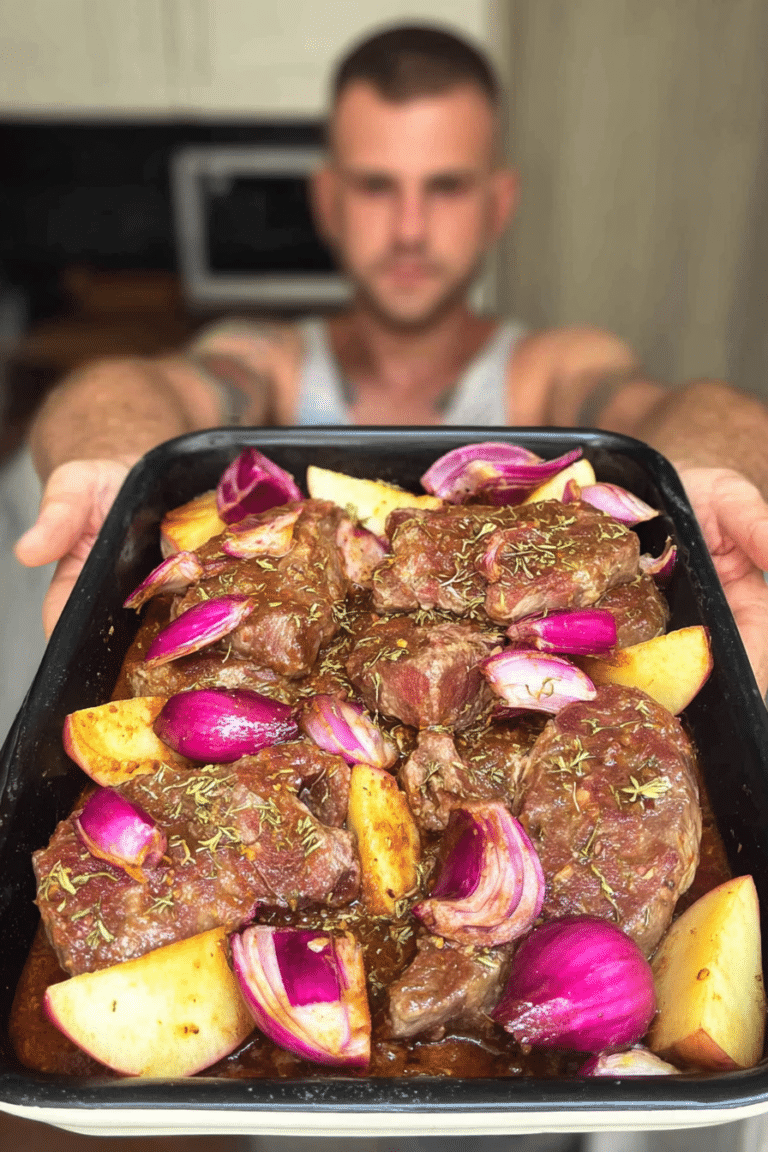


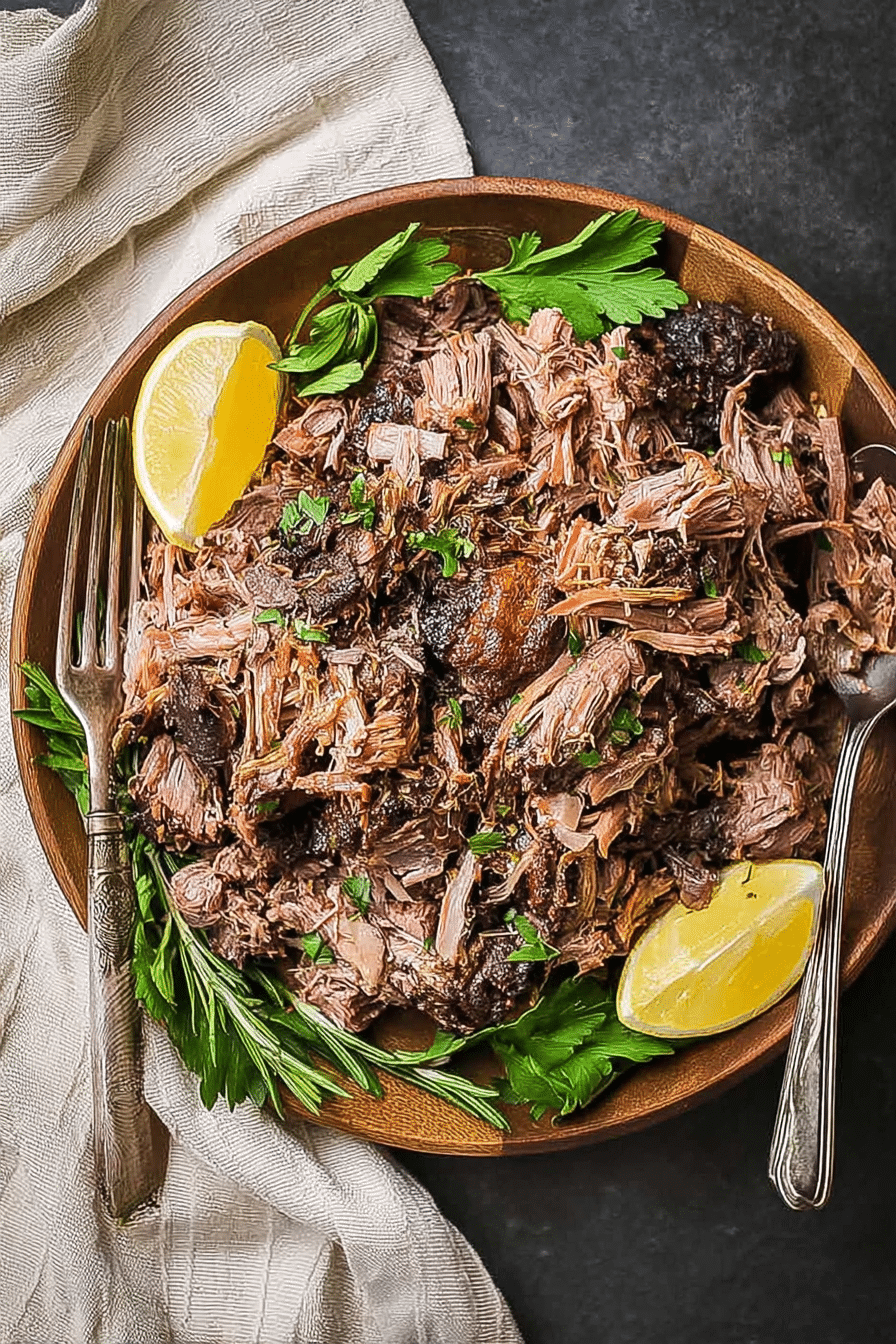
I have a soft spot for long, slow roasts—there is something very honest about leaving a piece of meat in a low oven until it gives up its flavour and texture. In my kitchen this pulled lamb became my go-to for celebrations because it arrives at the table glossy with juices, threaded with herbs, and impossibly tender. The first time I served it, guests kept circling the platter, drawn by the fragrant rosemary and the warm, peppery notes of baharat.
I like to start this roast the evening before a gathering so the flavours can settle and the meat relaxes overnight; that patience always pays off in depth and silkiness. While the oven does most of the work, little choices—how you season the surface, whether you sear first, and how you rest the joint—change everything about the final dish. Expect sweet, herby aromas to rise as the lamb slow-roasts, and a satisfying sight when you pull back the foil to reveal deeply caramelized edges.
This is a recipe that rewards small rituals: rubbing the spice mix into every crevice, tucking fragrant sprigs under the joint, and spooning the reduced cooking juices over shredded meat just before serving. It’s an impressive main for a weekend dinner, and pairs beautifully with simple sides that balance the lamb’s richness.
Why This Pulled Lamb Recipe Will Impress Your Guests
This dish stands out because of texture, aroma and presentation. Slow cooking renders connective tissue into gelatin, yielding a pull-apart tenderness that feels both rustic and refined. The spice mix—anchored by baharat and warmed with a hint of cardamom—creates a signature Middle Eastern profile without overwhelming the lamb. Visually, the roast arrives streaked with mahogany browning, dotted with fresh herb sprigs and pools of glossy jus that invite guests to tuck in.
Everything You Need for Pulled Lamb (Middle Eastern Slow Cooked Lamb)
Below I describe the role each ingredient plays and sensible substitutions. I avoid exact measurements here so you focus on balance and quality.
- * Lamb shoulder or leg – The workhorse of this dish: a cut with marbling and connective tissue that breaks down during slow cooking. Boneless pieces are easiest for pulling.
- * Onions – Provide a sweet aromatic base that softens and caramelizes, flavoring the pan juices.
- * Garlic – Adds savory depth; roast it whole with the joint for mellow, sweet garlic notes.
- * Fresh rosemary and thyme – Green aromatics that uplift the meat with piney and floral hints; tuck sprigs under and around the lamb.
- * Bay leaves – Offer subtle herbal bitterness that rounds the richness of the lamb.
- * Baharat (Middle Eastern seven-spice) – The anchor spice blend: warm, peppery and slightly sweet; replace with a mix of cumin, coriander and cinnamon if needed.
- * Garlic powder and cracked black pepper – Provide surface seasoning and a peppery edge; use salt-free garlic powder if your salt is measured separately.
- * Cardamom (optional) – A little goes a long way—adds floral warmth typical of regional slow roasts.
- * Olive oil – Helps the seasonings adhere and encourages browning during searing.
- * Stock and wine (or extra stock) – Create a braising medium that keeps the lamb moist and produces the jus you’ll spoon over the pulled meat.
How to Make Pulled Lamb (Step-by-Step)
- Prepare a roasting pan with quartered onions, garlic halves and herb sprigs to form an aromatic bed for the lamb.
- Mix your dry spice rub and press it into every surface of the lamb; open boneless pieces like a book to season interior surfaces if needed, then roll and secure.
- Drizzle the joint lightly with oil, set it fat-side up on the aromatics, and place the pan in a very hot oven briefly to brown the exterior and deepen flavor.
- Lower the oven to a gentle temperature, add stock and a splash of wine or more stock to the pan, cover tightly with foil or a lid, and let the lamb cook slowly for several hours until it is tender enough to pull with a fork.
- If the meat is not yet ready after the initial time, return it to the oven and continue slow roasting until the connective tissue yields; do not rush this step.
- Remove the cover, baste with pan juices, and briefly broil to caramelize the top—watch closely to avoid burning.
- Rest the joint for 10–20 minutes, then shred the meat into large, juicy pieces and toss with a few spoonfuls of the strained pan juices before serving.
The Secret to Using Authentic Middle Eastern Spices
Baharat is the soul of this roast: a fragrant blend traditionally made of warm spices like black pepper, cumin, coriander, cinnamon, and sometimes cloves and nutmeg. In my experience, freshly toasted whole spices ground just before making the rub add vibrancy that pre-ground mixes lack. I learned this after several attempts where the powdery blends tasted flat—freshly crushed cumin and coriander bring citrusy top notes that lift the lamb.
Fresh herbs—rosemary and thyme—bring a green brightness that offsets the meat’s richness and the spice’s warmth. Using whole spices when possible (lightly toasting and crushing them) yields clearer, brighter aromatics than relying solely on supermarket pre-ground blends.
Tips for Choosing the Best Cut of Lamb for Slow Cooking
When selecting lamb, look for pieces with visible marbling and a healthy layer of fat; these are promises of succulence after long cooking. Boneless lamb shoulder is my top pick because it contains the right balance of muscle and fat that softens into silky strands. A boneless leg will also work and produces a slightly leaner final dish—expect a firmer texture and adjust cooking time accordingly.
Fat is your friend here: it bastes the meat from within and keeps the shredded lamb glossy. Avoid very lean cuts; they can dry out or lack the unctuous mouthfeel that makes pulled lamb memorable.
Pro Tips for Perfect Pulled Lamb (Middle Eastern Slow Cooked Lamb)
- Season liberally and massage the rub into crevices so every bite is flavored.
- Sear or blast the roast in a hot oven first to develop Maillard browning for deeper flavour.
- Keep the braising liquid shallow—just enough to keep the bottom of the pan moist; you want steam and a concentrated jus, not to poach the meat.
- Resist the urge to check the roast too often; undisturbed slow roasting yields the best texture.
- Always let the meat rest before pulling; resting allows the juices to redistribute so the shredded lamb is juicy, not dry.
- Strain and reduce the pan juices separately to spoon over the shredded lamb for added shine and flavor.
Troubleshooting
- If the lamb is tough after the suggested time, continue slow roasting; connective tissue can take longer depending on the joint.
- If the exterior is browning too quickly during the long cook, tent foil over the roast to prevent burning while the interior tenderizes.
- If the pan liquids are drying out, add a little more stock and cover tightly to restore moisture without diluting flavor too much.
- If the spice mix tastes harsh, finish the pulled meat with a squeeze of lemon or a spoonful of yogurt to round and brighten flavors.
Ideas for Side Dishes or Accompaniments to Serve with Pulled Lamb
This lamb loves contrasts: bright, crunchy salads and cooling dairy balance its richness. Traditional pairings work beautifully and make a complete plate.
- Vermicelli rice—light, fragrant rice tossed with toasted vermicelli strands for texture.
- Fresh chopped salad—tomato, cucumber, mint and parsley dressed with lemon help cut through the lamb’s fat.
- Greek yogurt or labneh—cool and tangy, spooned alongside for richness control.
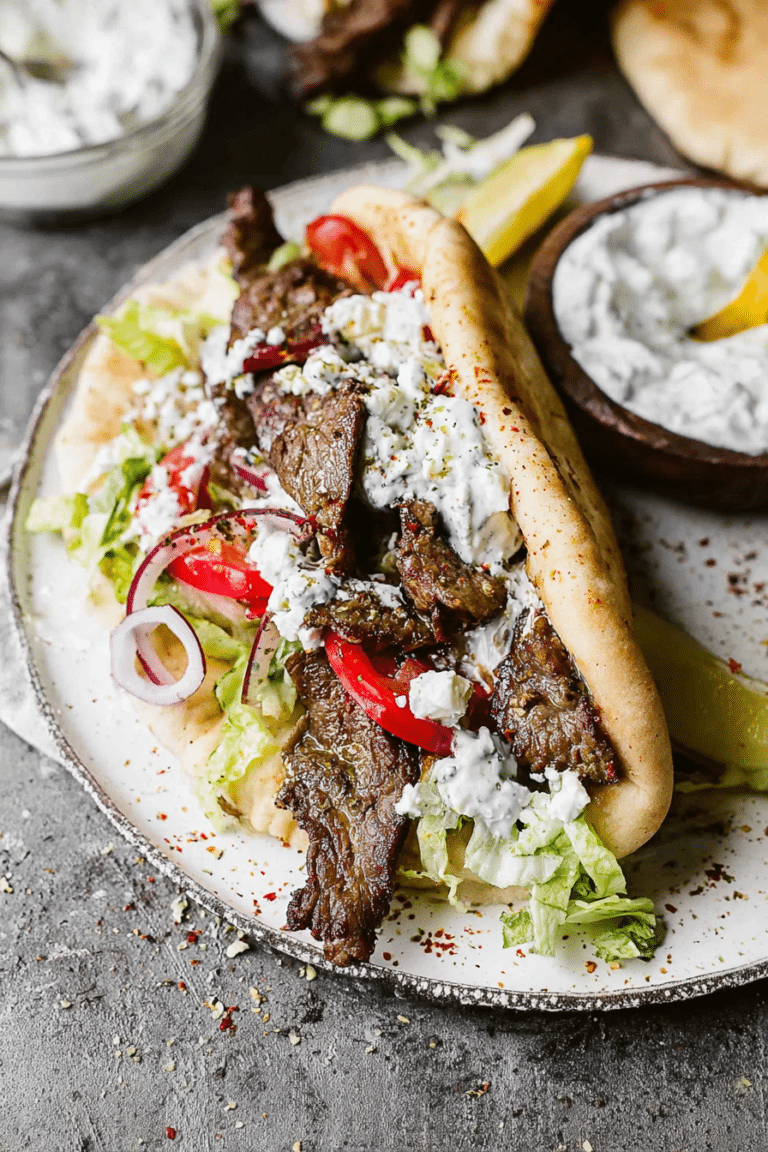
- Flatbreads or warm pita—ideal for assembling sandwiches or scooping up shredded lamb and salad.
- Roasted vegetables—root vegetables or eggplant roasted until caramelized offer earthy balance.
Pairing Suggestions for Drinks That Complement the Robust Flavors of Lamb
The lamb’s warmth and spice pair well with both tannic and aromatic beverages.
- Red wine—medium-bodied reds with moderate tannin and bright acidity pair well; think regional varieties with spice notes.
- Non-alcoholic—mint tea or a chilled spiced tea complements the meal and echoes the herbaceous elements.
- Cultural beverages—sparkling water with lemon and a sprig of mint or ayran (salted yogurt drink) provide cooling contrast and authenticity.
Instructions for Batch Cooking and Storing Pulled Lamb for Meal Prep
- Cool the pulled lamb to room temperature before transferring to airtight containers for refrigeration—keeps well for a few days.
- For freezing, portion into meal-sized packs and seal tightly to prevent freezer burn; thaw overnight in the refrigerator before reheating.
- Reheat gently in a low oven or on the stove with a splash of stock to restore moisture; avoid high heat that dries the meat.
- Repurpose leftovers into sandwiches, salads, stews or tacos—the seasoned meat adapts well to many formats.
Vegetarian or Vegan Alternatives That Mimic the Flavors and Textures of Pulled Lamb
For plant-based versions, focus on texture and bold seasoning.
- Jackfruit or shredded oyster mushrooms—both provide a shreds-like structure that soaks up the spice rub and braising juices.
- Use the same baharat-forward rub and roast or braise these alternatives slowly with aromatics until they absorb flavor and soften.
- Finish with a reduced, savoury sauce made from stock, tamari and a touch of acidity to replicate the glossy jus.
Conclusion and Serving Suggestions
This pulled lamb is a go-to when I want to serve something that feels celebratory yet relaxed: the oven does the heavy lifting while you prepare bright sides and gather guests. Serve the shredded lamb on a platter with bowls of vermicelli rice, chopped salad, Greek yogurt and warm flatbreads so people can compose their own plates. A final squeeze of lemon over the pulled meat and a scattering of fresh herbs make the presentation sing.
Frequently Asked Questions
What type of lamb is best for this pulled lamb recipe? For the best results, use boneless lamb shoulder or leg. These cuts are perfect for slow cooking, becoming tender and flavorful.
Can I use different herbs or spices? Absolutely! While the recipe features traditional Middle Eastern spices, feel free to experiment with your favorite herbs. Just keep in mind that the unique flavors contribute to the dish’s character.
How can I store leftovers after cooking? You can store leftover pulled lamb in an airtight container in the refrigerator for up to three days. It also freezes well; just ensure it’s well packaged to maintain quality.
Can I make this recipe ahead of time? Yes! This dish is perfect for making ahead. You can prepare it a day in advance, store it in the refrigerator, and reheat it before serving.
What are some good side dishes to serve with pulled lamb? Pulled lamb pairs wonderfully with vermicelli rice, fresh chopped salad, and Greek yogurt. You might also consider roasted vegetables or flatbreads for a complete meal.
Pulled Lamb (Middle Eastern Slow Cooked Lamb)
Ingredients
Method
- Prepare the roasting pan with quartered onions, garlic, thyme, rosemary and bay leaves.
- Season the lamb with the spice mix and olive oil.
- Sear in a preheated oven to brown for 20 minutes.
- Slow roast for 4-5 hours at lower temperature covered.
- Broil for 10-15 minutes to brown the top.
- Rest before serving with sides.