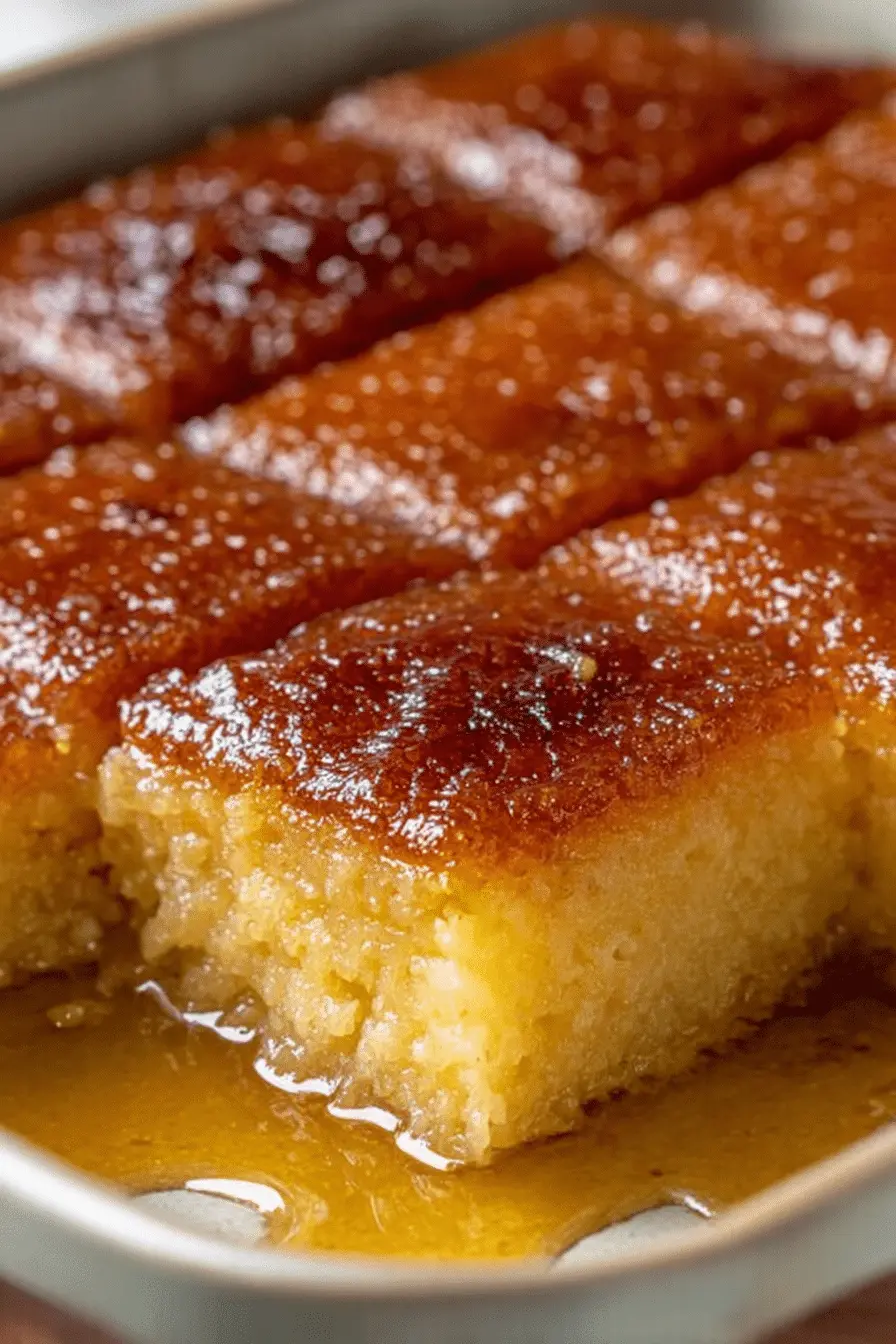
The Ravani Recipe My Family Always Requests
- Prep
- 15 min
- Cook
- 40 min
- Total
- 55 min
- Serves
- 12
- Calories
- 460 kcal
- Carbs
- 79.00 g
Introduction
I learned to make ravani in my mother's kitchen, with the radio on low and the smell of orange zest drifting through the house. I still remember the way the syrup hissed when it met the hot cake for the first time — that tense, fragrant moment when a simple dessert becomes a family ritual. Over the years I’ve tested proportions, fiddled with baking times and syrup consistency, and found what keeps this cake true to its Greek roots while reliable in a modern oven.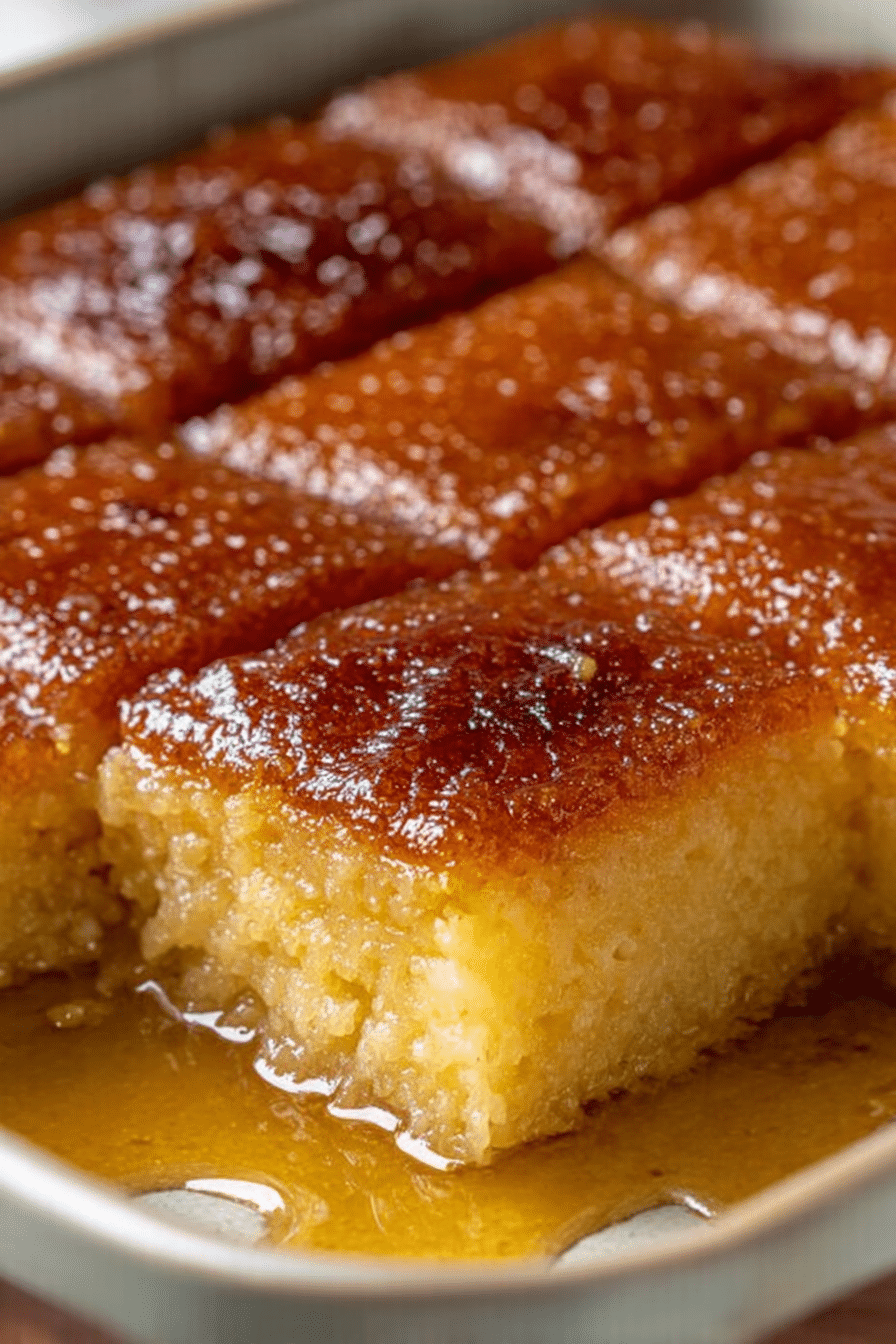
Why This Ravani Recipe Brings Greek Tradition to Your Table
Ravani (also called revani in some regions) is a cake that traces its roots across the eastern Mediterranean; in Greece it became a beloved household dessert because it uses pantry staples and a syrup technique that preserves and intensifies simple flavors. Families serve it for festive meals, after church gatherings, and when neighbors stop by — it carries a sense of hospitality. In many homes it’s the cake baked for name days, baptisms, or any excuse to sit together and share something sweet.
Sensory memory is part of its tradition: the bright citrus that cuts through the sweet syrup, the slightly grainy, yielding crumb of semolina, and that satisfying crack on the golden top when you slice into it. I often recall my aunt scoring the cake in diamond shapes and dotting each with a clove — small gestures that anchor this dessert to memory and place.
Everything You Need for Ravani
Below I list the key ingredients and tools — think of this as a shopping checklist and a reminder why each item matters. Use the best-quality dairy and citrus you can find: it changes the cake’s perfume and texture more than any other tweak.
- Ingredients – Fresh eggs, good yogurt, butter, fine semolina, plain flour, sugar, citrus (preferably fresh oranges), and simple spices like cinnamon for the syrup; each contributes to texture, moisture, and aroma.
- Tools – An electric mixer or whisk for the egg whites, a bowl for folding, a fine sieve for dry ingredients, a rectangular or square baking pan, and a saucepan for the syrup; a skewer or toothpick helps test doneness.
- Quality notes – Use full-fat Greek yogurt for the best mouthfeel, and fresh oranges rather than bottled juice for a brighter, cleaner citrus character.
The Secret to the Perfect Semolina Sponge
The single best technical secret is texture control: whipped egg whites create lift while the semolina gives structure and a tactile grain that distinguishes ravani from ordinary sponge cakes. I always beat the whites to firm peaks — not dry — and fold them gently to keep pockets of air intact.
Use fine semolina if you want a softer, more cake-like crumb; coarse semolina yields a chewier, more rustic bite and a more pronounced almond-like aroma when baked. Temperature matters too: bake gently so the outside browns without drying the interior. That balance is where the magic happens — a golden top that yields to a moist, springy interior.
Why Syrup Timing Makes or Breaks Ravani
Syrup timing is everything. Pouring cold syrup over a hot cake forces the syrup into the crumb because hot cake expands its air pockets; as it cools the cake contracts and pulls the syrup deep inside. If you pour warm syrup onto a cool cake you miss that capillary action and the result can be cloying on top but dry within.
Scientifically, once sugar dissolves into water and reaches a boil, cooling it to the right thickness prevents excessive crystallization and ensures a glossy finish. A syrup that’s too thin tastes weak; too thick becomes sticky and doesn’t distribute evenly. I aim for a syrup with a noticeable body but still pourable — the kind that clings briefly to a spoon before running off.
How to Make Ravani (Step-by-Step)
- Prepare the syrup first: combine water, sugar, orange peel and a cinnamon stick in a saucepan, bring to a short boil, then turn off and let it cool completely while you make the cake.
- Separate the eggs into whites and yolks. Beat the whites with sugar until you get firm peaks — they should hold shape but still look moist.
- Whisk the yolks with yogurt, freshly squeezed orange juice, melted butter and vanilla until smooth and homogeneous.
- Fold the yolk mixture gently into the whipped whites in stages so you keep as much air as possible in the batter.
- Sift the flour, semolina and baking powder together, then fold them into the egg mixture carefully; stop as soon as the streaks disappear to avoid deflating the batter.
- Grease your pan well and dust lightly with semolina to prevent sticking, then pour in the batter and smooth the top. Tap once to release large trapped air bubbles and, if you like, score the surface into serving shapes before baking.
- Bake at a moderate oven temperature until the top is golden and a skewer comes out clean. Keep an eye on the edges so they don’t over-brown — ovens vary widely.
- Remove the cake from the oven and immediately pour the completely cooled syrup evenly over the hot cake so it can soak in. Let it rest at least a couple of hours to absorb fully before slicing and serving.
Pro Tip for ravani recipe: Pour cold syrup over hot cake to lock in moisture
Pro-Tips are presented here as a bulleted list for quick scanning; treat them as small rituals that deliver consistent results.
- Always pour cold syrup over a hot cake to maximize absorption and ensure even moisture throughout.
- If you want a citrus twist, steep the syrup with a mix of orange and lemon peels for a brighter finish.
- A splash of liqueur (like orange-flavored) added to the cooled syrup can add depth — stir it in after the syrup has cooled so the alcohol aroma remains.
- Avoid pouring syrup in one spot; move methodically across the cake so the syrup distributes evenly.
How to Store, Reheat and Make-Ahead Ravani
Ravani keeps beautifully thanks to the syrup. Store it in an airtight container at room temperature for a day or two; for longer storage refrigerate it, wrapped tightly so it doesn’t absorb fridge odors. When you want to revive its just-baked texture, warm individual slices briefly in the oven or microwave — this softens the syrup and restores that fresh-from-the-pan aroma.
- Store in an airtight container to preserve moisture and keep citrus fragrance bright.
- To reheat, warm slices gently so the syrup loosens but doesn’t run off; 15–30 seconds in a microwave or a few minutes in a low oven works well.
- Make-ahead tip: bake a day before serving and refrigerate; bring to room temperature for a couple hours before presentation so the flavor opens up.
Serving Suggestions and Beverage Pairings
Ravani is comforting on its own but pairing it thoughtfully enhances the experience. In Greece it is often served with strong coffee or a simple herbal tea that contrasts the syrup’s sweetness. For a meal pairing, try balancing its citrus-sweetness with a savory main — for instance, a lemony chicken soup can refresh the palate after a slice of cake.
Enjoy your Ravani with a warm bowl of Greek Lemon Chicken Soup for a refreshing meal.
For presentation, a dusting of powdered sugar, a smear of whipped cream, or a scoop of vanilla ice cream offer textural contrast. Garnish with a few slivered almonds or a sprinkle of orange zest and serve on small plates so each portion keeps its syrupy charm.
For a less traditional but equally satisfying match, offer a tiny cup of strong Greek coffee alongside the cake; the bitter notes are the perfect counterpoint to the sweet syrup.
Nutritional Modifications and Healthier Alternatives
If you want to lighten the cake, there are ways to reduce sugar or adapt the flour without losing the soul of ravani. Small swaps and mindful choices can make it more approachable for different diets while keeping its character.
- Sugar reductions – Reduce syrup sugar slightly and rely on high-quality citrus for brightness; the perception of sweetness stays strong when acidity is pronounced.
- Yogurt swaps – Use lower-fat Greek yogurt if you want a lighter crumb, though full-fat yields the richest mouthfeel.
- Gluten-free options – Use a blend of fine cornmeal or certified gluten-free semolina alternatives paired with a gluten-free flour mix; texture will change but the syrup keeps it moist.
- Natural sweeteners – Consider part-replacing sugar in the syrup with a natural sweetener, but test consistency carefully since syrup thickness depends on sugar concentration.
If you're looking for a healthy twist, consider pairing your dessert with a lemon ginger turmeric shot for added wellness benefits.
Variations of the Ravani Recipe
These variations are presented as a bulleted list so you can scan and choose a direction quickly. Small additions or swaps transform the cake while honoring its core identity.
- Swap orange for lemon or grapefruit in the syrup for a different citrus profile — lemon gives a brighter zip, grapefruit a more bitter-sweet edge.
- Add ground cardamom or a pinch of nutmeg to the batter for warm spice notes that play nicely with the syrup’s citrus.
- Fold toasted nuts (walnuts or almonds) into the batter for crunch and nutty aroma, or sprinkle chopped nuts on top before serving.
- For a modern twist, stir a small amount of coconut into the batter for texture and a tropical echo.
- For inspiration from other desserts, try taking flavor cues from our lemon blueberry cake to add a bright fruit note to the batter or as a serving garnish.
Troubleshooting Common Issues
I include these troubleshooting notes from experience; I use first-person observations to show what I tried and what fixed the problem.
- If the cake is dense: I likely overfolded the batter or didn’t whip the egg whites to firm enough peaks. Whipping whites adequately and folding gently fixes that.
- If the cake is dry: I once baked for too long trying to brown the top. Reduce bake time and watch the edges; pour cold syrup immediately after baking to reintroduce moisture.
- If the syrup separates or crystallizes: I sometimes overheated and cooled too quickly. Keep the syrup at a gentle boil and cool to room temperature before using; avoid stirring in granulated sugar after cooling.
- If the top browns too quickly: my oven rack was too close to the element. Move the pan to a lower position or tent with foil near the end of baking.
Frequently Asked Questions
What is Ravani?
Ravani is a traditional Greek dessert made from semolina sponge cake, soaked in a delicious citrusy syrup. It's moist, sweet, and perfect for any occasion!
How do I ensure my Ravani has the perfect texture?
The key to perfect texture is to carefully fold the whipped egg whites into the egg yolk mixture without overmixing. This helps maintain the airy structure of the cake.
Can I make Ravani ahead of time?
Yes! Ravani can be made a day in advance. Just ensure to store it in an airtight container to keep it moist and fresh.
What should I serve with Ravani?
Ravani pairs beautifully with Greek coffee or a light tea. You can also serve it with a dollop of whipped cream or a scoop of vanilla ice cream for a delightful contrast.
Are there variations of Ravani I can try?
Absolutely! You can experiment with different flavors by adding nuts, spices, or even coconut to the batter for a unique twist on this classic dessert.
Recipe Card
The Ravani Recipe My Family Always Requests
- Prep
- 15 min
- Cook
- 40 min
- Total
- 55 min
- Serves
- 12
- Calories
- 460 kcal
- Carbs
- 79.00 g
Ingredients
- 500 gramssugar
- 500 gramswater
- 1 pieceorange peel
- 1 piececinnamon stick
- 4 pieceseggs (separated)
- 200 gramssugar
- 250 gramsGreek yoghurt
- 1 juiceorange
- 170 gramsunsalted butter (melted)
- 2 tspvanilla extract
- 150 gramssemolina fine
- 150 gramsall-purpose flour
- 1 tbspbaking powder
- 0.5 tspsalt
Instructions
- 1
In a saucepan, combine the water, sugar, orange peel, and cinnamon stick.
- 2
Bring the mixture to a boil, then turn it off after 2 minutes.
- 3
Remove from heat and allow the syrup to cool completely while you prepare the cake.
- 4
Separate the egg whites from the yolks and place them in two separate mixing bowls.
- 5
Add the sugar to the egg whites and beat until stiff peaks form.
- 6
In the bowl with the egg yolks, whisk together the Greek yogurt, orange juice, melted butter, and vanilla extract until smooth and well combined.
- 7
Gently fold the egg yolk mixture into the whipped egg whites.
- 8
Sift the flour, semolina, baking powder, and salt directly into the bowl with the egg mixture.
- 9
Gradually fold everything together until fully combined, being careful not to overmix.
- 10
Preheat your oven to 160°C (fan-forced).
- 11
Grease the bottom and sides of a 32 x 22 cm rectangular baking pan with butter, then lightly dust with semolina.
- 12
Pour the batter into the prepared pan and spread it evenly.
- 13
Bake the cake for 30-40 minutes or until the top is golden brown.
- 14
Pour the cooled syrup evenly over the hot cake.
- 15
Let your Ravani rest for a few hours to absorb the syrup fully and cool down before serving.
You might also like



Reviews
Be the first to review this.