

I make these Red Coconut Curry Meatballs on repeat when I need dinners that are healthy, satisfying, and reliable for weeknight meal prep. They hit the sweet spot: lean protein from ground poultry, rich mouthfeel from full-fat coconut milk, bright citrus notes from lime, and a spicy, aromatic red-curry punch that keeps each bowl interesting all week. In my kitchen this recipe has carried me through busy evenings and travel weeks because it stores and reheats cleanly without losing flavor.
When I test a meal-prep recipe I think about three things: texture retention, flavor clarity over time, and ease of assembly. These meatballs stay tender in the fridge, the curry sauce keeps its richness, and the cabbage salad gives you a fresh crunch that lasts several days. I’ll walk you through the techniques I rely on to avoid dry, rubbery chicken meatballs and how to build bowls that are bright and balanced each time.
I’ve learned a few practical shortcuts that still taste like real cooking: roast or bake the meatballs for an even exterior, simmer the sauce until it smells nutty and fragrant, and use riced cauliflower to keep this low-carb without sacrificing comfort. Read on for ingredient notes, the nutrition breakdown, how I assemble everything efficiently, and quick swaps for common diets.
Below I share the tactics I use in my kitchen to keep these bowls flavorful, fast, and fridge-friendly — plus troubleshooting notes in case anything goes amiss.
Why Red Coconut Curry Meatballs with Cauliflower Rice Belong on Your Meal-Prep Menu
These bowls are a practical addition to your weekly rotation because they combine high protein, healthy fats, and low-carbohydrate sides into one portable package. The meatballs are sturdy enough to be packed into containers without falling apart, the curry sauce keeps them moist on reheating, and the cabbage salad stays bright when dressed lightly and chilled.
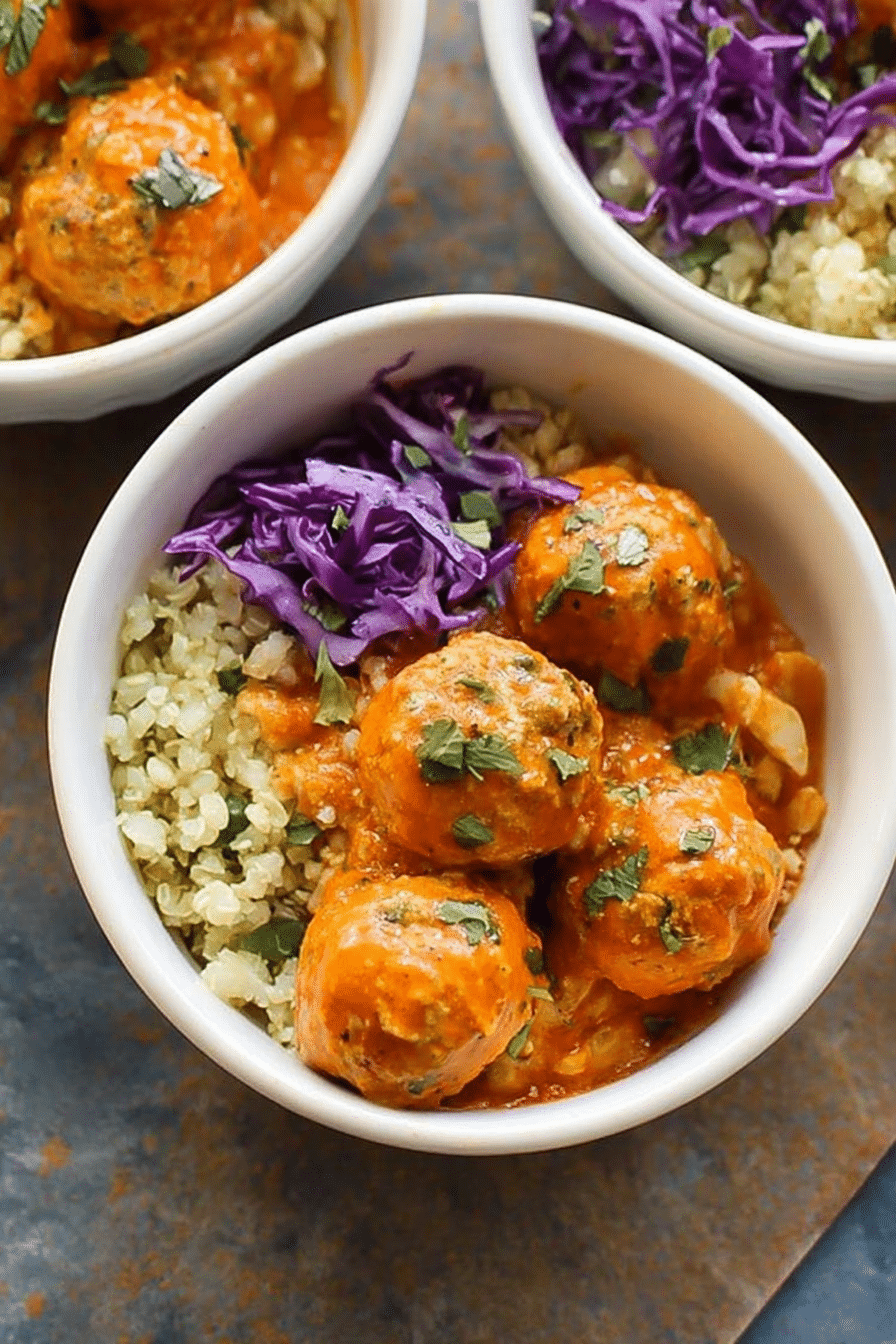
Visualize the contrast: glossy curry coating browned meatballs, a pale bed of cauliflower rice, and a jewel-toned cabbage slaw. Aromatically, the kitchen will smell of toasted curry paste, coconut, and lime — a cue that signals a satisfying meal is coming.
If you’re interested in more meal prep options, check out our delicious Teriyaki Chicken Meal Prep Bowls.
Everything You Need for Red Coconut Curry Meatballs with Cauliflower Rice
- Ground chicken (or turkey) – The lean protein base; binds well with egg and oats to keep meatballs tender.
- Garlic and onion – Build savory depth; soften the onion until slightly translucent to release sweetness.
- Red curry paste – The aromatic backbone; pick one with a short ingredients list for a cleaner flavor profile.
- Full-fat coconut milk – Adds richness and satiety; higher-fat versions give a silkier sauce and hold up better when reheated.
- Lime juice and rice vinegar – Bright acidic notes that balance fat and spice; add at the end so they stay fresh.
- Sriracha – For heat and a touch of tang; optional depending on your tolerance.
- Rolled oats and flour – Gentle binders that keep the meatballs tender; swap to gluten-free versions if needed.
- Cauliflower rice – Low-carb base that quickly cooks in a skillet; it soaks up curry without becoming mushy if not overcooked.
- Purple cabbage and cilantro – For crunchy, fresh contrast and herbal brightness.
- Equipment – A rimmed baking dish or sheet, medium skillet for the sauce, and a nonstick pan for the cauliflower rice make the flow effortless.
The Nutrition Breakdown: Protein, Healthy Fats, and Low‑Carb Wins
Per serving this bowl is protein-forward and higher in healthy fat thanks to the coconut milk — a combination that promotes satiety and supports muscle recovery when eaten after activity. The cauliflower rice keeps total carbohydrates low compared with grain-based bowls.
- Calories (approx.) – ~548 kcal per serving.
- Protein – ~27 g: from ground poultry and egg — supports fullness and muscle repair.
- Fat – ~42 g: primarily from full-fat coconut milk and olive oil — fats slow gastric emptying, increasing satiety.
- Carbohydrates – ~23 g: mostly from vegetables and small binders; cauliflower rice keeps net carbs low.
Other health notes: garlic and lime bring antioxidant and anti-inflammatory benefits, while the combination of fat and fiber helps with blood sugar stability. If you want to trim calories or fat, swap to light coconut milk or reduce oil when sautéing, but expect a thinner sauce.
Why Coconut Milk and Red Curry Help with Satiety and Flavor
Fat is a key satiety driver: it delays digestion and amplifies flavor, so a modest amount of coconut milk makes each meal feel indulgent and satisfying without needing large portions. Red curry paste is concentrated flavor — a little goes a long way — which means you can keep the dish nutrient-dense without adding empty calories.
The balance of sweet coconut, spicy curry, and bright lime creates a layered bowl where each bite keeps you interested; that complexity helps people feel satisfied faster. If you like a similar profile with seafood, try pairing these same flavor principles with fish:
If you’re curious about a seafood twist, try our Salmon Coconut Curry which showcases the same rich flavors of coconut milk.
The Secret to Tender, Moist Chicken Meatballs (no rubbery bites)
Ground chicken can go from tender to tough if handled poorly. The main fixes I rely on are gentle mixing, measured binders, and controlling heat during cooking so moisture stays locked in.
- Mix gently: combine ingredients until just incorporated to avoid developing a dense texture.
- Use moisture: wetting your hands while forming meatballs reduces friction and prevents compacting the meat.
- Short, high-heat bake: a hot oven quickly sets the exterior while preserving internal juices—follow with a brief simmer in the sauce to finish.
- Test a sample: cook one meatball first to check seasoning and texture before shaping the rest.
For related chicken tenderness tips, consider the techniques outlined in our Creamy White Chicken Enchiladas recipe.
Troubleshooting
- I overmixed the meatball mixture and they felt dense — what I do: refrigerate the mix briefly, then gently re-form with slightly moistened hands and finish by simmering in sauce rather than overbaking.
- The sauce split after reheating — what I do: reheat gently over low heat and add a splash of coconut milk or a squeeze of lime to bring the emulsion back together.
- Cauliflower rice turned soggy — what I do: cook it just long enough to warm through and let any excess moisture evaporate in the pan before plating.
- Meatballs were underseasoned — what I do: mix a small pan of the sauce, tear a meatball and test; adjust salt, lime, or curry before finishing the batch.
How to Make Red Coconut Curry Meatballs with Cauliflower Rice (Step-by-Step)
- Preheat the oven hot and prepare an oiled baking dish so the meatballs can roast without sticking; this gives them a subtle browning that improves texture.
- While the oven heats, toss together the cabbage slaw ingredients and chill so the flavors meld and the slaw stays crisp when plated.
- Combine the meatball ingredients gently in a large bowl until everything just comes together; form bite-sized meatballs with slightly wet hands and arrange them in the prepared dish.
- Bake the meatballs briefly to set their shape; they should be mostly cooked before you add the coconut curry to finish them.
- Sauté sliced onion until soft and fragrant, then stir in minced garlic, red curry paste, coconut milk, sriracha, and lime juice; bring to a gentle boil to let the flavors marry and the sauce thicken slightly.
- Pour the curry sauce over the partially baked meatballs and return the dish to the oven so the sauce can finish cooking the meat while infusing it with flavor.
- While the meatballs finish, heat oil in a skillet and sauté riced cauliflower briefly with lime juice, salt, and pepper — aim for tender but not mushy.
- Assemble bowls with cauliflower rice, cabbage slaw, meatballs, and extra curry sauce; finish with fresh herbs and a squeeze of lime for brightness.
Pro Tip for red coconut curry meatballs with cauliflower rice: Easy swaps for gluten-free, keto, and vegan diets
- Gluten-free – Use certified gluten-free oats and a gluten-free flour alternative in the meatballs; tamari or coconut aminos replace any soy-based sauces.
- Keto – Omit oats and replace flour with finely ground pork rinds or almond flour; keep full-fat coconut milk and skip honey in the slaw dressing.
- Vegan – Swap meatballs for a plant-based mix using mashed chickpeas or crumbled tofu with flax ‘egg’ as binder, and use vegan curry paste (some contain shrimp paste) and coconut milk for richness.
- Lower-fat – Switch to light coconut milk and reduce added oil; expect a thinner sauce but still flavorful with extra lime and herbs.
How to Store and Reheat Red Coconut Curry Meatballs with Cauliflower Rice
Store components separately for best texture: meatballs and curry sauce together in one airtight container, cauliflower rice in another, and the cabbage slaw undressed or lightly dressed in a separate container. Containers that are airtight and shallow help items cool quickly and reheat evenly.
- Refrigerator life: up to 4 days when stored properly.
- Freezing: shape and freeze meatballs on a tray, then transfer to an airtight bag; bake or simmer from frozen until heated through.
- Reheating tips: gently warm meatballs and sauce in a saucepan over low heat to avoid breaking the emulsion; add a splash of coconut milk or water if the sauce looks too thick.
- Cauliflower rice reheating: stir-fry quickly in a hot pan to refresh texture, or microwave covered for a short time and then finish in a skillet to remove excess moisture.
If you’d like a grain alternative when serving, our Cilantro Lime Rice pairs beautifully with many dishes as a swap for cauliflower rice.
Cultural Context and Storytelling Around Curry Dishes
Curry is a broad umbrella of flavor traditions that spans South and Southeast Asia, each region adapting spices and techniques to local ingredients. Historically, curry pastes were built from local chiles, aromatics, and toasted spices, creating regional signatures — red curry paste leans on red chiles and fragrant aromatics, which is why this bowl feels at once comforting and bright.
Imagine a busy market where vendors pile fragrant herbs, chilies, and coconut onto counters; that layered aroma is what red curry tries to capture. Over time, bowls like this have evolved by combining those bold flavors with modern health-forward ingredients — riced cauliflower, lean poultry, and fresh slaws — so you get the soul of curry in a lighter, more portable format.
Frequently Asked Questions
Can I use ground turkey instead of ground chicken for this recipe?
Absolutely! Ground turkey is a great substitute for ground chicken and will work just as well in these meatballs.
How can I make this recipe gluten-free?
You can easily make this dish gluten-free by using gluten-free flour and oats instead of regular flour and rolled oats.
Can I prepare the meatballs ahead of time and freeze them?
Yes, you can prepare the meatballs and freeze them before baking. Just store them in an airtight container and bake them straight from the freezer when you’re ready to enjoy!
What can I use as a substitute for the riced cauliflower?
If you don’t have riced cauliflower, you can substitute it with quinoa, brown rice, or even regular rice for a different flavor and texture.
How do I store leftovers, and how long will they last?
Store the leftovers in an airtight container in the fridge for up to 4 days. You can reheat them in the microwave or on the stovetop until warmed through.
Red Coconut Curry Meatballs with Cauliflower Rice
Ingredients
Method
- First, preheat oven to 400ºF and spray a casserole dish or cake pan with coconut oil cooking spray. Set aside.
- Prep your cabbage salad by placing all ingredients in a bowl. Mix well and place in the fridge.
- Prep meatball mixture by placing all ingredients into a large bowl and mixing until combined.
- Using a tablespoon cookie scoop (note: these are bite-sized, not giant!), scoop out mixture and mold into a ball with your hands. It works best if your hands are slightly moist with water. Place in oiled casserole dish.
- Place meatballs in the oven for 10 minutes.
- While meatballs are baking, prepare curry sauce by placing olive oil into a medium fry pan. When oil is hot, add onion.
- Sauté onion for 2-3 minutes and then add the rest of the curry sauce ingredients. Bring to a boil.
- After meatballs have been baking for 10 minutes, add curry sauce to the casserole dish and bake for an additional 7-10 minutes.
- Finally, add all ingredients for cauliflower rice into a fry pan and cook for 5-7 minutes.
- When meatballs are done, remove from the oven and place 1/2 cup of cabbage salad, 1/2 cup cauliflower rice, meatballs, and curry sauce in a bowl.
- Top with fresh thai basil and a squeeze of lime. Enjoy!