

I make these ricotta crostini every spring when the garden peas start to taste sweet again and guests keep dropping by with short notice. They’re one of those appetizers I can assemble mostly ahead of time, then finish in minutes so everything still looks fresh and bright on the platter. The contrast of creamy ricotta, snappy peas and peppery mint is exactly what I want at a sunny party.
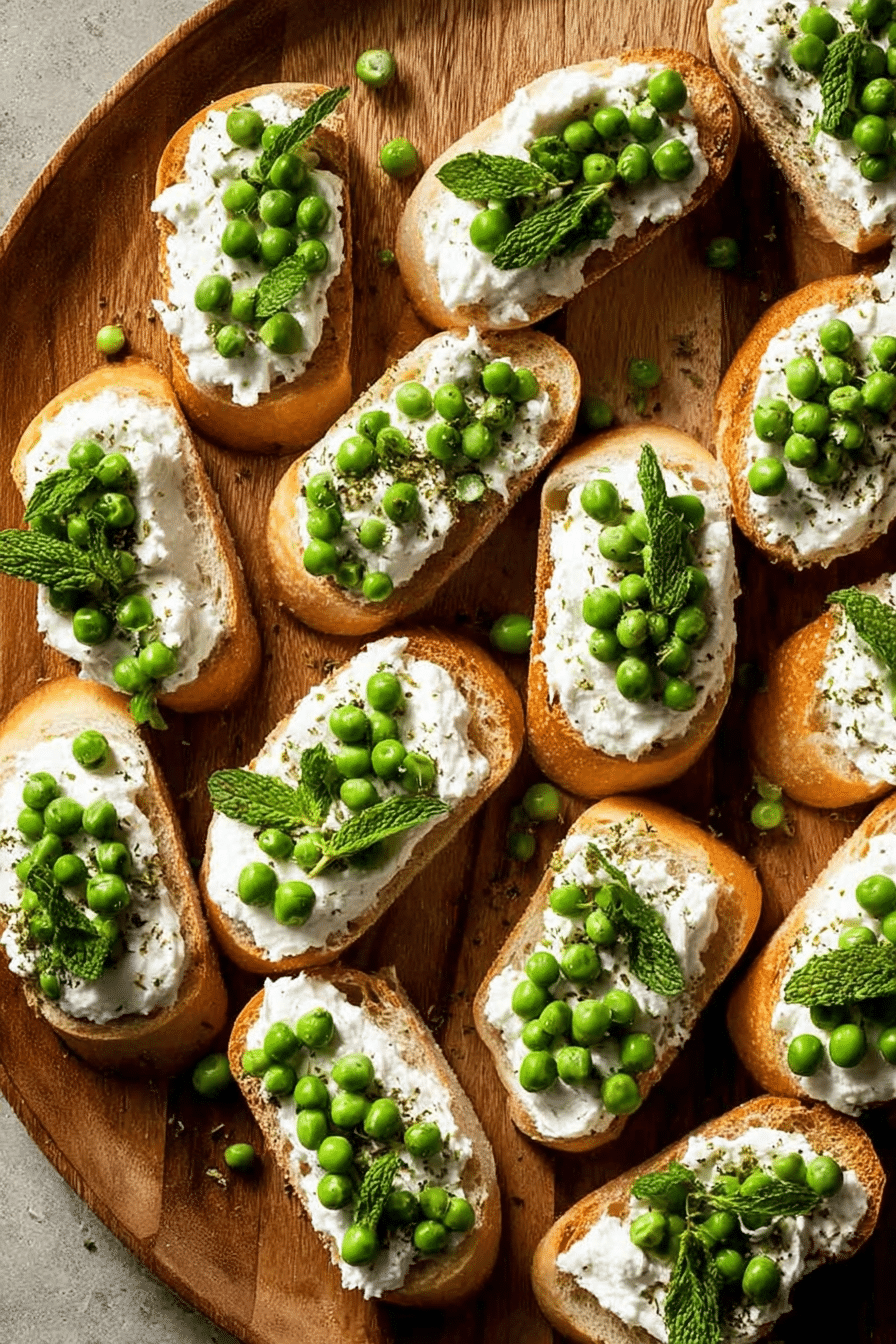
Since I often cook for a crowd, I keep the crostini assembly flexible: toast the bread early, whip the ricotta until silky, and blanch the peas so they stay vivid green. At serving time I spoon everything together and add a scattering of mint and a finishing salt — quick, attractive and low-stress. Guests always comment on the color alone; it looks like spring on a plate.
In my kitchen I treat this as a template: swap a few herbs, change the garnish, or make it vegan or gluten-free depending on who’s coming. Below I’ll walk you through my method, the small tricks that make the ricotta silken and the peas pop, and easy swaps so everyone can enjoy them.
Why this ricotta crostini with peas and mint is perfect for spring parties
This appetizer sings of spring: the bright green of peas and mint against snowy ricotta creates immediate visual appeal, and the flavors are light, fresh and approachable. For hosts, it’s a win because most of the work can be done ahead—toast the bread, prepare the ricotta, and blanch the peas so assembly takes only minutes. The result is a platter that looks intentionally seasonal without tying you to the stove while guests arrive.
When you bite one, you should notice three clear textures: the crisp crostini, the creamy ricotta, and the tender snap of peas. The aroma of fresh mint and a finishing drizzle of good olive oil make the dish feel polished. I avoid flowery language here: these crostini are simply bright, easy to scale, and they add a fresh focal point to any spread.
Everything You Need for Ricotta Crostini with Peas and Mint
- * Baguette – Your crunchy base; choose a day-old loaf for better toasting and less tearing when you spread the ricotta.
- * Olive oil – For brushing the bread and finishing the crostini with a glossy note.
- * Salt & pepper – To season both the ricotta and the peas; finishing salt like fleur de sel is a nice upgrade.
- * English peas (fresh or frozen) – Fresh gives the best snap and color, but frozen are a great convenience; cook briefly so they stay tender.
- * Garlic – A smashed clove sweeps through the sautéd peas for a background savory note; you can omit if you prefer a cleaner pea flavor.
- * Fresh ricotta – The star of the spread; look for whole-milk or a freshly made ricotta for a creamier texture.
- * Fresh mint – For bright herbal pops; tear large leaves so they sit nicely on each crostini.
- * Kitchen tools – A rimmed baking sheet for toasting, a pot for blanching peas, an ice bath container for shocking peas, and a small skillet for finishing them with garlic.
The Secret to Silky Ricotta Spread
- I always let the ricotta come to room temperature before working with it; cold ricotta is clumpy and resists whipping into a smooth spread.
- For a silky texture, whisk the ricotta vigorously with a drizzle of olive oil and a pinch of salt. If you want extra richness, fold in a spoonful of full-fat Greek yogurt or a splash of cream until it loosens into a spreadable consistency.
- If your ricotta is grainy, quickly process it in a blender or food processor with a little olive oil and lemon zest to brighten the flavor—this produces a smoother mouthfeel without thinning it too much.
- Choose a whole-milk or fresh artisan ricotta when possible; part-skim varieties can be dryer and need more smoothing additions.
How to Keep Peas Bright, Sweet and Tender
- Bring a pot of salted water to a rolling boil and add the peas for a very brief blanch—typically only a few minutes—so they cook through but stay firm.
- Immediately transfer the peas to an ice bath to halt cooking; this preserves their vibrant green color and sweet snap.
- Drain well before finishing in a skillet. Sauté the peas briefly with smashed garlic in olive oil over medium-high heat — just long enough for the garlic aroma to bloom and the peas to warm through without becoming mushy.
- If using frozen peas, treat them the same way but reduce the blanch time slightly and be sure to dry them well so they don’t water down the ricotta when plated.
Simple Garnishes That Make It Look Gourmet
- Small mint leaves or torn mint for a fresh, fragrant finish that also adds color contrast.
- A light drizzle of high-quality extra-virgin olive oil to add shine and roundness.
- Finishing salt such as fleur de sel or Maldon flakes to deliver a satisfying crunch and bright salt burst.
- Lemon zest for a citrusy lift, or a faint sprinkle of freshly cracked black pepper to give the dish a little bite.
- Edible flowers or microgreens for an elegant, seasonal touch when you want the platter to look extra special.
How to Make Ricotta Crostini with Peas and Mint (Step-by-Step)
- Preheat the oven and arrange your sliced baguette on a rimmed baking sheet. Brush or drizzle the slices with olive oil and season lightly with salt, then toast until crisp but not browned to keep the color light.
- Bring a pot of salted water to a boil, drop in the peas and blanch for a short time. Shock them in an ice bath, then drain thoroughly.
- Heat olive oil in a skillet over medium-high and sauté the drained peas with smashed garlic just until warmed and aromatic; keep them slightly firm.
- While the peas finish, work your ricotta to a spreadable consistency—whisk with a touch of olive oil, salt and lemon zest if you like.
- To assemble, spread a generous layer of ricotta on each crostini, top with a spoonful of peas, add a small mint leaf, finish with a pinch of sea salt and a grind of black pepper.
- For smaller gatherings, scale down the bread and peas accordingly; you can also prepare the ricotta and peas ahead and assemble only what you need right before serving.
Pro Tip for ricotta crostini with peas and mint: Easy Vegan & Gluten-Free Swaps
- Vegan ricotta substitute: use a cashew cream or a store-bought plant-based ricotta; blend until silky and add a squeeze of lemon and a pinch of salt to mimic dairy tang.
- Gluten-free base: swap in a sturdy gluten-free baguette or slice of toasted sourdough-style gluten-free bread; toast until crisp so it holds the topping.
- Maintain texture by keeping the vegan ricotta slightly thicker—strain a nut-based ricotta briefly on a fine mesh to firm it up if it’s too loose.
- Flavor balancing: if your swap loses some richness, add a touch more olive oil, lemon zest or a sprinkle of nutritional yeast to round the taste.
Troubleshooting
- Soggy crostini: toast the bread longer at a slightly lower temperature and let it cool completely; store toasted slices in a single layer to preserve crispness.
- Watery ricotta: drain the ricotta in a fine sieve for 15–30 minutes or briefly blitz it in a blender to restore texture.
- Bland peas: finish with a pinch of salt and a squeeze of lemon right before serving to brighten the flavor.
- Overcooked peas: if they go soft, quickly refresh with a splash of olive oil and lemon and use as a warm mash on the crostini instead of whole peas.
Variations
- Smoky option: add a small smear of whipped ricotta mixed with a touch of smoked paprika and top with peas for a hint of smokiness.
- Herby twist: swap mint for tarragon or basil for a different aromatic profile that still reads as spring.
- Crunch element: sprinkle toasted pine nuts or chopped pistachios over the top for texture and color contrast.
- Green puree base: blitz half the peas into a coarse puree with olive oil and lemon, spread that under the ricotta for a layered look.
How to Store, Make-Ahead and Serve Ricotta Crostini
Prepare components in advance to keep everything fresh: toast the baguette slices and store them in an airtight container at room temperature; make and chill the ricotta spread; blanch and cool the peas, then refrigerate them in a sealed container. Keep the toppings separate and assemble just before guests arrive so the crostini stay crisp.
For serving, arrange crostini on a large platter and garnish right before guests start to eat. If you want a light buffet pairing, complement your ricotta crostini with a cilantro lime pasta salad for a vibrant addition.
For a refreshing pairing, try serving our cilantro lime pasta salad alongside the crostini.
Another bright side to offer is a creamy cucumber salad; its coolness echoes the mint and keeps the spread feeling seasonal and refreshing.
For a refreshing pairing, try serving our creamy cucumber salad alongside the crostini.
Pairing Suggestions with Wines or Cocktails
A crisp, aromatic white like Sauvignon Blanc complements the herbaceous profile of peas and mint; its acidity cuts through the ricotta’s creaminess. If you prefer bubbles, a light sparkling wine or Prosecco adds celebratory notes without overpowering the delicate flavors. Rosé works well too when you want something a touch fruitier but still bright.
For cocktails, an Aperol Spritz is a great spring choice—its bitter-sweetness balances the dish. A simple gin and tonic with a slice of cucumber and a mint sprig echoes the crostini’s freshness. For non-alcoholic options, sparkling water with lemon and fresh mint keeps the palate clean and lively. If you want a light starter pairing, serve the crostini with a warm spring vegetable soup for a comforting match that still feels seasonal.
Flavor Enhancements: Additional Spices or Unique Garnishes
Brighten the crostini with lemon zest or a tiny pinch of chili flakes for gentle heat. Toasted nuts such as pistachios or pine nuts add crunch and color. For a sweeter angle, drizzle a few drops of honey over ricotta before adding peas—this is especially nice with ricotta whipped with a little lemon.
If you want to expand the plate into a small spring spread, add a side of sauteed spring vegetable salad to elevate your dish with fresh flavors.
Add a side of sauteed spring vegetable salad to elevate your dish with fresh flavors.
Frequently Asked Questions
Can I use frozen peas for this recipe?
Yes, you can definitely use frozen peas! Just make sure to cook them briefly to keep them bright and tender.
What can I substitute for ricotta cheese?
You can use cottage cheese or a vegan cream cheese for a dairy-free option. Just blend it until smooth to mimic the ricotta texture.
How do I store leftover crostini?
Store any leftover crostini in an airtight container in the fridge for up to two days. It’s best to keep the topping separate until you’re ready to serve.
Can I prepare this crostini ahead of time?
Yes, you can toast the baguette slices and prepare the ricotta and peas in advance. Just assemble them right before serving for the best flavor and texture.
What wine pairs well with ricotta crostini?
A crisp white wine, like Sauvignon Blanc or a light sparkling wine, pairs wonderfully with the fresh flavors of the crostini.
Ricotta Crostini with Peas and Mint
Ingredients
Method
- Preheat oven to 375 F. Place sliced baguette on a large baking sheet. Drizzle with 2 tablespoons olive oil, sprinkle with 1 teaspoon salt, and cook until crispy, about 7 minutes. Remove and set aside.
- In a pot, boil water with 1 tablespoon salt. Add peas and cook for 3 minutes. Drain and cool in an ice bath.
- In a skillet, heat 2 tablespoons olive oil over medium-high heat. Sauté peas with garlic for 3-4 minutes until firm.
- Layer crostini with ricotta, peas, and mint. Season with sea salt and black pepper. Serve at room temperature.