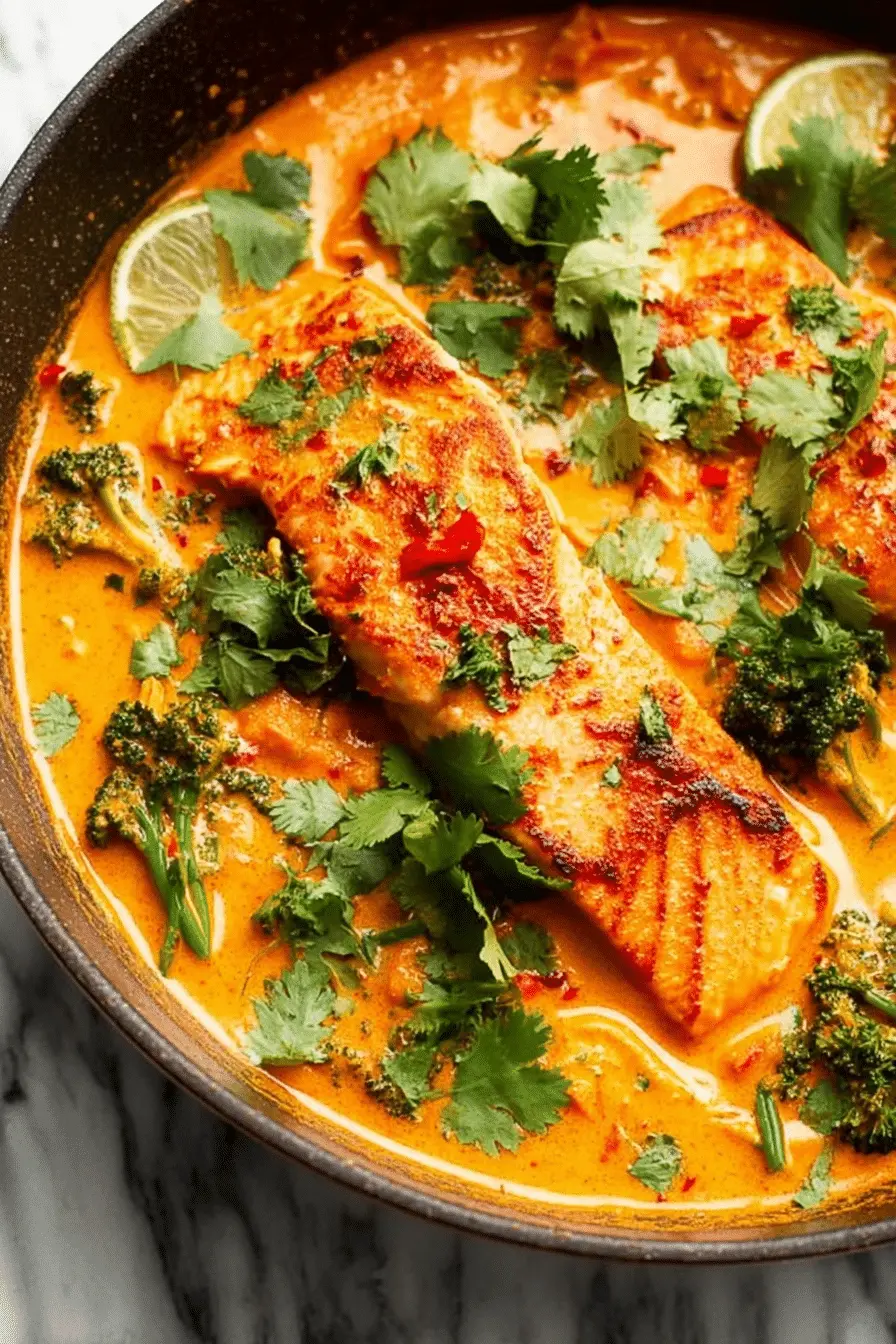
Delicious Salmon Coconut Curry: Easy Thai-Inspired Recipe in 30 Minutes
- Prep
- 15 min
- Cook
- 20 min
- Total
- 35 min
- Serves
- 4
- Calories
- 458 kcal
- Carbs
- 12.00 g
Introduction
I first made this salmon coconut curry on a blustery weeknight when I wanted something fast, warm, and worry-free. The kitchen filled with a heady mix of coconut and red curry paste as the fish finished in the sauce — it smelled tropical and comfortingly savory at the same time. This Thai-inspired salmon coconut curry pairs tender pan-seared salmon with a creamy, slightly tangy coconut milk sauce flavored with red curry paste, garlic, lime, and fresh herbs. It sits squarely between cozy and bright: rich from the coconut, aromatic from the curry paste, and fresh from basil and cilantro.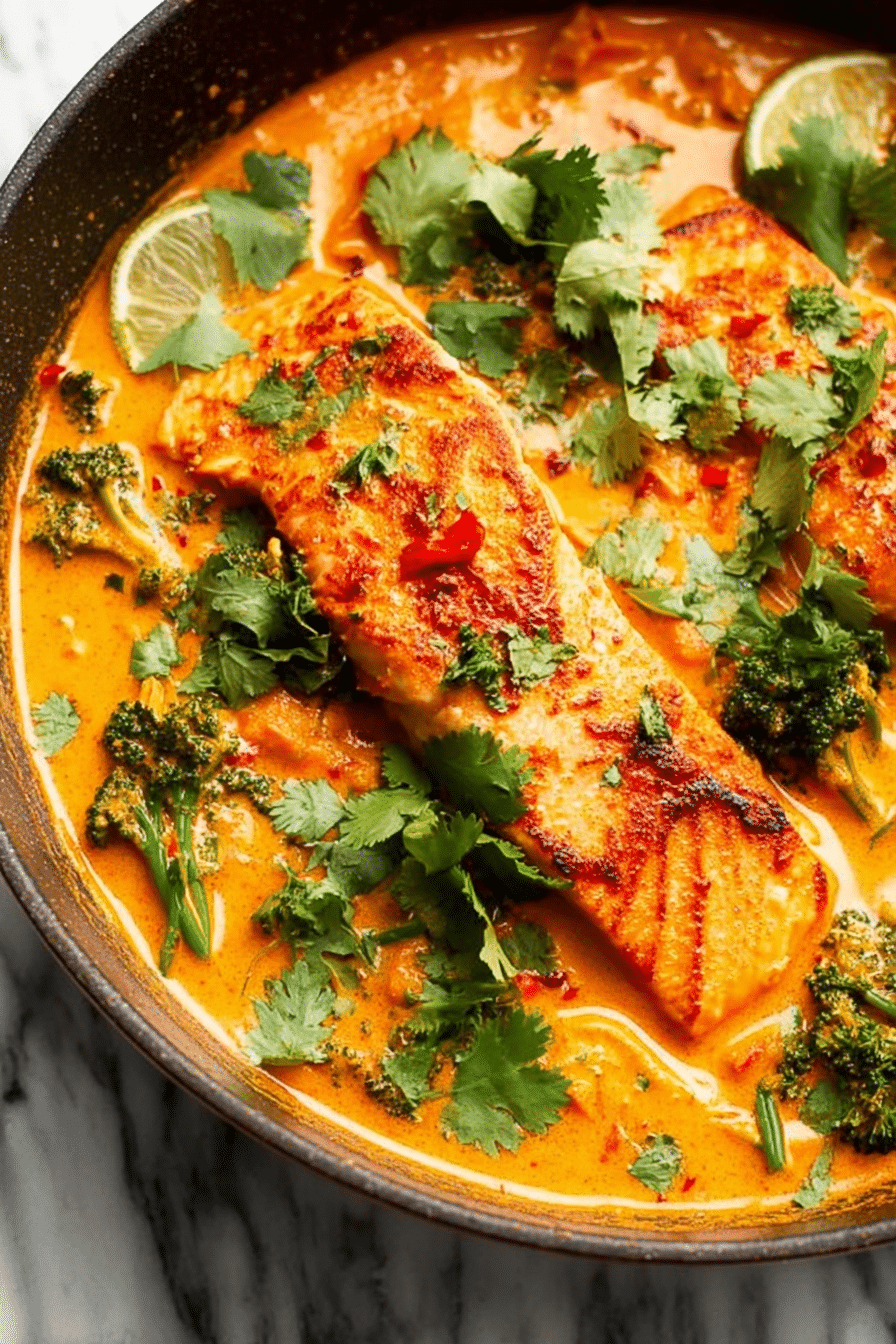
Ingredients for the Ultimate Curry
- Fresh salmon – the star: look for firm fillets with bright color; skin-on helps with searing and flavor, and sustainable choices matter.
- Thai red curry paste – the primary seasoning: it brings heat, aromatics, and depth; adjust amount to taste.
- Full-fat coconut milk – gives the sauce body and a silky mouthfeel; full-fat yields the creamiest texture and balances the spice.
- Garlic – a fragrant base note; softens and sweetens when sautéed briefly with the onion.
- Onion – builds savory complexity; cook until lightly browned to add sweetness and depth.
- Fish sauce – optional but recommended for umami; a little goes a long way — substitute tamari for a non-fish option.
- Lime – brightens the whole dish; a squeeze at the end lifts the flavors and cuts richness.
- Brown sugar – balances heat and acid; you only need a touch to round the flavors.
- Carrots and broccolini – add color, texture, and freshness; keep them tender-crisp to contrast the soft fish.
- Fresh basil and cilantro – finishing herbs: they give a fragrant, herbal lift that makes the curry feel finished.
- Olive oil and butter – a mix for searing: the oil tolerates heat and the butter adds flavor and browning.
Step-by-Step Cooking Instructions
Below is the method I use every time. I’ll note the small things I changed as I tested this recipe so you don’t have to learn them the hard way.- Prep the salmon: cut into four pieces, pat very dry, and season both sides with salt and pepper. Dryness matters here — if the salmon is wet it won’t sear properly. I pat mine with paper towels and let it sit for a couple of minutes while I chop the veg.
- Heat the pan: add a drizzle of olive oil and a small knob of butter to a skillet over medium-high heat. Let the pan get hot for a few minutes so the salmon starts to sizzle immediately when it hits the surface.
- Sear the salmon: cook skin-side down first for about 5 minutes. You want a good sear and you’ll feel the fillet release naturally when the skin is properly crisped — if it’s sticking, it’s not ready yet. Flip and cook another 2–3 minutes; the salmon should be almost done at this point (it will finish in the curry). If you’re worried about overcooking, take it off the heat a little early; residual heat and the sauce will finish the job.
- Remove the fish: transfer the salmon to a plate. If you don’t want the skin, slide it off now — it’s easy after searing.
- Clear the pan a bit: spoon out most of the oil leaving about a tablespoon to cook the aromatics. This keeps the sauce from becoming greasy and lets the curry paste bloom correctly.
- Sauté the aromatics: add the chopped onion and cook for about 3 minutes until it’s lightly brown and fragrant. Stir in minced garlic and two heaping tablespoons of red curry paste and cook for about 1 minute — you’ll smell the paste bloom and the aroma will shift from sharp to warm and savory.
- Add liquids and veg: pour in the coconut milk, stir in a splash of fish sauce (optional but recommended for depth), and add a pinch of brown sugar. Toss in the matchstick carrots and chopped broccolini. Bring everything to a gentle bubble and let it simmer for about 5 minutes — the veg should be tender-crisp and the sauce should thicken slightly and become glossy. If the sauce looks too thin at first, keep it at a gentle simmer; it will reduce and coat the spoon in a minute or two.
- Finish the curry: stir in a teaspoon of lime juice, nestle the salmon back into the pan, and let it warm through for a couple of minutes. Taste and adjust salt and pepper. Sprinkle torn basil and chopped cilantro over the top just before serving.
Nutritional Benefits of Salmon and Coconut Milk
There’s real nutrition behind this comfort food. Salmon is an excellent source of high-quality protein and omega-3 fatty acids — those healthy fats that support heart and brain health. A typical serving of salmon provides a substantial portion of the recommended daily intake of omega-3s and is also rich in vitamin D and B vitamins. Coconut milk brings medium-chain triglycerides (MCTs) — a form of saturated fat that's metabolized differently than long-chain fats — and it adds calories and satiety, which can be helpful if you want a filling meal. Coconut milk also contains some micronutrients and lends a creamy texture that helps make spices more approachable. Together, salmon and coconut milk make a satisfying, nutrient-dense main that balances protein, healthy fats, and a modest amount of carbohydrates from the veggies.Dietary Adaptations and Variations
This recipe is flexible. Here are adaptations I’ve tested (and used) in my kitchen:- Keto / low-carb – skip the carrots, use more broccolini, and serve over cauliflower rice to keep carbs very low.
- Gluten-free – use tamari or gluten-free soy sauce instead of any soy-based additives; the original recipe is already largely gluten-free if you check your curry paste.
- Vegetarian / vegan – substitute firm tofu or tempeh for salmon and use mushroom seasoning or a kelp-based liquid in place of fish sauce to add umami.
- Other proteins – shrimp works beautifully and cooks even faster; add it at the very end and simmer until just opaque. For a heartier twist, try chunks of cod or halibut.
- Spice adjustments – reduce the red curry paste by half for milder heat, or add more for a kick. Extra coconut milk or a pinch of sugar will tame the heat, while lime brightens and sharpens the flavors.
Cooking Tips for Beginners
Here are the lessons I picked up after testing this recipe a dozen times. They’ll save you from the most common mistakes:- Dry the fish well – moisture on the surface prevents good searing. Pat and let it sit for a moment while you heat the pan.
- Don’t crowd the pan – sear in a single layer so each piece gets a blistered skin and even browning.
- Let the salmon release – if it’s sticking, it usually means it isn’t ready; give it a bit more time and it will let go naturally.
- Bloom the curry paste – cooking the paste briefly with oil unlocks its aroma; you’ll smell it shift from sharp to warm. Don’t skip this step.
- Taste as you go – acid, salt, heat, and sweetness should be balanced. If it tastes flat, add a pinch of salt rather than sugar first.
- Finish gently – after adding the salmon back to the pan, heat only until warmed through so the fish doesn’t flake apart.
Sustainability of Ingredients Used
Choosing sustainable ingredients matters. For salmon, look for responsibly farmed or wild-caught options with certifications such as MSC for wild seafood or recognized responsible aquaculture labels. Sustainable salmon not only supports healthy oceans but also tends to be higher quality and more flavorful. For coconut products, buy brands that prioritize ethical sourcing if you can. Fair-trade coconut products and companies that disclose sourcing practices help ensure producers are treated fairly. Small choices like these reduce environmental impact and support better supply chains. When buying curry paste, check the label for additives and allergens, and pick brands that are transparent about sourcing. Fresh herbs, local produce, and seasonal vegetables also reduce transport footprint and often taste better.Serving Suggestions and Pairings
This curry is a flexible main. I usually serve it over steaming jasmine rice so the fragrant grains soak up the sauce, but it’s equally good over quinoa or cauliflower rice for a lighter meal. The herbs and lime zest on top make it pop visually and flavor-wise. For a fragrant side, try our cilantro lime rice alongside salmon coconut curry for a bright, zesty contrast. Pairings I love:- Jasmine rice – soft, fragrant, and perfect for sopping up sauce.
- Cauliflower rice – keeps it low-carb and lets the curry shine.
- Light vegetable stir-fry – quick sautéed greens or snap peas for crunch.
- Refreshing drink – a limey soda, cold lager, or a light white wine. For a non-alcoholic echo of the curry’s tropical notes, pair with a pineapple coconut smoothie.
Conclusion and Call to Action
Salmon coconut curry is one of those dishes that’s forgiving, fast, and full of flavor — great for busy nights and small dinner gatherings alike. You’ll get creamy coconut, aromatic curry paste, bright lime, and flaky salmon all in one skillet. Try it as written, then make it your own by adjusting the heat, swapping proteins, or changing the sides. If you make this, I’d love to hear how it turned out — did you keep the skin on, or go tofu for a vegetarian twist? Share your experience or adaptations in the comments. If you post a photo, tag me so I can see your version and leave a tip or two. Happy cooking — and remember: let the salmon rest briefly after cooking, taste for salt before serving, and don’t be afraid to tweak the spice until it feels right for you.Recipe Card
Delicious Salmon Coconut Curry: Easy Thai-Inspired Recipe in 30 Minutes
- Prep
- 15 min
- Cook
- 20 min
- Total
- 35 min
- Serves
- 4
- Calories
- 458 kcal
- Carbs
- 12.00 g
Ingredients
- 1 poundfresh salmon
- —Salt & pepper (to taste)
- 1 tablespoonolive oil
- 1 tablespoonbutter
- 1/2 mediumonion (chopped)
- 2 clovesgarlic (minced)
- 2 tablespoonsThai red curry paste
- 1/2 teaspoonfish sauce (optional)
- 1 canfull-fat coconut milk (13.5 ounces)
- 1/2 teaspoonbrown sugar
- 1/2 cupmatchstick cut carrots
- 1 heaping cupchopped broccolini
- 1 teaspoonlime juice
- 2 tablespoonstorn/chopped fresh basil
- 2 tablespoonschopped fresh cilantro
Instructions
- 1
Cut the salmon into 4 equal pieces. Pat both sides dry with paper towel and season with salt & pepper.
- 2
Add the oil and butter to a skillet over medium-high heat. Let the pan heat up for a few minutes.
- 3
Cook the salmon, skin-side down, for 5 minutes. Flip it and cook for another 2-3 minutes.
- 4
Take the salmon out of the pan and transfer it to a plate.
- 5
Spoon some of the oil out of the skillet so you have about a tablespoon of it left in there.
- 6
Add the onion to the skillet and sauté for about 3 minutes, then stir in the garlic and curry paste and cook for 1 minute.
- 7
Add in the fish sauce, coconut milk, sugar, carrots, and broccolini. Let it gently bubble for about 5 minutes.
- 8
Stir in the lime juice, then add the fish back to the pan. Let it warm through for a couple of minutes. Season with more salt & pepper as needed.
- 9
Sprinkle with the basil and cilantro and serve immediately.
You might also like

Reviews
Be the first to review this.