The One-Pan Sheet Pan Sesame Chicken I Make Every Week
- Prep
- 15 min
- Cook
- 45 min
- Total
- 60 min
- Serves
- 4
- Calories
- 495 kcal
- Carbs
- 26.10 g
Introduction
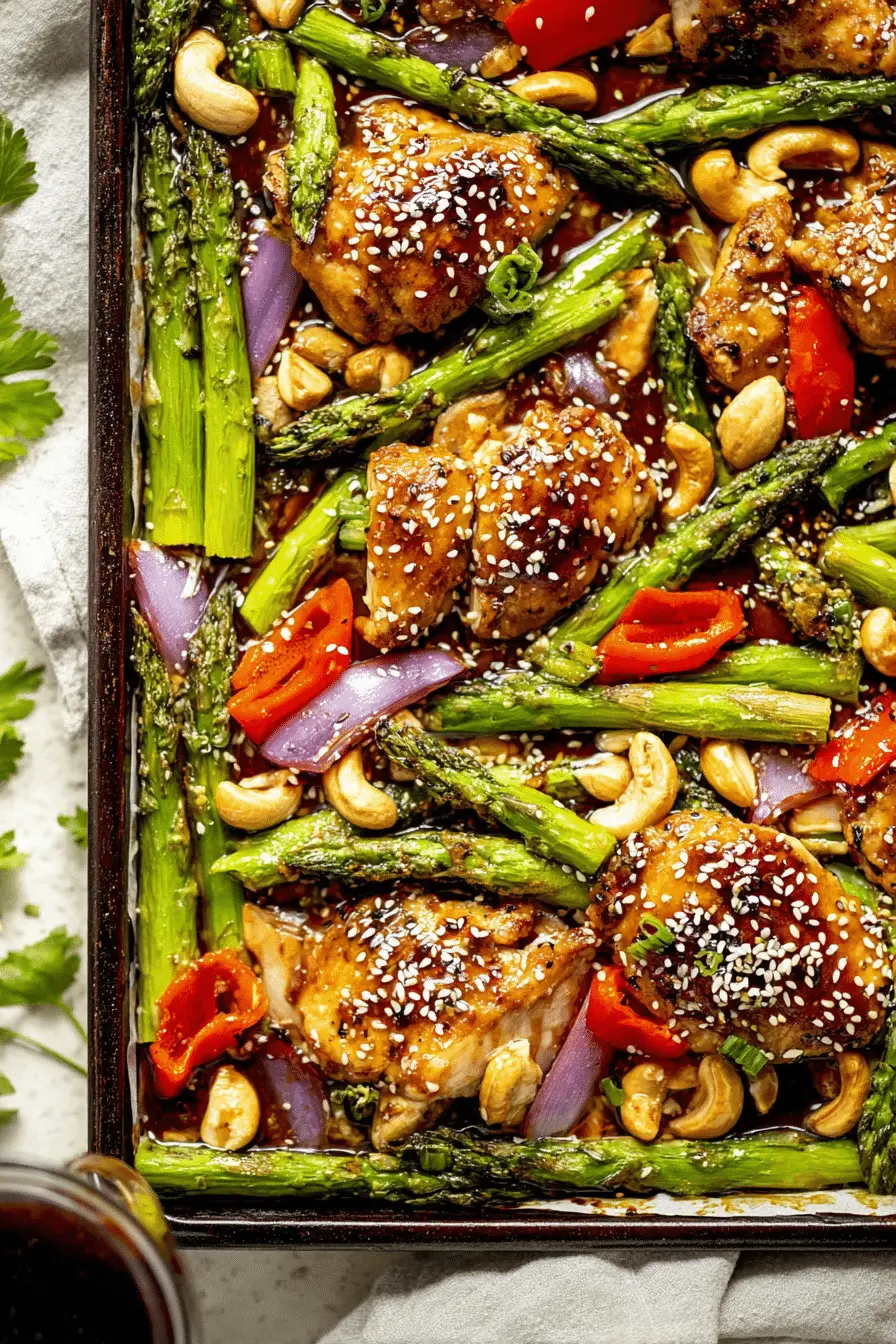
I pull this sheet pan sesame chicken out when the week hits full speed and I need dinner that’s fast, flavorful, and low-fuss. I love how the sesame sauce fills the kitchen with warm, toasty aromatics while the pan does all the work — you get juicy chicken, slightly charred vegetables, and a handful of roasted cashews with almost no babysitting required.
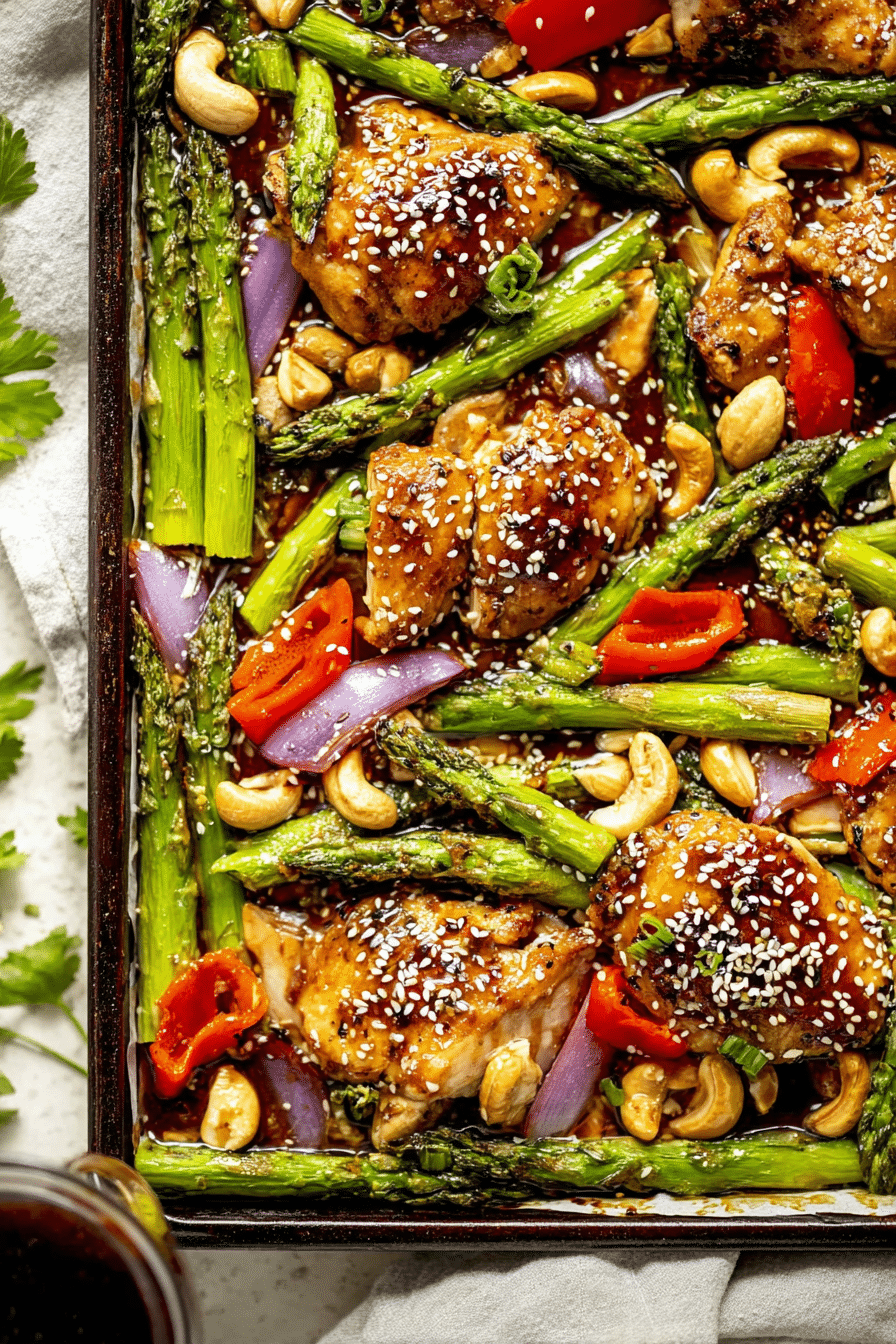
I usually prep the sauce first so the ginger and garlic have a moment to shine, then let the chicken sit in half of that sauce while the oven heats. The result is glossy, savory bites with a gentle sweet heat and a pop of herb freshness on top. It’s the kind of dinner that stretches across lunches the next day, too.
Over the years I’ve tuned the timings and small techniques so you get tender thighs with crisped edges and vegetables that keep a snappy bite. Below I walk through what you need, why each part matters, and clear, scannable tips so you can get this on the table quickly and confidently.
Why this Sheet Pan Sesame Chicken is perfect for busy weeknights
This recipe uses minimal equipment and common pantry ingredients so cleanup is fast and grocery runs are simple. The one-pan approach concentrates flavor: juices from the chicken mingle with the sesame sauce and roast into the vegetables, giving every bite savory-sweet depth without extra steps. It’s also balanced — protein-forward from the chicken, vegetables for fiber and color, and healthy fats from sesame oil and cashews.
Visually, the dish is bright and appealing: green asparagus, ruby bell pepper, and golden-browned chicken make for an inviting plate. The aroma — nutty sesame, fresh ginger, and garlic — signals dinner is ready even before you open the oven.
Everything You Need for Sheet Pan Sesame Chicken
- Chicken thighs – Best for juiciness and forgiving cooking; they tolerate high oven heat without drying out. You can swap for breasts if you prefer, but watch cooking time.
- Asparagus – Roasts quickly and keeps a pleasant bite. Broccoli or snap peas are good swaps.
- Red bell pepper – Adds sweetness, color, and contrast; any bell pepper works.
- Red onion – Gives savory-sweet depth and caramelizes nicely; shallots are a softer option.
- Raw cashews – Roast on the pan for crunch; use almonds if preferred or omit for nut-free.
- Soy sauce (low-sodium) – The salty backbone of the sauce; choose tamari for gluten-free.
- Honey – Balances salt and heat with gentle sweetness; swap maple syrup for a different sweetness profile.
- Toasted sesame oil – Delivers that characteristic nutty aroma; a small amount goes a long way.
- Rice vinegar – Brightens the sauce and cuts richness; use any mild vinegar if needed.
- Sambal olek – Adds controlled heat; you can reduce or omit depending on heat tolerance.
- Fresh ginger and garlic – Grated for maximum aroma and integration into the sauce.
- Basic cookware – A large rimmed sheet pan, parchment or a light coating of oil, and tongs. Nothing fancy required.
How the Sesame Sauce Builds Big Flavor Fast
Each component in the sauce plays a clear role. Soy sauce brings savory umami; honey provides a glossy counterpoint that caramelizes in the oven; rice vinegar adds bright acidity that prevents the dish from tasting heavy. Toasted sesame oil gives a toasty aroma — add it at the right time (in the sauce, not as the sole cooking fat) so it remains fragrant.
To deepen flavor quickly: grate fresh ginger and garlic finely so they disperse, briefly whisk the sauce so honey dissolves, and marinate the chicken in half the sauce so the surface picks up flavor without over-saturating. If you want an even more concentrated glaze, reserve some sauce and simmer it briefly on the stove to thicken before serving.
The Secret to Tender Chicken with Crispy Edges
Several small techniques make a big difference. Pat the chicken dry before you marinate so it browns; give the chicken a short solo roast before adding vegetables so the surface can begin to caramelize undisturbed. High oven heat encourages Maillard browning and those crisp edges while keeping the interior juicy — thighs tolerate this better than breasts.
Spacing matters: crowding the pan creates steam and softens edges. Aim for a single layer so hot air can circulate and the chicken and vegetables roast rather than steam. I also like to add cashews in the last stage so they toast but don’t burn.
How to Make Sheet Pan Sesame Chicken (Step-by-Step)
- Preheat your oven thoroughly so the pan enters a hot environment for immediate searing.
- Whisk the sesame sauce components together until smooth; set half aside for finishing the dish later.
- Place the chicken and vegetables in a large bowl and toss with half the sauce so the surfaces are well coated; let sit briefly while the oven heats.
- Transfer only the chicken to the prepared sheet pan in a single layer and roast until the exterior starts to brown and the internal temperature is near done.
- Remove the pan, arrange the vegetables between the chicken pieces without crowding, and scatter raw cashews on top.
- Return the pan to the oven and roast until the chicken is fully cooked and vegetables are tender with a slight bite; cashews should be golden.
- Serve over rice or noodles with a spoonful of the reserved sauce and a scattering of fresh herbs, scallions, and sesame seeds.
Pro Tip for sheet pan sesame chicken: timing that saves 10+ minutes
Pro-Tips, Troubleshooting, and Variations are presented as bulleted lists for scannability.
- Prep at once: Trim and chop your vegetables while the sauce comes together so you can toss and roast immediately.
- Marinate ahead: If you have 20–30 minutes, let the chicken sit in the sauce; if pressed for time, 5–10 minutes still helps.
- Stagger cooking: Roast chicken first, then add quicker-cooking vegetables to finish in one pan without overcooking anything.
- Double batch: Make extra sauce and double the pan for meal prep — it refrigerates and freezes well.
- Shortcut: Use pre-cut vegetables or a bag of trimmed asparagus to shave prep time.
What to Serve With It (Rice, Noodles & Sides)
For a classic pairing, serve this sheet pan sesame chicken over fluffy jasmine or steamed rice to catch the sauce. For a lighter option, rice noodles or a bed of greens work beautifully. For a sweet-savory complement, consider pairing your Sheet Pan Sesame Chicken with our honey garlic chicken.
Another great match is cilantro-lime rice, which adds brightness and lifts the sesame flavors — it’s an easy side that complements the dish perfectly: cilantro lime rice. Add quick sides like a cucumber salad, steamed edamame, or a simple shredded carrot slaw to increase crunch and color.
How to Store, Reheat and Meal-Prep Sheet Pan Sesame Chicken
Store leftovers in airtight containers in the refrigerator for 3–4 days. For longer storage, portion into freezer-safe containers and freeze for up to 2 months. When reheating, use methods that preserve texture: a hot oven or skillet will bring back crisp edges; the microwave is fine for quick reheats if you don’t mind softer edges.
Learn essential tips on how to store and reheat your leftovers for maximum freshness.
- Oven: Reheat at a moderate temperature on a baking sheet until warmed through to revive crispness.
- Skillet: Slice and toss in a hot skillet for a few minutes to re-crisp the edges and toast the sauce.
- Microwave: Cover loosely and heat in short bursts to avoid overheating the chicken.
- Meal-prep tip: Portion into single-meal containers with rice and a small herb packet so you can reheat a balanced meal quickly.
Nutrition and Health Benefits
This sheet pan sesame chicken is protein-forward — the recipe delivers roughly 40.7 grams of protein per serving, making it a filling option for active weeks. The vegetables contribute fiber and micronutrients, while sesame oil and cashews add heart-healthy fats. Choosing low-sodium soy sauce and moderate honey keeps sodium and added sugars in check.
Per serving estimates: about 495 kcal, 26.2 g fat, 26.1 g carbohydrates, and 40.7 g protein. If you’d like a lighter plate, increase the vegetables and serve over greens or cauliflower rice. For a sweet finish after a savory meal like this, try our creamiest rice pudding to balance flavors.
Troubleshooting
- If the chicken is dry, I recommend switching to thighs (if you used breasts) or reducing oven time and checking internal temperature earlier.
- If vegetables are soggy, I’ve found that cutting them larger and adding them later in the bake preserves texture.
- If the sauce tastes too salty, I dilute reserved sauce with a splash of water and a squeeze of rice vinegar to brighten it.
- If cashews brown too fast, add them in the final minutes of roasting or toast them separately in a skillet.
- If the glaze is too thin, simmer the reserved sauce briefly on the stove to concentrate it before drizzling over the finished dish.
Variations
- Chicken breasts: Use if you prefer white meat — adjust cooking time and watch closely to avoid overcooking.
- Vegetarian swap: Replace chicken with firm tofu, pressed and roasted; increase oven time slightly and finish with the reserved sauce.
- Nut-free: Omit cashews and add roasted chickpeas or seeds for crunch.
- Spice level: Reduce or omit sambal olek for mild heat, or add a splash of chili oil for extra kick.
- Gluten-free: Use tamari in place of soy sauce and ensure other condiments are certified gluten-free.
Frequently Asked Questions
Can I use chicken breasts instead of thighs?
Yes, you can use boneless skinless chicken breasts instead of thighs, but keep in mind that thighs tend to be juicier and more flavorful.
What vegetables can I substitute in this recipe?
Feel free to swap in your favorite vegetables such as broccoli, carrots, or snap peas to suit your taste.
How do I store leftovers?
Store any leftovers in an airtight container in the refrigerator for up to 3-4 days. You can also freeze them for longer storage.
Can I make the sauce ahead of time?
Absolutely! You can prepare the sesame sauce up to a week in advance and store it in the fridge.
How spicy is this dish?
The heat level can be adjusted by using less sambal olek in the sauce. Start with 1 tablespoon if you're cautious with spice!
Recipe Card
The One-Pan Sheet Pan Sesame Chicken I Make Every Week
- Prep
- 15 min
- Cook
- 45 min
- Total
- 60 min
- Serves
- 4
- Calories
- 495 kcal
- Carbs
- 26.10 g
Ingredients
- ¼ cupLow-sodium soy sauce
- 3 tablespoonsHoney
- 2 tablespoonsRice vinegar
- 2 tablespoonsToasted sesame oil
- 1 tablespoonExtra-virgin olive oil or avocado oil
- 1 to 2 tablespoonsSambal olek
- 1 tablespoonGrated fresh ginger
- 2Garlic cloves, minced or grated
- 1 ½ poundsBoneless skinless chicken thighs
- 1 bunchAsparagus, ends trimmed
- 1Red bell pepper, cut into 1-inch chunks
- 1Red onion, cut into 1-inch chunks or sliced
- ½ cupRaw cashews
- ¼ cupFresh torn leafy herbs
- 2Scallions, thinly sliced
- 1 tablespoonToasted sesame seeds
Instructions
- 1
Preheat the oven to 425 degrees F. Line a large baking sheet with parchment paper and set aside.
- 2
In a medium bowl, whisk together the soy sauce, honey, rice vinegar, sesame oil, olive oil, sambal olek, ginger and garlic.
- 3
In an extra large bowl, add the chicken and veggies and pour HALF of the sesame ginger sauce over the chicken. Toss to coat and marinate.
- 4
Remove ONLY the chicken from the bowl and transfer to the prepared pan. Bake for 15 minutes.
- 5
Transfer the vegetables to the pan in between the chicken. Sprinkle cashews over and bake for an additional 12 to 15 minutes.
- 6
Serve with a scoop of rice and top with chicken, veggies, and reserved sauce. Garnish with fresh herbs and sesame seeds.
You might also like


Reviews
Be the first to review this.