

I make this pasta all through spring when dill is at its best. In my kitchen the combination of fresh dill, tart lemon zest, and warm, caramelized cherry tomatoes feels like the season on a plate. It’s the kind of weeknight dinner I rely on when I want something that tastes fresh but doesn’t take all evening to pull together.
I first roast the tomatoes until they pop and brown at the edges — that sweet, garlicky aroma fills the house and makes everything else fall into place. While they roast, I blitz a bright dill-pistachio pesto and sauté some broccoli; everything comes together quickly, and the shrimp cooks in minutes just before serving.
I like that this dish is flexible: you can skip the shrimp for a vegetarian meal, swap pasta shapes, or make the pesto a day ahead. The flavors—herbaceous dill, lemon, roasted garlic, and a touch of salty cheese—feel light but full-flavored, which is exactly what I want on a busy spring evening.
Why This Shrimp Pasta with Dill Pesto is Perfect for Spring
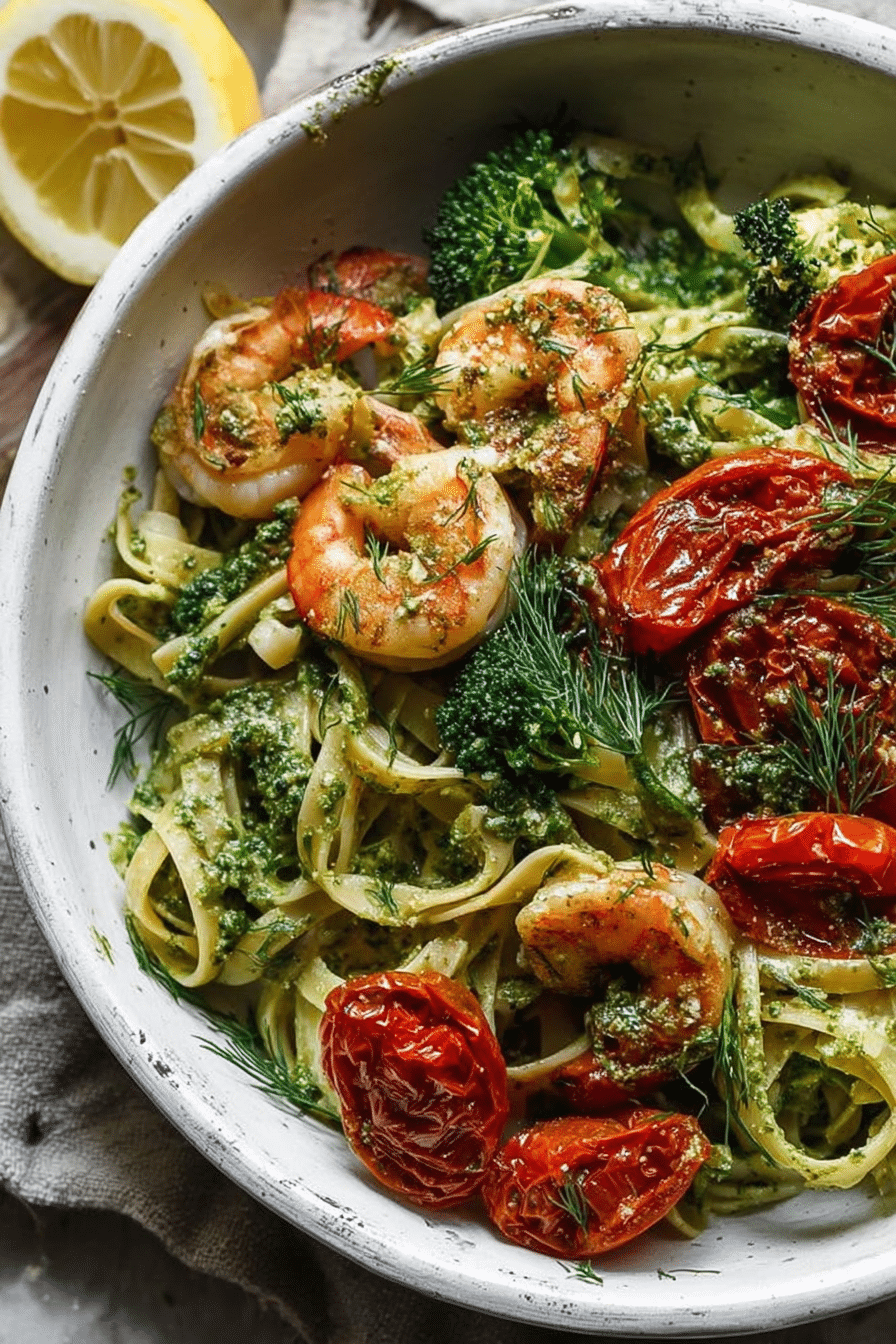
This dish leans on seasonal brightness. Fresh herbs and lemon lighten the richness of the pasta while broccoli and roasted tomatoes add texture and color. When the air warms up I prefer meals that taste vibrant rather than heavy—this hits that mark with herbaceous pesto, sweet roasted tomatoes, and quick-cooking shrimp. The aroma of garlic roasting and warm citrus is immediate and inviting; visually you’ll get vivid green pesto contrasted with ruby tomatoes and pink shrimp.
Everything You Need for Shrimp Pasta with Dill Pesto
- Dill – The star herb here; use fresh dill for its bright, slightly grassy flavor. Dried dill won’t give the same lift.
- Flat-leaf parsley – Balances the dill and adds a clean, herbal backbone if you want to stretch the herb flavor.
- Pistachios (roasted, salted) – Adds richness and a buttery texture to the pesto; toasted almonds or walnuts can stand in if needed.
- Parmesan – Brings saltiness and umami; choose a real, aged cheese for the best flavor.
- Olive oil (extra virgin) – Use a good-quality oil for the pesto and finishing; it makes a noticeable difference in mouthfeel and brightness.
- Grape or cherry tomatoes – Small tomatoes roast and caramelize quickly; their burst texture is key to the sauce’s sweetness.
- Shrimp – Large shrimp are quick to cook and pair well with lemon-garlic seasoning; frozen works fine if thawed completely first.
- Pasta – Wider noodles like pappardelle or fettuccine hold onto the pesto well; thinner strands will make the dish feel lighter. Choose a shape you enjoy.
- Broccoli – Small florets sauté quickly and add a tender-crisp bite to contrast the soft pasta and shrimp.
- Garlic and lemon – These brighten and deepen every component; use fresh garlic for roasting and fresh lemon for the pesto and shrimp.
How to Make Shrimp Pasta with Dill Pesto (Step-by-Step)
- Prep the tomatoes: toss small tomatoes and whole smashed garlic with olive oil, salt, and pepper, then roast until they’re burst and slightly caramelized—this concentrates their sweetness and adds savory depth.
- Marinate the shrimp briefly with lemon zest, a small amount of garlic, oil, and salt so the shrimp picks up flavor without becoming overwhelmed.
- Make the dill-pistachio pesto in a food processor by pulsing the herbs, nuts, garlic, lemon, and cheese, then streaming in olive oil until smooth. Taste and season; fresh herbs should read bright and lemony.
- Bring salted water to a boil and cook your chosen pasta until al dente so it has a little bite and holds sauce well. Reserve a bit of the pasta cooking water before draining to loosen the pesto if needed.
- Sauté sliced garlic in olive oil until golden, add broccoli florets, and cook until tender-crisp—season while cooking. The garlic should brown lightly and become almost chip-like for texture and flavor.
- Cook the shrimp in a hot skillet for about two minutes per side (adjust for size) until opaque and just firm; don’t let them curl into a tight “o” or they’re likely overcooked.
- Toss hot pasta with dill pesto, roasted tomatoes (discard the whole roasted garlic or mash it into the sauce if you like), broccoli, and shrimp. Add reserved pasta water a splash at a time if the sauce needs loosening, then finish with extra dill, lemon wedges, and grated cheese to serve.
The Secret to Flavorful Roasted Tomatoes
Roasting transforms simple tomatoes into a concentrated, caramelized component that tastes savory and sweet. A few key points make the difference:
- High, steady heat encourages the Maillard-like browning on the tomato skins and sugars, creating deeper flavor and aroma—aim for color at the edges without burning.
- Don’t overcrowd the pan; give tomatoes room so they roast instead of steaming. When they shrink and wrinkle, the sugars have concentrated.
- A little garlic roasted alongside the tomatoes softens and mellows; you can discard the cloves or mash them into the sauce for extra richness.
- Roasted tomatoes are versatile—use extras in salads, on toast, or blended into a quick sauce for other weeknight meals.
Why Fresh Herbs Make All the Difference
Fresh herbs change both flavor and nutrition in a way dried simply can’t match. Fresh dill and parsley add volatile aromatics that brighten the pesto and lift the whole dish; they also contain vitamins and antioxidants that dried herbs lack in potency. For storage, wrap herbs loosely in a damp paper towel and keep them in a sealed bag in the fridge to preserve their color and aroma. If you grow a small pot of dill, use the feathery fronds within days for the best scent and flavor.
How to Achieve the Best Cooked Shrimp
- Choose shrimp size with cooking time in mind: larger shrimp need slightly more heat and time, while small shrimp cook almost instantly—plan your timing accordingly.
- Marinate briefly; acid and salt will flavor shrimp quickly, but a long sit can make them mealy. A short rest while you prep the rest of the meal is enough.
- Cook shrimp in a single hot layer so they sear quickly—about two minutes per side for large shrimp is typical. Watch the color change: when they turn opaque and form a gentle “C” shape, they’re done. Tight curls signal overcook.
- If you’re reheating cooked shrimp, do so gently and briefly to avoid rubberiness—low heat and a splash of liquid helps maintain tenderness.
Pro-Tip for Making Shrimp Pasta with Dill Pesto
- I often make the pesto a day ahead; it tastes even brighter after a short rest and saves hands-on time the night you cook.
- Reserve some pasta cooking water—starchy water helps the pesto cling to noodles and creates a silky sauce without adding cream.
- If you want more texture, stir a handful of toasted pistachios into the finished dish for crunch.
- To speed prep, buy peeled and deveined shrimp and use pre-washed herb bunches; I’ll chop extra herbs for garnish while the pasta cooks.
- Adjust salt gradually—between pesto, cheese, and any salted nuts, the dish can become too salty if you season everything heavily up front.
Troubleshooting
- Pesto tastes thin or flat: I’d add a pinch more salt, a squeeze more lemon, or a few more nuts for body, then pulse again.
- Tomatoes didn’t caramelize: spread them farther apart on the sheet and increase oven temperature slightly so they brown instead of steam.
- Shrimp turned rubbery: I’ve overcooked them—next time I’ll pull them off the heat sooner; they continue to cook a bit from carryover heat.
- Sauce is clumpy or won’t coat the pasta: stir in reserved pasta water a tablespoon at a time until you reach a smooth, glossy consistency.
Storage Tips for Leftover Pasta
Store components separately when possible to preserve texture: keep leftover pesto and roasted tomatoes in sealed containers, and store shrimp in a shallow airtight container in the fridge. Pasta mixed with the sauce can be refrigerated, but it will firm up; loosen with a splash of water or olive oil when reheating. Seafood should be eaten within a couple of days for best quality—reheat gently on the stovetop until just warmed through to avoid overcooking the shrimp.
Dietary Variations for Shrimp Pasta Lovers
- Gluten-free – Use a gluten-free pasta and cook to al dente to avoid a gummy texture; check the package for timing adjustments.
- Vegetarian – Skip the shrimp and add chickpeas or extra roasted vegetables for protein and heartiness.
- Low-calorie – Reduce oil in the pesto slightly and bulk the plate with extra broccoli or greens to keep the meal satisfying without extra calories.
- Dairy-free – Omit the Parmesan and add a few more nuts or a spoonful of nutritional yeast for a savory kick.
Serve this pasta straight away with lemon wedges and extra chopped dill; the contrast of warm roasted tomatoes, fragrant herb pesto, and bright shrimp is at its best when fresh. If you have leftovers, follow the storage tips above so they stay as close to that first-night texture as possible.
Frequently Asked Questions
Can I use frozen shrimp for this recipe? Absolutely! Just make sure to thaw them thoroughly before marinating and cooking for the best results.
What type of pasta works best for this dish? Pappardelle, fettuccine, or mafaldine are great choices, but feel free to use any pasta you enjoy!
Can I make this dish vegetarian? Yes! You can easily skip the shrimp and add more vegetables or even some chickpeas for protein.
How should I store leftovers? Store any leftovers in an airtight container in the fridge for up to 3 days. Reheat gently on the stovetop or in the microwave.
What can I use instead of dill in the pesto? If you don’t have dill, you can substitute it with fresh basil or a mix of herbs for a different flavor profile.
Shrimp Pasta with Dill Pesto and Garlic Roasted Tomatoes
Ingredients
Method
- Preheat oven to 400℉. Line a baking sheet with parchment paper. Toss tomatoes and garlic with olive oil, salt, and pepper, then roast for 15-20 minutes.3 cloves garlic, smashed, 2 tablespoons olive oil, 1/4 teaspoon salt, 1/4 teaspoon pepper, 1 pound large shrimp, peeled and deveined
- In a medium bowl, toss shrimp with lemon zest, garlic, olive oil, salt, and pepper. Let sit.1 large lemon zest, 1 clove garlic, finely chopped, 2 tablespoons olive oil, 1/4 teaspoon salt, 1/4 teaspoon pepper
- In a food processor, combine dill, parsley, garlic, lemon zest, lemon juice, pistachios, parmesan, salt, and pepper. Blend, adding olive oil until smooth.1 cup packed fresh dill, 1/2 cup packed flat-leaf parsley, 1 clove garlic, 1/2 lemon zest zest of 1/2 a lemon, 1 lemon juice of 1 lemon, 1/4 cup roasted salted pistachios, 1/4 cup grated Parmesan cheese, 1/4 teaspoon salt
- In a large skillet, heat olive oil over medium heat. Sauté garlic for 20-30 seconds, then add broccoli and cook for 5-7 minutes.1/4 teaspoon pepper, 1/3 cup extra virgin olive oil, 3/4 pound pasta of your choice (e.g., pappardelle, fettuccine, or mafaldine)
- In a large pot of salted water, cook pasta until al dente, then drain thoroughly.1/4 cup olive oil
- In a skillet, cook shrimp for 2 minutes on each side, until cooked through. Season as desired.1 large lemon zest
- Toss hot pasta with dill pesto, roasted tomatoes, broccoli, and shrimp. Season to taste and serve with lemon wedges and parmesan.