

I learned to make beef stew the way my grandmother did: low heat, plenty of time, and a few small tricks that make a big difference. I still remember the first time I opened the slow cooker and was met with a steam-warmed bowl of beef and vegetables that felt like a warm blanket on a blustery evening. This recipe is the kind I return to when I want comfort on the table and good conversation around it.
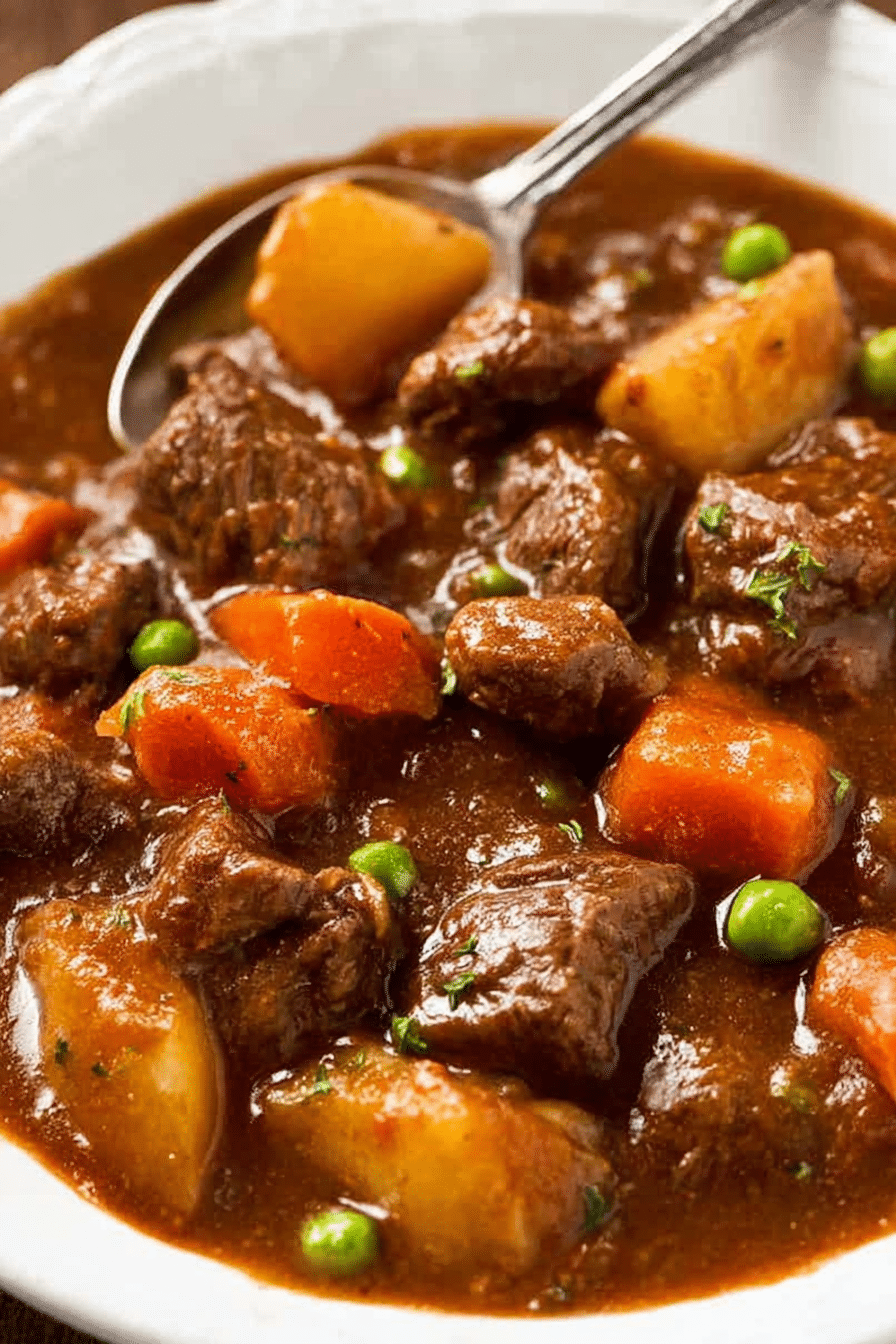
The scent of browned beef, garlic, and rosemary drifting through my kitchen is the second-best part—second only to the moment someone takes that first spoonful and sighs. I keep this version straightforward on purpose: honest ingredients, familiar steps, and plenty of room for you to make it your own. I’ve tested it over many seasons, and its forgiving nature makes it a reliable dish whether you’re feeding a crowd or saving the last bowl for yourself.
When I make this stew in my kitchen, I also think about the little conveniences that slow cooking gives you: the ability to start in the morning and come home to dinner that’s already done, and the way leftovers taste even better after a day in the fridge. If you like hearty soups and one-pot dinners, this will feel right at home on your weeknight rotation.
Cozy Comfort in a Bowl: Why This Recipe is Perfect for You
This stew is about warmth and memory. Slow cooking softens tougher cuts of meat and draws out deep, savory aromas—think beef, caramelized onions, and a touch of wine mingling into a rich broth. It’s the kind of meal that encourages people to linger around the table and share stories.
I keep the method simple so that home cooks of every level can succeed: brown the meat, build layers of flavor with onions, garlic, wine, and stock, then let the slow cooker do the rest. The result is forgiving and deeply satisfying—comfort food that brings family and friends together without fuss.
If you love hearty dishes like beef stew, you’ll also enjoy our Best Beef Chili that warms you up during cold nights.
Everything You Need for Slow Cooker Beef Stew
- Stew beef – Look for a cut with good connective tissue and some marbling; it becomes tender and flavorful when cooked low and slow. Tougher cuts are better here than lean ones.
- Salt and pepper (and a savory salt blend) – Season early to build flavor and finish to taste.
- Flour – Helps create a light coating on the beef that aids browning and gives the broth a little body; swap with a gluten-free flour if needed.
- Fat for searing – Use an oil with a high smoke point for browning; butter at the end adds silkiness.
- Onions and garlic – The aromatic backbone; caramelizing onions adds a natural sweetness.
- Red wine – Adds acidity and depth; a dry red works best, but there are substitutes if you prefer not to use alcohol.
- Beef stock and bouillon – Provide rich body; low-sodium stock gives you more control over salt.
- Worcestershire sauce and tomato paste – Concentrated umami—small amounts go a long way in deepening flavor and improving texture.
- Root vegetables – Yukon-style potatoes and stout carrots hold up well during long cooking; softer roots can turn mushy, so choose accordingly.
- Herbs – Bay leaves and a sprig of rosemary add background aroma; remove the stems before serving.
- Frozen peas – Added at the end for color and a fresh pop of flavor; swap with other quick-cooking vegetables if you like.
How to Make Slow Cooker Beef Stew (Step-by-Step)
- Trim and season the beef. Pat the meat dry, remove any large slabs of fat, and season evenly. Dry meat browns better—this is where much of the stew’s flavor begins.
- Browning (don’t skip it). Heat oil in a hot skillet and brown the beef in batches to avoid steaming. Aim for a short, deep sear on all sides—those browned bits are flavor gold. Transfer the seared pieces to the slow cooker.
- Sauté aromatics. Reduce heat, add a little butter, then soften the onions until they’re translucent and just beginning to caramelize. Add garlic briefly—too long and it will burn. Deglaze the pan with a splash of wine and scrape the fond; that liquid becomes part of the stew’s flavor foundation. Add the onions, garlic, and deglazing liquid to the slow cooker.
- Layer the remaining ingredients. Add stock, tomato paste, Worcestershire sauce, carrots, potatoes, herbs, and bouillon. Place bay leaves and the rosemary stem in so their aroma infuses the broth. Resist stirring too vigorously—the slow cooker will marry the flavors on its own.
- Cook low and slow. Cook on low for the longer time for the most tender result, or use the shorter high setting if you’re pressed for time. You’re listening for vegetables that are softened and meat that’s yielding when tested with a fork.
- Finish gently. Add frozen peas near the end so they keep their color and texture. Remove bay leaves and the rosemary stem before serving. For a silky finish, swirl in cold butter at the very end—this enriches the sauce without thinning it.
- Meal prep tip. This stew keeps and often tastes better the next day; cool it quickly, refrigerate, and reheat gently so the fat reincorporates into the sauce.
For more easy meal prep, check out these additional Slow Cooker Recipes to save time in the kitchen.
The Secret to Tender, Flavorful Beef
Marbling and connective tissue are your friends in stew. Fat within the meat keeps bites juicy, while collagen breaks down into gelatin during long cooking, thickening the broth and giving that luxurious mouthfeel I look for. That’s why chuck roast and similar cuts are classic choices.
Cooking at a low temperature for several hours allows those tough fibers to unwind without drying the meat. If the beef is still firm at the end of the lower cooking time, give it another hour—toughness is usually a matter of time rather than heat.
If you can’t find classic stew cuts, look for blade roast, brisket, or short ribs—anything with connective tissue will behave similarly. Avoid very lean cuts; they can become dry when cooked for long periods.
Enhancing Flavor: The Role of Red Wine in Your Stew
Red wine brings acidity that balances the richness of beef and stock; it also adds tannins and aromatic compounds that deepen as the stew simmers. Cabernet sauvignon offers more structure and darker fruit notes, while merlot tends to be softer and fruit-forward—either will lend character, so use one you enjoy drinking.
Alcohol mostly cooks off over long cooking, but the concentrated flavor remains. If you want similar depth without alcohol, use a good-quality unsalted beef stock with a splash of red wine vinegar or a non-alcoholic red wine substitute to mimic the acidity and fruit notes.
- Wine substitute ideas – Beef stock plus a splash of red wine vinegar or balsamic, or a low-sodium commercial non-alcoholic red wine alternative work well for adding acidity and depth.
Pair your meal with dessert by making Homemade Chocolate Turtles for a sweet ending to a hearty dinner.
Pro-Tip for Slow Cooker Beef Stew: Thicken It Right
Note: Pro-Tips, Troubleshooting, and Variations are written as bulleted lists below for quick reference.
- Use a cornstarch slurry (cold water plus cornstarch) added near the end of cooking and simmer briefly to thicken—add gradually until you reach the body you prefer.
- If you prefer flour, mix it with cold water to form a paste or make a beurre manié (equal parts butter and flour kneaded together) and stir in toward the end; give it time to cook out the raw flour taste.
- Tomato paste adds both body and umami—stir it in during the early stage so its flavor blends into the broth; it also helps the sauce thicken slightly as it reduces.
- For a silky finish, swirl cold butter in at the end (a chef’s technique called monter au beurre); it rounds the sauce and improves mouthfeel without adding extra cooking time.
- Optional: a few drops of a meat glaze product will darken the sauce if you prefer a richer color, but it’s purely cosmetic—flavor is best built from good stock and careful browning.
Troubleshooting
- Stew is too thin: Make a slurry of starch and cold water, whisk it in, and let the heat bring it to a simmer until it thickens.
- Meat still tough: Continue cooking on low; chewiness usually means the connective tissue hasn’t yet broken down—time is the fix.
- Vegetables are mushy: Add quicker-cooking vegetables later in the process, or cut them larger so they hold their shape during long cooks.
- Too salty: Add peeled, raw potato chunks to the stew for a short time to absorb excess salt, or dilute with a bit more unsalted stock and adjust seasoning.
- Flavor feels flat: A small splash of acid (vinegar or a squeeze of lemon) or a dash of Worcestershire sauce often brightens and balances the dish.
Storage Tips and Variations to Try
- Refrigeration: Cool quickly, store in an airtight container, and keep for up to 3–4 days. Reheat gently over low heat so the sauce reintegrates.
- Freezing: This stew freezes well for up to three months—thaw in the refrigerator overnight before reheating. If you plan to freeze, slightly undercook the potatoes so they don’t turn to mush on reheating.
- Low-calorie options: Use leaner cuts and more vegetables, and reduce added butter at the end; you can also swap some potatoes for turnips or rutabaga for fewer carbs.
- Gluten-free: Skip the flour dusting and use a cornstarch slurry to thicken at the end.
- Dairy-free: Omit the finishing butter and use a small splash of extra stock and a whisk to finish for richness.
- Flavor twists: Add smoked paprika and a touch of chipotle for a smoky profile, or stir in a spoonful of miso for a savory umami boost.
- Try this next: If you enjoyed this beef stew, consider trying our Easy Chicken and Dumplings for another comforting meal.
I like to serve this stew with crusty bread and a simple green salad—there’s something reassuring about breaking bread and passing the bowl around. In my kitchen, it’s a dish that arrives at the table with steam, stories, and satisfied smiles. Make it a weeknight staple or a weekend project; either way, it’s a bowl of comfort that keeps returning favorably in my house.
Frequently Asked Questions
How do I cook beef stew in a slow cooker? Start by cutting the beef into cubes and seasoning it. Brown the meat in a skillet, then transfer it to the slow cooker. Add your vegetables and broth, and cook on low for 7 ½ to 8 hours or high for 3 ½ to 4 hours until tender.
Can I use any type of red wine for this recipe? Yes! A cabernet sauvignon or merlot works perfectly. Just ensure it’s a wine you enjoy drinking, as it will add depth to your stew.
What can I do to thicken my stew? To thicken your stew, you can mix ¼ cup of cold water with 3 tablespoons of cornstarch and slowly add it while stirring. You can also swirl in some cold butter at the end for a velvety finish.
How should I store leftover beef stew? Store leftover beef stew in an airtight container in the refrigerator for up to 3-4 days. You can also freeze it for up to 3 months; just thaw it in the fridge before reheating.
Can I add other vegetables to the stew? Absolutely! Feel free to get creative with vegetables. You can add mushrooms, green beans, or even parsnips for an extra twist.
Slow Cooker Beef Stew
Ingredients
Method
- Cut meat into 1-inch cubes, discard any large pieces of fat.
- Sprinkle beef with black pepper, garlic salt, and celery salt. Toss to coat.
- Sprinkle flour over the meat and toss again.
- Heat olive oil in a large skillet over medium-high heat. Add the meat in batches, don’t overcrowd the pan. Brown on each side for 45 seconds. Add more oil if needed. Transfer to slow cooker.
- Reduce heat to medium and melt 1 tablespoon of butter. Add onions and cook for 5 minutes. Add garlic and cook for 1 minute. Add a splash of wine and use a spatula to loosen brown bits in the skillet. Transfer the onions, garlic, and remaining wine to the slow cooker.
- Add all remaining ingredients except for the peas, corn starch mixture, and 2 tablespoons of cold butter.
- Cook on low for 450 minutes or high for 210 to 240 minutes, until the vegetables are softened and the potatoes are fork tender.
- Add the peas during the last 15 minutes of cooking. Remove the bay leaves and rosemary stem.
- Optional: To thicken, combine cold water with cornstarch. Slowly add it to the stew, stirring to incorporate.
- Turn off the heat. Swirl in 2 tablespoons of cold butter for a smooth, velvety finish.