

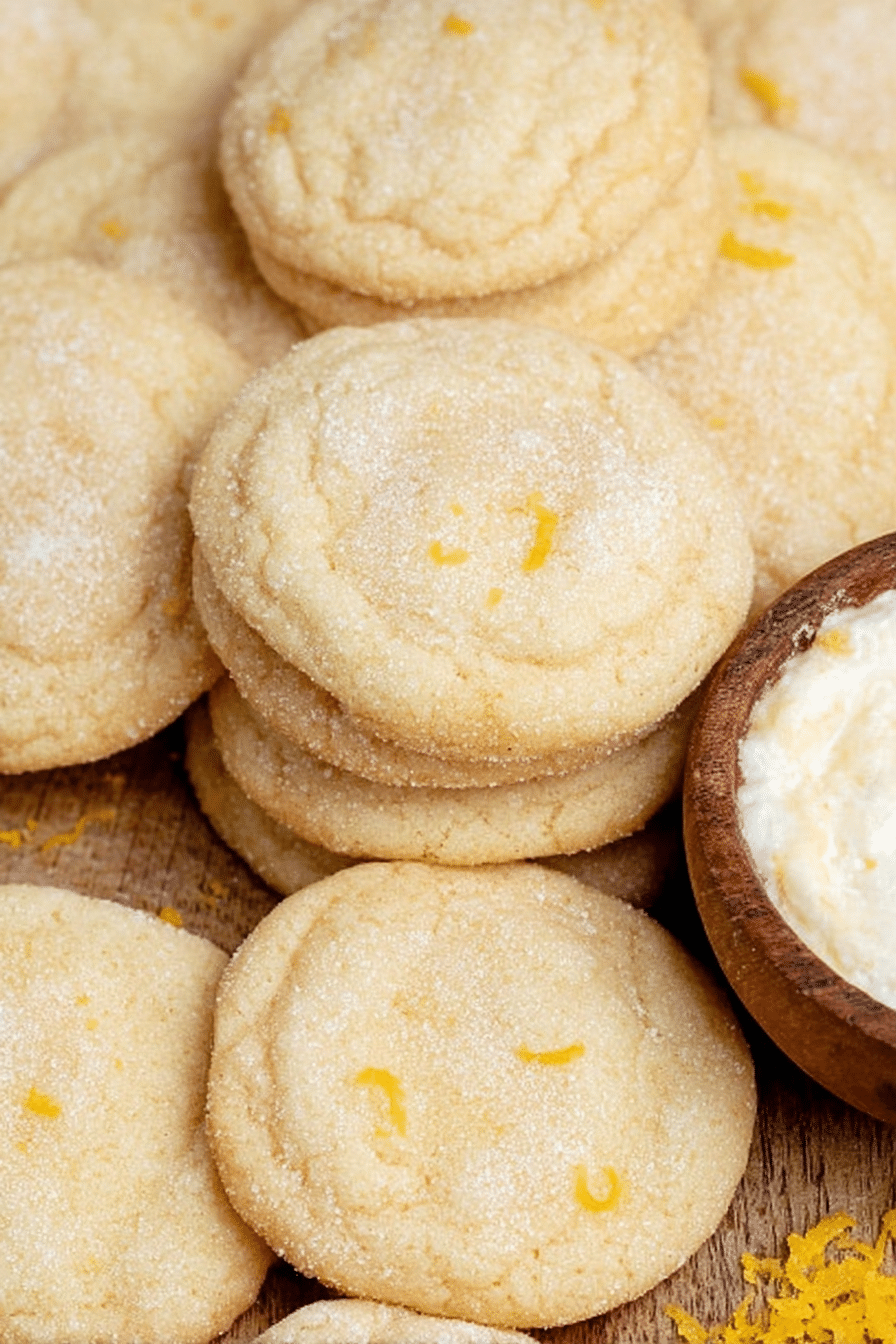
I make these soft, chewy lemon cookies whenever I want something that feels special but won’t take over my afternoon. They come together quickly, and the triple-lemon approach — zest, juice, and extract — gives a bright, clean lemon note that doesn’t overpower the buttery cookie base. I love that they finish with a sparkly sugar crust that catches the light on a dessert plate.
In my kitchen these cookies are a go-to when I need something that travels well for picnics or looks pretty on a tea tray. I appreciate recipes that respect busy schedules: short active prep, a reliable chill window, and a very short bake time. That means you can mix, chill, and still be out the door with warm cookies if you plan ahead.
I’ll be honest — I’ve baked a lot of lemon cookies that turned out dry or too cakey. Over time I learned a few small adjustments (an extra yolk, a touch of cornstarch, and a careful chill) that keep them tender and satisfyingly chewy. Below I’ll walk you through the why and the how so you can make these with confidence and get consistent results every time.
Why These Soft & Chewy Lemon Cookies Are Perfect for Busy Bakers
These cookies are ideal when you have limited time but want a dessert that looks like you spent more effort than you did. The recipe’s active prep time is short and the bake window is brief — you can mix the dough while making coffee and still have time to chill. The ingredient list is compact, but each component punches above its weight for flavor.
Because they’re soft and chewy instead of crisp, the cookies travel well and stay pleasant to eat the next day if stored properly. Serve them at casual gatherings, picnic baskets, or alongside a light dessert spread for a pop of citrus brightness. Visually, look for golden-browned edges, puffy centers straight from the oven, and a faint sparkle when you add the finishing sugar.
Everything You Need for Soft & Chewy Lemon Cookies
Below I explain the role each main ingredient plays and offer practical tips on tools and brands that make the process smooth. You should gather these before starting so the mix goes quickly and your eggs and butter are at the right temperatures.
- Butter – Provides richness, flavor, and structure; use a good-quality unsalted stick butter for the cleanest result. Room-temperature butter (soft but not greasy) creams best.
- Granulated sugar – Gives sweetness and contributes to structure; rolling the dough in extra sugar adds a decorative crunch.
- Lemon zest – Bright, essential citrus oil that gives the cookie its signature aroma; always zest before juicing.
- Egg and extra egg yolk – The whole egg helps bind while the extra yolk adds tenderness and chew by increasing fat content.
- Lemon extract – Concentrates lemon flavor; you can split vanilla and lemon extracts if you prefer a rounder profile.
- All-purpose flour – The backbone of the cookie; choose a reliable brand with moderate protein for balanced gluten development.
- Baking soda – Leavening agent that reacts with lemon juice to give initial lift and a tender crumb.
- Cornstarch – A little makes the crumb tender and contributes to chewiness by interfering with gluten formation.
- Salt – Balances sweetness and enhances the lemon notes.
- Lemon juice – Activates the baking soda and adds real tartness; add it at the right moment for a visible reaction.
- Tools – Stand mixer or hand mixer, zester, cookie scoop, baking sheets, parchment or silicone mats, and a wire rack for cooling.
The Secret to the Perfect Chewy Texture
Getting chew rather than cakiness is about controlling gluten, moisture, and fat interactions. A few technical details I pay attention to every time will help you reproduce the same texture:
- Use butter at the correct temperature: soft enough to cream but not melted. This traps air when creamed with sugar, creating a tender lift without excess spread.
- Cornstarch reduces tough gluten formation, which keeps the centers soft and slightly dense rather than airy.
- An extra egg yolk adds fat and moisture, which helps create a tender, chewy interior while also improving browning.
- A light hand with mixing once the flour is added preserves the tender structure; overworking activates gluten and makes cookies tougher.
Why the Lemon Juice + Baking Soda Foam Matters
There’s a short, visible chemistry lesson in these cookies: the acid in lemon juice reacts with baking soda to produce carbon dioxide gas. That foam gives an early burst of lift in the oven, helping the cookies puff before the protein structure sets.
- The reaction between the acidic lemon and alkaline baking soda creates bubbles that expand in the heat, contributing to a light top while the interior stays soft.
- Because the reaction is immediate, adding lemon juice after the baking soda concentrates the foam where you want the lift. If you mixed them too early, the leavening power would dissipate.
- You’ll often see the mixture foam briefly when the juice hits the soda; that’s a good sign that the chemistry is working.
Why Chilling the Dough Changes Everything
Chilling isn’t a perfunctory pause — it’s critical for texture and flavor. From my testing, the dough behaves very differently straight from the mixer versus after a solid chill.
- Chilling firms the butter so the cookies spread less and keep a thicker, chewier center.
- Cold dough holds its shape in the oven, which helps edges brown just enough while the middle stays soft.
- Flavor matures in the refrigerator: lemon notes round out and the sugar dissolves slightly into the dough for better mouthfeel.
- Actionable chilling tip: give the dough at least one hour in the fridge; longer (up to 24–48 hours) deepens flavor and improves chewiness even more.
How to Make Soft & Chewy Lemon Cookies (Step-by-Step)
- Beat the softened butter, sugar, and lemon zest until light and fluffy, scraping the bowl as needed.
- Add the egg and extra yolk, then the extract(s), and mix until combined — the mixture should look glossy and slightly aerated.
- Heap the dry ingredients together in a mound in the bowl, with the baking soda on top so you can see where the raising agent is.
- Pour the lemon juice directly over the baking soda — it will foam. That immediate reaction is intentional and helps with lift.
- Fold the dry ingredients into the wet just until there are no streaks of flour; stop as soon as the dough comes together to avoid developing gluten.
- Scoop or roll dough into balls (about 1 1/2 to 2 tablespoons each if you use a scoop) and chill them at least one hour; you can refrigerate longer for deeper flavor and firmer dough.
- When ready to bake, roll chilled balls in extra granulated sugar, place on prepared sheets with space between them, and bake until edges are set but centers still look soft — avoid overbaking for best chew.
- Right out of the oven, gently swirl the pan to round the cookies if needed, rest briefly on the sheet, then transfer to a rack to cool completely; they’ll settle as they cool.
What to Serve with Soft & Chewy Lemon Cookies
These cookies shine with beverages and lighter desserts that mirror their citrus brightness. I like pairing them with a pot of herbal tea or a tall glass of iced tea for casual afternoons. For a dessert table, place them next to small scoops of lemon sorbet or a selection of fresh berries for contrast and color.
They also work well alongside other lemon desserts in a coordinated spread — try them with lemon blueberry cupcakes for variety, or pair them with a zesty salad for a light finish at a brunch. If you want another sweet companion, lemon poppy seed cupcakes complement the cookies’ texture and flavor.
For a savory-sweet pairing, serve these cookies with a bright salad, like an easy lemon basil chicken salad, to echo the citrus theme and offer a satisfying contrast in course and texture.
Pro Tip for Soft & Chewy Lemon Cookies: Chill the Dough for Chewiness
- Chill the dough at least one hour; this is the minimum I recommend for chew and controlled spread.
- For even better flavor and texture, chill 24–48 hours when possible — the cookies will have deeper lemon notes and firmer dough that bakes up chewier.
- If you’re short on time, shape the dough into balls and freeze them; bake from frozen with an extra minute or two of bake time.
- For a unique twist on texture and flavor, try incorporating techniques from my brown butter sourdough discard chocolate chip cookies when adapting bake times and chilling approaches.
How to Store, Freeze, and Make-Ahead Soft & Chewy Lemon Cookies
Make-ahead planning is one of my favorite shortcuts for stress-free gatherings. Here’s how I keep these cookies tasting fresh:
- Store baked cookies in an airtight container at room temperature for up to one week; place a slice of bread in the container to help retain moisture if desired.
- To freeze baked cookies, first freeze them in a single layer, then transfer to a freezer bag for up to three months; thaw at room temperature or briefly warm in a low oven.
- To freeze dough, shape into balls and freeze on a tray until solid, then bag them; bake from frozen, adding a minute or two to the bake time.
- Reheat baked cookies in a 300°F (150°C) oven for a few minutes to regain that fresh-from-the-oven softness.
Gluten-Free and Vegan Variations
- Gluten-free – Use a 1:1 gluten-free flour blend that contains xanthan gum; you may need a slightly longer chill to firm the dough for scooping.
- Vegan – Replace butter with a solid plant-based butter and substitute a flax or chia egg for the egg; expect slightly different browning and consider a slightly longer chill for structure.
- Egg-free options – Aquafaba can sometimes stand in for egg whites if you want to avoid eggs while keeping lift, but adjust chilling and handling as needed.
- Flavor adjustments – If you want less tartness, reduce fresh lemon juice slightly and boost zest or extract for aroma without extra acidity.
Troubleshooting
- I baked them and they spread too much — The butter was likely too warm. Chill the dough longer and make sure your baking sheets aren’t hot.
- I got dry, crumbly cookies — You may have overmixed or overbaked. Fold the dough only until combined and pull them from the oven while centers still look slightly soft.
- I don’t see foam when I add lemon juice — Check the baking soda for freshness; old baking soda loses reactivity and won’t bubble as vigorously.
- The cookies are pale and soft but not set — They may need a minute or two more in the oven; watch the edges for the first sign of gentle browning.
Frequently Asked Questions
How long do I need to chill the dough? It’s best to chill the dough for at least 1 hour. This helps the cookies maintain their soft and chewy texture while baking!
Can I substitute ingredients in the recipe? Yes! If you’re looking for gluten-free options, you can use a 1:1 gluten-free flour blend. For vegan variations, consider using coconut oil instead of butter and a flax egg in place of the egg.
What should I serve with soft & chewy lemon cookies? These cookies pair wonderfully with a glass of milk, hot tea, or lemon sorbet for a refreshing treat!
How do I store leftover cookies? Store the cookies in an airtight container at room temperature for up to a week. For longer storage, freeze them in a single layer, then transfer to a bag for up to three months.
What makes these cookies chewy instead of crunchy? The combination of butter, egg yolk, and chilling the dough are key factors that create that desired chewy texture. Avoid overbaking them for the best results!
Soft & Chewy Lemon Cookies
Ingredients
Equipment
Method
- Beat the butter, sugar, and lemon zest in a stand mixer fitted with the paddle attachment for 3-4 minutes until light and fluffy. Scrape down the sides of the bowl as needed.
- Add eggs and extract(s), then mix again.
- Add dry ingredients in a mound with baking soda on top. Pour lemon juice on top of the baking soda and mix until combined. Do not over mix.
- Refrigerate the dough for at least 1 hour.
- Preheat the oven to 325°F.
- Roll balls of dough in granulated sugar and place on lined baking sheets.
- Bake for 10-12 minutes. They should be soft and chewy.
- Allow cookies to rest on the sheet for 5 minutes before transferring to a wire rack to cool completely.
- Optional: Sprinkle the tops of cookies with more granulated sugar and lemon zest for garnish.