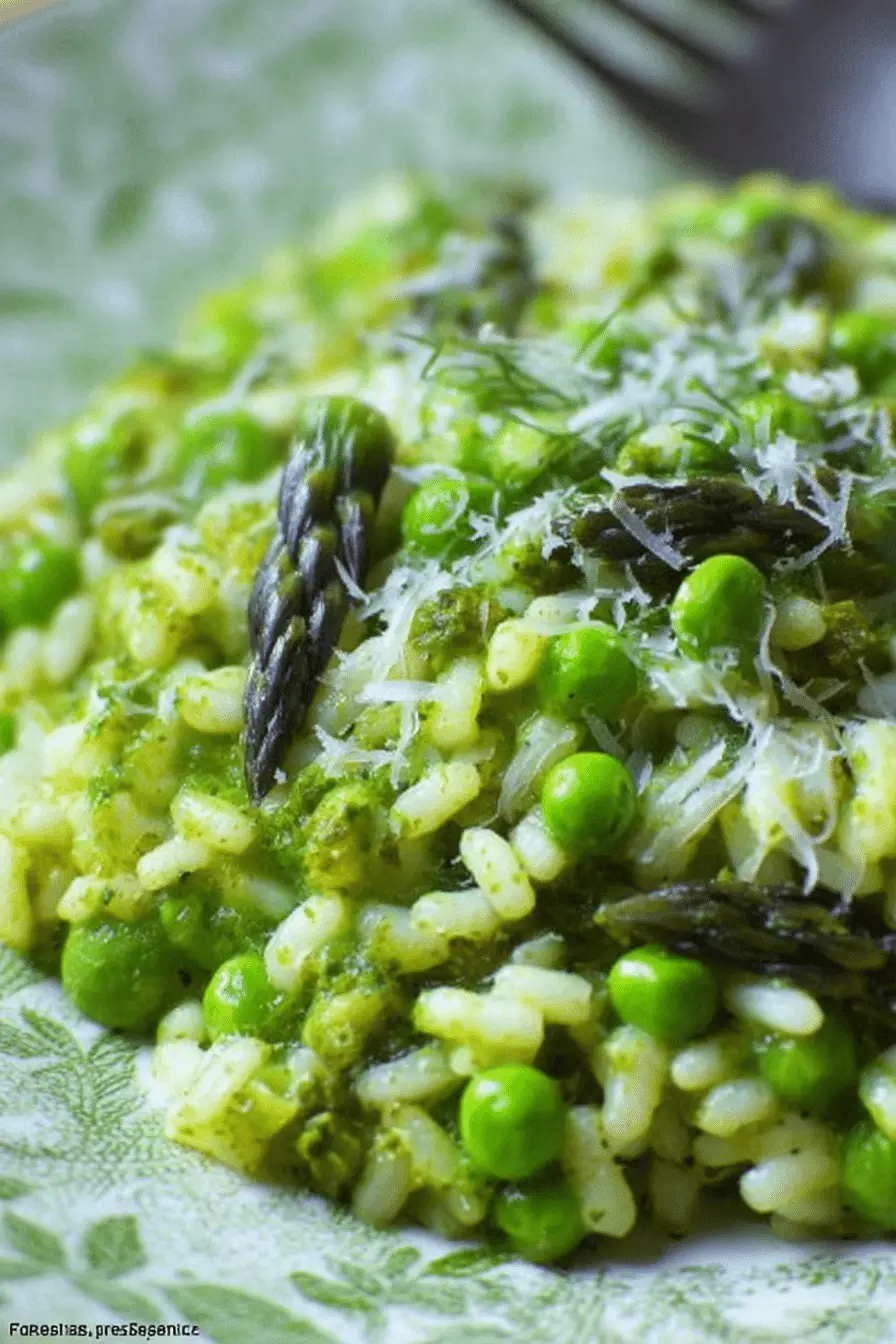
The Spring Green Risotto I Make for Quick Weeknight Dinners
- Prep
- 15 min
- Cook
- 30 min
- Total
- 45 min
- Serves
- 4
- Calories
- 501 kcal
- Carbs
- 65.00 g
Introduction
I cook this spring green risotto whenever I want something bright, nourishing, and fast on a weeknight. It hits that sweet spot: fresh seasonal vegetables, a creamy finish, and enough green on the plate to feel like a small celebration of spring. In my kitchen I keep the mise en place tight — trimmed asparagus, thawed peas, and a quick fennel slice — so the actual stove time is calm and efficient.
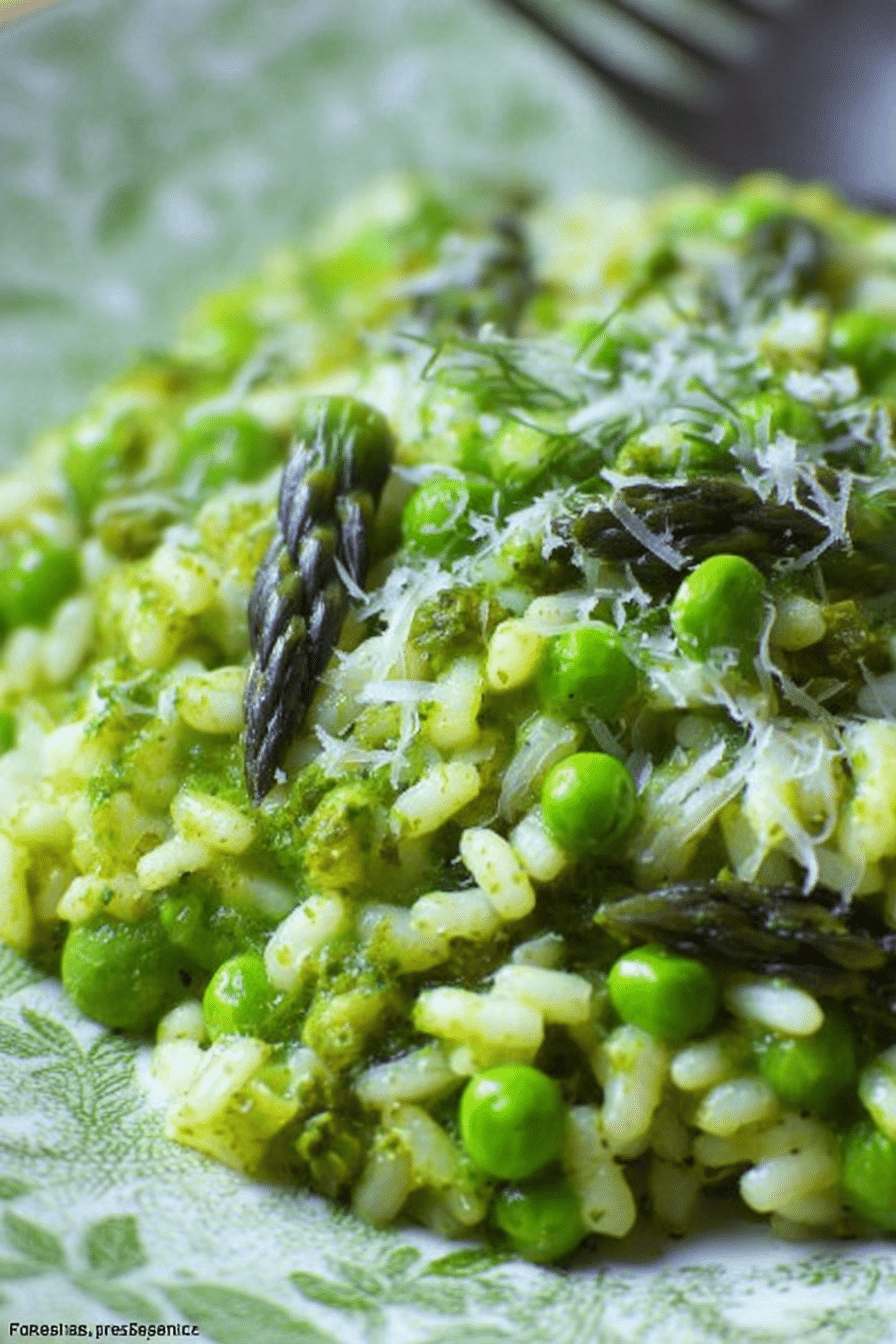
What I appreciate most is how forgiving the method is: if you have warm broth at the ready and a heavy pan that holds steady heat, the rest flows. The green puree (peas + parsley) brightens the color and flavor at the finish without weighing the dish down, so you get that vivid jade hue and a fresh herbal lift. The aroma of garlic, shallot and butter while the rice toasts is one of my favorite weekly comforts.
I also rely on small shortcuts — a splash of dry Sherry for acid and depth, frozen peas for convenience, and a food processor to make the pea-parsley purée in seconds. Those choices keep the whole dish doable in about 30 minutes, so you can handle a few other things — a quick salad, setting the table, or helping with homework — while the risotto finishes to a creamy, tender finish.
Everything You Need for Spring Green Risotto
- Arborio rice – The short-grain rice that releases starch and creates that quintessential creamy texture; Carnaroli or Vialone Nano are fine alternatives if you have them.
- Peas (fresh and/or frozen) – Fresh peas bring sweetness and texture; frozen peas are a reliable shortcut that still taste bright when pureed or blanched.
- Asparagus – Adds snap and color; trim woody ends so the spears cook evenly.
- Fennel – Thin slices add a subtle anise note and crunchy contrast when sautéed.
- Shallot, onion and garlic – Build the savory aromatic base; don’t rush them — gentle sweating develops flavor.
- Good-quality broth – Low-sodium chicken or vegetable stock deepens the dish; a reliable store-bought stock or homemade broth both work well.
- Butter and olive oil – Butter enriches the finish; olive oil is the cooking backbone. For a vegan version use a neutral-flavored vegan butter or extra olive oil.
- Parmesan (Parmigiano-Reggiano) – Adds savory umami and helps emulsify the risotto at the end; swap nutritional yeast for a vegan option.
- Fresh parsley and lemon – Parsley brightens the purée and lemon juice at the end lifts the whole dish.
- Tools – A heavy-bottomed wide pan for even heat, a ladle for adding warm broth, and a food processor or blender to puree peas and herbs quickly.
If you love the taste of peas in your risotto, check out our Spring Pea Risotto for more inspiration.
The Secret to Lusciously Creamy Risotto — without a fuss
- Keep the broth hot in a separate pot so you don't drop the pan temperature each time you add liquid — this helps the rice cook evenly and release its starch steadily.
- Start with a gentle sauté of aromatics and fennel; toast the rice briefly so each grain gets a thin coating of fat before you add liquid — this encourages even cooking and flavor.
- Add wine (or Sherry) to deglaze and let the alcohol mostly cook off; you should hear a confident sizzle when it hits the pan — that quick evaporation concentrates flavor without cooling things down.
- Add warm broth in measured ladles, giving the rice time to absorb before adding more. Stir often, but you don’t need to whisk constantly — a steady, rhythmic stir encourages emulsification and keeps you from breaking the grains.
- Finish off the risotto with the pea-parsley purée and grated cheese (or vegan alternatives); the final stirring and gentle heat create a glossy emulsion that makes the risotto feel rich without adding extra cream.
Troubleshooting
- If the risotto is too watery near the end, increase the heat briefly and stir until it tightens; this concentrates flavor and removes excess liquid.
- If the rice is undercooked but you’re low on broth, use boiling water to finish it — it’s neutral and won’t dilute the flavor much.
- If the texture is gluey or overly starchy I find it’s usually because the rice was over-stirred at very high speed or the wrong rice was used; next time reduce vigorous stirring and confirm you’re using short-grain risotto rice.
- If the dish tastes flat, a squeeze of lemon and a final grating of Parmesan will lift the flavors and bring balance.
Preparing Peas, Asparagus & Fennel for Bright Flavor and Color
- Blanch the asparagus and fresh peas briefly in boiling water, then plunge them into ice water to stop cooking — this preserves a vibrant green color and keeps the asparagus tender-crisp.
- Puree thawed peas with parsley for a bright, raw-green finish; the puree adds color and fresh herb flavor without extra cooking time.
- Select fresh produce: look for firm asparagus tips, plump peas, and fennel bulbs that are tight and aromatic. These small choices make a big difference in texture and taste.
- Nutrition note: these greens are rich in vitamins A and C, fiber, and plant compounds that support a feeling of light, nutrient-rich comfort at the end of a busy day.
For more tips on Preparing Seasonal Vegetables, be sure to check out our guide to enhance your risotto.
How to Make Spring Green Risotto (Step-by-Step)
- Warm the broth and keep it at a low simmer so each addition doesn’t cool the pan too much.
- Heat oil and a little butter in your heavy pan, then sweat the shallot, onion, garlic, and sliced fennel until fragrant and slightly softened.
- Add the rice and stir to coat each grain with fat; toast for a minute so the rice becomes glossy and slightly translucent at the edges.
- Pour in the Sherry (or dry white wine) and let it sizzle until the aroma mellows and the liquid is mostly absorbed.
- Add the first ladle of hot broth and stir so the rice begins to release its starch; continue adding broth ladle by ladle, stirring rhythmically and waiting for absorption before the next addition.
- About two-thirds of the way through, fold in the blanched peas and chopped asparagus so they finish cooking with the rice and retain bright color.
- When the rice is tender but still with a slight bite, stir in the pea-parsley purée to marry color and flavor throughout the dish.
- Finish with grated Parmesan and a squeeze of lemon juice, adjusting salt and pepper to taste; keep the heat low and stir until the risotto is glossy and just saucy.
- Serve immediately with extra cheese at the table so guests can add to taste.
Pro Tip for spring green risotto: Quick vegetarian & vegan swaps
- Use vegetable broth instead of chicken broth to keep the dish vegetarian-friendly without changing technique.
- Replace butter with a high-quality plant-based margarine or rich olive oil for a smooth finish in vegan versions.
- Swap grated Parmesan for nutritional yeast or a vegan Parmesan-style cheese; add a splash of extra-virgin olive oil to help emulsify the finish.
- If you want more protein in a vegan bowl, stir in cooked white beans or top with grilled tofu at the end.
Easy Variations: Alternative Grains, Add-Ins and Wine Pairings
- Alternative grains – Try pearl barley or farro for a chewier texture; they take longer to cook and will yield a nuttier result compared with traditional risotto rice.
- Add-ins – Toss in snap peas or baby spinach at the end for extra crunch and color; grilled shrimp or seared chicken are quick protein options to serve on top.
- Wine pairings – A dry, crisp white like Sauvignon Blanc or a lighter unoaked Chardonnay complements the bright green flavors; for a slightly richer pairing, a dry sparkling wine provides a pleasant contrast.
Explore our Easy Variations section for creative options to customize your risotto.
How to Store, Reheat and Meal-Prep Spring Green Risotto
- Cool the risotto quickly and transfer to airtight containers; it will keep in the refrigerator for up to three days.
- To reheat, add a splash of broth or water and gently warm over low heat while stirring to restore creaminess; a quick stir-in of a knob of butter (or olive oil for vegan) freshens the texture.
- For meal-prep, portion into single-serving containers and store the pea-parsley purée separately if possible so the color and brightness stay fresh until you reheat.
Learn how to keep your risotto fresh with our comprehensive meal-prep guide.
Frequently Asked Questions
How long does it take to make Spring Green Risotto?
This risotto comes together in about 30 minutes from start to finish, making it a strong option for busy weeknight dinners.
Can I make this risotto vegetarian or vegan?
Yes. Use vegetable broth instead of chicken broth to make it vegetarian. For a vegan version, omit the Parmesan or use a plant-based cheese substitute and swap butter for a vegan alternative or extra olive oil.
What can I substitute for arborio rice?
Good alternatives are Carnaroli or Vialone Nano, which behave similarly. If you need to use other grains, expect a different texture—barley and farro give a chewier bite and require longer cooking.
How do I store leftovers of Spring Green Risotto?
Let the risotto cool, then store it in an airtight container in the refrigerator for up to three days.
Can I add other vegetables or proteins to this risotto?
Absolutely. Seasonal vegetables like snap peas or arugula work well; grilled chicken, shrimp, or beans are all good protein additions to round out the meal.
Recipe Card
The Spring Green Risotto I Make for Quick Weeknight Dinners
- Prep
- 15 min
- Cook
- 30 min
- Total
- 45 min
- Serves
- 4
- Calories
- 501 kcal
- Carbs
- 65.00 g
Ingredients
- 1 cupfresh shelled garden peas
- 1 lbbaby asparagus (trimmed)
- 1 cupfrozen peas (thawed)
- 1/2 cupchopped parsley
- 2 Tbspunsalted butter
- 2 Tbspolive oil
- 1 largeshallot (minced)
- 1/2 white onion(chopped)
- 2 clovesgarlic (minced)
- 1 small headof fennel (thinly sliced)
- 1 heaping cuparborio rice
- 1/2 cupdry Sherry
- 48 ozchicken broth (or vegetable broth)
- 1/2 lemonjuice of
- 1/2 cupgood quality Parmesan cheese (finely grated)
Instructions
- 1
Bring a pot of water to a boil and immerse the asparagus and the garden peas for 30 seconds. Drain and immediately plunge the vegetables into ice water. Let cool in the ice water, and then drain. Chop the asparagus into one inch pieces.
- 2
In a food processor or blender, puree the thawed peas, and parsley until smooth. Set aside.
- 3
Heat the broth in a saucepan on the stove and leave it on very low heat as you begin the risotto.
- 4
Heat the olive oil and butter in a large heavy pan. Saute the shallot, onion, garlic, and fennel for about 5 minutes, until the fennel is crisp tender.
- 5
Add the rice and stir as you cook another minute.
- 6
Add the Sherry to the pot and stir until it is absorbed. You want the heat to be hot enough so that you hear a good sizzle when the Sherry hits the pan. When the Sherry is absorbed, add your first ladle of broth and cook, stirring constantly, until it is absorbed.
- 7
Continue to add the broth, stirring almost constantly, waiting for the liquid to be absorbed before adding more. After about 20 minutes, add the garden peas and asparagus, and continue cooking until the rice is tender and you have used most of the broth. Taste the rice to check if it is tender. If not, keep cooking. If you run low on broth, add a little water to it.
- 8
When the rice is tender, stir in the pea and parsley puree. Continue to stir until it is hot throughout. Add the cheese and lemon juice. Add salt and pepper to taste.
- 9
Serve hot with a little extra cheese.
You might also like


Reviews
Be the first to review this.