The Spring Pea Crostini My Guests Always Ask For
- Prep
- 10 min
- Cook
- 10 min
- Total
- 20 min
- Serves
- 6
- Calories
- 116 kcal
- Carbs
- 9.00 g
On this page13 quick jumps
TOC
13 quick jumps
Introduction
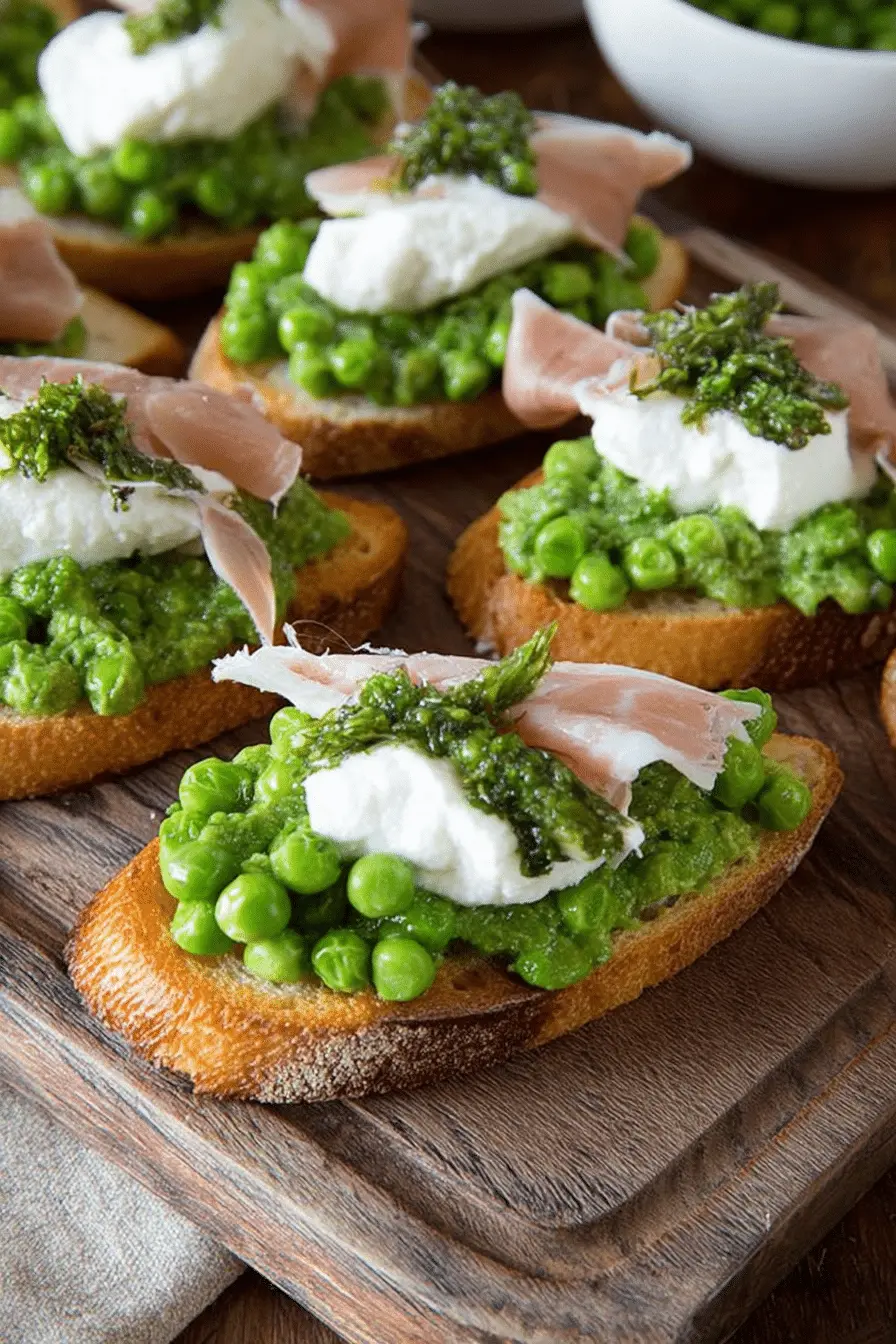
When spring arrives I reach for the first tender peas I can find and start thinking in bite-sized pieces. I remember serving these crostini at a small garden party years ago and watching guests pause at the platter — the bright green pesto, the milky burrata, the whisper of prosciutto made a simple appetizer feel deliberate and seasonal.
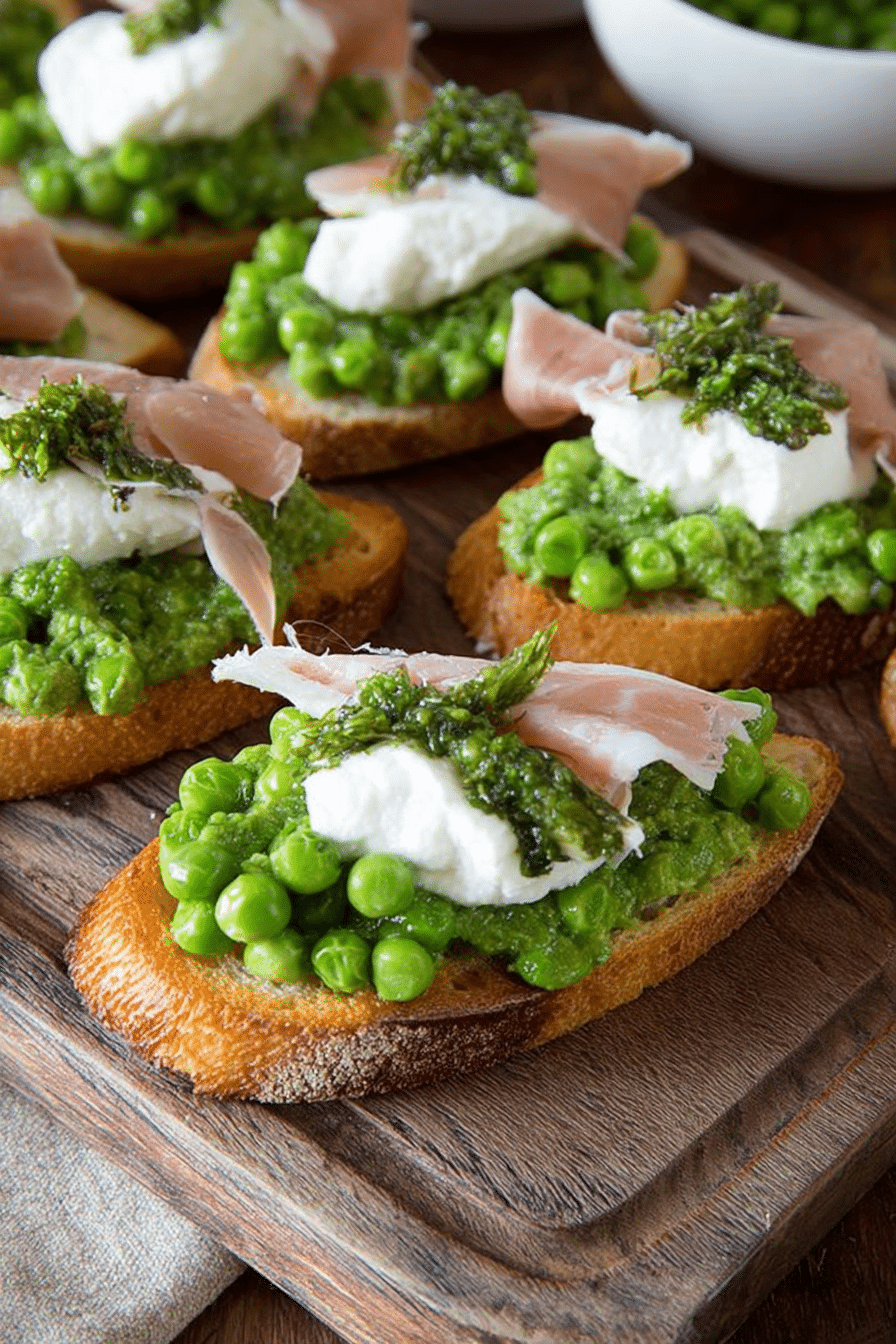
I like how straightforward the recipe is: a verdant pea-mint (or basil) pesto spread over crisp toasted bread, topped with creamy burrata and a thin ribbon of prosciutto. The contrast of textures and temperatures — cool pesto, room-temperature burrata, warm toast — is what makes these crostini feel special while still being easy to execute.
Over the years I refined a few small details that make the platter look and taste intentional: season the pesto boldly, toast the crostini until they’re just shy of too-brown, and assemble at the last minute so everything stays bright and fresh. I’ll walk you through those tweaks below so you can serve a beautiful spring appetizer with confidence.
Why Spring Pea Crostini Belongs on Your Spring Party Menu
Fresh peas and bright herbs are the hallmark of spring cooking — they bring a clean vegetal sweetness and an aromatic lift that pairs well with creamy and salty elements. On a table, the vivid green of the pea pesto and the soft white of burrata create a striking visual centerpiece that complements floral or pastel-themed settings. Crostini are inherently versatile: they work as cocktail-hour bites, part of a composed appetizer board, or paired with a light salad for a more substantial starter.
Close your eyes and imagine the scent: pea and mint, a hint of citrus from lemon, and the warm toast drifting through the air. That fragrant combination is immediately springlike and invites guests to taste before they even sit down.
Everything You Need for Spring Pea Crostini
Below I list the core ingredients and a few tools that will make this recipe seamless. Focus on freshness for the herbs and quality for the burrata — those choices will show up on the platter.
- Peas – The base of the pesto; frozen peas are convenient and sweet, fresh peas add a sweeter, green snap if you have them (blanch first).
- Basil or Mint – Choose one to keep the pesto focused; mint brightens, basil rounds the flavor.
- Garlic – Adds savory depth; a little goes a long way so it doesn’t overpower the peas.
- California Dry Jack or a hard, aged cheese – Adds savory, salty complexity and helps bind the pesto.
- Lemon juice – Brings acidity to balance sweetness and cut through the richness of the burrata.
- Red pepper flakes – Optional; add a whisper of heat to counterbalance the softness of cheese.
- Kosher salt and freshly cracked black pepper – Essential for seasoning the pesto properly.
- California Burrata – The creamy centerpiece; the milky interior is what makes each crostini feel indulgent.
- Prosciutto – Thin slices add a salty, silky finish; optional if you prefer vegetarian bites.
- Toasted crostini or good crusty bread – Crunch provides contrast; choose slices that are firm enough to hold toppings without collapsing.
- Tools – A food processor for a smooth pesto, a rimmed baking sheet for toasting, and a small spoon or offset spatula for spreading.
For an alternative crostini option, try our ricotta crostini with peas and mint, which complements the fresh flavors beautifully.
The Secret to a Bright, Vibrant Pea Pesto
- Start with cold peas so the color stays verdant; if using fresh, blanch briefly and shock in ice water to preserve that bright green.
- Add acid in two stages: a little lemon while you emulsify to lift flavors, then finish with an extra squeeze if needed after tasting. The acid is what keeps the pesto lively against the burrata.
- Use a pulse-and-rest technique in the food processor: pulse to break down the peas, scrape the bowl, then run to emulsify with cheese and oil. This prevents over-processing and keeps texture.
- Slowly add a neutral oil while processing to create a glossy, spreadable emulsion; you want the pesto silky but not wet.
- Taste and season boldly at the end — peas can taste flat if under-salted, so err on the side of seasoning and then adjust for acidity and heat with lemon and red pepper flakes.
How to Layer and Toast for Picture-Perfect Crostini
- Toast your bread until golden and firm to the touch; it should still have a little give so the burrata doesn’t slide off, but it must be sturdy enough to hold the spread.
- Spread a thin base layer of pesto first so every bite has that fresh green flavor; too much pesto will make the bread soggy over time.
- Add a small spoonful of burrata, gently breaking its interior so the creamy center can mingle with the pesto; place it at room temperature so it’s soft and spreadable.
- Drape a ribbon of prosciutto over the top for color and salt, or tuck microgreens for a vegetarian contrast — aim for color contrast and textural balance.
- Assemble just before serving to maintain the crostini’s crunch and the pesto’s bright color; if you must hold them briefly, keep crostini on a single layer at room temperature and add burrata and prosciutto last.
Scaling Tips: Serve 12, 30 or 100 Guests Without Stress
- Plan your mise en place: chop herbs, toast bread, and portion burrata so day-of assembly is quick. For larger counts, set up an assembly line to speed plating.
- Multiply the recipe in batches you can process comfortably in your equipment; for example, double or triple the pesto in separate runs rather than overfilling your food processor.
- For 12 guests, make roughly double the base batch; for 30, plan on four to five times the base; for 100, use commercial-sized sheet pans and consider making pesto in large-capacity blender batches. (Adjust quantities to taste.)
- Use multiple sheet pans to toast bread in parallel and a warming lamp or oven on very low to keep components at serving temperature if you’re staging a long event.
- Serve family-style on several platters rather than one crowded board so guests can help themselves without crushing crostini. Consider complementing the spread with a scalable salad such as a spinach strawberry salad that grows easily for large groups.
Consider adding our refreshing spinach strawberry salad to your menu, which scales beautifully for any gathering size.
How to Make Spring Pea Crostini (Step-by-Step)
- Prepare the peas: if using fresh, blanch briefly and shock in ice water; if using frozen, thaw and drain well so the pesto isn’t watery.
- Build the pesto: add peas, herbs (mint or basil), garlic, hard cheese, lemon juice, a pinch of red pepper flakes, and seasoning to your food processor. Pulse to break down, then run while streaming in oil until smooth and spreadable.
- Taste and finish: adjust salt, pepper, and lemon to keep the pesto bright. It should taste lively and slightly salty to cut through the burrata.
- Toast the crostini: arrange bread in a single layer on a rimmed sheet and toast until golden and firm; a quick brush of oil before toasting enhances color and crispness.
- Assemble just before serving: spread pesto on each crostino, add a spoonful of burrata, then garnish with prosciutto or herbs.
- Plate artfully: arrange on a wooden board or platter, leaving small gaps between pieces so the colors read clearly and guests can pick without tugging adjacent crostini.
If you enjoy the flavors of this crostini, you'll love our creamy one-pot pasta with peas and mint, which is perfect for a spring dinner.
Pro Tips (from my kitchen)
- I let Burrata come to room temperature before serving so it’s soft and spreadable; cold cheese pulls the warmth away from the crostini.
- Toast a little extra bread — some guests will want seconds and you’ll avoid scrambling for more last minute.
- If your pesto looks dull, add a splash more lemon and finish with a tiny drizzle of oil to revive the sheen.
Troubleshooting (what I watch for)
- If the pesto tastes flat, I first check salt levels and then add a little more lemon — acid brightens the whole spread.
- If the burrata leaks too much during assembly, I gently pat dry the exterior with a paper towel and spread the creamy interior right before plating.
- If crostini soggy quickly, reduce the pesto thickness on each slice and assemble later in the service window so toast stays crisp.
Variations
- Skip the prosciutto and add lemon zest and toasted almonds for a vegetarian crunch.
- Stir in a handful of finely chopped herbs (chives or tarragon) to the pesto for a layered herbal note.
- Serve on grilled baguette slices for a smoky edge that pairs well with salty meats.
Vegan Options for Spring Pea Crostini
- Replace the burrata with a high-quality vegan burrata or a cashew-based cream to mimic the silky center; look for a version that has a soft interior texture.
- Use nutritional yeast or a vegan hard cheese alternative in the pesto for a savory, cheesy note without dairy.
- Swap the prosciutto for thinly sliced roasted beets or marinated, smoked mushrooms to maintain a salty, umami finish.
- Choose gluten-free toast or seeded crackers that provide a sturdy base and similar crunch for those avoiding gluten.
Suggested Beverage Pairings and Serving Board Ideas
Pairing is about contrast and balance: you want a sip that refreshes the palate between bites and complements the pea’s sweetness and the burrata’s creaminess.
- Sauvignon Blanc or Vermentino — bright acidity and citrus notes mirror the lemon in the pesto and cut through the cheese.
- Champagne or a dry sparkling wine — the bubbles refresh the palate and add celebratory sparkle to a spring table.
- Light-bodied rosé — pairs nicely with prosciutto and offers a fruit-forward counterpoint without overpowering the crostini.
- Non-alcoholic: sparkling water with a twist of lemon or a lightly brewed green tea chilled and served with mint.
For presentation, arrange crostini on a long wooden board with small bowls of extra pesto and torn burrata so guests can customize. Add clusters of grapes, thinly sliced radishes, and a pile of dressed greens to round out the board and provide color contrast.
Pair your spring pea crostini with a delightful dish like spring vegetable brown butter gnocchi for a harmonious spring menu.
How to Store, Make-Ahead, and Scale Spring Pea Crostini
- Make the pesto up to 24 hours ahead and store in an airtight container; press a piece of plastic wrap directly on the surface to prevent oxidation and color loss.
- Toast bread earlier in the day and store in a paper bag to keep it crisp; re-crisp briefly in a low oven before assembling if needed.
- Keep burrata refrigerated until 30 minutes before serving so it softens but does not leak; assemble crostini just before guests arrive.
- For large events, prepare pesto and toast in batches, then set up an assembly station where one person spreads pesto, another portions burrata, and a third adds prosciutto — this minimizes holding time and keeps crostini crisp.
- Store leftovers separately: keep pesto refrigerated, toast at room temperature, and burrata chilled; recombine only when ready to serve again within 24 hours.
Frequently Asked Questions
Can I use fresh peas instead of frozen for the Spring Pea Crostini?
Absolutely! Fresh peas can provide a sweeter flavor, just make sure to blanch them before using.
What if I can't find California Burrata cheese?
You can substitute it with any fresh burrata or even a creamy goat cheese for a similar texture and taste.
How can I make the dish vegan?
For a vegan version, replace the burrata with a vegan cheese alternative, and omit the prosciutto.
Can I prepare the pea pesto ahead of time?
Yes! You can make the pea pesto a day in advance and store it in an airtight container in the fridge.
What are some good drink pairings for this appetizer?
A crisp white wine like Sauvignon Blanc or a light sparkling water with lemon would pair beautifully with Spring Pea Crostini.
Ingredients
- 1 packagefrozen peas, thawed
- ½ cupfresh basil or mint
- 1 clovegarlic
- ⅓ cupgrated California Dry Jack cheese
- 1 mediumlemon (juiced)
- ½ teaspoonred pepper flakes
- —Kosher salt and freshly cracked black pepper to taste
- California cheeseBurrata
- to tasteThinly sliced prosciutto
- to tasteToasted Crostini
Instructions
- 1
In a large food processor, combine the peas, basil or mint, garlic, California Dry Jack cheese, lemon juice, red pepper flakes and salt and pepper. Pulse for 30 seconds. Taste and adjust seasoning as needed.
- 2
Slather a few tablespoons of the pea pesto on top of the crostini. Add a tablespoon or two of California Burrata cheese and then garnish with a piece of prosciutto.
- 3
Serve immediately.
Recipe Card
The Spring Pea Crostini My Guests Always Ask For
Keep it handy for later, send it to someone cooking with you, or open the clean print view.
- Prep
- 10 min
- Total
- 20 min
- Serves
- 6
You might also like
The Skewers I Make Every BBQ — Halloumi, Apricot & Pistachio
May 20, 2026
The Roasted Plum Crostini Appetizer I Make for Every Fall Gathering
May 20, 2026
How I Make Cherry Chicken with Balsamic Rosemary Glaze in 40 Minutes
May 18, 2026
Favorite Party Bite — Balsamic Cherry and Goat Cheese Crostini
May 18, 2026
Reviews
Be the first to review this.