


I have a short list of weeknight dishes I turn to when I want something that tastes special without demanding my whole evening. This spring pea risotto sits at the top of that list: it brightens up the kitchen with lemon and fresh herbs, and the peas keep each spoonful lively and green. I’ve tested the timing until the texture is reliably creamy but still quick enough for a 30-minute dinner.
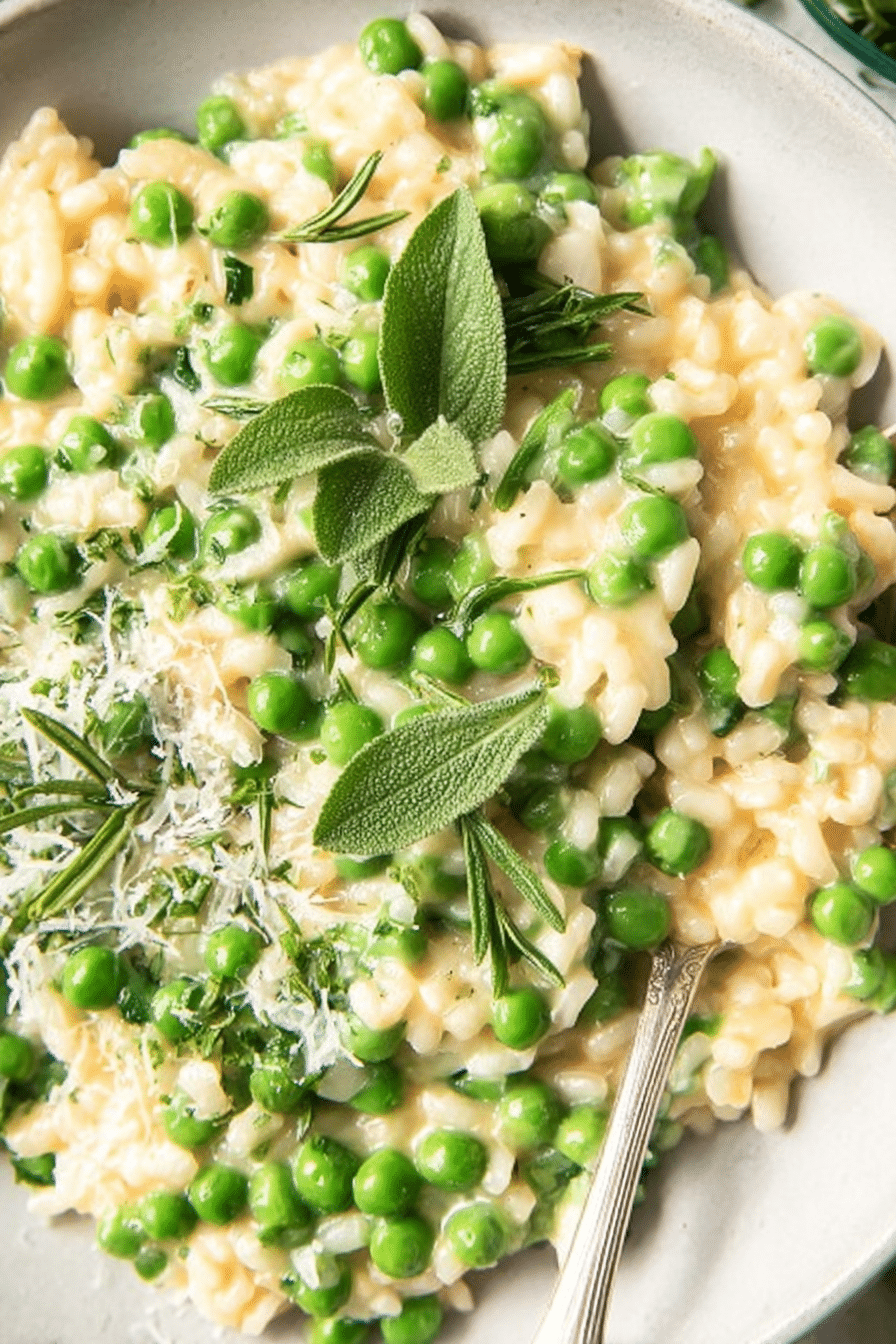
When I first started working through risotto technique, I wasted a lot of time babysitting a pot at the wrong temperature. Over the years I learned that having hot stock ready, keeping your heat moderate, and giving the rice a little cheeky stir at the right moments makes all the difference. The result is a risotto that feels indulgent but still light enough for spring evenings.
I’ll walk you through the simple pantry choices that make a big flavor difference, the little timing tweaks that save you stress, and what I do when the risotto needs rescuing. This is a quick, approachable version that still tastes like you invested time in the plate.
Everything You Need for Spring Pea Risotto
Here’s a conversational run-down of the ingredients and why they matter so you can swap in what you have on hand. You won’t see measurements here — focus on the roles each ingredient plays and how to substitute if needed.
- Fresh peas – Provide a bright, sweet pop of color and texture; frozen peas work fine and can be added straight to the risotto without blanching.
- Unsalted butter – Adds richness and helps carry the flavors; for a dairy-free option, use a neutral oil or vegan butter.
- Shallot – Offers a soft, sweet aromatics base; you can substitute mild onion if that’s what you have.
- Garlic – Gives a savory lift; add sparingly so it doesn’t overpower the peas and lemon.
- Arborio rice – Short-grain rice that creates that signature creamy texture; other short-grain varieties like carnaroli work, but long-grain rice won’t give the same creaminess.
- White wine – Deglazes the pan and adds acidity; you can omit it and use a splash more stock if you prefer.
- Fresh thyme – Subtle earthy note; you can use other herbs, but keep them light so they don’t mask the peas.
- Vegetable stock – The cooking liquid that builds flavor and creaminess; keep it warm while you cook (important).
- Parmesan cheese – Adds umami and silky finish; for a vegan version, substitute a vegan parmesan or nutritional yeast.
- Lemon zest and juice – Brightens and cuts through richness; add at the end to keep the freshness.
- Fresh mint – A spring-forward herb that lifts the dish; basil or parsley are great alternatives.
- Salt and pepper – Essential for seasoning; always taste and adjust at the end.
The Secret to Silky Risotto in 30 Minutes
Getting a creamy risotto quickly is mostly about control: control of heat, control of timing, and control of the stirring. I focus on three practical things — hot stock, short bursts of stirring, and knowing the rice’s texture rather than the clock. When the rice is cooked through but still has a slight tooth, it will release its starch and create that silkiness without becoming gluey.
Smell helps you as much as sight: you want the aroma of softened shallots and a light toasty note from the rice before you add liquid. Touch tells you when the rice is close — a grain should be tender with a tiny firm center when you bite it. Sight confirms the final texture: the risotto should spread slowly when the pan is tilted, not run like soup nor hold too firm in a mound.
How Temperature and Timing Affect Texture
Small changes in heat and timing create big differences in the final mouthfeel. Keep these sensory cues in mind:
- Keep your stock barely simmering so each ladle slips into the rice smoothly and maintains gentle cooking.
- If the heat is too high, the liquid will evaporate quickly and the rice won’t release starch properly; if too low, the rice will stew and get mushy.
- Add liquid in increments and wait until the rice has mostly absorbed it; this gradual addition lets the surface starch emulsify into a creamy sauce.
- Stir often but not constantly — short, confident stirs coax starch out without breaking the grains down.
Herbs, Lemon & Cheese: Flavor Tips That Keep It Bright
Think of herbs, lemon, and cheese as the finishing trio that keeps the risotto light and springlike. Use lemon zest for aroma and lemon juice for the final lift — add the juice just before serving so it stays vibrant. Fresh mint adds a cool, green note that plays beautifully with peas; basil or parsley will keep the profile familiar if mint feels assertive.
When you add parmesan, remove the pan from direct heat and stir it in off the flame so it melts into the rice evenly. If you are making a dairy-free version, a spoonful of olive oil or a sprinkle of nutritional yeast adds a similar savory richness without dairy.
How to Make Spring Pea Risotto (Step-by-Step)
- Blanch the peas briefly in boiling salted water until bright and slightly tender, then shock them in an ice bath to lock in color; if using frozen peas, you can skip blanching and add them later during finishing.
- Keep your stock warm in a separate pot over low heat so each addition doesn’t drop the temperature of the rice.
- Melt butter in a large skillet over medium heat and gently sweat the shallot and garlic until translucent and fragrant; don’t let them brown.
- Add the rice and toast it briefly, stirring so each grain is coated and warmed — you’ll smell a faint nutty note when it’s ready.
- Pour in the white wine and scrape the pan to lift any fond; let the wine mostly evaporate so the rice can absorb liquid cleanly.
- Add warmed stock in small increments, stirring between additions and waiting until the rice mostly absorbs the liquid before adding more; continue until the rice is al dente and the mixture is creamy.
- Stir in parmesan off the heat along with the blanched peas and lemon juice; taste and season with salt and pepper.
- Finish with fresh herbs and lemon zest, then serve immediately while the texture is silky and pourable.
Pro Tip for spring pea risotto: Use hot stock & quick stirs
- I always keep a ladle of hot stock at hand so the heat in the pan stays steady — it saves time and prevents the rice from seizing up.
- Use confident short stirs rather than constant agitation; this encourages the rice to release starch gradually and keeps grains intact.
- If the risotto looks dry before the rice is cooked, add another splash of hot stock or a tablespoon of warm water rather than turning up the heat.
- For a glossy finish, finish with a small knob of butter or a drizzle of good olive oil off the heat before serving.
Nutritional Benefits and Dietary Variations
Peas are a great source of plant protein, fiber, and vitamins like vitamin K and vitamin C, and they add color and texture without a lot of fat. Parmesan contributes protein and calcium as well as a strong savory hit so you can use less and still get big flavor. If you want a lighter plate, focus on fresh herbs and lemon to amplify flavor while keeping added fats modest.
For a vegan-friendly version, swap the butter for olive oil, use vegetable stock, and replace parmesan with a vegan cheese or a sprinkle of nutritional yeast for that umami note. These swaps keep the dish plant-based while preserving the character of the risotto.
Using seasonal, local peas reduces food miles and often means better flavor and texture; if you’re building a quick spring menu, pairing the risotto with something like a simple spring salad or vegetable soup complements the meal nicely. For an easy pairing, try adding our Chickpea Arugula Quinoa Salad alongside the risotto, or start the meal with a light Spring Vegetable Soup. If you want a fresh side, a Spring Salad with Goat Cheese makes a lovely companion that keeps the meal bright and seasonal.
Troubleshooting
- I sometimes find the risotto turns too thick; if that happens, stir in a splash of warm stock or water off the heat to loosen it up and restore silkiness.
- If the rice is still hard but there’s no stock left, use hot water or a little extra stock and be patient — gentle cooking will finish the grains without becoming mush.
- When the risotto tastes flat, a pinch more salt and a quick squeeze of lemon will lift the flavors instantly.
- If the peas lose their color, it usually means they were overcooked; next time, shorten the blanch time and cool them immediately in an ice bath.
Variations
- Add blanched asparagus tips along with peas for a spring vegetable mix and a slightly firmer bite.
- Stir in sautéed mushrooms and thyme for an earthier, more substantial version.
- Finish with a spoonful of crème fraîche or mascarpone for extra creaminess if you’re not avoiding dairy.
- Use fresh herbs like basil or parsley instead of mint if you prefer a more classic Italian herb profile.
How to Store and Reheat Spring Pea Risotto
Store leftover risotto in an airtight container in the refrigerator and use within a couple of days. To reheat, warm it gently over low heat with a splash of stock or water to bring back the creaminess; stir frequently and finish with a little grated parmesan or a drizzle of olive oil. Avoid microwaving at high power, which can dry the rice and give it an uneven texture.
Frequently Asked Questions
Can I use frozen peas instead of fresh peas for this risotto?
Yes, you can use frozen peas as a substitute! Just add them directly to the risotto without blanching, and they’ll cook perfectly.
What can I substitute for arborio rice in this recipe?
If you don’t have arborio rice, you can try using other short-grain rice varieties like carnaroli or even a medium-grain rice. However, the creaminess may differ slightly.
How can I make this risotto vegan-friendly?
To make it vegan, substitute the butter with olive oil, replace the parmesan cheese with a vegan cheese alternative or nutritional yeast, and use vegetable stock to keep it plant-based.
Can I prepare this risotto ahead of time?
While risotto is best served fresh, you can prepare the base ahead of time and reheat it, adding the peas and parmesan just before serving to maintain creaminess.
What herbs can I use instead of mint in this risotto?
You can substitute mint with other fresh herbs like basil or parsley, depending on your taste preference!
Spring Pea Risotto
Ingredients
Method
- Blanch the fresh peas by dropping them into a large pot of boiling salted water for 1-2 minutes and then immerse in an ice bath.
- Heat the vegetable stock in a medium pot over medium heat until simmering.
- In a large skillet, melt butter and sauté shallots and garlic for about 5 minutes.
- Add in arborio rice and toast for 2 minutes. Then, de-glaze with white wine, scraping up browned bits.
- Gradually add in warmed vegetable stock ½ cup at a time, stirring until absorbed until the rice is fully cooked.
- Stir in parmesan, blanched peas, lemon juice, and adjust seasoning with salt and pepper.
- Garnish with fresh herbs and lemon zest before serving.