

I cook with the seasons in my kitchen, and this spring vegetable brown butter gnocchi is one of those recipes that makes me feel like spring has arrived on a plate. I first made it on a rainy April evening, when the market was heavy with bright green asparagus and tender peas; the aroma of browned butter filled the house and cut straight through the drizzle outside. Over the years I’ve learned that a few small decisions — the right ricotta, a judicious hand with flour, and patience when browning butter — determine whether the gnocchi are feather-light or disappointingly dense.
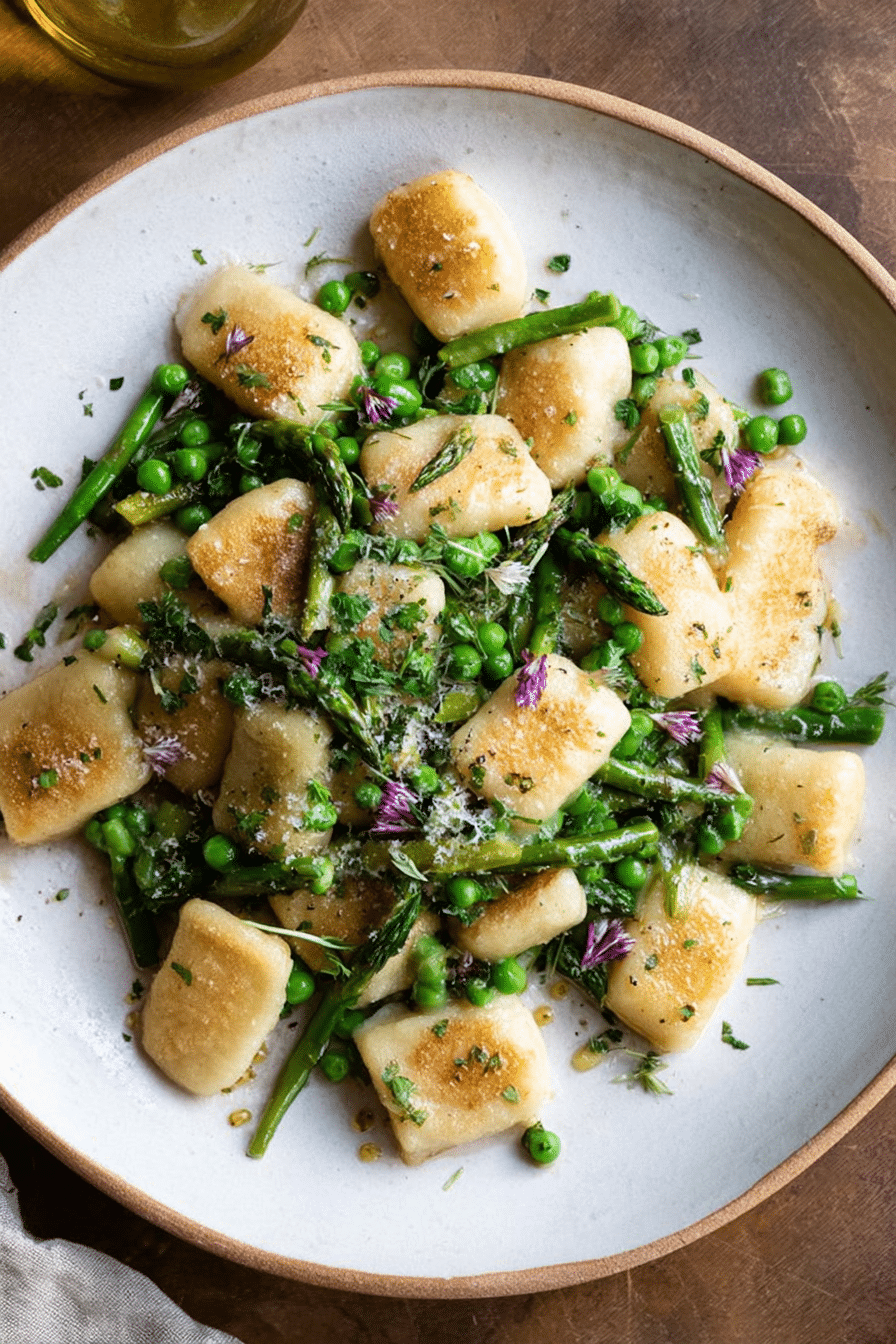
I remember the first time I overworked the dough and ended up with heavy gnocchi; since then I’ve practiced a lighter touch and learned to read the dough by feel. The ricotta should be creamy and not watery; the dough should just come together and still feel tender when you shape it. The brown butter adds a savory, toasty finish that makes even a simple plate feel special.
If you love fresh produce in the spring, you may also enjoy our spring vegetable soup for a delicious way to celebrate the season. That soup and this gnocchi share the same goal: let the vegetables sing while keeping the cooking straightforward and satisfying.
Everything about this dish rewards attention to quality — from the ricotta’s texture to the snap of the peas and asparagus. Below I’ve written a practical guide so you can achieve gentle, tender gnocchi and a bright vegetable topping with golden brown butter every time.
Everything You Need for Spring Vegetable Brown Butter Gnocchi
- Ricotta – Choose full-fat, well-drained ricotta for the creamiest dough; if it’s very wet, let it drain in a sieve so the dough isn’t soggy.
- Egg – Binds the dough and adds richness; you only need enough to hold the mixture together.
- Grated Parmesan – Adds savory depth and helps the dough hold structure while contributing a subtle saltiness.
- All-purpose flour – Provides structure; add just enough so the dough comes together without becoming dense. If you need a gluten-free route, use a validated potato starch-based blend (see Variations).
- Fresh or frozen peas – Fresh peas bring sweetness and texture; frozen peas are an excellent, convenient substitute when fresh aren’t available.
- Asparagus and sugar snap peas – Bright, slightly crunchy vegetables that contrast the pillowy gnocchi; choose firm, vibrant stalks and pods.
- Butter – For both sautéing the vegetables and for browning; the toasted milk solids in brown butter are essential to the dish’s flavor.
- Lemon (zest and juice) – Adds lift and brightens the brown butter and vegetables; zest is especially important for aroma.
- Fresh chives, black pepper, flaky sea salt – Finishing touches for aroma, a sharp peppery edge, and a pleasing crunch of salt on top.
When you shop, look for locally grown peas and asparagus if possible — the difference in sweetness and texture is noticeable. High-quality ricotta transforms the gnocchi: I prefer a tub that’s dense rather than watery, and if you have the time, let it sit in a fine sieve while you prep the rest of the ingredients.
How to Make Spring Vegetable Brown Butter Gnocchi (Step-by-Step)
- Prepare the vegetables first: blanch peas briefly and shock in ice water to keep color and snap; trim and thinly slice asparagus and snap peas so they cook quickly and evenly.
- Make the gnocchi dough gently: beat the egg, fold in drained ricotta and grated Parmesan until smooth, then add flour and salt. Mix just until the flour is absorbed and the dough holds together — stop before it becomes stiff.
- Shape the gnocchi with a light hand: on a floured surface, roll the dough into a loose rope and cut into bite-sized pieces. You can leave them plain or roll them across a fork or gnocchi board for grooves that hold sauce.
- Cook the gnocchi in gently boiling salted water: they’re done when they float; remove them with a slotted spoon and reserve a little cooking water to adjust sauce consistency if needed.
- Brown the butter in a separate pan: melt, then lower the heat and allow the butter to foam and the milk solids to turn a golden-brown color; the aroma will be nutty and warm. Watch closely so it doesn’t burn.
- Sauté the vegetables briefly in butter: use the remaining butter to quickly caramelize the asparagus and snap peas, then add the blanched peas just to warm through. Finish with lemon zest and a squeeze of juice to brighten the dish.
- Toss gnocchi with brown butter: transfer drained gnocchi to the brown butter, let them toast for a minute so they pick up a light crust, then fold in the vegetables. Taste and season with flaky sea salt and freshly cracked black pepper, finish with chives.
The Secret to the Perfect Gnocchi Texture
- Handle the dough sparingly — the moment the flour is incorporated, stop mixing. Overworking develops gluten and yields dense gnocchi rather than light pillows.
- The cheese matters: Parmesan gives structure and savory flavor; too much will dry the dough, too little and the gnocchi can be gummy. Aim for balance.
- Feel the dough: it should be slightly tacky but not sticky. If it sticks excessively, dust the surface and rope with a little more flour — but add as little as possible.
- Shaping tools: a fork or gnocchi board adds grooves to catch the brown butter. If you’re new to shaping, don’t worry — uniform size and gentle handling are more important than perfect ridges.
- Cooking test: cook a couple of gnocchi first to confirm texture before boiling the entire batch; they should float and feel tender when bitten.
Why Fresh Ingredients Matter in This Dish
Fresh, seasonal vegetables are the backbone of this recipe. Green peas that are sweet and bright, and asparagus that snaps when bent, bring color, texture, and natural sweetness that contrast the rich, nutty brown butter. Locally sourced produce often has better flavor because it’s harvested at peak ripeness — you’ll notice the difference in every bite. Fresh lemon zest lifts the whole plate, adding bright citrus perfume that lightens the sauce.
Beyond flavor, fresh ingredients hold their texture better during quick cooking; frozen or older vegetables can turn mushy. If you’re aiming for the very best results, buy vegetables from a farmers market or a trustworthy local produce stall and prepare them the same day.
Cooking with Brown Butter: The Key Technique
- Start in a light-colored pan so you can see the milk solids turn golden — that visual cue is how you know it’s time to stop. The butter will foam, then subside; the tiny brown flecks are the toasted milk solids.
- Keep the heat moderate and stir occasionally; residual heat will continue to deepen the color, so remove from heat just as it turns golden and fragrant.
- Have your gnocchi and vegetables ready before you brown the butter — the process moves quickly and you don’t want to overcook the butter while multitasking.
- If the butter begins to smell bitter or the solids turn dark brown, toss it and start over. A fresh batch of butter will give the dish a warm, nutty aroma without any burnt notes.
Pro-Tip for Spring Vegetable Brown Butter Gnocchi
- Make-ahead strategy: shape the gnocchi and freeze them on a tray until firm, then transfer to a bag for long-term storage. Cook from frozen — they will take a little longer to float.
- Gluten-free option: swap the flour for a tested gluten-free blend formulated for potato/gnocchi use; keep the dough a touch wetter and handle gently to avoid crumbling.
- Vegan approach: replace ricotta with a thick, pressed tofu blended smooth and use a plant-based butter with a neutral flavor; add a pinch of nutritional yeast for savory depth.
- Reheating tip: sauté cooked gnocchi briefly in a hot pan with a knob of butter until warmed through and slightly crisped — this restores texture better than microwaving.
- Seasoning finish: always finish with lemon zest and flaky sea salt at the table; those final touches sharpen the flavors and add contrast to the brown butter’s richness.
Storage Tips for Leftover Gnocchi
- Cooked gnocchi: store in an airtight container in the refrigerator for up to three days; refresh by pan-searing gently in butter to restore color and texture.
- Uncooked gnocchi: place on a tray dusted with flour and freeze until solid, then transfer to a sealed bag; they’ll keep for several months and cook straight from frozen.
- Avoid saucing large batches before storing; keep sauce and gnocchi separate when possible so the gnocchi don’t become soggy in the fridge.
Variations to Try for Different Dietary Needs
- Gluten-free gnocchi: use a validated gluten-free flour blend designed for small-pasta or gnocchi; expect to adjust hydration and handle gently to prevent cracking.
- Vegan gnocchi: swap ricotta for a well-drained, blended tofu or a cashew ricotta; use plant butter and omit Parmesan, adding nutritional yeast or miso for savoriness.
- Protein additions: for a protein accompaniment, try our brown sugar garlic chicken as a complementary, savory option to serve alongside.
- Seasonal swaps: in late spring swap peas for fava beans or add young ramps for a garlicky green note; different vegetables will shift the dish’s character while keeping it bright.
Side Dish and Wine Pairing Suggestions
For texture contrast and a fresh counterpoint, serve a simple spring salad with tangy goat cheese alongside the gnocchi — it brightens the palate and keeps the meal lively. For a delightful addition, consider pairing your gnocchi with a refreshing spring salad with goat cheese.
If you prefer a heartier accompaniment, roast a lemony chicken or serve a garlicky chicken and potatoes for a rustic table. Another excellent pairing for your gnocchi is the baked garlic parmesan chicken and potatoes.
Wine pairings: choose a light, crisp white with good acidity to cut the brown butter’s richness — Sauvignon Blanc or a mineral-driven Pinot Grigio are reliable matches. For a touch of floral complexity, an unoaked Chardonnay with bright citrus notes also works well.
Frequently Asked Questions
What type of potatoes are best for making gnocchi?
For making gnocchi, it’s best to use starchy potatoes like Russets or Yukon Golds. These types create a light and fluffy texture.
Can I use frozen peas instead of fresh ones?
Absolutely! Frozen peas work great in this recipe and will save you some prep time. Just be sure to cook them briefly until tender.
How can I store leftover gnocchi?
Store leftover gnocchi in an airtight container in the refrigerator for up to 3 days. You can also freeze them for longer storage.
Is it possible to make this recipe vegetarian?
Yes! The recipe is already vegetarian as it doesn’t contain meat. You can simply omit any potential meat-based sides to keep it fully vegetarian.
What wine pairs well with Spring Vegetable Brown Butter Gnocchi?
A light white wine, such as Sauvignon Blanc or Pinot Grigio, pairs beautifully with the vibrant flavors of this dish.
Spring Vegetable Brown Butter Gnocchi
Ingredients
Method
- Bring a large pot of salted water to a boil. Add the peas. Cook for about 3 minutes, or until tender. Use a strainer to transfer the peas to a bowl of ice water to cool. Once cooled, drain the peas and set aside. Reserve the pot of water.
- In a mixing bowl, beat the egg. Whisk in the ricotta cheese until smooth. Then, whisk in the grated parmesan. Add the flour and salt to the bowl. Use a wooden spoon to incorporate it. Do not over stir (stop just when all of the flour is absorbed and the dough comes together).
- Transfer the dough to a lightly floured surface. Gently roll the dough into a long rope, adding a little more flour if needed. Cut the rope into ½-1” pieces. Transfer the gnocchi to the pot of salted boiling water. Cook for about 3 minutes, or until they float to the top.
- Meanwhile, add 3 tablespoons of the butter to a small saucepan over medium heat. Allow to melt. Lower the heat to medium-low and continue to cook the butter until golden brown and fragrant.
- In a separate skillet, melt the remaining butter over medium-high heat. Add the asparagus and sugar snap peas. Quickly sauté for a minute or so, just until lightly caramelized. Stir in the peas to heat through. Season with the lemon zest, lemon juice, and a pinch of salt to taste.
- Drain the gnocchi. Transfer them to the brown butter and allow to toast for a minute. Plate the gnocchi with the brown butter and vegetables over top. Garnish with a pinch of chives, freshly cracked black pepper, and flaky sea salt.