

There’s something about the first bunches of asparagus and the snap of fresh peas that makes the kitchen feel like it’s reopening after a long winter. I make this spring vegetable soup every year the markets start filling up with tender greens — it’s that transitional dish that’s warm and comforting, but tastes like new season sunshine. The broth wakes up with garlic and onion, then the vegetables add color and texture: little pops of snap peas, silky leeks, and the lemon at the end brightens everything. I love that it’s easy enough for a weeknight but pretty enough for company.
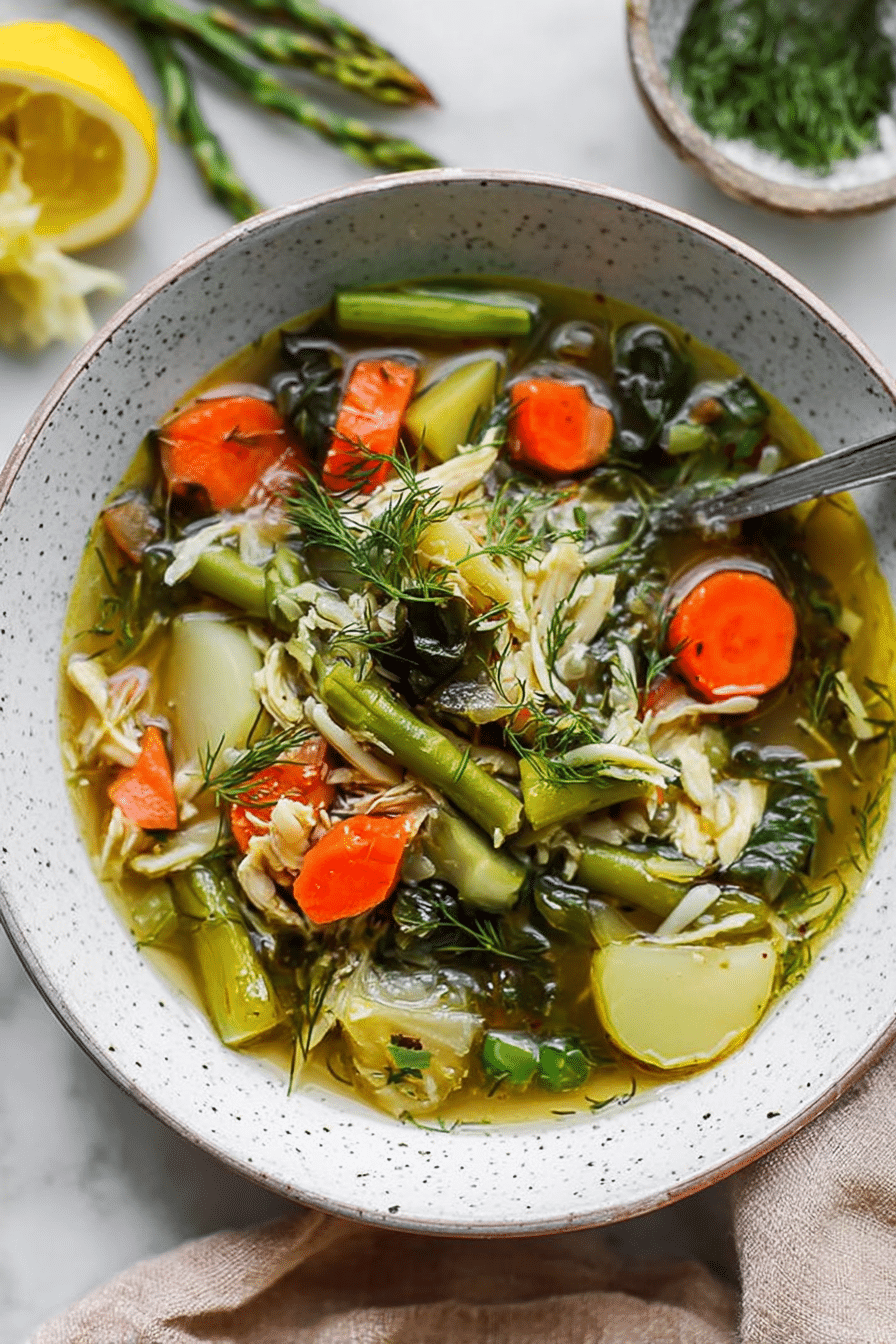
When I first tested this recipe I was surprised by how quickly those green flavors show up — the smell of dill and lemon literally changes the entire pot in a minute. Over several tests I tweaked the timing so the orzo doesn’t overcook and the vegetables stay bright but tender. Below I’ll walk you through why each step matters, what can go wrong, and how to adapt it to your pantry.
Benefits of Fresh Seasonal Ingredients
Using vegetables that are in season — asparagus, snap peas, young leeks, baby spinach or swiss chard — is the secret to a soup that tastes like spring. I can tell the difference when ingredients come from the farmers’ market: the asparagus is sweeter, the peas actually pop in your mouth, and the greens have a fresher, less bitter edge. Fresh produce also tends to have higher vitamin content and less travel time, which is better for the environment and supports small-scale farmers.
Seasonal suggestions and what they bring to the pot:
- Asparagus – bright, grassy flavor and tender texture if you use thicker spears and trim the woody ends; it cooks fast so add it early enough to soften but not so long that it turns limp.
- Snap peas – provide a fresh crunch and natural sweetness; they keep their color and texture if you add them late in the cooking.
- Leek – offers a gentle, sweet onion note; use only the white and pale green parts for the most delicate flavor.
- Swiss chard or spinach – adds iron-rich greens and a silky mouthfeel once wilted; chard stands up a bit better to cooking than delicate baby spinach.
- Carrots – lend sweetness and body to the soup; slice evenly so they cook through at the same rate as asparagus pieces.
- Fresh dill – finishing herb that lifts each spoonful with a citrusy, slightly anise-y aroma when combined with lemon.
If you want a bright springside to showcase fresh peas, try our snap pea salad with zesty lemon vinaigrette for a crisp, lemony complement to the soup.
Easy One-Pot Preparation Steps
This is a true one-pot soup that keeps cleanup minimal — I use a large, heavy-bottomed pot so the bottom doesn’t scorch and there’s room for the orzo to expand. One-pot cooking also helps flavors meld: the garlic and onion infuse the oil, the vegetables release juices into the broth, and the orzo thickens the liquid slightly, giving the soup a comforting, spoonable texture.
Why the timing matters: you sauté the onion and garlic first to build a savory foundation; vegetables like carrots need a few minutes to soften, but asparagus and snap peas need much less. If you add everything at once you risk overcooking the delicate greens or undercooking the root vegetables.
Here is the tested recipe format I follow (yields 4):
Ingredients (accurate for the recipe):
- Olive oil – a drizzle to sauté the aromatics and carry flavor.
- Yellow onion – chopped; builds a sweet, savory base.
- Garlic – minced; turns from sharp to fragrant and slightly sweet when gently cooked.
- Carrots – chopped; add sweetness and body.
- Asparagus – woody stems removed; use thicker spears for texture.
- Snap peas – bright sweet crunch that should stay slightly crisp.
- Leek – white part only, sliced into rounds for gentle onion flavor.
- Italian seasoning – herb blend to add Mediterranean warmth.
- Vegetable broth – low sodium to control final salt levels.
- Orzo – adds body; cook time matters to avoid mushiness (see GF notes below).
- Swiss chard – chopped; wilts into the soup and adds color and nutrients.
- Cooked chicken (optional) – shredded for protein, or swap for white beans to keep it vegetarian.
- Fresh dill – added at the end for brightness.
- Lemon juice – half a lemon (or more to taste) to finish and lift flavors.
- Salt & pepper – to taste; salt brightens the whole bowl, so season carefully.
Full accurate ingredient amounts (for precise cooking):
- 1/4 cup olive oil
- 1 cup chopped yellow onion
- 4 large cloves garlic, minced
- 1.5 cups chopped carrots (about 2 carrots)
- 1.5 cups chopped asparagus
- 1.5 cups chopped snap peas
- 1 leek, white part, cut into 1/4-inch rounds
- 1 Tbsp Italian seasoning
- 5 cups low-sodium vegetable broth
- 3/4 cup dry orzo
- 2 large leaves swiss chard, chopped
- 2 cups cooked shredded chicken (optional)
- 1/4 cup fresh dill, chopped
- Juice of 1/2 a lemon
- Salt + pepper to taste
Step-by-step:
- Heat a large, deep pot over medium-high and add the olive oil. When the oil shimmers, add the chopped onion and minced garlic. Stir and cook for about 5 minutes until the onion is soft and translucent and the garlic aroma goes from sharp to warm and slightly sweet. Watch closely — garlic can burn quickly; if it starts to brown too fast, lower the heat.
- Add the chopped carrots, asparagus, snap peas, sliced leek, and the Italian seasoning. Season lightly with salt and pepper (remember the broth is low-sodium). Stir and cook for about 3 minutes so the carrots start to soften but the green vegetables keep their color. If your carrots are thicker, give them an extra 1–2 minutes to avoid undercooked chunks.
- Pour in the 5 cups of vegetable broth, stir, cover the pot, and bring to a boil. Covering helps the broth heat evenly and reduces evaporation; keep an eye so it doesn’t scorch on the bottom.
- Once the broth is boiling, stir in the uncooked orzo, chopped swiss chard, and shredded chicken (if using). Reduce the heat slightly so the pot is at a gentle boil and cook for 6 minutes. The orzo will plump and release some starch, which lightly thickens the soup.
- Remove from heat and stir in the fresh dill and lemon juice. Taste and adjust salt and pepper as needed before ladling into bowls. The lemon should brighten the flavors — start with half a lemon and add more if you want extra zing.
For an alternative one-pot method that’s great for busy days, see our creamy slow-cooker tomato tortellini soup for slow-cooker timing and tips you can adapt.
Gluten-Free Adaptations for the Recipe
If you need this soup to be gluten-free, there are a couple of reliable swaps that keep the texture and flavor you expect. I’ve cooked this version both with gluten-free orzo and with cooked rice, and both work well.
- Gluten-free pasta – swap the orzo for a gluten-free orzo alternative or small GF pasta; watch cooking times which can vary by brand.
- Rice or quinoa – use about 3/4 cup cooked rice or quinoa added at the end to avoid overcooking; if adding uncooked, increase broth slightly and adjust cook time until grains are tender.
- Thickening – if you like a thicker soup, whisk 1 tablespoon cornstarch with 2 tablespoons cold water and stir into the hot soup, then simmer 1–2 minutes until it thickens. Alternatively, puree a cup of the cooked vegetables and stir back in for body without changing flavor.
Note: always use a gluten-free labelled vegetable broth if you’re strictly avoiding gluten. The flavors remain intact with these swaps — the lemon and dill still bring the same brightness.
Meal Prep and Storage Tips
This soup is a great meal-prep candidate. I often make a double batch on Sunday and portion lunches for the week. Here’s how I keep the texture and freshness as close to the day-of as possible:
- Fridge: Cool the soup to room temperature and store in airtight containers for 3–4 days. If the soup contains orzo, expect it to absorb more liquid over time and soften.
- Freezing: Freeze up to 2–3 months. I recommend omitting orzo if you plan to freeze — instead, freeze the soup base and add freshly cooked orzo when reheating to avoid a mushy result.
- Reheating: Reheat gently on the stove over medium-low, stirring often. Add a splash of broth or water if it’s too thick. Finish with a squeeze of lemon and a sprinkle of fresh dill for that bright, just-made flavor.
- Batch-cooking tip: Cook the orzo separately and keep it in the fridge. When serving, ladle hot soup over a scoop of cold orzo — it warms through but keeps a firmer bite.
To avoid waste, leftover soup makes a lovely base for a grain bowl or can be thickened and served over toasted bread with a soft-boiled egg. It’s very forgiving.
Nutritional Benefits of the Ingredients
This soup is a good balance of vegetables, protein (if you add chicken or beans), and carbohydrates from orzo. Here are the key nutritional highlights of the main players:
- Kale/Swiss chard – high in vitamins A, C, and K, and a source of iron and calcium; they wilt down and provide antioxidants without heavy calories.
- Carrots – rich in beta-carotene (a vitamin A precursor) and fiber; they bring natural sweetness and eye-healthy nutrients.
- Zucchini/Asparagus – provide vitamin C and folate; asparagus also offers inulin, which supports gut bacteria.
- Peas – contain plant protein, fiber, and vitamin K; the fresh ones especially add a sweet pop.
- Cooked chicken or white beans – chicken adds lean protein and satiety; cannellini or navy beans are excellent plant-based protein and fiber substitutes.
To highlight plant-based protein and fiber, consider adding white beans as in our Tuscan white bean soup for a heartier, nutrient-packed variation.
Creative Variations and Flavor Combinations
Over the years I’ve experimented with this base to suit different moods and pantries. Here are tested variations that worked in my kitchen:
- Creamy coconut variation – stir in 1/2 cup coconut milk at the end for a silky, slightly sweet finish that plays well with Thai lime leaves and cilantro.
- Mediterranean twist – swap dill for fresh oregano and add a handful of chopped cherry tomatoes and kalamata olives to the bowl for briny contrast.
- Asian-flavored – use chicken broth, add a thumb of ginger with the garlic, finish with soy sauce (or tamari for GF) and a splash of rice vinegar. Top with scallions and cilantro.
- Spicy kick – sprinkle red pepper flakes with the Italian seasoning, or swirl in chili oil just before serving.
- Protein swaps – shredded rotisserie chicken, cubed tofu, tempeh, or canned white beans all work. If using tofu, brown it first for texture.
These variations are practical — I often reach for the coconut milk version on rainy spring nights and the Mediterranean one for a light dinner when guests come over.
Serving Suggestions and Pairing Ideas
How you serve this soup can take it from weeknight comfort to a composed meal. I like to finish each bowl with a few simple touches that add texture and punch:
- Drizzle of extra-virgin olive oil or a swirl of pesto for richness.
- Crunchy croutons or toasted nuts (pine nuts or almonds) for contrast.
- Fresh herbs: extra dill, parsley, or chives depending on your mood.
- A wedge of lemon on the side so everyone can add more brightness at the table.
Serve the soup with warm, crusty bread or a simple green salad. If you’re indulging, pair with a glass of crisp white wine (like a Sauvignon Blanc) or a homemade herbal tea — chamomile or mint are gentle, complementary choices.
Serve the soup with warm homemade cheese breadsticks for an indulgent, family-friendly pairing perfect for dipping.
Conclusion and Encouragement to Try the Recipe
If you’ve made it this far, give the recipe a try this weekend when your market looks most promising. Start by tasting the broth after you sauté the aromatics — that’s where you can correct salt, add a squeeze of lemon, or decide if you want more herbiness. Don’t be afraid to swap the protein or skip the orzo for a lower-carb option; this recipe is forgiving and meant to showcase good produce.
I’d love to hear how you make it your own. Tag a photo if you share it or note any creative swaps that worked — I test these ideas in my own kitchen and really enjoy seeing what readers invent. Happy cooking and enjoy the bright, fresh flavors of spring in a cozy soup bowl.
Frequently Asked Questions
Can I make this soup gluten-free?
Yes. Swap the orzo for a gluten-free pasta, rice, or quinoa and use a gluten-free vegetable broth. If you want a thicker soup, use a cornstarch slurry or puree some of the cooked vegetables. Note that cooking times may vary depending on the substitute.
How can I make this soup vegetarian or vegan?
Replace the shredded chicken with canned white beans (cannellini or navy beans) or extra vegetables. For vegan, use vegetable broth and omit any dairy (this recipe doesn’t use dairy). Tofu or tempeh also work as plant-based protein options.
Can I use frozen vegetables instead of fresh?
Yes—frozen peas, asparagus, and other spring veggies work fine. Add frozen vegetables after the broth boils and reduce overall cook time slightly, since frozen veggies cook faster. Taste and adjust so they stay bright and slightly crisp.
What’s the best way to store and reheat leftovers?
Store in an airtight container in the fridge for 3–4 days or freeze up to 2–3 months. To avoid mushy orzo, either cook the orzo separately and add when reheating, or omit orzo before freezing and add freshly cooked orzo when serving. Reheat gently on the stove or in the microwave and finish with a squeeze of lemon and fresh dill.
Can I meal prep this soup for the week?
Absolutely. Make a big batch, cool it, and portion into airtight containers. If planning meals throughout the week, store the soup without orzo and pack cooked orzo separately to keep texture fresh. This makes quick, healthy lunches or dinners.
Spring Vegetable Soup
Ingredients
Method
- Heat olive oil in a large, deep pot over medium-high. Add in chopped onion and minced garlic. Stir and cook for 5 minutes.
- Add chopped carrots, asparagus, snap peas, leeks, and Italian seasoning to the pot. Season with salt and pepper, then stir and cook for about 3 minutes.
- Pour in vegetable broth. Cover the pot and bring broth to a boil.
- Once broth is boiling, stir in the uncooked orzo, chopped swiss chard, and shredded chicken. Cook for 6 minutes.
- Stir in the fresh dill and lemon juice. Taste and adjust seasoning as needed before serving.