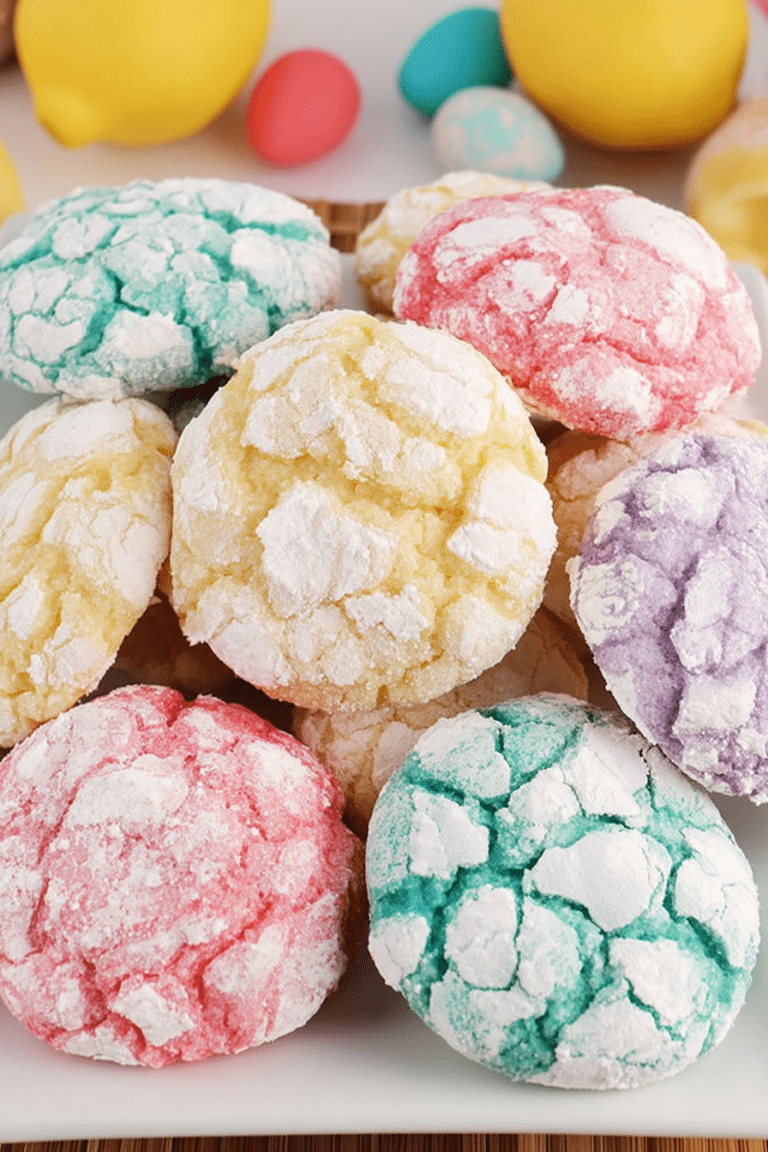


I make these Springtime Crinkle Cookies whenever I need a cheerful treat that actually comes together fast. They’re the kind of cookie I roll with friends while the kettle warms for tea—soft centers, crackled tops, and a little pastel cheer that brightens a dessert plate. I like that they look special without demanding a full afternoon in the kitchen.
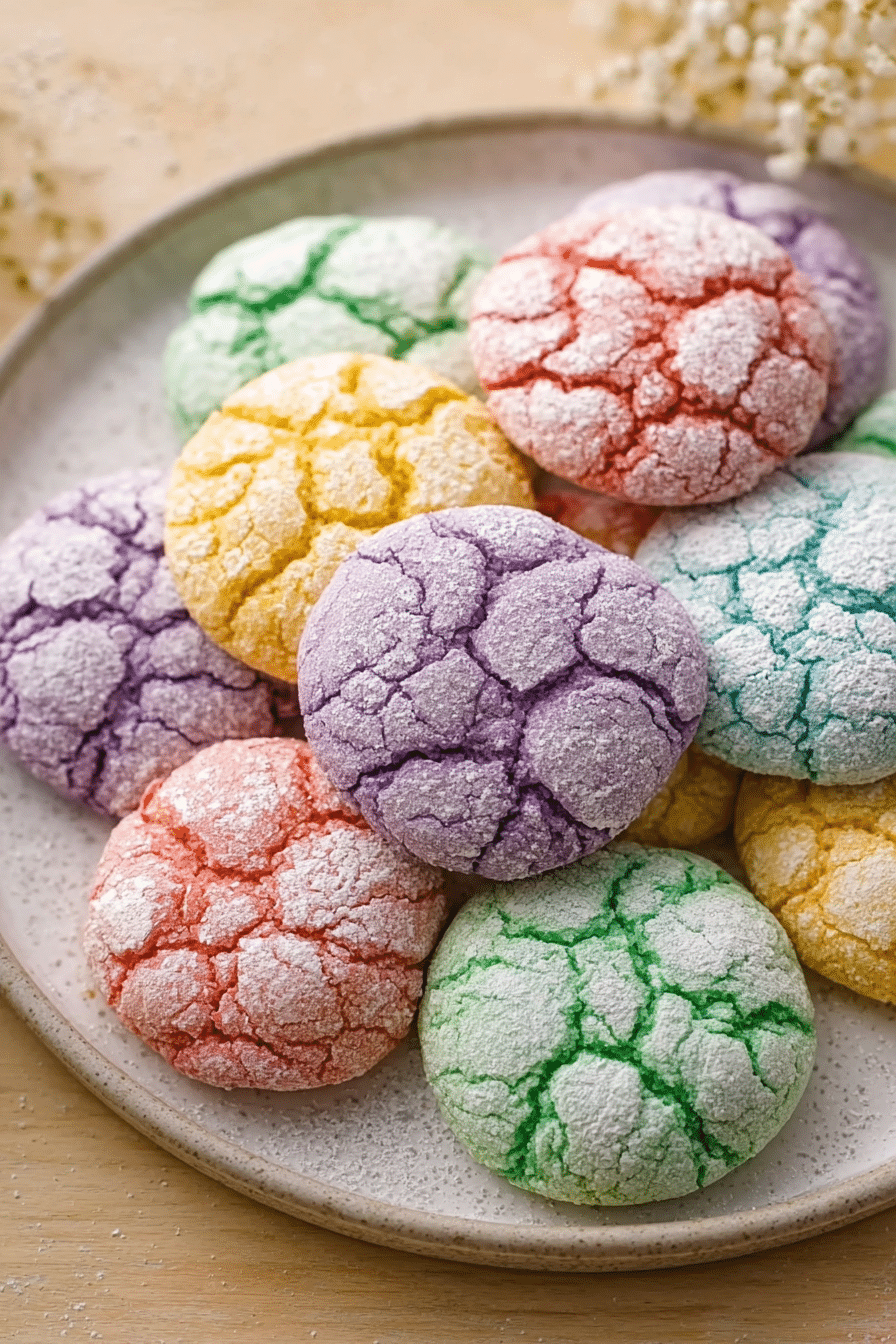
In my kitchen, the aroma of vanilla and a hint of almond fills the air as these cookies bake — it always feels like spring arriving early. I like that the method is forgiving: a quick creaming, a simple chill, and a dusting of powdered sugar are all it takes to get those pretty cracks. Over the years I’ve learned small adjustments that make the texture reliably soft and the tops beautifully crinkled.
These cookies are perfect for last-minute gatherings because they bake quickly and travel well. If you want a zesty twist, or need a gluten-free or vegan version, there are simple swaps that keep the same playful look and tender bite. I’ll walk you through the why and the how so your first batch looks the way you hoped it would.
Everything You Need for Springtime Crinkle Cookies
Simple pantry staples and a couple of basic tools are all you need to make these. Below I’ll explain why each ingredient matters and suggest easy substitutions for common dietary needs. If you like the crinkle texture, you might also enjoy our Lemon Crinkle Cookies for a zesty twist.
- Ingredients (what each one does)
- All-purpose flour – The structure builder; it creates the tender crumb when combined with the right fat and leavening. For GF, use a blend labeled for 1:1 substitution that contains xanthan gum.
- Baking powder – The lift agent that puffs the tops and helps form the crackled surface.
- Salt – Balances sweetness and rounds the flavor.
- Unsalted butter – Adds richness and a tender mouthfeel. For a dairy-free version, swap in a firm vegan butter.
- Granulated sugar – Sweetness and structure; it also helps create a glazed surface that cracks under powdered sugar.
- Eggs – Bind the dough and contribute moisture and lift. For vegan swaps, I recommend specific egg replacers below.
- Vanilla extract – The backbone of flavor; simple and comforting. You can swap other extracts for variations.
- Almond extract (optional) – A little goes a long way for a nutty, floral note; omit or double vanilla if you prefer.
- Powdered sugar – The visual and textural finishing touch: it gives the cookies their signature crackled look and a delicate outer texture.
- Gel food coloring – Use pastels for that spring look; gel concentrates color so you add less liquid and keep dough consistency.
- Tools you’ll want
- Mixing bowls and a hand mixer or stand mixer for easy creaming.
- Measuring cups and spoons.
- A baking sheet lined with parchment or a silicon mat.
- A small scoop or your hands for rolling dough balls and a shallow bowl for powdered sugar.
If you need diet-friendly ideas, I mention gluten-free and vegan swaps in the Flavor Swaps section below.
The Secret to the Perfect Crinkle Texture
The crackled top is about balance: enough rise to split the sugary surface, and a soft interior that contrasts with the crisp outer sugar. Here’s what really matters.
- Baking powder does the rising. It creates fast lift in the oven so the tops burst and crack. If you underuse it, cookies stay flat; too much and they can taste metallic.
- Sugar and butter set the exterior. During baking the butter melts and the sugar helps form a thin, slightly glossy skin that fractures as the cookie expands.
- Powdered sugar coating. Rolling the chilled dough in powdered sugar gives you the dramatic white cracks. It also adds a delicate outer texture that contrasts with the tender center.
- Dough consistency. A thick, slightly tacky dough holds shape and rises upward rather than spreading thin — that vertical rise is what creates the large cracks.
Why Chilling the Dough Makes a Bigger, Better Crackle
Chilling is more than just timing — it’s structural and flavor work. Give the dough time in the fridge and you’ll see a noticeable difference in look and bite.
- Chilling firms the butter so cookies spread less; that leads to a thicker cookie that rises more and cracks larger on top.
- Cold dough traps air pockets and stabilizes sugar; as the oven heats, those pockets expand and push the powdered sugar shell apart for bigger fissures.
- Resting in the fridge also lets flavors meld — the vanilla and almond notes develop and taste deeper after a short chill.
Flavor Swaps & Diet-Friendly Tweaks (gluten-free, vegan options)
These cookies are a great canvas for different flavors and diets. Swap extracts, add zest, or switch flours and egg replacers to suit your needs. For those looking for diet-friendly options, try our Banana Chocolate Chip Bars as a sweet and nutritious alternative.
- Extract swaps – Try lemon or orange extract for a citrus lift, or mint for a fresher note.
- Add-ins – Mini chocolate chips or finely chopped nuts add texture; fold them in gently so the dough keeps its structure.
- Gluten-free – Use a reliable 1:1 gluten-free flour blend that contains xanthan gum. It mimics the structure of all-purpose flour and keeps the cookies tender.
- Vegan – Replace butter with a firm vegan butter and use an egg replacer like flax egg or a commercial binder. Note: flax egg can add a bit more chew; choose the replacer based on the texture you prefer.
- Variations (quick ideas)
- Citrus zest added to the dough for bright, fresh notes.
- Stir in tiny white chocolate chips for a pretty contrast with pastels.
- Use natural colorings like beet powder or turmeric for softer, food-friendly hues.
How to Make Springtime Crinkle Cookies (Step-by-Step)
Below are clear, scannable steps so you can follow along in the kitchen. Use these checkpoints to know how the dough and cookies should feel and look at each stage.
- Preheat your oven and prepare a baking sheet with parchment or a silicone mat so cookies don’t stick.
- Cream together butter and sugar until the mixture is light and slightly fluffy — you should see it lighten in color and texture.
- Add eggs one at a time, mixing until each is incorporated, then stir in vanilla and any optional extract. The batter will look glossy.
- Fold in the dry mixture until a thick dough forms — it should be soft but not loose. If it feels too sticky, chill briefly before coloring.
- Divide the dough into portions and tint each with gel food color until even. Gel keeps the dough from becoming too wet.
- Chill the colored dough until firm enough to scoop — this helps the cookies rise up instead of spreading thin.
- Roll tablespoon-sized balls (or your chosen size) in powdered sugar until fully coated, then place them on the sheet with space between for expansion.
- Bake until the tops crack and the edges set. Smaller cookies need less time; larger cookies need a minute or two more. Let them rest a few minutes on the sheet before transferring to a rack.
- Troubleshooting (what I learned in my kitchen)
- If the dough felt too tacky to roll, I popped it back into the fridge for 10–15 minutes and that firmed it enough to handle without drying it out.
- If cracks are small, the dough was likely too thin or the oven temperature ran cool; try a slightly longer chill and check your oven thermometer.
- For cookies that spread too much, double-check your leavening and make sure the butter wasn’t overly soft when you creamed it.
Pro Tip for Springtime Crinkle Cookies: How to Get Big Cracks Every Time
Pro-Tips, Troubleshooting, and Variations are written as bulleted lists below for quick scanning.
- Roll generously in powdered sugar so the outer shell is thick enough to fracture as the cookie expands.
- Space cookies well on the sheet; they need room to rise without bumping into one another.
- Chill the dough for at least the recommended time — longer chills often yield better cracks and deeper flavor.
- Use gel food coloring to avoid adding extra moisture to the dough; liquid color can make the dough softer and reduce cracking.
- Adjust baking time by size: smaller scoops bake quickly and produce tighter cracks; larger scoops need more time and create bigger fissures.
- Know your oven: if it runs cool, the tops won’t set in time to crack well; a slightly hotter, short bake can help create the split surface.
Decorating & Serving Ideas for Spring Gatherings
These cookies already look festive, but a few simple touches make them party-ready. Consider pairing your Springtime Crinkle Cookies with our Soft Chewy Lemon Cookies for a delightful dessert platter.
- Finish with a light dusting of extra powdered sugar just before serving for a fresh, snow-like look.
- Top a few cookies with tiny pastel sprinkles or edible flower petals for a beautiful, seasonal display.
- Arrange on a pastel-colored platter or tiered stand to play up the spring palette—mix colors for impact.
- Pair with iced tea, lemonade, or a floral herbal tea to complement the gentle flavors.
How to Store, Freeze, and Make-Ahead Springtime Crinkle Cookies
You can make these ahead and keep that just-baked tenderness with a few simple storage tricks. Try storing your treat varieties together, like our delicious Glazed Lemon Cookies.
- Room temperature: Store in an airtight container layered with parchment to prevent sticking; they stay fresh for up to a week.
- Freezing: Freeze in a single layer on a tray until firm, then stack with parchment between layers in a freezer-safe container to prevent sticking.
- Reheating: Thaw at room temperature and warm briefly in a low oven to refresh the exterior if desired — this brings back a just-baked texture.
- Make-ahead: You can form and freeze the dough balls (coated in powdered sugar) and bake from frozen, adding a couple of minutes to the bake time.
Frequently Asked Questions
What is the best way to store Springtime Crinkle Cookies?
Store your crinkle cookies in an airtight container at room temperature for up to one week. For longer freshness, you can freeze them for up to three months!
Can I make these cookies gluten-free?
Yes! You can substitute all-purpose flour with a gluten-free flour blend. Just make sure it includes xanthan gum for the best texture.
How can I enhance the flavor of Springtime Crinkle Cookies?
You can add citrus zest like lemon or orange for a fresh twist, or mix in chocolate chips for an extra indulgent treat!
Why is chilling the dough important?
Chilling the dough helps the cookies maintain their shape while baking and enhances the flavor. It also leads to a better crinkle texture!
What can I use instead of almond extract?
If you’re not a fan of almond extract, you can simply omit it or substitute it with additional vanilla extract for a delicious flavor.
Springtime Crinkle Cookies
Ingredients
Method
- Preheat oven to 350°F (175°C) and line a baking sheet with parchment paper.
- Whisk together flour, baking powder, and salt in a medium bowl.
- In a large bowl, beat butter and sugar until light and fluffy. Add eggs one at a time, mixing well after each addition.
- Stir in vanilla and almond extracts, then gradually fold in the dry ingredients to form a thick dough.
- Divide dough into portions and add pastel gel food coloring to each, mixing until colors are even. Chill for at least 30 minutes.
- Roll tablespoon-sized balls of dough in powdered sugar until fully coated. Place 2 inches apart on baking sheet.
- Bake for 10–12 minutes or until tops crack and edges are set. Let cool on the sheet for a few minutes before transferring to a rack to cool completely.