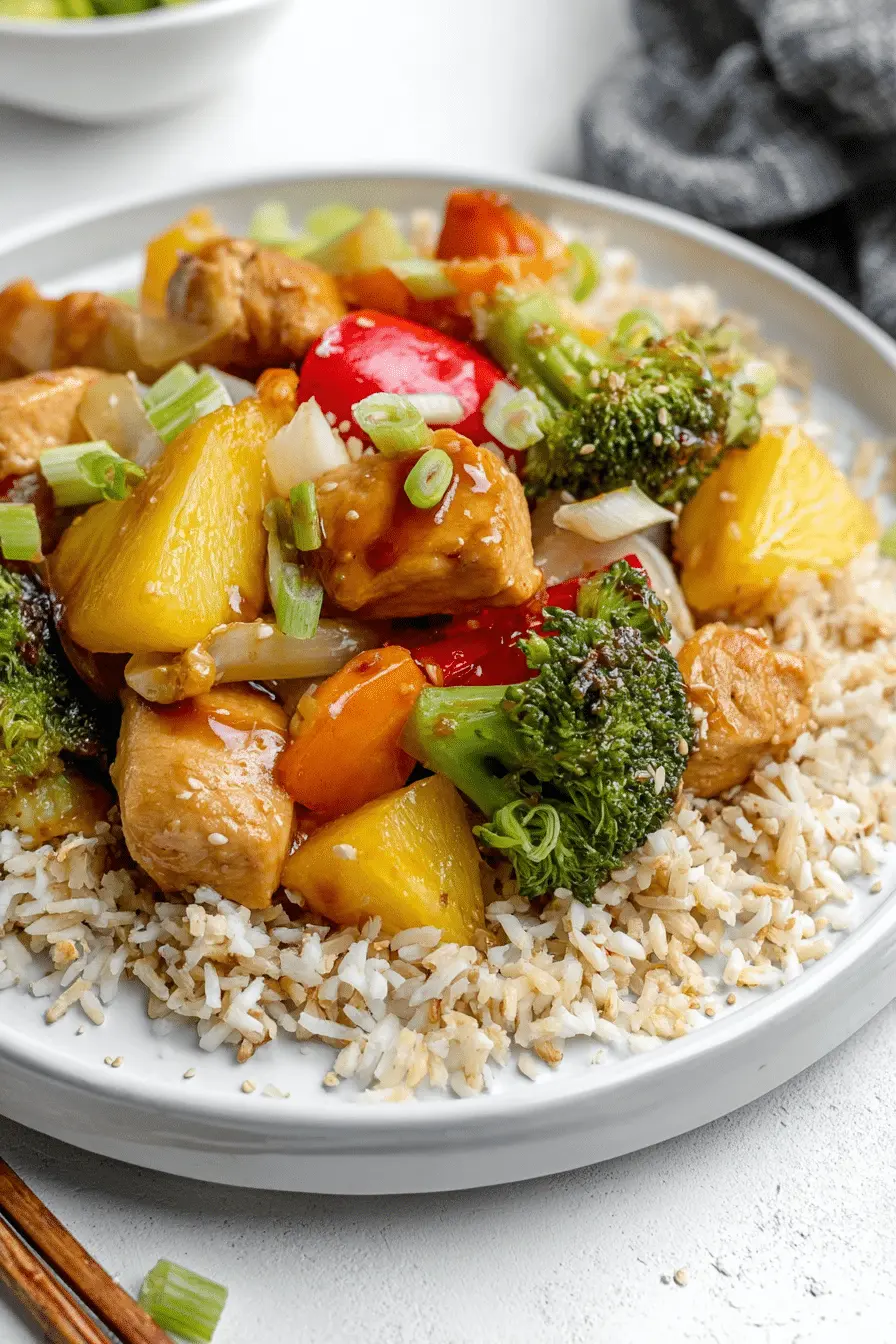
The 30-Minute Sweet and Sour Pineapple Broccoli Chicken Stir Fry
- Prep
- 15 min
- Cook
- 15 min
- Total
- 30 min
- Serves
- 4
- Calories
- 286 kcal
- Carbs
- 28.20 g
Introduction
I make this sweet and sour pineapple broccoli chicken stir fry on the busiest weeknights when I need dinner that’s fast, colorful, and satisfying. It’s one of those reliable recipes that comes together in about 30 minutes, trims down my cleanup, and still tastes like I spent way more time in the kitchen than I actually did. The tang of pineapple, the brightness of ginger and scallions, and the satisfying bite of crisp broccoli keep everyone at my table happy.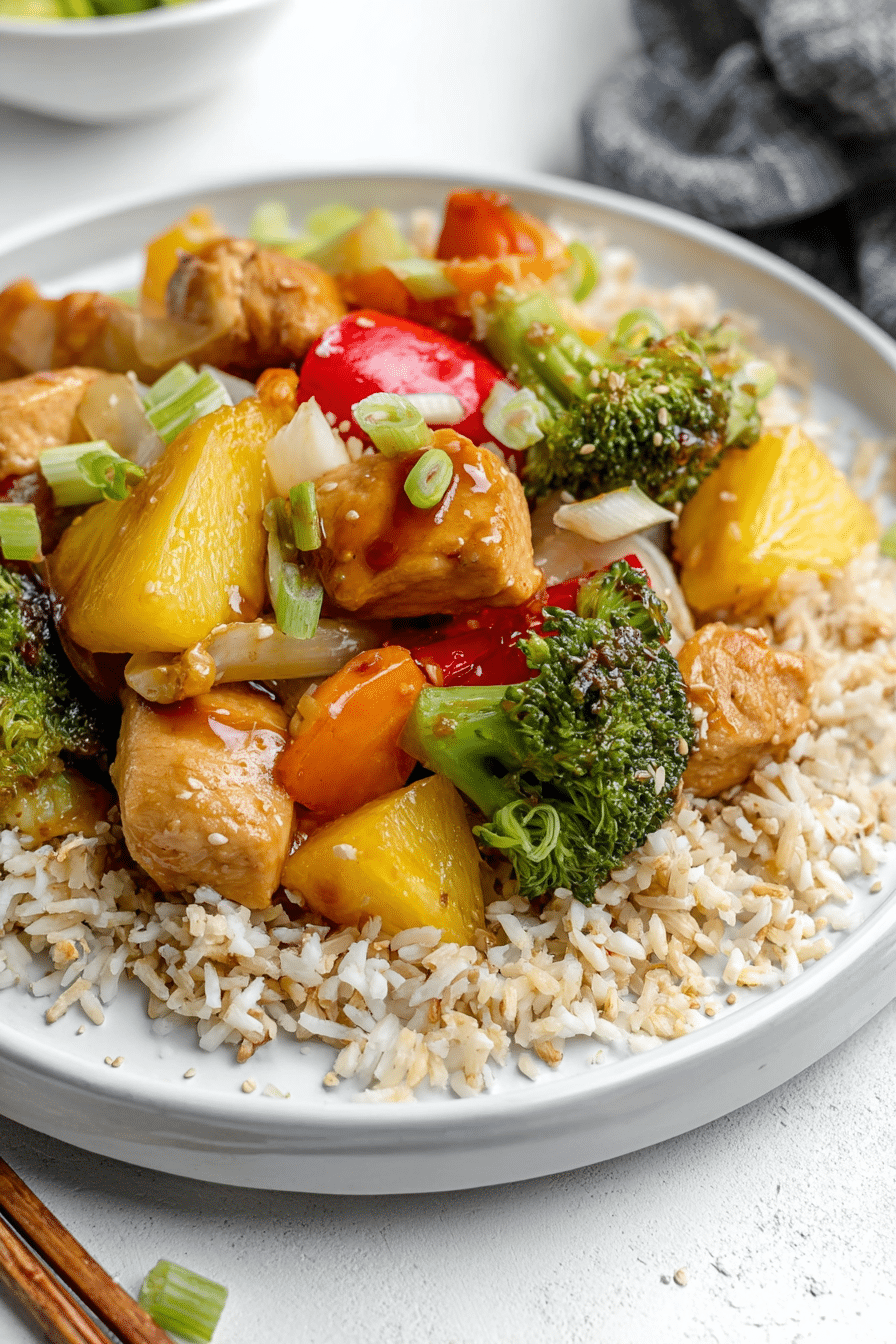
Why this Sweet and Sour Pineapple Broccoli Chicken Stir Fry is perfect for busy weeknights
This recipe is built for speed and balance: it takes about 30 minutes from start to finish, uses just one deep skillet to minimize washing up, and hits protein, vegetables, and a bright sauce all in one pan. The colors—red pepper, green broccoli, golden pineapple—make the plate look finished without any fuss, and the mix of textures keeps picky eaters engaged. Because everything cooks quickly at high heat, you spend less time babysitting the stove and more time at the table. If you want more simple one-pan options that make weeknights easier, check out these easy one-pan chicken dinners.Everything You Need for Sweet and Sour Pineapple Broccoli Chicken Stir Fry
Below I walk through the ingredients conversationally so you know what each one does and what to swap if you need to. You won’t find exact measurements here — just purpose and smart substitutions to make grocery shopping and prep straightforward.- * Soy sauce – Provides the savory backbone and umami; swap for tamari or a gluten-free soy alternative if you need to avoid gluten.
- * Rice wine vinegar – Adds bright acidity to balance the sweetness; distilled white vinegar is a last-resort sub but will change the flavor a bit.
- * Honey / brown sugar – Sweetens and gives that classic sweet-and-sour profile; use maple syrup or a sugar substitute for lower sugar.
- * Garlic & ginger – Aromatics that boost depth and freshness; grated is best for integrating into the sauce.
- * Arrowroot or cornstarch – Thickens the sauce quickly when heated; arrowroot gives a slightly clearer finish.
- * Sesame oil – Gives toasted flavor; use a neutral oil for high-heat cooking and finish with a tiny drizzle of sesame oil for aroma if preferred.
- * Chicken breast – Cooks quickly and stays tender when cut into even pieces; swap for thigh meat for more forgiving juiciness.
- * Broccoli – The textural star: florets stay pleasantly crisp when cooked briefly at high heat; frozen is fine but may soften more.
- * Bell pepper & red onion – Add sweetness, color, and bite; they caramelize lightly while the broccoli cooks.
- * Pineapple chunks – Bring natural acidity and sweetness plus a tropical fragrance; fresh offers the best texture but frozen works well in a pinch.
- * Cooked rice or quinoa – Your vehicle for the sauce; brown or coconut rice gives a nuttier backdrop to the sweet-and-sour flavors.
The Secret to a Balanced Sweet-and-Sour Sauce (Homemade vs Store-Bought)
A homemade sauce gives you control — you can dial back sugar, reduce sodium, and adjust the tang so the pineapple’s natural acidity shines through. The balance is simple: salty (soy), sweet (honey/brown sugar), acidic (rice vinegar), a little aromatics (garlic + ginger), and a starch to finish the sauce so it clings to the chicken and vegetables. When you cook the sauce, the starch is whisked in cold first so it doesn’t clump, then added to the hot pan where it thickens almost instantly. This gives a glossy finish and helps the flavors adhere to every piece. Store-bought sauces are convenient, but they often run sweeter and saltier — making your own is the best way to manage both sugar and sodium without sacrificing flavor. Want other quick sauce ideas to keep on hand? Explore our homemade sauce recipes for additional inspiration.How to Keep Broccoli Crisp and Chicken Juicy
Textural contrast is what makes this stir fry sing. Keep the broccoli brightly green with a satisfying snap and the chicken tender by following these practical steps:- Start with a hot pan: get your skillet (or wok) hot before adding oil so the chicken sears quickly instead of stewing.
- Cut chicken into uniform pieces so everything cooks evenly; remove it from the pan once it’s just cooked through to avoid overcooking while you cook the vegetables.
- Cook broccoli and other veggies briefly over medium-high heat; you want them tender-crisp. If using frozen broccoli, give it a little extra time but drain any excess moisture.
- Return the chicken to the pan at the end and add the sauce just long enough to heat through and thicken — this prevents the meat from drying out.
- Use a splash of water or stock if the pan gets too dry while you’re stirring; keep the movement frequent to prevent stewing.
- I’ve found that the number-one mistake is crowding the pan — if your skillet is overcrowded, the chicken will steam instead of sear. Work in batches if your pan isn’t large enough.
- If your broccoli turns dull and floppy, it usually means it cooked too long; next time reduce the time in the pan or finish it with a quick cold-water shock if you want to preserve color for meal prep.
Nutritional Benefits: What Pineapple, Broccoli and Ginger Do for You
These ingredients don’t just taste great — they bring real nutrition to the plate:- Pineapple – Offers vitamin C and digestive enzymes that can help with protein breakdown and add natural sweetness so you need less added sugar.
- Broccoli – High in fiber and antioxidants; it supports fullness and contributes important vitamins and minerals with a low-calorie footprint.
- Ginger – Adds anti-inflammatory compounds and a warming aroma; it’s great for digestion and brightens the sauce without extra sodium.
How to Make Sweet and Sour Pineapple Broccoli Chicken Stir Fry (Step-by-Step)
Follow these steps in order and multitask where you can; timing is what keeps the chicken juicy and the veg crisp. Use "you" directions below as your on-pan checklist.- Make the sauce: whisk together soy sauce, vinegar, a little water, sweetener, minced garlic, grated ginger, and arrowroot or cornstarch until smooth; set aside.
- Heat half the oil in a deep skillet over medium-high heat. Add the diced chicken and sear, stirring occasionally, until it’s no longer pink on the outside (you’ll finish cooking it later). Transfer the chicken to a bowl and keep the pan hot.
- Add the remaining oil, then add bell pepper chunks, onion, and broccoli to the pan. Stir frequently over medium-high heat until the broccoli is bright and just tender-crisp (a few minutes depending on your pan).
- Stir in pineapple and return the chicken to the pan. Pour the prepared sauce over everything and bring to a slight simmer; reduce the heat to low and cook just until the sauce thickens and coats the ingredients.
- Taste and adjust: add a splash of vinegar if you want more tang or a pinch of sweetener if you prefer it sweeter. Serve immediately over brown or coconut rice and sprinkle with chopped scallions.
Pro Tip for sweet and sour pineapple broccoli chicken stir fry: Make-Ahead Sauce & Meal-Prep Hacks
I rely on a few simple habits to make weeknight dinners stress-free. These are quick to adopt and will save you time on the busiest days:- Make the sauce ahead and store it in an airtight jar in the fridge for several days — then assembly is just a matter of cooking the chicken and veggies.
- Pre-chop vegetables and portion out chicken in meal-prep containers so you can move from fridge to pan in minutes.
- Cook a big batch of rice once or use a rice cooker with a timer so hot rice is ready when your stir fry finishes.
- Batch-cook the protein (or use a roasted chicken) and refrigerate for 3–4 days to speed up assembly during the week.
How to Store, Reheat and Meal-Prep Your Stir Fry
Storing and reheating correctly keeps textures intact and flavors bright. Follow these practical tips to make leftovers taste fresh:- Store in shallow airtight containers in the refrigerator to cool quickly and preserve texture; use within 3–4 days.
- For freezing, portion into meal-sized containers and freeze for up to 2 months; thaw overnight in the fridge before reheating.
- Reheat gently on the stovetop over medium heat with a splash of water or stock to refresh the sauce and prevent drying out. A short microwave blast works for convenience but stir halfway through to avoid hot spots.
- Signs to discard: any off-odors, sliminess, or mold. When in doubt, throw it out.
Easy Variations: Gluten-Free, Vegetarian and Lower-Sugar Options
Customize this stir fry to suit dietary needs without losing its signature flavors. The variations below are presented as a scannable list so you can pick one and start cooking.- Gluten-free: Use tamari or a certified gluten-free soy sauce and swap cornstarch for arrowroot if you prefer.
- Vegetarian / Vegan: Replace chicken with firm tofu, tempeh, or a seitan alternative (use tamari for gluten-free) and cook until nicely browned before combining with vegetables.
- Lower-sugar: Cut back on added sweetener and rely more on the pineapple’s natural juice; use a monk fruit or erythritol blend if you want minimal sugar without changing texture.
- Extra-veg: Add snap peas, baby corn, or shredded carrots for more color and nutrition — add quicker-cooking veggies later in the process so everything finishes evenly.
Frequently Asked Questions
How long does it take to make Sweet and Sour Pineapple Broccoli Chicken Stir Fry? This recipe takes just 30 minutes to make, making it perfect for busy weeknights! Can I use frozen broccoli or pineapple for the stir fry? Absolutely! Frozen broccoli and pineapple work great in this recipe, just make sure to adjust the cooking time as needed. What can I substitute for arrowroot starch? You can use cornstarch as a substitute for arrowroot starch in the stir fry sauce. Is this recipe gluten-free? To make it gluten-free, simply use a gluten-free soy sauce or tamari in the sauce. Can I prepare the sauce in advance? Yes! You can make the sweet and sour sauce ahead of time and store it in the refrigerator until you're ready to use it.Recipe Card
The 30-Minute Sweet and Sour Pineapple Broccoli Chicken Stir Fry
- Prep
- 15 min
- Cook
- 15 min
- Total
- 30 min
- Serves
- 4
- Calories
- 286 kcal
- Carbs
- 28.20 g
Ingredients
- ⅓ cupLow sodium soy sauce
- 3 tablespoonsWater
- 2 tablespoonsRice wine vinegar
- 2 tablespoonsHoney
- 1 tablespoonBrown sugar
- 3 clovesGarlic, minced
- 2 teaspoonsFreshly grated ginger
- ½ tablespoonArrowroot starch
- 1 tablespoonSesame oil
- 1 poundBoneless skinless chicken breast, diced
- 1 largeRed bell pepper, chopped
- 1 smallRed onion, chopped
- 4 cupsBroccoli florets
- 1 cupPineapple chunks
- for servingCooked brown or coconut rice
- for toppingChopped fresh scallions
Instructions
- 1
First make your stir fry sauce: in a medium bowl, whisk together the soy sauce, water, rice wine vinegar, honey, brown sugar, garlic, ginger and arrowroot starch (or cornstarch). Set aside.
- 2
Add 1/2 tablespoon sesame oil to a deep skillet and place over medium heat. Add diced chicken breast and cook until no longer pink, about 5-8 minutes. Once cooked, transfer meat to a bowl and set aside.
- 3
In the same pan, add the remaining ½ tablespoon sesame oil. Add in bell pepper chunks, onion chunks and broccoli. Cook, stirring frequently for 5-8 minutes until broccoli is slightly tender but still has a bite.
- 4
Stir in pineapple and cooked chicken breast. Pour sauce over and bring to a slight simmer then reduce heat to low and cook for an additional 2-4 minutes until sauce begins to thicken.
- 5
Serve with brown rice, coconut rice or quinoa for a healthy dinner. Garnish with scallions.
You might also like

Reviews
Be the first to review this.